Sprouted Wheat Flour: The Upgrade Your Whole Wheat Atta Never Told You It Needed
Available in 900g, 1800g, 4.5kg and 9kg. Find your pack below.
You switched to whole wheat atta. You did the right thing.
And yet the iron levels will not climb. The energy does not match the effort you put into eating clean. The child who eats well on paper still seems low on something you cannot name.
Here is what no atta brand has ever told you.
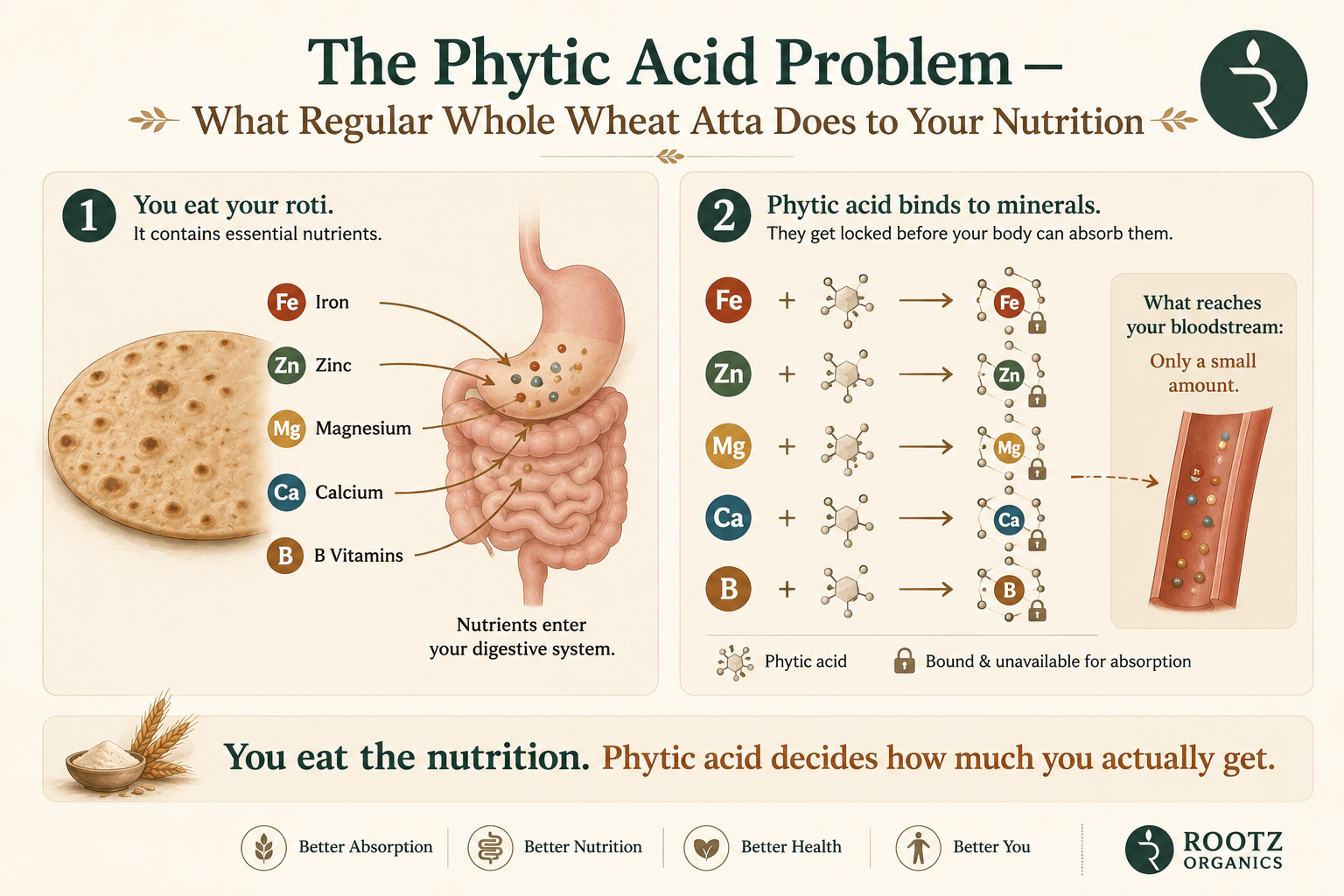
Every bag of whole wheat flour, including organic, including stone-ground, contains a compound called phytic acid. Its only job is to bind to the iron, zinc, magnesium and calcium in your flour and carry them out of your body before you can absorb them. You are eating the nutrition. Phytic acid is deciding how much of it your body actually receives.
Over 50 percent of Indian women are iron deficient. Most of them are eating whole wheat rotis every single day and wondering why the numbers will not move. The food is not the problem. The barrier inside the food is.
Sprouted wheat flour is the only atta that dismantles that barrier. From the inside, before the flour ever reaches your kitchen.
The Problem Nobody In the Atta Industry Talks About
Phytic acid is not a contaminant. It is not something that creeps in during processing. It is naturally present in the outer layer of every grain of wheat and it survives milling completely intact.
Here is what it does inside your body.
When you eat a roti made from regular whole wheat atta, the iron, zinc and magnesium in that flour enter your digestive system alongside phytic acid. Phytic acid binds to those minerals before your gut can absorb them, locking them into compounds your body cannot use, and flushes them out.
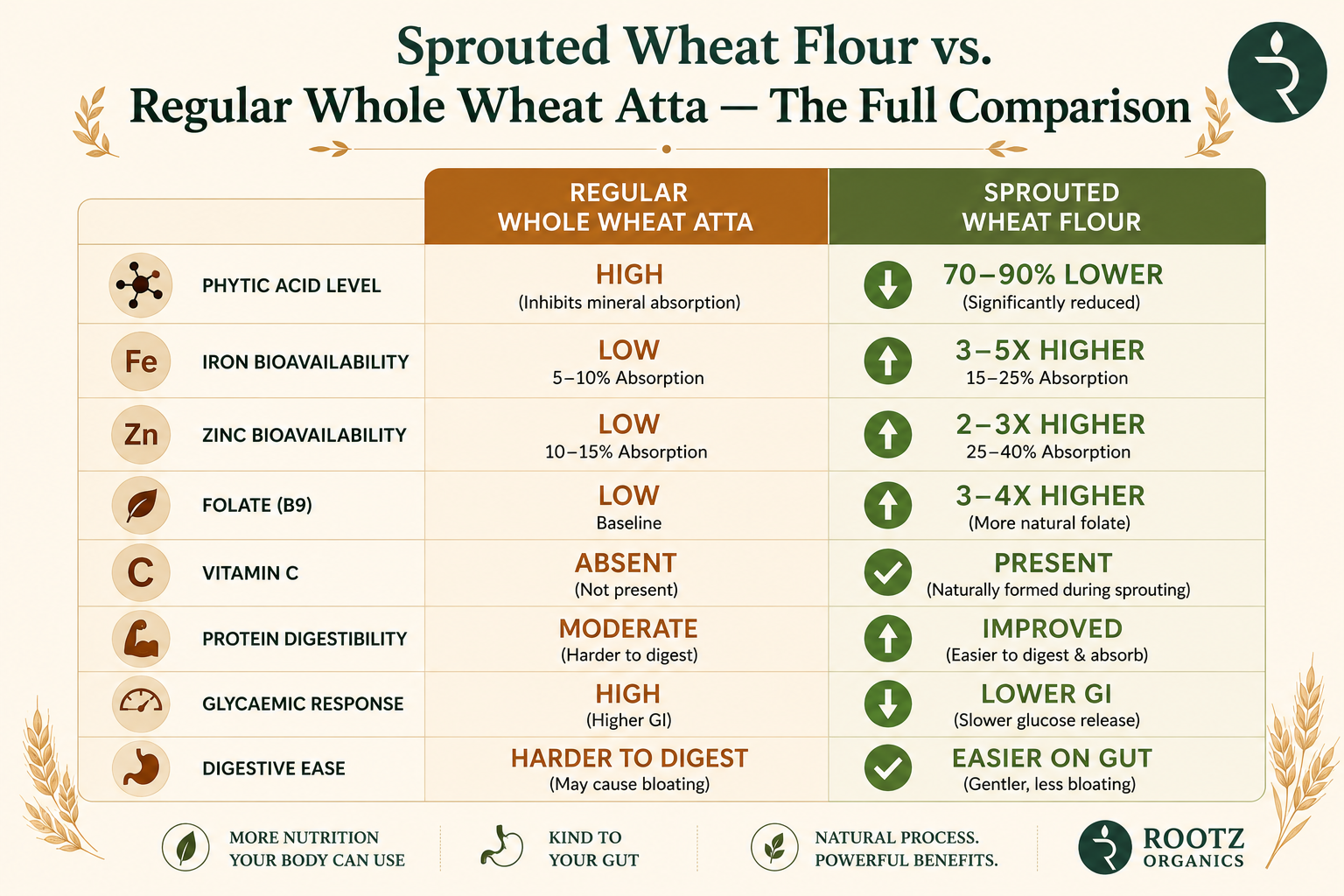
Studies confirm it plainly: sprouting significantly reduces phytic acid, which directly increases the bioavailability of minerals like iron and zinc. Sprouting also resulted in a reduction of tannins, the second anti-nutrient compound blocking absorption in regular wheat.
The nutrition is present in your whole wheat atta. Phytic acid is deciding how much of it your body actually receives.
India has one of the highest rates of iron deficiency anaemia in the world, affecting over 50 percent of women and a large proportion of children. The standard advice is to eat iron-rich food. The missing conversation is about whether that iron is actually reaching the bloodstream. In regular whole wheat atta, for the most part, it is not.
What Sprouting Does That No Other Process Can
When a wheat grain is soaked in water and allowed to germinate, it activates a cascade of enzymes designed to break down its own stored compounds and make them available for growth. The primary target of those enzymes is phytic acid.
Sprouting unlocks the grain from the inside. The process that was protecting those minerals from the seed's perspective releases them completely, making iron, zinc, magnesium and calcium bioavailable in a way that was never possible from the unsprouted grain.
The full nutritional transformation that research confirms:
Folate increases 3 to 4 times. The single most critical nutrient in early pregnancy, and one of the most commonly deficient vitamins in Indian women, multiplies during germination. A daily sprouted wheat roti is one of the most consistent folate sources available.
Vitamin C appears. Not present in dry wheat at all. Sprouting creates it, with values between 5 and 55mg per 100g, adding an antioxidant that simultaneously supports immunity and enhances iron absorption further.
B vitamins rise substantially. Thiamine, riboflavin and niacin, responsible for energy metabolism, brain function and nerve health, all increase during germination.
Protein digestibility improves significantly. The enzymes activated during sprouting partially break down complex proteins, making them easier for the gut to process and the body to use.
Blood sugar response lowers. Sprouting partially breaks down starch, which lowers the glycaemic index and produces a slower, more gradual glucose release after meals. For diabetics and pre-diabetics, this works alongside higher fibre and resistant starch to reduce post-meal spikes.
Digestion becomes easier. Complex starches are partially broken down before the flour ever reaches your kitchen. Your gut does less work processing each roti, which is why families dealing with heaviness, slow digestion, or post-meal discomfort notice a change within days of switching.
Same wheat. Germinated. Every nutritional barrier is removed. Every benefit unlocked.
This Is Who Feels It Most
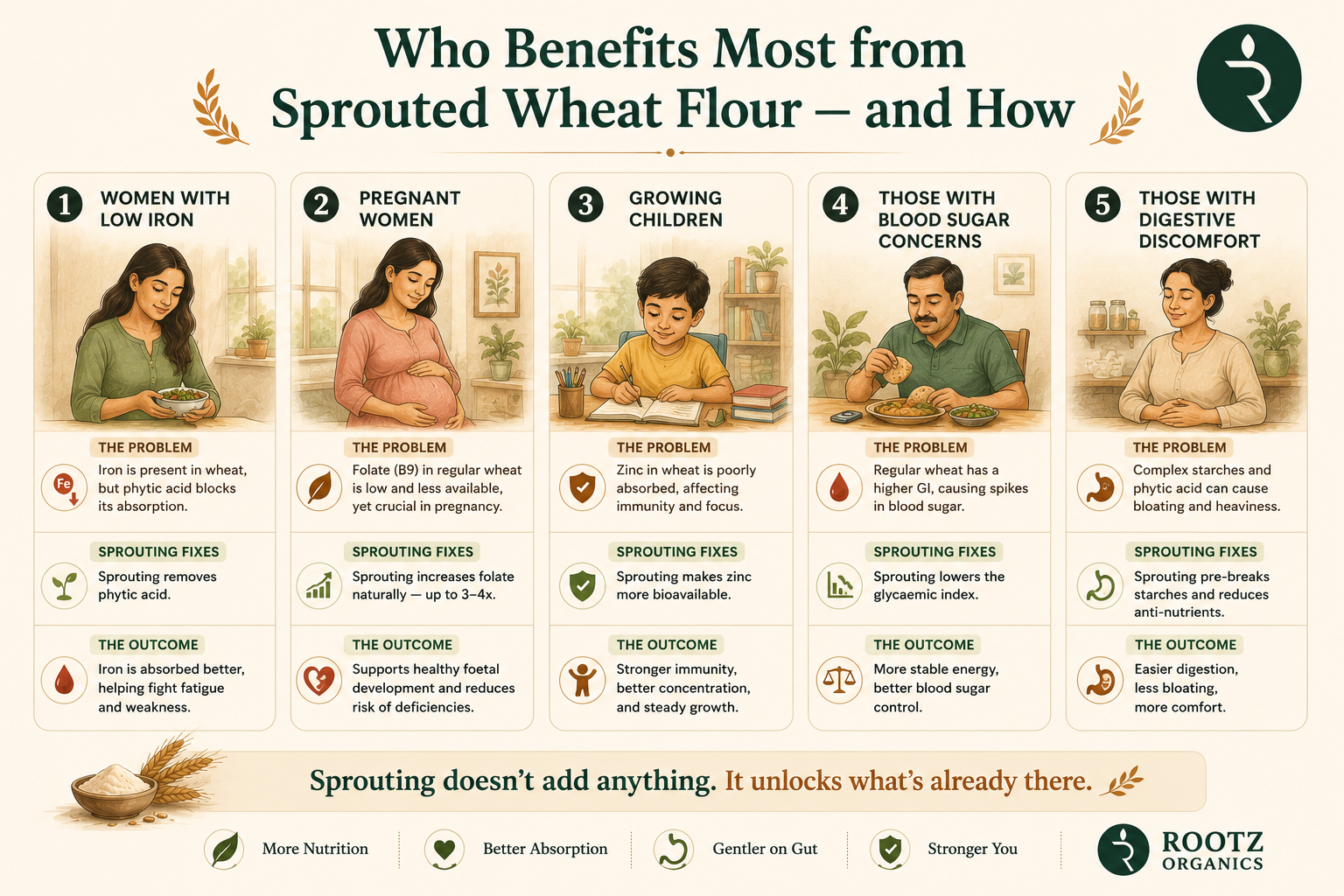
Think about the woman who has been anaemic for years. She eats spinach, she eats dal, she takes the supplements her doctor recommends. The numbers improve slightly, then plateau. What her doctor has not told her, and what her atta brand certainly has not, is that phytic acid in her daily rotis has been undoing a portion of that effort at every meal. Remove the barrier and her body finally receives what she has been eating all along.
Think about the pregnant woman in her first trimester, before she even knows she is pregnant. Folate is the most critical nutrient in those earliest weeks. It is the window when neural tube development is happening and the consequences of deficiency are irreversible.Sprouted wheat flour delivers folate at three to four times the level of regular atta. That is not a supplement. That is a roti. The same roti her family eats every day, doing work she never asked it to do.
Think about the child who eats well, sleeps enough, and still seems low on something. Slower to shake off illness, slower to concentrate, quicker to tire. Zinc deficiency is one of the most common and most under-diagnosed micronutrient deficiencies in Indian children. It directly affects immunity, growth and cognitive development. Regular whole wheat atta contains zinc, but phytic acid prevents most of it from being absorbed. Sprouted wheat flour removes that barrier. What your child eats and what their body receives finally become the same thing.
And think about anyone in the household managing blood sugar, or whose gut simply works harder than it should. Sprouting partially breaks down starch before the flour reaches your kitchen, lowering the glycaemic index, slowing glucose release, reducing the digestive load at every meal. No new recipes. No new habits. Just a flour that does more of the work before it arrives.
Why Rootz Organics and Why It Matters Here More Than Anywhere
Not all sprouted wheat flour completes the transformation that makes it worth buying.
The sprouting duration, the temperature, the conditions: all of these determine how completely phytic acid is broken down and how much of the nutritional upgrade actually occurs. Minimum sprouting produces a product with a sprouted label and very little of the benefit. Proper sprouting, controlled, complete, verified, produces the flour described in this blog.
Rootz Organics Sprouted Wheat Flour begins with certified organic wheat from over 200 verified farms across India. Zero pesticides. Zero chemical fertilisers. Zero GMOs. Third-party certified under NPOP, India's National Programme for Organic Production, independently audited and batch-traceable from farm to pack.
The grain is soaked and germinated under controlled conditions until the sprouting transformation completes: phytic acid reduced, enzymes activated, nutrients unlocked. Then stone-ground at low heat on traditional chakki so that every benefit the germination created arrives in your flour intact.
One ingredient: organic sprouted wheat. Nothing added. Nothing removed. The founder tests every product in her own kitchen first. Her family eats it before yours does.
Which Pack Is Right for Your Family
Same flour. Same certified organic grain. Same controlled sprouting and stone-ground standard at every size. The pack you choose depends on how many people you are feeding and how seriously you are making this switch.
900g: Start Here
For individuals, couples, or any family trying sprouted wheat flour for the first time. About 30 to 35 rotis. Enough for 10 days in a small household. Most families who open a 900g pack are placing their next order before it runs out, not because they have to, but because they do not want the gap.
Best for: First-time buyers, singles, or couples.
1800g: The First Real Switch
Two weeks of rotis for a family of three or four eating twice daily. This is the window where the difference becomes undeniable. Digestion settling, energy steadying, the quiet shift that happens when phytic acid stops working against you at every meal. The 1800g is the pack where most families stop looking at anything else.
Best for: Families of 3 to 4 ready to feel the full difference.
4.5kg: The Monthly Pack
One uninterrupted month for a family of four. No reorder mid-month. No gap where you fall back on regular atta and partially reset what your body has been building: the iron absorption improving, the folate delivering, the blood sugar stabilising. The 4.5kg is for the family that has decided. More economical per roti than either smaller pack.
Best for: Families of 4 to 5 who have committed.
9kg: For the Household That Does Not Compromise
Two months for a family of four. A full month for a joint family of six to eight.
A joint family of six eating regular whole wheat atta three times a day sits through over a thousand meals a year where phytic acid is quietly blocking the iron, zinc and magnesium in every roti. Over a year of Rootz Organics Sprouted Wheat Flour, that same household receives the full nutritional value of every one of those meals.
The difference is not a roti. It is a year. And at the 9kg price, it is also the lowest cost per roti across the entire range.
Best for: Joint families of 6 to 8, or families of 4 who want two uninterrupted months.
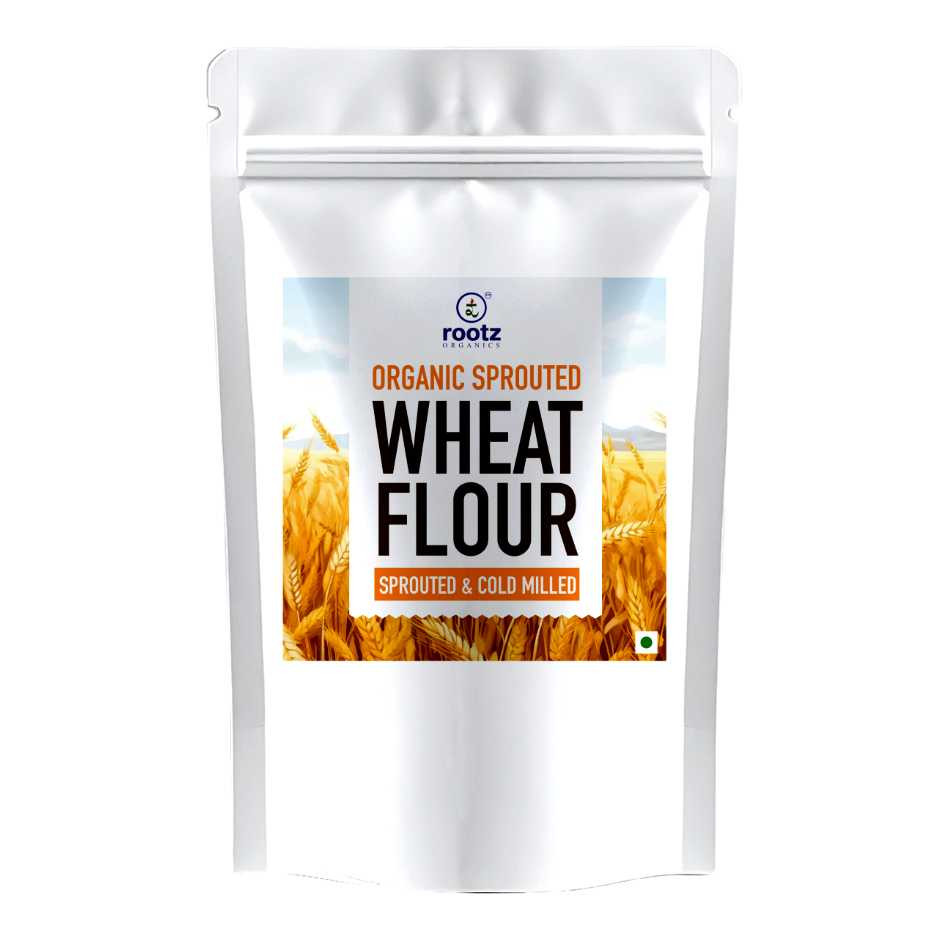
Order Rootz Organics Sprouted Wheat Flour
Ordering directly from rootzorganics.in gives you the freshest germinated and milled batch and supports the 200+ organic farming families behind every pack.
Frequently Asked Questions
What is sprouted wheat flour and how is it different from regular whole wheat atta?
Sprouted wheat flour is made from wheat grains that have been soaked and allowed to germinate before milling. Germination activates enzymes that break down phytic acid, an anti-nutrient present in all whole grains that binds to iron, zinc, magnesium and calcium and prevents your body from absorbing them. The result: significantly higher mineral bioavailability, folate levels 3 to 4 times higher, the appearance of vitamin C, improved protein digestibility, a lower glycaemic index, and easier digestion. Regular whole wheat atta, even organic, contains phytic acid intact, meaning much of its nutritional content passes through unabsorbed.
Is sprouted wheat flour better than regular whole wheat atta?
For most people and most
health goals, yes, specifically. Sprouting does not simply add nutrients. It removes the barrier that was blocking the nutrients already present in whole wheat from reaching your bloodstream. The improvement in iron, zinc and folate bioavailability is the most meaningful difference for the majority of Indian families.
Which pack size should I start with?
Start with the 1800g if you are feeding a family. It gives you a genuine two-week window, which is when most people feel a clear difference in digestion and energy. If you have already used sprouted wheat flour and are committing fully, the 4.5kg covers a household of four for a month with no interruption. The 9kg is the right call for larger families or anyone who wants two months at the best per-roti price.
Is sprouted wheat flour good for diabetics?
Yes. Sprouting partially breaks down starch, which lowers the glycaemic index and slows post-meal glucose release. Combined with higher fibre and resistant starch, sprouted wheat flour produces a gentler blood sugar response than regular whole wheat atta. Consult your doctor before making dietary changes if you are on blood sugar medication.
Is sprouted wheat flour safe and beneficial during pregnancy?
Especially beneficial. Folate at 3 to 4 times the level of regular atta is the single most critical nutrient in early pregnancy, supporting foetal neural development. Combined with higher bioavailable iron and zinc, sprouted wheat flour is one of the most nutritionally valuable roti flours available to pregnant women. Always discuss dietary changes with your doctor during pregnancy.
Is Rootz Organics sprouted wheat flour genuinely certified organic?
Yes. Third-party certified under NPOP, India's National Programme for Organic Production. Sourced from 200-plus verified organic farms. Zero pesticides, zero chemical fertilisers, zero GMOs. Every batch is independently traceable from farm to pack.
Will my family notice a difference in how the rotis taste?
Slightly sweeter and milder than regular whole wheat atta, because some of the complex starches have been partially broken down during germination. Most families find the rotis softer and more palatable. The adjustment, if any, takes a day or two at most.
Can children eat sprouted wheat rotis every day?
Especially suited for children. Zinc bioavailability is significantly higher than from regular atta, directly supporting immunity, growth and cognitive development during the years when nutrition most shapes outcomes. Higher folate, iron and B vitamins make every roti a more complete nutritional contribution to a child's daily needs.
How do I store sprouted wheat flour?
Airtight container, cool and dry place, away from sunlight and moisture. Refrigerate during summer months. Because the grain has been germinated, it is slightly more perishable than regular atta, so consume within 30 days of opening for best freshness and nutritional integrity.
Health and Happiness Always.
-
 August 25th, 2026
 -

The Science Behind Soaking, Sprouting, Fermenting and Grinding
August 24th, 2026 -
 August 24th, 2026
 -
 August 20th, 2026