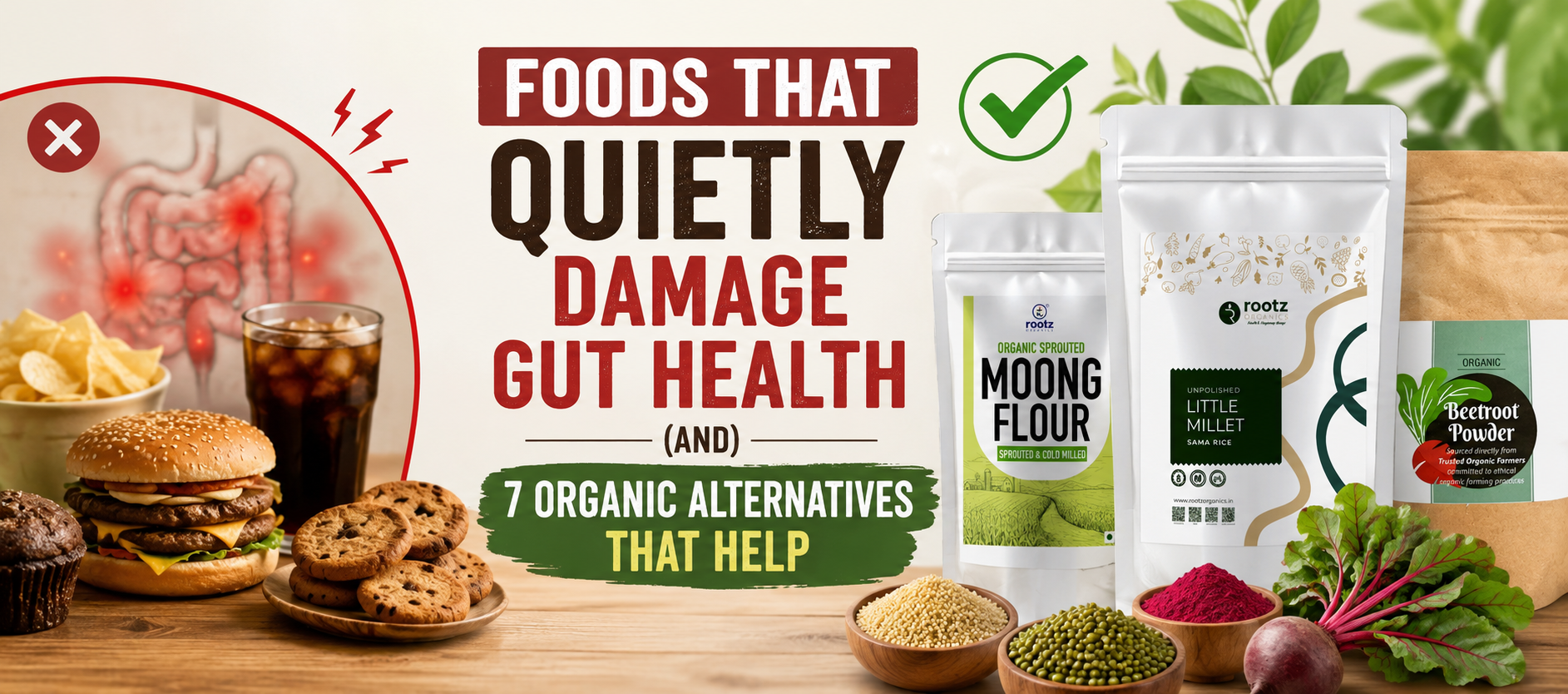
Foods That Quietly Damage Gut Health (And 7 Organic Alternatives That Help)
Most of us don't think twice about the everyday foods sitting in our kitchen cabinets. Yet some of the most common packaged and processed items are slowly working against one of the body's most important systems: the gut. Long before symptoms become obvious, your digestive system is often sending quiet signals that something isn't right. Understanding which foods for gut health actually help, and which ones quietly sabotage it, can make a real difference to how you feel every single day.
This guide breaks down the hidden culprits behind common digestive discomfort and offers practical, India-friendly organic alternatives that are easy to bring into your daily routine.
Why Gut Health Matters More Than Most People Realise
The gut is often called the body's "second brain," and for good reason. It houses trillions of microorganisms that influence digestion, immunity, mood, and even skin health. When this internal ecosystem is disturbed by poor dietary choices, the effects ripple far beyond occasional bloating. Chronic inflammation, weakened immunity, fatigue, and irregular digestion can all trace back to an imbalanced gut microbiome.
Ayurveda has long emphasised the connection between digestion, or "agni," and overall wellbeing, a principle modern nutritional science is now actively validating. The foods we eat daily either nourish this internal balance or chip away at it, often without us realising it.
Common Foods That Silently Harm Digestive Health
Several everyday foods, often consumed out of convenience or habit, can disrupt gut function over time. Recognising these is the first step toward making better choices.
1. Refined Flour (Maida) and Ultra-Processed Baked Goods
Refined flour is stripped of its bran and germ during processing, removing most of the fibre that feeds beneficial gut bacteria. Regular consumption of maida-based products like white bread, biscuits, and bakery items can lead to slower digestion, blood sugar spikes, and reduced microbial diversity. Over time, this contributes to bloating and irregular bowel movements.
2. Sugary Packaged Snacks and Beverages
Excess sugar doesn't just affect blood glucose levels; it also feeds harmful bacteria and yeast in the gut, allowing them to outcompete beneficial strains. This imbalance, known as dysbiosis, has been linked to bloating, fatigue, and weakened immune response.
3. Foods Loaded With Artificial Additives and Preservatives
Many packaged foods contain emulsifiers, artificial colours, and chemical preservatives designed to extend shelf life. Research increasingly suggests that certain emulsifiers can disrupt the protective mucus lining of the gut, potentially increasing intestinal permeability, sometimes referred to as "leaky gut."
4. Polished Grains and Low-Fibre Staples
Heavily polished rice and refined grains lose much of their natural fibre and nutrient content during processing. A diet built around these low-fibre staples can leave gut bacteria undernourished, since fibre is their primary food source.
5. Excessive Fried and Deep-Processed Oily Foods
Repeated consumption of deep-fried foods, especially those made with reused or low-quality oils, can slow digestion and contribute to inflammation in the gut lining. This often shows up as heaviness, acidity, or discomfort after meals.
6. Conventionally Grown Produce With Pesticide Residue
Non-organic fruits and vegetables can carry pesticide and chemical residues that, with regular exposure, may interfere with the delicate balance of gut bacteria. Choosing produce grown without synthetic chemicals reduces this unnecessary burden on the digestive system.
How to Identify If Your Diet Is Affecting Your Gut
Common signs include persistent bloating, irregular bowel movements, frequent acidity, unexplained fatigue after meals, skin issues, and recurring sugar cravings. These symptoms are frequently dismissed as "normal" digestive variation, but when they appear consistently, they're often a direct reflection of dietary patterns rather than something to ignore.
Organic Alternatives That Genuinely Support Digestive Wellness
The good news is that supporting gut health doesn't require a complicated overhaul. Simple, consistent swaps toward whole, minimally processed organic foods can make a measurable difference over time.
1. Choose Whole Grain and Millet-Based Flours Over Refined Maida
Switching to organic flours online made from whole grains or millets retains the natural fibre and nutrients lost in refined flour. These flours digest more slowly, helping maintain steadier blood sugar levels while feeding beneficial gut bacteria.
2. Bring Unpolished Grains Into Daily Meals
Unpolished, minimally processed grains retain their bran layer, which is rich in fibre and micronutrients. Including unpolished millets like ragi, jowar, and bajra in your weekly meals adds natural roughage that supports regular digestion and a more diverse gut microbiome.
3. Prioritise Fresh, Chemical-Free Vegetables
Fresh produce grown without synthetic pesticides reduces the chemical load on your digestive system. For households in the capital region, sourcing organic vegetables online delhi ensures freshness alongside the assurance of clean, residue-free farming practices.
4. Make Millets a Regular Part of Your Pantry
Millets are naturally gluten-free, high in fibre, and have a lower glycemic index compared to refined grains. Stocking up on organic millets online makes it easier to rotate grains throughout the week rather than relying solely on polished rice or wheat.
5. Replace Sugary Snacks With Naturally Fermented and Whole-Food Options
Traditional fermented foods such as curd, idli, and dosa batter naturally support gut bacteria through beneficial probiotics. Pairing these with whole-food snacks instead of packaged sugary alternatives helps reduce the dysbiosis caused by excess refined sugar.
6. Shift Toward Clean-Label Pantry Staples
Reading labels matters. Choosing products free from artificial preservatives and additives protects the gut lining from unnecessary irritants. Building a pantry through a trusted online organic grocery makes it simpler to consistently choose clean-label staples over heavily processed alternatives.
7. Build Daily Meals Around Whole, Traditional Foods
Returning to traditional, minimally processed eating patterns, rooted in Ayurvedic principles of fresh, seasonal, and whole foods, naturally supports better digestion. Sourcing reliable organic food products online makes it easier to maintain this approach consistently, even with a busy urban lifestyle.
Simple Daily Habits That Complement a Gut-Friendly Diet
Diet is foundational, but a few additional habits amplify its benefits. Staying adequately hydrated supports the movement of fibre through the digestive tract. Eating meals at consistent times helps regulate the body's natural digestive rhythm. Chewing food thoroughly reduces the digestive burden on the stomach and intestines. And managing stress, often an overlooked factor, matters significantly, since the gut and nervous system are closely linked through what researchers call the gut-brain axis.
Building a Sustainable, Gut-Friendly Routine
Long-term digestive wellness isn't about perfection; it's about consistency. Rather than eliminating every processed food overnight, focus on gradual, sustainable swaps. Replace one refined staple with its whole-grain counterpart. Choose fresh, organic produce when available. Read ingredient labels before buying packaged snacks. These small, repeated choices compound over weeks and months into meaningful improvements in digestion, energy, and overall wellbeing.
Ultimately, prioritising genuinely nourishing foods for gut health is less about following a strict diet and more about returning to simple, traditional eating patterns that Indian households have relied on for generations, now supported by the convenience of trusted organic sourcing.
Frequently Asked Questions
What are the early signs of poor gut health?
Bloating, irregular bowel movements, frequent acidity, low energy after meals, skin breakouts, and recurring sugar cravings are common early signs of an imbalanced gut. These symptoms often go unnoticed because they are mistaken for normal digestion issues rather than signals of gut microbiome disruption.
Can refined flour really damage the gut?
Yes. Refined flour is stripped of bran and fibre, which feeds beneficial gut bacteria. Regular consumption can slow digestion, spike blood sugar, and reduce microbial diversity over time, making whole grain or millet-based alternatives a healthier daily choice.
How quickly can switching to organic foods improve digestion?
Many people notice reduced bloating and more regular bowel movements within two to three weeks of consistently choosing fibre-rich, additive-free organic foods, though individual results vary based on overall diet and lifestyle.
Are millets better than wheat for gut health?
Millets are generally higher in fibre and have a lower glycemic index than refined wheat, which helps slow digestion and supports steady blood sugar levels. Unpolished, minimally processed millets retain more of these gut-friendly properties.
What is the simplest way to start eating for better gut health?
Start by replacing one processed staple at a time, such as swapping refined flour for an organic atta blend or sugary snacks for handcrafted, preservative-free alternatives. Small, consistent swaps are more sustainable than overhauling your entire diet at once.
-
 August 25th, 2026
 -

The Science Behind Soaking, Sprouting, Fermenting and Grinding
August 24th, 2026 -
 August 24th, 2026
 -
 August 20th, 2026