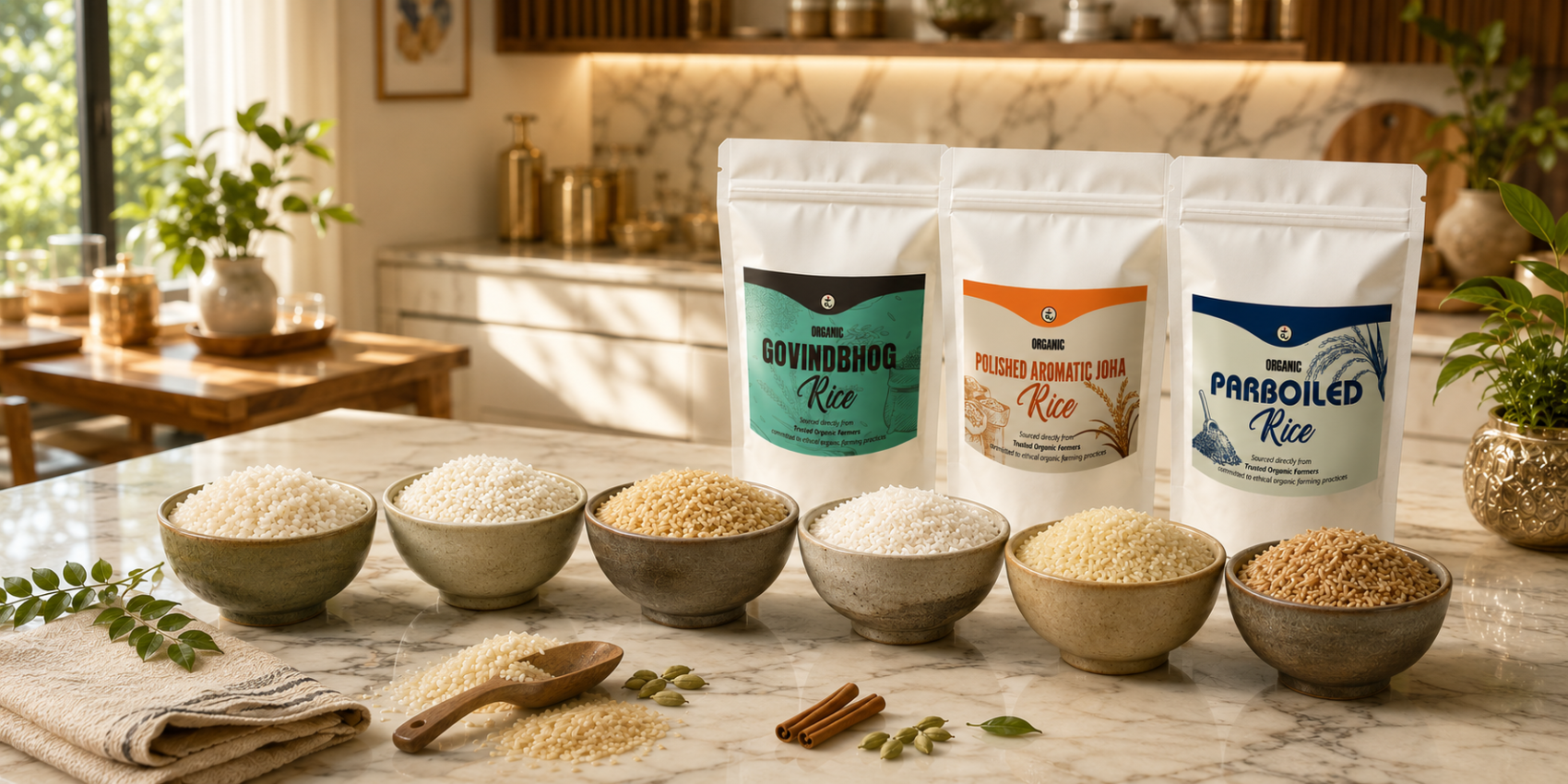
India Is Sitting on 6,000 Rice Varieties. Your Kitchen Probably Uses Two.
My mother cooked Govindbhog rice every Diwali. Not because it was special occasion rice — she didn't think of it that way. She thought of it the way she thought of everything that came from her mother's kitchen: it was simply how rice was supposed to be. Short-grained, butter-soft, filling the whole flat with a fragrance you could not describe to someone who had never smelled it.
When I started Rootz Organics, I went looking for that rice for our community. What I found was a food system that had quietly replaced it. In most Delhi NCR homes today — including ones where the grandmother still cooks — the daily rice is a commercial polished variety chosen by habit, by proximity, by price-per-kilo. The heritage varieties still exist. Farmers still grow them. But the urban kitchen largely stopped asking for them.
I want to change that. Not out of sentimentality, but out of conviction: the rice your grandparents ate was more nutritious, more digestible, and more suited to your body than most of what fills the supermarket shelf today. And it is time we brought it back — deliberately, knowledgeably, and without apology.
What Happened to India's Rice Diversity — and Why It Matters Now
India's Green Revolution of the 1960s and 70s was a genuine achievement in food security. But it came at a cost we are still paying. To maximise yield, agriculture shifted toward a handful of high-production hybrid varieties. Traditional rice cultivation areas shrank. The market followed demand, and demand followed the market. Within two generations, thousands of varieties that fed Indian civilisations for millennia moved from everyday kitchens to the margins.
Today, India's urban families — particularly in metros like Delhi, Gurugram, Noida, and Faridabad — eat from a remarkably narrow rice repertoire. The consequences show up in quiet, chronic ways. India has the world's largest diabetes population. Digestive disorders are epidemic in urban adults. The connection between a high-glycaemic, low-diversity diet and these outcomes is not speculative — it is documented. Reintroducing heritage rice varieties into the daily meal is one of the most accessible nutritional upgrades available to any Indian family.
Heritage Rice vs Commercial Rice: What You're Actually Comparing
What you're comparing | Commercial polished rice | Commercial polished rice |
Cultivation time | 90–100 days (high-yield hybrid) | 120–145 days (slow-grown traditional) |
Micronutrient profile | Stripped during milling | Naturally retained iron, zinc, vitamins |
Glycaemic response | High — spikes blood sugar fast | Moderate to lower depending on variety |
Pesticide exposure | High — spikes blood sugar fast | Organic certified, zero synthetic chemicals |
Flavour | Neutral, uniform | Variety-specific aroma and distinct taste |
Impact on farmers | Race to the lowest price | Fair pricing for traditional cultivation |
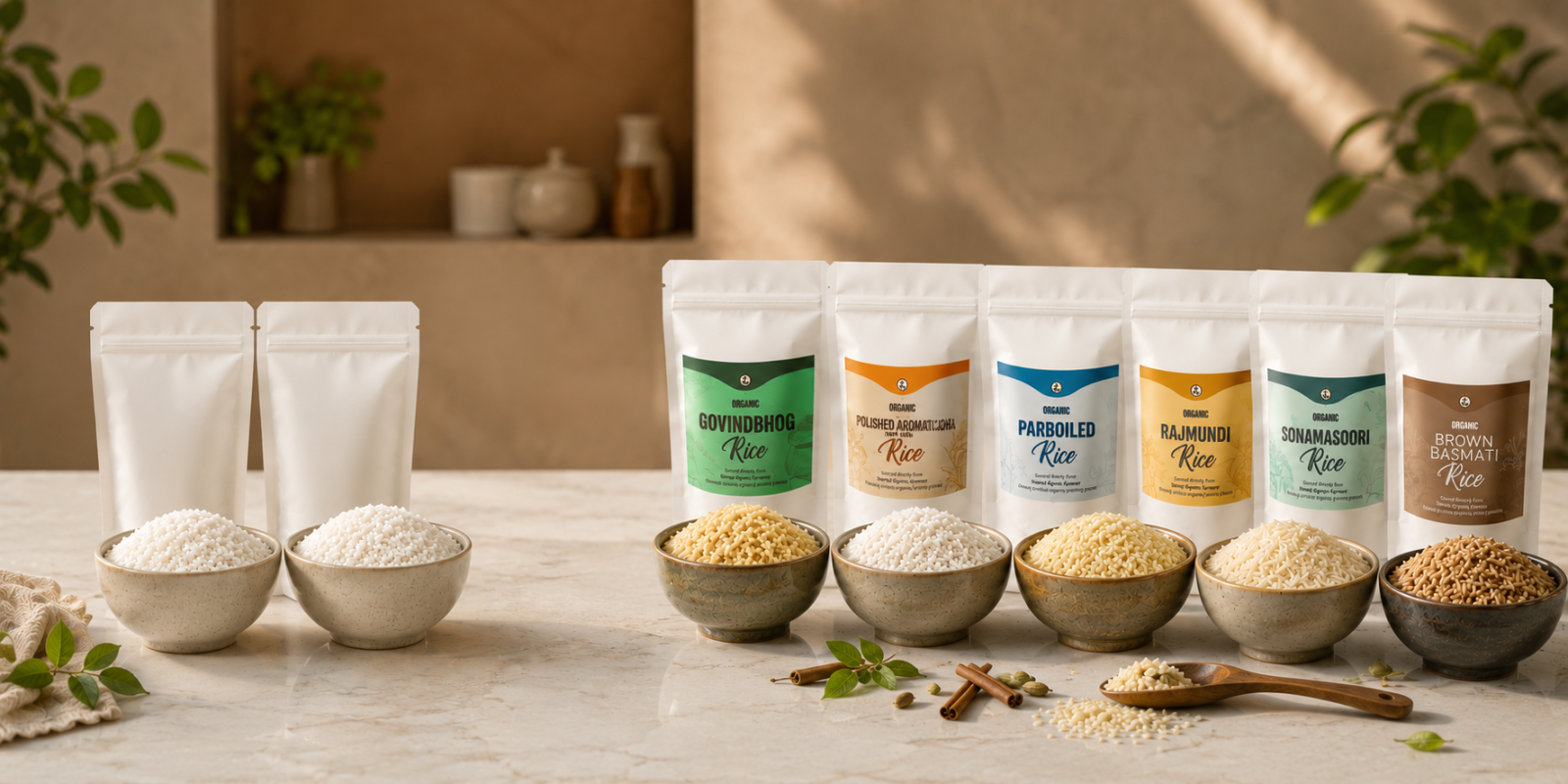
The Heritage Varieties We Source at Rootz
These are not interchangeable. Each variety has a regional identity, a specific nutritional profile, and a traditional role in Indian cooking that no commercial substitute replicates.
Govindbhog Rice — Bengal's Sacred Grain
| |||||||||||||
Kollam Rice — The Digestive Powerhouse
| |||||||||||||
Rajmundi Rice — The Deccan Plateau's Ancient Grain
| |||||||||||||
Sonamasoori Rice — The Daily Staple Reimagined
| |||||||||||||
The Everyday Champion: Organic Parboiled Rice
Why parboiled rice deserves its own section
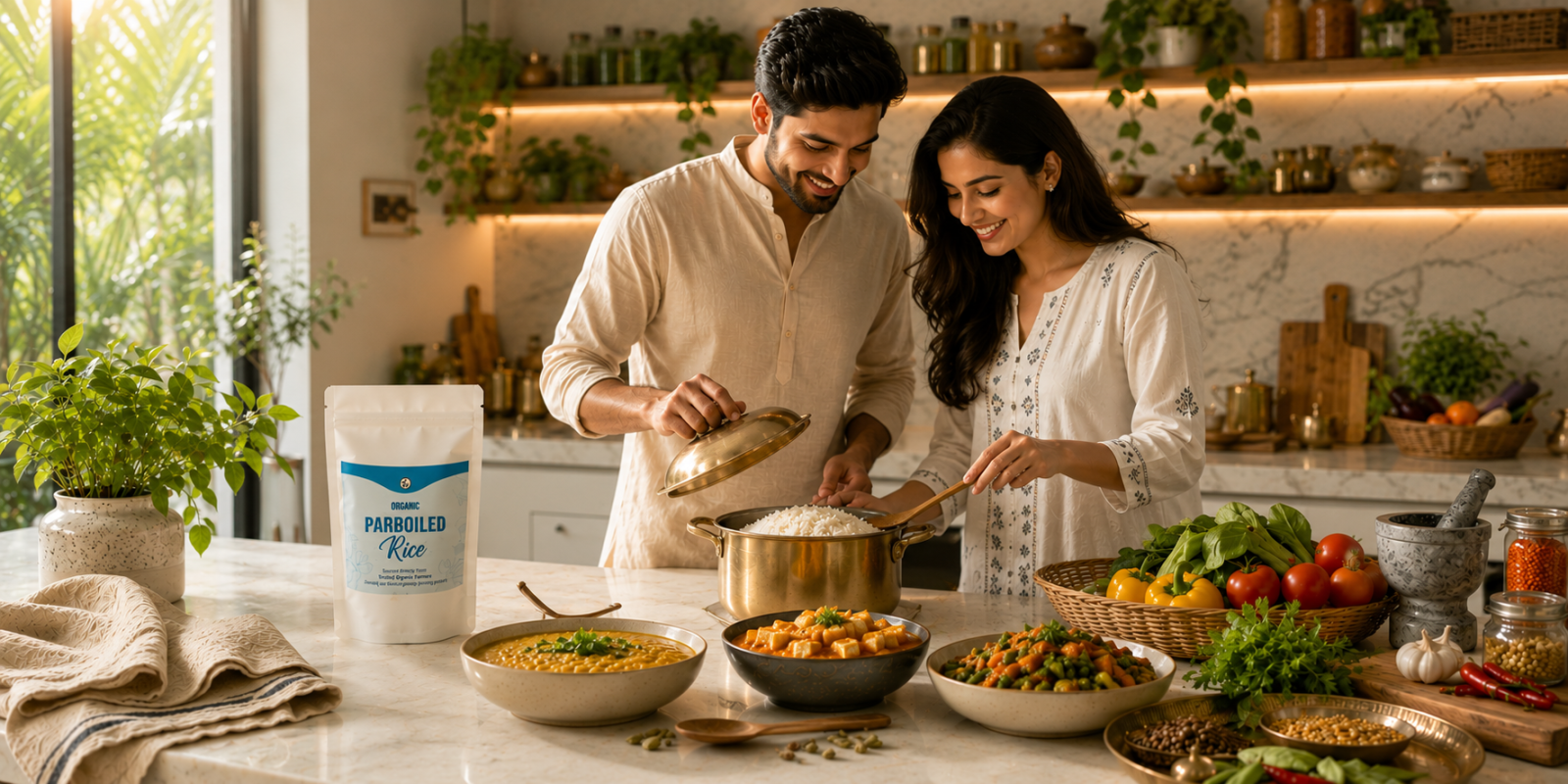
Parboiled rice is not a heritage variety — it is a processing method applied to traditional rice. But when done right, with organically grown grain and no chemical shortcuts, it solves one of the most common complaints about white rice: that it is hard on the stomach, spikes energy and then crashes it, and offers little beyond empty carbohydrates. Our organic parboiled rice does the opposite of all three.
What Parboiling Actually Does — and Why It Matters
Most people think parboiled rice is simply partially cooked rice. The reality is more interesting than that. Parboiling is a process where the rice is soaked, steamed, and dried while still in its husk — before milling. This steam pressure drives the nutrients from the outer bran layer deep into the grain itself.
The result is a rice that behaves nutritionally more like brown rice than white rice — but cooks with the ease, texture, and digestibility of white rice. The starch structure is also altered during parboiling, creating a higher proportion of resistant starch — the kind that does not spike blood glucose but instead feeds the beneficial bacteria in your gut.
For any family where someone is managing acidity, sluggish digestion, blood sugar sensitivity, or simply the post-meal heaviness that comes from a large serving of commercial polished rice — this is the most practical daily switch available.
What Makes Rootz Parboiled Rice Different
Most parboiled rice in the Indian market is made from commercially farmed grain treated with synthetic fertilisers and pesticides during cultivation. The parboiling process does not remove those residues — it locks them in along with the nutrients.
Our organic parboiled rice starts with certified organic grain — grown without synthetic pesticides or chemical fertilisers. The parboiling is done traditionally, without industrial shortcuts. What arrives in your kitchen is fluffy, separate-grained, easy to digest, and free from the residue burden that commercial parboiled rice carries.
When to Choose Parboiled Rice in Your Kitchen
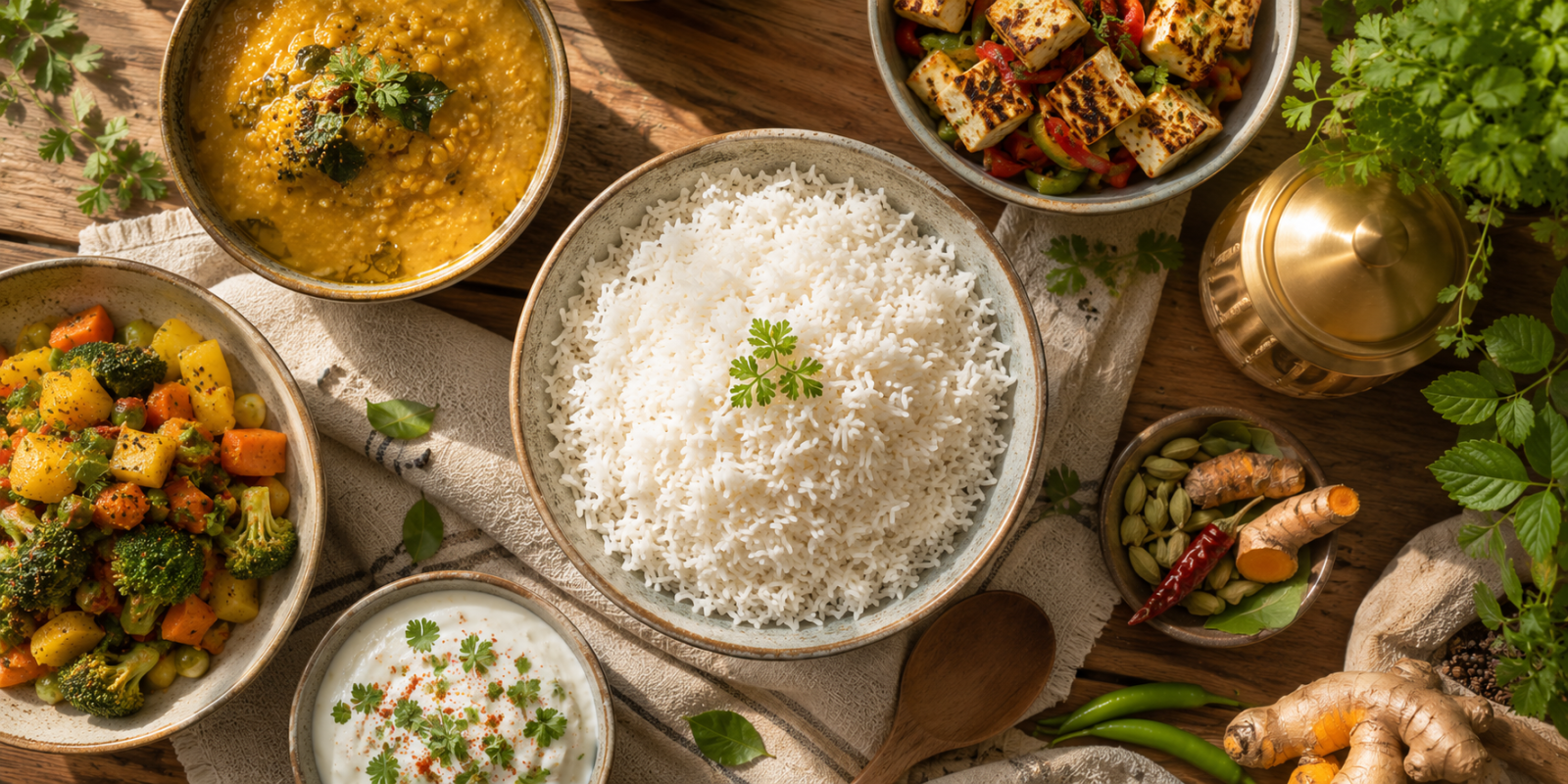
- Everyday meals — its non-sticky, fluffy texture works beautifully with dal, sabzi, and curries without clumping.
- Curd rice — one of its best applications. The firm grains hold texture even after mixing with curd, unlike soft-cooked white rice.
- Lemon rice and tamarind rice — the separated grains soak up tempering and seasoning evenly.
- Khichdi — holds structure during slow cooking while absorbing the flavour of dal and spices.
- For sensitive stomachs — if you or anyone in your family experiences acidity, bloating, or heaviness after meals, replacing commercial white rice with organic parboiled rice is one of the simplest dietary changes you can make. The difference in how you feel after eating is often noticeable within a week.
- For children — the slower energy release keeps them fuller for longer and avoids the sugar crash that follows high-GI meals.
Available on Amazon India — Rootz Organics Parboiled Rice
Our organic parboiled rice is listed directly on Amazon India, fulfilled by Rootz Organics. Shipped to your door across India with Amazon's delivery network.
900g | 1.8 kg | 4.5 kg Bundle Amazon — check price |
Order on Amazon India → Shop Rootz Parboiled Rice on Amazon India
The Delhi NCR Kitchen Problem — and the Simple Fix
I speak to families in our Rootz community in Delhi, Gurugram, Noida, and Faridabad every week. The conversation about rice follows a pattern. They know intuitively that what they're buying from the local kirana or quick-commerce app is not quite right. The rice doesn't smell the way they remember. It doesn't behave the way their mothers' rice did. But the alternatives seem too complicated to find.
The fix is simpler than you think. You do not need to overhaul your diet. You do not need to cook differently. You need to change what goes into the pot — and the rest follows. Swapping daily polished rice for Sonamasoori or our organic parboiled rice requires zero adjustment to recipes. Introducing Govindbhog for festival cooking means your payesh and khichuri taste the way they are supposed to taste. Adding Rajmundi to your weekly rotation gives your family more fibre and a gentler blood sugar response with no extra effort.
That is what food-as-medicine looks like in practice. Not dramatic elimination. Not a protocol. A quiet, steady elevation of what you already do every day.
Get These Delivered Across India
Available on rootzorganics.in with delivery across Delhi NCR and major Indian cities — and on Amazon India for faster delivery anywhere in the country.
- Govindbhog Rice — GI-tagged, aromatic, West Bengal origin. Available in 900g, 1.8kg, 4.5kg, 9kg, and 18kg.
- Kollam (Jeera Kolam) Rice — Micronutrient-rich, exceptionally digestible. Available in 2kg.
- Rajmundi Rice — Karnataka heritage grain, partial bran retained. Available in 900g and 1.8kg.
- Sonamasoori Rice — Half-boiled, lightweight, gut-friendly. Available in 1kg and 3kg bulk.
- Organic Parboiled Rice — Low GI, diabetic-friendly, fluffy and easy to digest. Available in 900g and 1.8kg on site; bundle packs on Amazon India.
- Brown Basmati Rice — Full bran layer, lowest GI of the range. Available in 1kg and 3kg bulk.
Shop the full heritage rice collection → rootzorganics.in/categories/rice
Prefer Amazon? Shop Rootz Organics on Amazon India
Our full rice range — including parboiled, Govindbhog, Joha, and black rice — is available directly on Amazon India, shipped by Rootz Organics. Prime-eligible · Pan-India delivery · Sold & shipped by Rootz Organics
Parboiled Rice | Govindbhog Rice | + More varieties |
Order on Amazon India → Browse Rootz Organics on Amazon India
FREQUENTLY ASKED QUESTIONS
Where can I buy Govindbhog rice online in Delhi NCR?
Rootz Organics delivers authentic, organically grown Govindbhog rice directly to homes across Delhi NCR and major Indian cities. Govindbhog is a GI-tagged heritage variety from West Bengal, traditionally used for payesh, bhog khichuri, and festive cooking. Order from rootzorganics.in or find us on Amazon India — sold and shipped by Rootz Organics.
Is parboiled rice good for digestion and acidity?
Yes. Organic parboiled rice is one of the best choices for those with digestive sensitivity or acidity. The parboiling process — steaming rice in its husk before milling — drives nutrients into the grain and alters the starch structure to create more resistant starch. This means slower digestion, steadier energy release, and less acid load on the stomach compared to regular polished white rice. Rootz Organics parboiled rice is available in 900g and 1.8kg on our website and in bundle packs on Amazon India.
Which rice is best for diabetics in India — heritage or regular?
Rajmundi and Brown Basmati are the best choices for managing blood sugar — both retain more fibre and have a lower glycaemic response. Rootz Organics organic parboiled rice is also an excellent daily option: it is labelled Low GI and diabetic-friendly, with resistant starch that feeds gut bacteria rather than spiking glucose. All are available from rootzorganics.in and on Amazon India.
What is the difference between parboiled rice and regular white rice?
Regular white rice is milled directly after harvesting, which removes the bran and germ layers along with most micronutrients. Parboiled rice is steamed in its husk before milling — this drives nutrients from the outer layers into the grain itself. The result retains more vitamins and minerals than white rice, has a lower glycaemic index, is easier to digest, and produces fluffy non-sticky grains. Rootz Organics parboiled rice is certified organic, making it free from pesticide residues that commercial parboiled rice may retain.
Can I buy Rootz Organics rice on Amazon India?
Yes. Rootz Organics is an active seller on Amazon India. Our parboiled rice, Govindbhog rice, Joha rice, black rice, and other varieties are listed on Amazon.in and sold and shipped directly by Rootz Organics. Search 'Rootz Organics' on Amazon India or visit our Amazon store page.
-
 August 6th, 2026
 -
 August 6th, 2026