
Why Sprouted Foods Are Easier to Digest Than Regular Grains
Soak a handful of moong or ragi overnight, let it sit for a day, and something changes inside the grain long before it reaches your plate. That change is why so many Indian households have quietly relied on sprouting for generations, and why nutritionists keep returning to the same conclusion: sprouted grains rank among the easy to digest grains available in an everyday kitchen. The process does not add anything to the grain. It simply switches on the grain's own enzymes and lets them do work that your stomach would otherwise have to do alone.
Quick answer: Sprouted grains are easier to digest because germination activates enzymes inside the seed that break down phytic acid, complex starches, and proteins that normally slow digestion. This pre-digestion reduces bloating, improves nutrient absorption, and makes the grain gentler on the gut compared to its unsprouted form.
What Actually Happens When a Grain Sprouts?
A grain is a dormant seed. The moment it is soaked in water, it "wakes up" and begins preparing to grow into a plant. To fuel that growth, the seed activates internal enzymes, chiefly amylase, protease, and phytase, that break its own stored starch, protein, and mineral-binding compounds into simpler forms.
Sprouting, in simple terms: it is the controlled germination of a seed through soaking and short-term growth, during which natural enzymes convert complex nutrients into forms the human body can absorb more easily, without cooking or processing.
This is not a marketing claim specific to any one brand. It is basic plant biology, and it is exactly why sprouted flours and grains behave differently in the body compared to their raw, unsprouted counterparts.
The Science Behind Easier Digestion in Sprouted Grains
Three separate mechanisms explain why sprouted foods sit lighter on the stomach. Each one targets a specific compound that otherwise makes grains harder to break down, and together they are the reason food scientists and nutritionists now describe sprouted varieties as some of the more easy to digest grains in an everyday diet, rather than simply calling them "healthier" without explaining why.
1. Phytic Acid Breaks Down
Raw grains contain phytic acid, a compound that binds to iron, zinc, calcium, and magnesium and blocks their absorption in the gut. Research on germinated cereals and pulses has recorded phytic acid reductions ranging from roughly one-third to as much as three-quarters of the original content, depending on the grain and soaking time. Less phytic acid means more of the grain's own minerals actually reach your bloodstream instead of passing through unused.
2. Starch and Protein Get Pre-Broken
During germination, amylase enzymes begin converting complex starches into simpler sugars, while protease enzymes start breaking proteins into smaller peptides and amino acids. Studies on sprouted millets have documented measurable increases in amylase and protease activity alongside significantly improved in-vitro protein digestibility. In practical terms, the grain arrives at your stomach partly pre-digested, so your own digestive enzymes have less heavy lifting to do.
3. Anti-Nutrients and Inhibitors Lose Their Grip
Unsprouted grains and legumes also carry trypsin inhibitors and tannins, compounds that interfere with protein-digesting enzymes and can contribute to gas and bloating. Germination has been shown to lower trypsin inhibitor activity meaningfully, which is one reason sprouted pulses and grains are traditionally recommended for people with sensitive digestion, including young children and elderly family members.
Sprouted vs. Regular Grains: A Side-by-Side Comparison
The differences between a sprouted grain and its regular, unsprouted counterpart are measurable, not just anecdotal. Here is how they compare on the factors that matter most for digestion:
- Phytic acid content: Regular grains retain their full phytic acid load; sprouted grains show substantial reductions after germination, freeing up bound minerals.
- Starch structure: Regular grains contain complex, tightly packed starch; sprouted grains have partially broken-down starch that digests faster and produces less post-meal heaviness.
- Protein form: Regular grains store protein in dense, harder-to-break-down chains; sprouted grains contain proteins already partly broken into simpler peptides.
- Mineral bioavailability: Regular grains lock iron, zinc, and calcium to phytic acid; sprouted grains release more of these minerals for actual absorption.
- Gut comfort: Regular grains are more likely to cause bloating or heaviness in sensitive digestion; sprouted grains are traditionally used as gentler, everyday options for exactly this reason.
Why Indian Kitchens Have Used Sprouting for Generations
Long before "sprouted foods" became a packaging term, Indian households were soaking moong, methi, and wheat for khichdi, salads, and porridge. Ayurveda has long treated sprouted grains and legumes as "laghu," or light, easy on the agni (digestive fire), which lines up closely with what modern food science now confirms about enzyme activation and reduced anti-nutrients.
This overlap between traditional practice and current research is worth paying attention to. It is rare for a centuries-old kitchen habit to match so precisely with what a lab measures today, and it is a strong signal that sprouting was never a fad, but a working solution to a real digestive problem.
Sprouted Ragi, Jowar, and Wheat: What Changes in the Flour
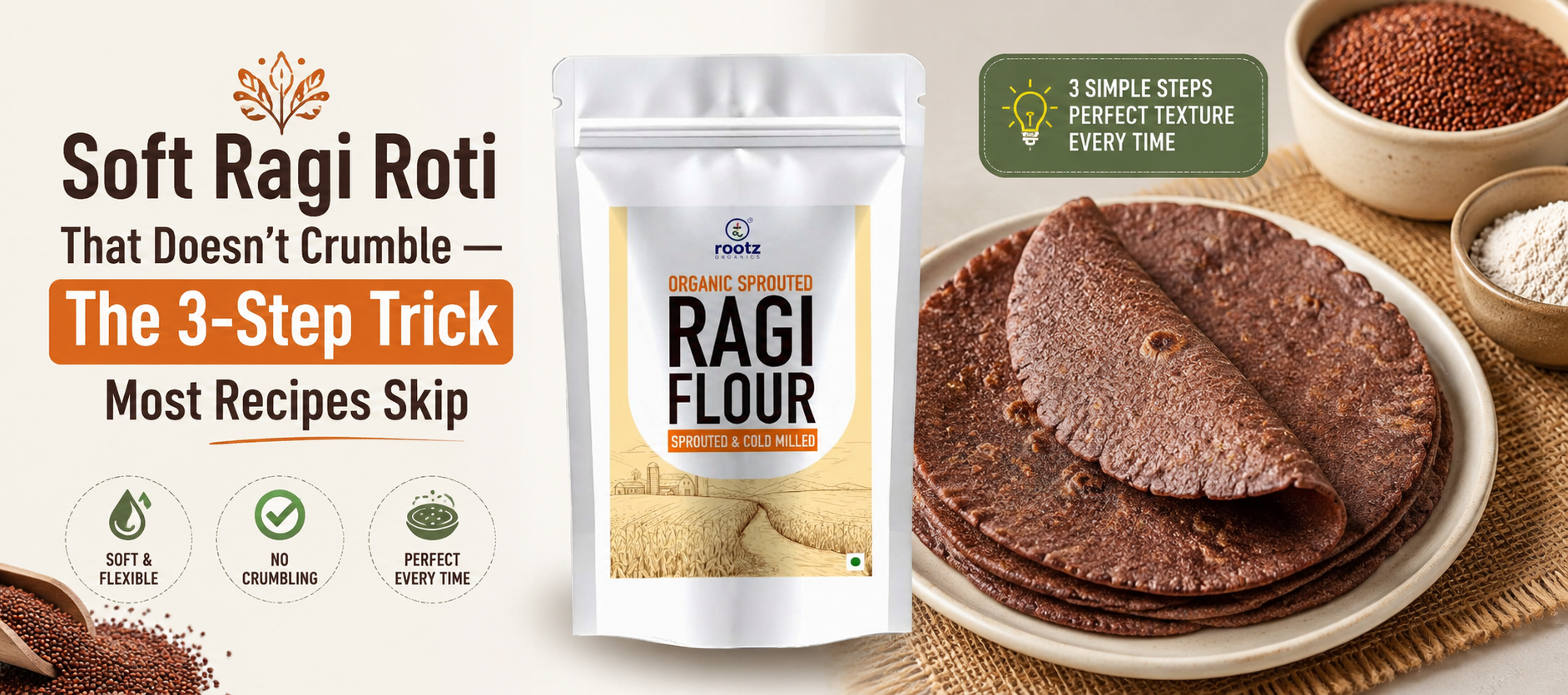
Sprouting is not limited to whole grains you cook and eat directly. It also changes flour. Sprouted ragi flour, sprouted jowar flour, and sprouted wheat flour go through the same germination process before being stone-ground, which means the phytic acid reduction and enzyme activation happen before the flour ever reaches your kitchen.
This matters because flour is where most Indians actually consume their daily grain intake, through rotis, dosas, and porridge. Choosing from a range of gluten free flours that includes sprouted variants means the digestibility advantage is already built into the base ingredient, not something you have to engineer yourself at home.
Millets: Naturally Light Grains That Sprout Especially Well
Millets deserve a specific mention because they combine two digestibility advantages at once. They are naturally gluten-free and lower in the dense starch structures found in refined wheat, and when sprouted, they show some of the most measurable improvements in enzyme activity recorded in grain research.
Foxtail, barnyard, kodo, and little millet all fall into this category. Because they retain their bran layer, unpolished millets carry more of the fibre and minerals that sprouting then helps make bioavailable, rather than starting from an already-stripped grain. For households building a millet-based weekly rotation, sourcing organic millets online from a supplier that sources unpolished, minimally processed varieties preserves this advantage from farm to plate.
How to Bring Easy-to-Digest Grains Into Daily Meals
Making the switch does not require an overhaul of your kitchen. It works best as a gradual, step-by-step substitution:
- Start with breakfast: Replace one regular flour-based item, such as a plain wheat roti or dosa, with a sprouted ragi or jowar version.
- Rotate your grain base: Alternate between rice and millets through the week instead of defaulting to one staple every day. A base of organic rice online alongside a couple of millet meals spreads out digestive load and nutrient variety.
- Soak before you cook: Even unsprouted legumes and grains benefit from an overnight soak, which triggers some of the same phytase activity as full sprouting.
- Pair with healthy fats: Cooking sprouted grains with a small amount of unrefined, cold pressed oils such as sesame or groundnut oil supports fat-soluble nutrient absorption alongside the digestibility gains from sprouting.
- Build a pantry around it: Keep a small, rotating stock of sprouted flours, minimally processed millets, and pulses on hand so the easier-to-digest option is always the convenient one, not the exception.
For households looking to build this pantry in one go rather than product by product, browsing a curated selection of organic food products online makes it simpler to source sprouted flours, millets, and pulses from a single, chemical-free supply chain.
Who Notices the Biggest Difference?
While sprouted grains support digestion for almost anyone, certain groups tend to notice the change most clearly:
- People with occasional bloating or gas after grain-heavy meals, since reduced phytic acid and trypsin inhibitors directly ease the load on digestive enzymes.
- Growing children, whose smaller digestive systems benefit from partially broken-down starches and proteins.
- Elderly family members, who often produce fewer digestive enzymes naturally and benefit from grains that arrive partly pre-digested.
- Anyone managing blood sugar, since sprouted grains generally digest more slowly and steadily than refined starches, avoiding sharp post-meal spikes.
- People recovering from illness or gut sensitivity, for whom traditional Indian recovery diets have long favoured moong and rice preparations precisely because they ask less of a weakened digestive system.
None of this means regular, unsprouted grains are harmful or should be avoided altogether. Whole, minimally processed grains remain a valuable part of a balanced Indian diet on their own. Sprouting simply adds a further, well-documented layer of digestive ease on top of that existing nutritional value, which is why many households treat it as a rotation rather than a full replacement.
Common Misunderstandings About Sprouted Grains
A few misconceptions tend to follow sprouted grains around, and clearing them up helps set realistic expectations for anyone trying this for the first time.
"Sprouted means raw and unsafe"
Sprouting and eating raw are not the same thing. Sprouted grains and flours are almost always dried and then cooked or milled before consumption, exactly like regular grains. The sprouting stage only changes the internal chemistry of the seed; it does not mean the final product skips cooking.
"All sprouted products digest identically"
The degree of improvement depends on the grain type, soaking duration, and germination time. A grain sprouted for 12 hours will not show the same phytic acid reduction as one sprouted for 48 hours. This is why sourcing from a producer that controls and standardises the sprouting process matters more than the word "sprouted" on a label alone.
"Sprouted flour tastes noticeably different"
Most people notice a slightly nuttier, milder flavour rather than a dramatic change. Rotis and dosas made from sprouted ragi or jowar flour generally hold their shape and taste close enough to the regular version that the switch does not require adjusting a family's usual recipes.
A Simple Way to Remember the Difference
Sprouting does not add anything artificial to a grain. It uses the seed's own enzymes to unlock nutrients and neutralise compounds that would otherwise slow digestion, which is the core reason sprouted grains and flours are consistently gentler on the stomach than their unsprouted counterparts. For Indian households, this is less a new discovery than a return to a method the kitchen already knew worked, now backed by measurable enzyme and mineral-bioavailability data.
Frequently Asked Questions
Why are sprouted grains easier to digest than regular grains?
Sprouting activates enzymes inside the seed that break down phytic acid, complex starches, and storage proteins. This partial pre-digestion means the grain requires less enzymatic work from your own digestive system, resulting in less bloating and heaviness after meals.
Can sprouted flour be used the same way as regular flour?
Yes. Sprouted ragi, jowar, and wheat flours can be used for rotis, dosas, porridge, and baking exactly like regular flour. The texture and cooking method stay largely the same; only the nutrient profile and digestibility improve.
Are sprouted millets good for people with gluten sensitivity?
Most millets, including foxtail, barnyard, kodo, and little millet, are naturally gluten-free. Sprouting these millets further improves protein and starch digestibility, making them a suitable choice for people managing gluten sensitivity or looking for lighter grain options.
How long does it take to sprout grains at home?
Most grains and legumes need an 8 to 12 hour soak followed by 12 to 48 hours of germination at room temperature, depending on the grain. Millets and moong typically sprout faster, while wheat and larger legumes may take closer to two days.
Do sprouted grains lose any nutrients during germination?
Some starch, fat, and protein content decreases slightly as the seed uses stored energy to sprout, but this is offset by increased fibre, higher mineral bioavailability, and improved digestibility, which is the primary benefit most people are seeking from sprouted grains.
-
 August 6th, 2026
 -

Why More Doctors Are Recommending Traditional Indian Foods Again
July 24th, 2026 -

Why Are So Many Healthy-Looking Foods Actually Ultra-Processed
July 24th, 2026