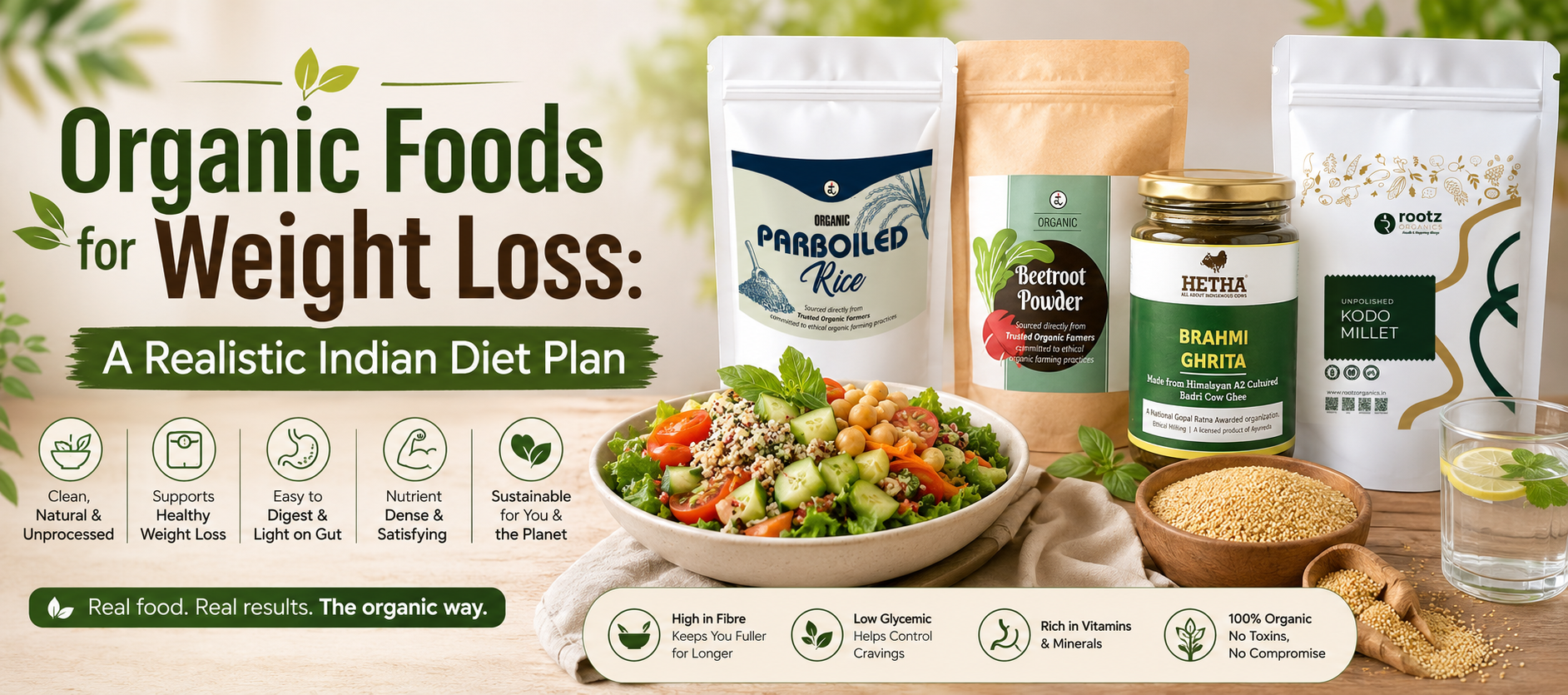
Organic Foods for Weight Loss: A Realistic Indian Diet Plan
Most weight-loss advice circulating online is built for a different kitchen — one stocked with kale, quinoa, and almond milk that rarely feature in an Indian household. A more practical starting point is closer to home: organic foods for weight loss drawn from millets, whole grains, cold-pressed oils, and seasonal produce that Indian families have relied on for generations. This article lays out what that looks like in practice, without turning it into a restrictive diet plan built around imported ingredients.
What Is an Organic Diet and How Does It Support Weight Loss?
An organic diet centres on foods grown and processed without synthetic pesticides, chemical fertilisers, or artificial preservatives. For weight management, this matters less because "organic" burns fat and more because organic staples — millets, unpolished grains, cold-pressed oils — tend to be less refined, higher in fibre, and slower to digest, which supports satiety and steadier blood sugar.
Why Whole, Unprocessed Foods Matter More Than Any Single Ingredient
Sustainable weight loss has more to do with reducing processed, refined food intake than with chasing a specific "superfood." Refined flour, polished rice, and refined oils are stripped of fibre and micronutrients during processing, which means they digest faster and leave people hungry sooner.
Switching the base of a meal — the grain, the flour, the cooking oil — to a whole, minimally processed organic version changes the entire nutritional profile of that meal without requiring a person to overhaul their cuisine. This is why the shift tends to be more sustainable for Indian households than adopting an entirely foreign diet pattern.
Best Organic Foods for Weight Loss You Can Add to an Indian Diet
A handful of everyday Indian staples, in their organic and less-processed form, do most of the work in a weight-conscious kitchen:
- Millets (jowar, ragi, bajra, foxtail) — higher in fibre and lower on the glycemic index than polished rice or refined wheat.
- Unpolished, single-origin rice — retains bran and germ layers that are milled away from polished varieties, adding fibre and slowing digestion.
- Cold-pressed oils (mustard, groundnut, sesame) — extracted without heat or chemical solvents, preserving natural antioxidants lost in refined oil processing.
- Sprouted legumes and pulses — sprouting increases protein bioavailability and reduces anti-nutrients, making them easier to digest.
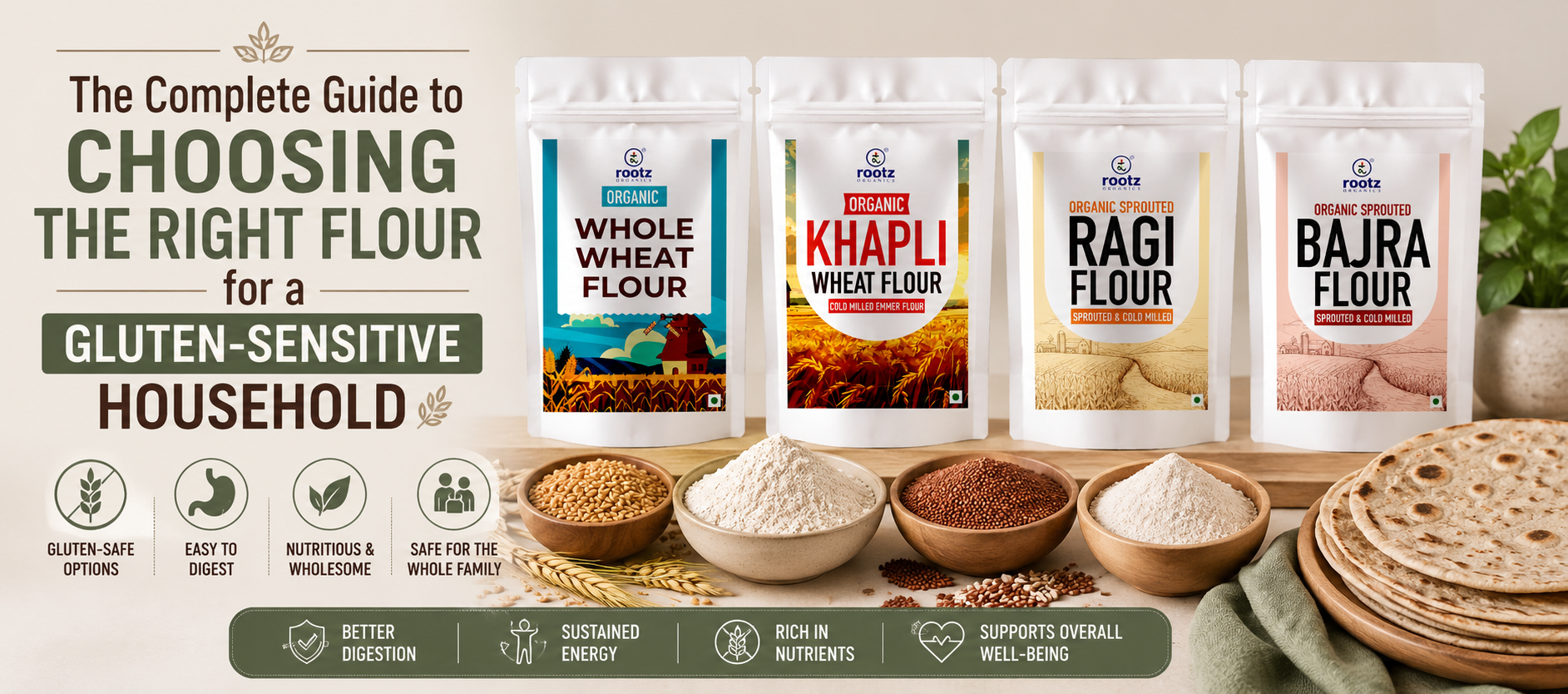
- Gluten-free and low-gluten flours — ragi, jowar, and besan-based flours that add variety without the bloating some people experience with refined wheat.
- Seasonal, chemical-free vegetables and fruits — grown without synthetic pesticide residue, typically fresher when sourced locally and in season.
Millets: The Traditional Indian Grain Making a Comeback
India is the world's largest producer of millets, and 2023 was observed as the International Year of Millets — a recognition of a grain that Indian households were cooking with long before it became a wellness trend. Unpolished millets retain their outer bran layer, which is where most of the fibre and micronutrients sit.
Jowar and bajra rotis, foxtail millet khichdi, and ragi porridge are all traditional preparations that fit naturally into a weight-conscious meal plan without needing a single imported ingredient. Because millets are more slowly digested than refined wheat or polished rice, they tend to keep people fuller for longer between meals.
Choosing the Right Flours for a Weight-Conscious Kitchen
The flour used for daily rotis has an outsized effect on a household's overall calorie and fibre intake, simply because it's consumed multiple times a day. Refined maida-heavy multigrain blends often market themselves as "healthy" while contributing little actual fibre.
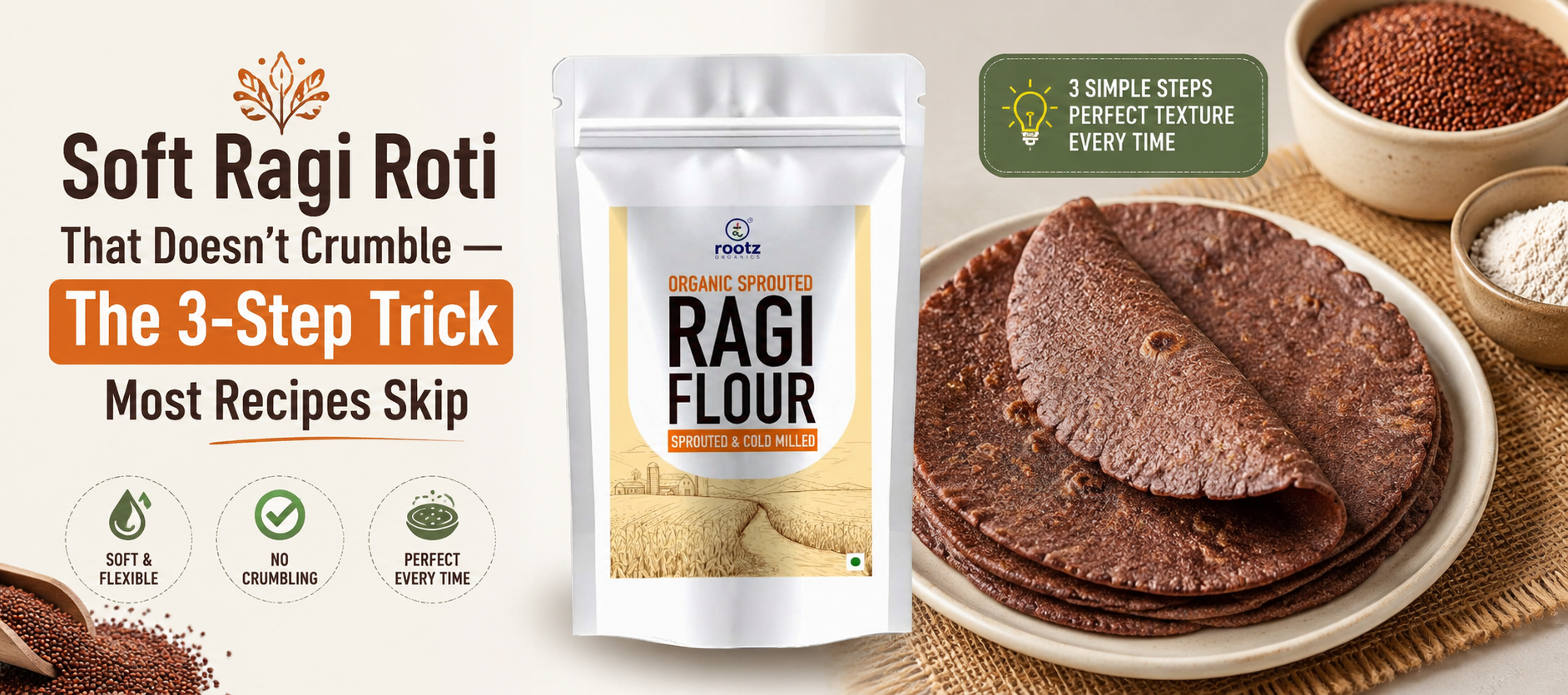
Rotating between ragi flour, jowar flour, and other gluten free flours adds nutritional variety and is a practical option for anyone managing gluten sensitivity alongside weight goals. Besan (chickpea flour) is another useful addition — it's naturally high in protein relative to most Indian flours, which helps with satiety.
The Role of Cold-Pressed Oils in a Healthy Metabolism
Cooking oil is another place where refining strips out nutritional value. Refined oils go through chemical extraction and high-heat processing that removes many of the natural antioxidants and micronutrients present in the raw seed or nut.
Cold-pressed oils are extracted mechanically, without heat or chemical solvents, which preserves more of their natural nutrient profile. Mustard oil, groundnut oil, and sesame oil are traditional Indian choices that work well across regional cuisines and don't require switching to imported alternatives like avocado or olive oil.
Building a Realistic Indian Weight-Loss Meal Plan
A workable meal plan is one that a household can actually sustain past the first two weeks. The structure below swaps refined staples for organic, whole alternatives while keeping familiar Indian meal patterns intact.
Step 1: Replace the Base Grain
Swap polished white rice for organic rice varieties with less polishing, or alternate rice meals with millet-based ones through the week.
Step 2: Rotate the Roti Flour
Use ragi or jowar flour two to three times a week instead of relying solely on refined wheat, easing the body into higher-fibre grains gradually.
Step 3: Switch the Cooking Oil
Move to a cold-pressed oil for daily cooking rather than a refined, heavily processed one.
Step 4: Add a Sprouted or Fermented Element
Include a small portion of sprouted moong, chana, or a fermented food like curd or idli batter, which support digestion.
Step 5: Keep Portions and Timing Consistent
Weight loss is still ultimately governed by portion control and consistency; organic ingredients improve nutrient quality, not calorie arithmetic.
Sample One-Day Indian Meal Plan Using Organic Foods
- Early morning: Soaked almonds with warm water
- Breakfast: Ragi porridge with seasonal fruit
- Mid-morning: Sprouted moong chaat
- Lunch: Jowar roti, seasonal vegetable sabzi, dal, curd, cooked in cold-pressed mustard or groundnut oil
- Evening: Roasted foxtail millet or makhana
- Dinner: Organic rice khichdi with vegetables, light on oil, early in the evening
Common Mistakes People Make When Switching to Organic Diets
A few patterns tend to derail people who are otherwise doing the right thing:
- Assuming "organic" automatically means low-calorie — organic ghee, jaggery, and nuts are still calorie-dense.
- Switching every staple at once instead of rotating gradually, which often leads to giving up within weeks.
- Buying loosely labelled "organic" products without checking sourcing or certification.
- Ignoring portion size on the assumption that organic ingredients offset overeating.
How to Source Genuinely Organic Products in India
Sourcing matters as much as the ingredient list itself. Look for clear labelling on origin, milling or pressing method, and any certification the seller can show. Buying organic food products online from a supplier that discloses sourcing details is generally more reliable than loose, unbranded produce sold as "organic" without documentation.
For households in Delhi-NCR, freshness is also a practical factor — flours milled closer to the delivery date and oils pressed in smaller batches tend to retain more of their nutritional value than products that have sat in storage for months.
Frequently Asked Questions
Do organic foods actually help with weight loss?
Organic foods themselves don't directly cause weight loss. What helps is that whole, minimally processed organic staples like millets and unpolished rice are higher in fibre and digest more slowly, which supports fullness and reduces overeating compared to refined alternatives.
Which Indian foods are best for a weight-loss diet?
Millets such as jowar, ragi, and bajra, unpolished rice, sprouted legumes, and vegetables cooked in cold-pressed oils are among the most effective traditional Indian foods for weight management, since they combine fibre, protein, and slower digestion.
Is millet better than rice for weight loss?
Millets generally have a lower glycemic index and higher fibre content than polished white rice, which can help with satiety and blood sugar control. Unpolished or brown rice varieties narrow this gap considerably compared to fully polished rice.
Can I lose weight eating rotis every day?
Yes, as long as the flour is whole and unrefined and portion size is controlled. Rotating between ragi, jowar, and whole wheat flour adds fibre variety, while rotis made from refined maida offer far less nutritional benefit.
Are cold-pressed oils healthier than refined oils for weight loss?
Cold-pressed oils retain more natural antioxidants and nutrients because they're extracted without heat or chemical processing. They aren't lower in calories than refined oils, so portion control still matters, but their nutrient density makes them a better daily cooking choice.
-
 August 6th, 2026
 -
Why More Doctors Are Recommending Traditional Indian Foods Again
July 24th, 2026 -
Why Are So Many Healthy-Looking Foods Actually Ultra-Processed
July 24th, 2026