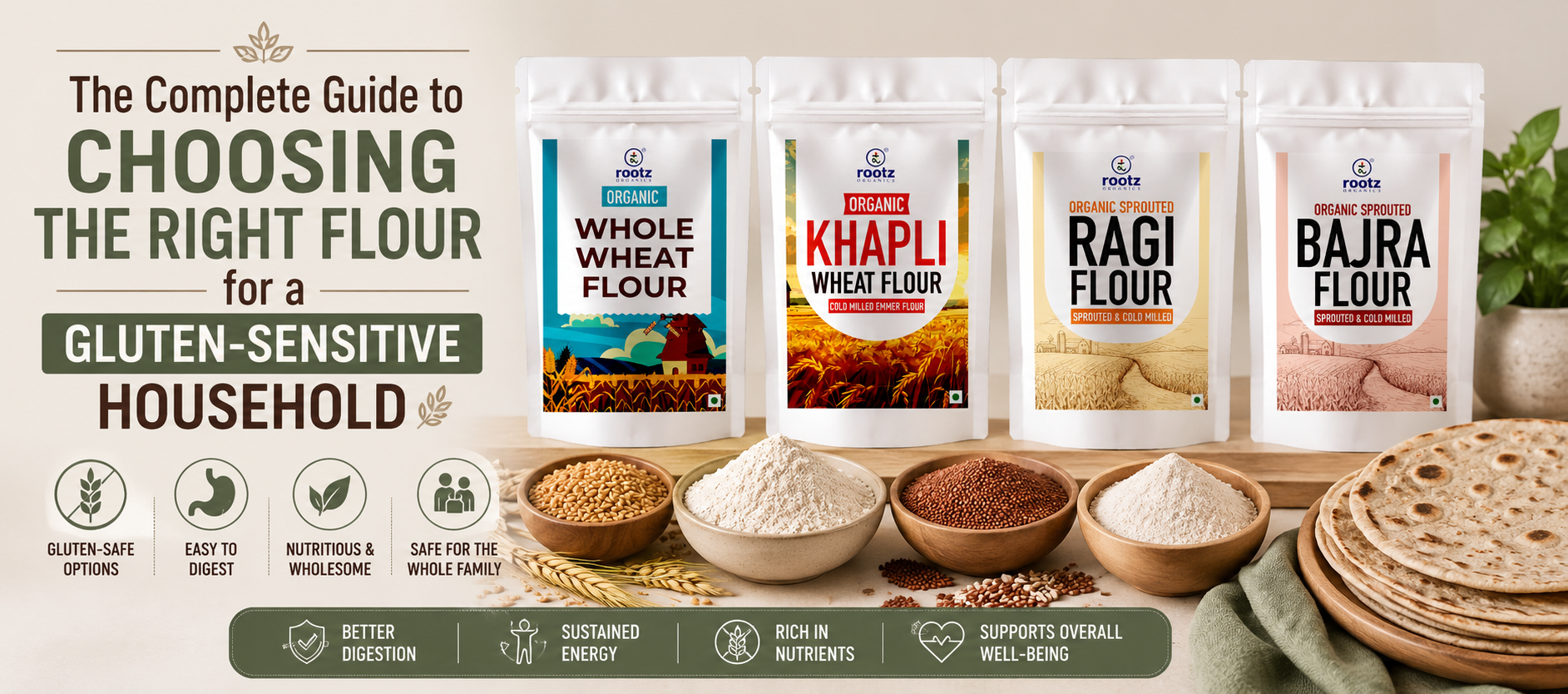
"The Complete Guide to Choosing the Right Flour for a Gluten-Sensitive Household"
A gluten-sensitive household does not run on a single flour. It runs on a rotation — one grain for rotis, another for baking, a third for thickening curries — chosen with an understanding of texture, nutrition, and cross-contamination risk. In Indian kitchens, where wheat atta has historically been the default staple, switching to gluten-free cooking means relearning how flour behaves, not just swapping one packet for another.
This guide walks through the grains, millets, legumes, and nuts that make up India's gluten-free flour landscape, how to use each one in daily cooking, and how to build a kitchen system that keeps a sensitive family member safe without turning every meal into a project.
What "Gluten-Sensitive" Actually Means in the Kitchen
Gluten sensitivity covers a spectrum, from diagnosed coeliac disease to non-coeliac gluten sensitivity and wheat allergy, and each condition carries a different tolerance threshold. For a coeliac household, even trace cross-contamination from a shared chakki (flour mill) or a shared rolling board can trigger a reaction. For non-coeliac sensitivity, the concern is usually digestive comfort rather than an autoimmune response.
Because tolerance varies so widely between individuals, the safest approach for any gluten-sensitive household is to treat every flour as if trace contamination matters — sourcing from mills and brands that process gluten-free grains separately from wheat.
An Overview of Gluten-Free Flour Categories Used in India
Understanding the different types of gluten free flour available in Indian kitchens makes it easier to plan meals around texture and nutrition rather than around a single wheat-flour substitute. Broadly, gluten-free flours fall into three families: millet flours (ragi, jowar, bajra, foxtail), legume and pulse flours (besan, moong, urad), and nut or root flours (almond, tapioca, rice, water chestnut/singhara).
Each family behaves differently under heat and moisture. Millet flours make good rotis and bhakris when combined with a binding agent; legume flours work best in savoury pancakes and fritters; nut and root flours are typically blended into baked goods where structure, rather than chew, is the goal.
Millet-Based Flours: The Everyday Workhorses
Millets have fed Indian households for centuries, long before "gluten-free" became a shelf label, and they remain the most practical daily substitute for wheat atta.
- Ragi (finger millet) flour — high in calcium and iron, commonly used for porridge, dosa batter, and rotis. Organic ragi flour that is stone-ground at low temperature retains more of these minerals than heat-milled versions.
- Jowar (sorghum) flour — lighter in texture, naturally gluten-free, and a good base for bhakri once mixed with hot water to help the dough bind. Organic jowar flour made from sprouted grain is easier to digest, since sprouting reduces phytic acid and improves mineral absorption.
- Bajra (pearl millet) flour — dense and warming, traditionally eaten in winter months for its higher fat content.
- Foxtail, kodo, and little millet flours — milder in flavour, often used in idli and dosa batters as a rice substitute.
None of these millet flours contain gluten's elastic proteins, so dough made purely from millet tends to crack when rolled. Kneading with hot water, resting the dough, and using a rolling surface dusted lightly with rice flour usually solves this.
Legume and Pulse Flours
Besan (chickpea flour), moong flour, and urad flour are naturally gluten-free and add protein where millet flours fall short. Besan is the base for chilla, pakoras, and dhokla, while moong flour works well in cheela batters for a lighter, protein-forward breakfast. These flours also carry a stronger flavour, so they are usually blended rather than used alone in baked recipes.
Nut and Root-Based Flours
Almond flour, tapioca (sabudana-derived) flour, rice flour, and singhara (water chestnut) flour serve a different purpose — they are used to build structure in baked goods or to thicken gravies, particularly during fasting periods when wheat and most millets are avoided. Almond flour, in particular, is popular for gluten-free cakes and cookies because it holds moisture well.
Choosing the Right Flour for Each Kind of Cooking
Rather than picking one all-purpose gluten-free flour, most Indian households that manage sensitivity well use a small rotation of two to three flours matched to specific dishes.
For Rotis and Flatbreads
Jowar and bajra flour, kneaded fresh with hot water and rolled between parchment or a greased sheet, give the closest texture to a soft wheat roti. Mixing in a small proportion of ragi adds mineral density without significantly changing the texture.
For Dosas and Idlis
A batter of rice flour, foxtail millet flour, and urad dal, fermented overnight, produces a naturally gluten-free dosa with the same tang and crispness as the traditional version.
For Baking
A blend of almond flour, rice flour, and a small quantity of tapioca starch generally performs better in cakes and cookies than any single gluten-free flour used alone, since each contributes a different property — almond for moisture, rice for structure, tapioca for binding.
For Thickening Curries and Gravies
Besan and rice flour are common thickeners in Indian cooking that are already gluten-free by default, making them a safe substitute for maida-based roux in mixed households.
Reading Labels and Avoiding Cross-Contamination
A flour can be botanically gluten-free and still be unsafe for a coeliac household if it is milled on shared equipment. This is one of the more overlooked risks when transitioning to a gluten-free kitchen.
- Check whether the brand mills gluten-free grains on dedicated equipment, not shared wheat chakkis.
- Look for third-party organic or gluten-free certification rather than relying on packaging language alone.
- In shared kitchens, store gluten-free flours in separate, clearly labelled containers, and use a dedicated rolling board, rolling pin, and sieve.
- Watch for wheat starch listed as a stabiliser in packaged snacks, sauces, and asafoetida (hing), which traditionally contains wheat flour as a carrier — pure hing or gluten-free hing should be used instead.
Rootz Organics' range of gluten free flours is processed and packaged separately from wheat products, which matters for households managing coeliac disease rather than simple dietary preference.
A Practical Transition Plan for a Gluten-Sensitive Household
Switching an entire household's flour habits at once tends to fail. Sudden changes usually mean every meal tastes unfamiliar at the same time, which makes the whole family, not just the gluten-sensitive member, resistant to sticking with it. A staged transition, spread across a few weeks, is easier to sustain and gives everyone time to adjust to new textures one dish at a time.
- Week 1: Replace only the daily roti flour with a jowar-ragi blend, keeping every other recipe unchanged.
- Week 2: Swap the breakfast batter (dosa or idli) for a millet-and-rice-flour version.
- Week 3: Audit the pantry for hidden gluten in sauces, snacks, and spice mixes, replacing anything ambiguous.
- Week 4: Introduce a baking flour blend for occasional cakes, cookies, or bread, and finalise separate storage for gluten-free flours.
Sourcing consistently from a single trusted supplier for staples such as organic millets online and organic rice online also reduces the risk of accidentally introducing a differently-processed batch into the rotation.
Storage and Shelf Life of Gluten-Free Flours
Gluten-free flours, particularly millet and nut-based ones, have a shorter shelf life than refined wheat flour because they retain more natural oils and bran. Store them in airtight containers away from direct sunlight, and refrigerate almond flour and sprouted flours during humid months to prevent rancidity. Buying smaller quantities more frequently, rather than stocking a large batch, keeps the flour fresher and reduces the chance of a musty smell developing before it is used.
During India's monsoon months, humidity accelerates spoilage in stone-ground and sprouted flours more than in commercially refined ones, since they retain more of the grain's natural moisture-absorbing bran layer. A layer of silica gel sachets or a few dried curry leaves placed inside the storage container is a traditional trick that helps control moisture without introducing any chemical preservative into a household that is already trying to eat clean.
Comparing Common Gluten-Free Flours at a Glance
The table below summarises how the main types of gluten free flour differ in texture, primary nutrient strength, and best use case, which is often the fastest way to decide what to stock first.
- Ragi flour — earthy flavour, high calcium and iron, best for porridge and rotis.
- Jowar flour — light texture, high fibre, best for bhakri and rotis.
- Bajra flour — dense and warming, higher fat content, best for winter rotis.
- Besan (chickpea flour) — nutty flavour, high protein, best for chilla and thickening.
- Almond flour — mild and moist, high healthy fats, best for baking.
- Rice flour — neutral flavour, easy digestion, best for dosa batter and thickening.
Why Sourcing Matters as Much as the Flour Itself
Two packets labelled "ragi flour" can differ significantly in how safe and nutritious they actually are, depending on how the grain was grown, milled, and stored before it reached the shelf. Conventionally grown grains can carry pesticide residue, and flour milled in a facility that also processes wheat carries a genuine cross-contamination risk regardless of what the label claims.
This is why an increasing number of gluten-sensitive households in India are moving their entire pantry, not just the flour aisle, toward certified sources. Rootz Organics' broader catalogue of organic food products online — spanning pulses, oils, and pantry staples alongside flours — makes it easier to keep an entire kitchen chemical-free and traceable back to the farm, rather than managing gluten safety in isolation while the rest of the pantry remains unverified.
From an expert standpoint, the households that manage gluten sensitivity most successfully over the long term are the ones that standardise their sourcing early. Once a family settles on one or two trusted brands for staple grains and flours, the guesswork around cross-contamination and ingredient sourcing largely disappears, and meal planning becomes routine rather than a recurring research task.
Quick Answer
The safest flours for a gluten-sensitive Indian household are millet flours (ragi, jowar, bajra, foxtail), legume flours (besan, moong), and nut or root flours (almond, rice, tapioca), sourced from mills that process them separately from wheat. Most households rotate two to three of these based on the dish being prepared, rather than relying on a single all-purpose substitute.
Frequently Asked Questions
Which flour is closest to wheat atta for making soft rotis?
A blend of jowar and ragi flour, kneaded with hot water and rested for ten minutes before rolling, comes closest to the softness and pliability of a wheat roti. Rolling between two sheets of parchment paper reduces the tearing that millet dough is prone to.
Is besan (chickpea flour) always gluten-free?
Pure besan made from 100% chickpeas is naturally gluten-free. However, packaged besan blends can sometimes include wheat-based fillers, so checking the ingredient list or choosing a certified single-ingredient besan is important for a coeliac household.
Can millet flours be used for baking cakes and cookies?
Millet flours can be used in baking but generally work best combined with almond flour, rice flour, or tapioca starch rather than alone, since they lack the elasticity needed for a light, airy crumb. A mixed blend gives more consistent results.
How should gluten-free flours be stored to prevent spoilage?
Gluten-free flours should be kept in airtight containers away from heat and sunlight, and nut-based or sprouted flours are best refrigerated during humid months. Buying smaller quantities more often helps maintain freshness, since these flours have a shorter shelf life than refined wheat flour.
What should a household check before buying a gluten-free flour brand?
Look for flours that are milled on dedicated, non-wheat equipment, carry organic or gluten-free certification, and list a single grain or legume as the only ingredient. This reduces the risk of trace cross-contamination for coeliac or highly sensitive individuals.
In summary: Building a gluten-sensitive kitchen in India works best with a small, deliberate rotation of millet, legume, and nut-based flours matched to specific dishes, sourced from mills that keep gluten-free grains separate from wheat. Ragi and jowar cover daily rotis, besan and rice flour handle batters and thickening, and almond or tapioca flour fill in for baking — together forming a complete, sustainable substitute for wheat atta.
-
Why More Doctors Are Recommending Traditional Indian Foods Again
July 24th, 2026 -
Why Are So Many Healthy-Looking Foods Actually Ultra-Processed
July 24th, 2026 -
Healthy School Tiffin Ideas Using Millets and Sprouted Flours
July 22nd, 2026