What Makes Chanderi Fabric So Special? A Complete Guide for Indian Women
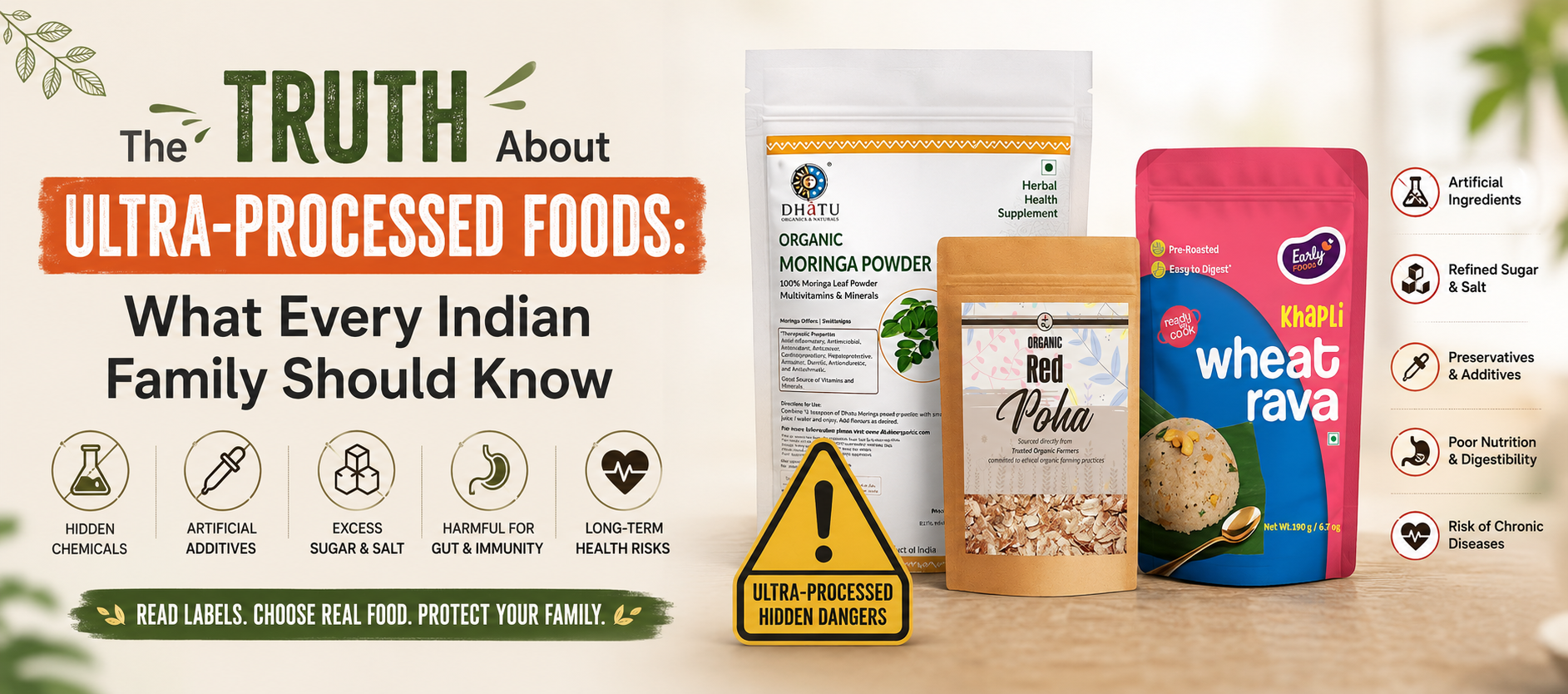
Quick Answer: Ultra-processed foods are industrially manufactured products made mostly from refined ingredients, additives, and flavour systems rather than whole foods. In India, these include packaged biscuits, namkeens, instant noodles, sugary drinks, and ready-to-eat meals. Regular consumption is linked to overeating, weight gain, and higher risk of lifestyle diseases, though not every packaged food carries equal risk.
Walk through any Indian kitchen today and you'll likely find a very different pantry than the one your grandparents had. Alongside dal, atta, and rice sits a growing shelf of packaged biscuits, instant noodles, flavoured chips, and ready-to-eat curries. These products are convenient, affordable, and heavily marketed — but many of them belong to a category nutrition scientists call ultra-processed foods, and understanding what that actually means can change how your family eats.
This isn't about fear-mongering or telling you to throw out every packet in your kitchen. It's about understanding the science clearly enough to make informed choices for your household, especially as India's rates of diabetes, obesity, and heart disease continue to climb alongside rising consumption of packaged food.
What Does "Ultra-Processed" Actually Mean?
The term comes from a food classification system called NOVA, developed by researchers to group foods based on how they're made rather than just their nutrient content. NOVA sorts foods into four groups: unprocessed or minimally processed foods like fresh vegetables and grains, processed culinary ingredients like ghee and salt, processed foods like canned vegetables or fresh bread, and finally, ultra processed foods — industrial formulations built from refined ingredients and additives rarely found in a home kitchen, such as protein isolates, modified starches, emulsifiers, and artificial flavour systems.
What separates this fourth group from ordinary processed food isn't just the number of steps involved, but the presence of substances designed purely to extend shelf life, mimic flavour, or improve texture, rather than to nourish.
Where These Foods Show Up in Everyday Indian Diets
India-specific research using validated screening tools has found that the largest contributors to ultra-processed intake among Indian adults are packaged and branded biscuits, breads, sauces and ketchups, chocolates, toffees, and savoury namkeens. Add to that the growing popularity of pizzas, burgers, French fries, and momos as regular takeout choices, and it becomes clear that ultra-processed eating isn't a niche urban trend anymore — it has quietly become part of the everyday Indian diet, across both metro cities and smaller towns.
Why Your Body Responds Differently to These Foods
One of the most consistent findings in recent nutrition research involves appetite regulation. A widely cited study published in Nature Medicine found that people eating diets high in ultra-processed foods consumed roughly 500 more calories per day than those eating whole-food diets, even when both diets were matched for calories, sugar, fat, and salt on paper. Researchers believe this happens because heavily processed foods are engineered to be hyper-palatable and easy to overeat quickly, which interferes with the hormones — ghrelin and leptin — that normally signal fullness to the brain.
Beyond appetite, longer-term studies have linked high intake of these foods to elevated risk of obesity, type 2 diabetes, cardiovascular disease, and metabolic syndrome. For Indian families already navigating a rising national burden of lifestyle diseases, this connection is particularly relevant.
Not Every Packaged Food Deserves the Same Concern
It's worth pausing here, because oversimplifying this topic can be misleading. Recent scientific reviews examining the NOVA system point out that ultra-processed foods aren't a uniform category — some, like sugar-sweetened beverages and processed meats, show the strongest and most consistent links to poor health outcomes, while others, such as fortified whole-grain cereals or certain packaged dairy products, show neutral or even beneficial associations in research.
This nuance matters for practical decision-making. Rather than treating every packet on the shelf as equally harmful, it's more useful to ask a simple question for each product: is this closer to a whole food with minimal intervention, or is it an industrial formulation built around additives and refined fillers? That single habit does more for your family's health than trying to eliminate packaged food entirely.
How to Rebuild an Indian Pantry Around Whole Foods
The good news is that reducing reliance on heavily processed products doesn't require giving up convenience — it mostly means shifting which convenient products you choose. Start with your grain staples, since these form the base of most Indian meals. Choosing organic rice online instead of heavily milled, additive-treated commercial rice keeps more of the grain's natural fibre and nutrients intact.
For everyday flours and grains, Unpolished millets offer a naturally minimally processed alternative to refined wheat products, with a lower glycemic impact and none of the emulsifiers or preservatives found in packaged multigrain snacks. If you want to build a full millet-based pantry, sourcing from a dedicated organic millets online range makes it far easier to find grains, flours, and ready-to-cook options that skip industrial additives altogether.
Cooking oil is another everyday staple worth revisiting, since refined oils used in most packaged snacks undergo heavy industrial processing. Switching to cold pressed oils, extracted mechanically without chemical solvents or high heat, preserves natural nutrients that refined oils typically lose.
For broader pantry restocking — pulses, spices, snacks, and bakery items — sourcing from certified organic food products online generally means shorter, more recognisable ingredient lists than mass-market alternatives, since small-batch organic producers rarely rely on industrial stabilisers or flavour systems. And for households that prefer the convenience of ordering everyday groceries digitally, choosing to shop organic food online lets you compare ingredient panels and certifications before adding items to your cart, something that's far easier than reading tiny print in a crowded supermarket aisle.
A Practical Framework for Grocery Decisions
Rather than memorising long ingredient lists, try applying this simple filter every time you shop:
- Does the ingredient list contain items you wouldn't normally find in a home kitchen, such as emulsifiers, protein isolates, or artificial flavour systems?
- Is the first ingredient a whole food, or a refined filler like maida, modified starch, or corn syrup?
- Could you recreate a version of this product at home with recognisable ingredients?
- Is this product occasional (festive sweets, packaged treats) or a daily staple (atta, rice, oil, dal)? Prioritise minimally processed versions of daily staples first.
This approach doesn't demand perfection. It simply shifts the default choice for your family's most frequently eaten foods away from industrial formulations and back toward whole, recognisable ingredients — which is where the biggest long-term health impact actually lies.
Frequently Asked Questions
What exactly are ultra-processed foods?
They are industrially manufactured food products made primarily from refined ingredients and additives such as emulsifiers, preservatives, and artificial flavours, rather than whole or minimally processed ingredients. Examples include instant noodles, packaged biscuits, sugary drinks, and ready-to-eat meals.
Are all packaged foods considered ultra-processed?
No. Packaging alone doesn't determine the category. A food is generally classified as ultra-processed based on its ingredient composition and the presence of industrial additives, not simply because it comes in a packet. Some packaged foods, like plain frozen vegetables or minimally treated dairy, fall into less concerning categories.
Why are these foods linked to weight gain?
Research suggests these foods are often engineered to be highly palatable and quick to eat, which can disrupt the hormones that regulate hunger and fullness. Studies have found people consuming these diets tend to eat significantly more calories without realising it.
Which Indian foods are the biggest contributors to ultra-processed intake?
Indian dietary research points to packaged biscuits, breads, sauces, ketchups, namkeens, chocolates, and increasingly, ready-to-eat items like pizzas, burgers, and instant noodles as the largest contributors among Indian adults.
What's the easiest first step to reduce ultra-processed food at home?
Start with daily staples rather than occasional treats. Switching your everyday atta, rice, oil, and snacks to minimally processed or organic alternatives has a far bigger cumulative impact than eliminating festive sweets or occasional takeout.
-
 August 25th, 2026
 -

The Science Behind Soaking, Sprouting, Fermenting and Grinding
August 24th, 2026 -
 August 24th, 2026
 -
 August 20th, 2026