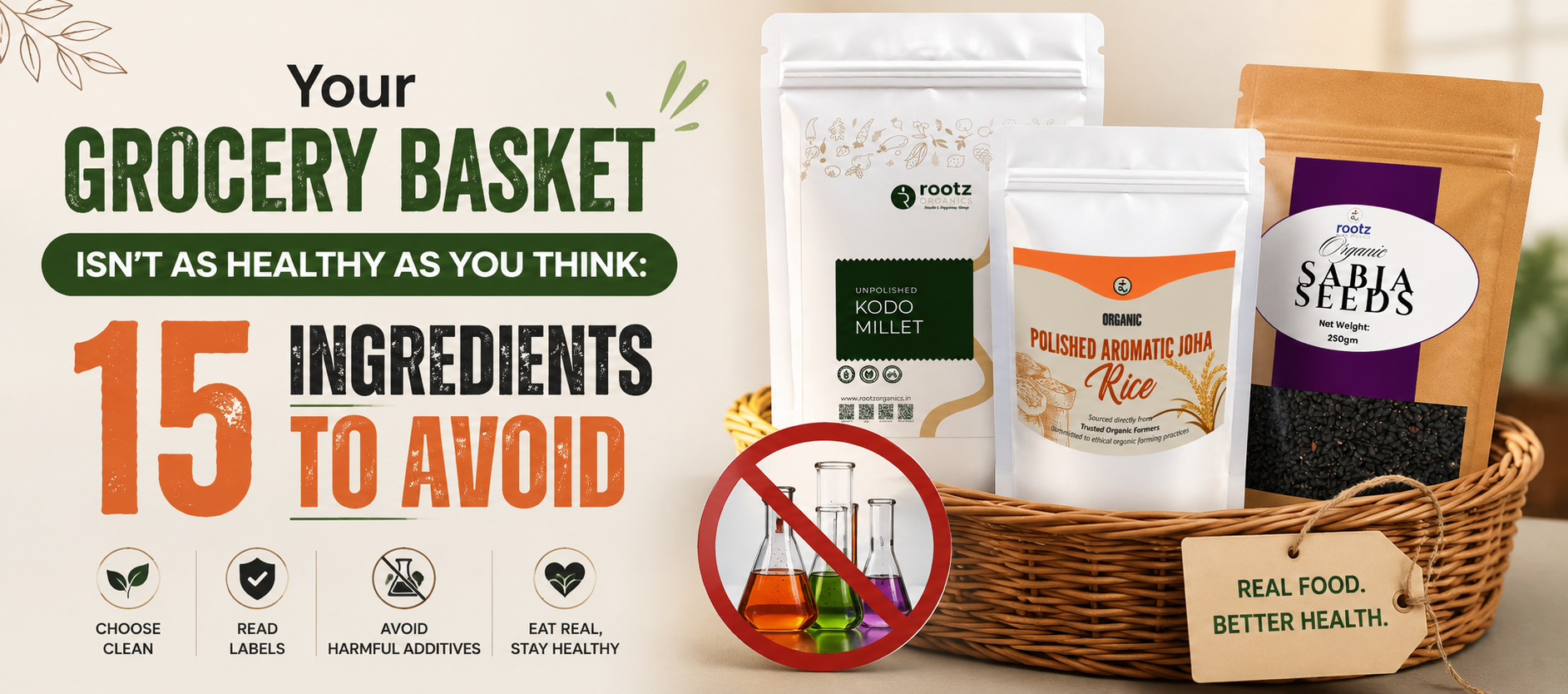
Your Grocery Basket Isn't as Healthy as You Think: 15 Ingredients to Avoid
Quick Answer: Many everyday Indian groceries — biscuits, sauces, namkeens, packaged flours, and even "fresh" fruit — contain hidden trans fats, artificial colours, MSG, chemical preservatives, and refined fillers. The safest habit is to always flip the pack over and read the ingredient panel before the front label, since front-of-pack words like "natural" or "healthy" are marketing claims, not regulatory guarantees.
Most Indian households shop with the same mental checklist every week: dal, atta, oil, a few snacks for the kids, maybe a sauce or two. What rarely makes it onto that checklist is a second look at the ingredient panel. Yet that small block of text on the back of the pack often tells a very different story from the bright, reassuring words printed on the front.
Over the last decade, packaged and processed foods have become a bigger part of Indian diets than ever before, and with that shift has come a quiet rise in additives, preservatives, and refined ingredients that most families never intended to bring home. This guide breaks down the most common food ingredients to avoid, explains why each one matters for your health, and shows you exactly what to look for the next time you're standing in the grocery aisle.
Why the Front of the Pack Can't Be Trusted Alone
In India, food packaging is regulated by the Food Safety and Standards Authority of India (FSSAI), which permits a defined list of additives within specific safety limits. That's different from adulteration, which is illegal outright. The problem for shoppers isn't that additives exist — it's that front-of-pack claims like "wholesome," "natural," or "no added preservatives" aren't tightly standardised, so two products can carry similar claims while having very different ingredient lists underneath. The only reliable way to judge a product is to read what's actually printed on the back, starting with the first three ingredients, since these make up the bulk of what you're eating.
15 Hidden Additives Commonly Found in Indian Groceries
Here is a practical, India-specific list of ingredients worth watching for, along with where they typically hide and why they deserve caution.
1. Hydrogenated Vegetable Oil (Vanaspati / Trans Fats)
Found in bakery biscuits, samosas, namkeens, and margarine-style spreads, hydrogenated oil is chemically altered to stay solid at room temperature and extend shelf life. It raises LDL cholesterol while lowering HDL, which is why cardiologists consistently flag it as one of the most harmful additives in the Indian diet.
2. RBD Palm Oil
Cheap and shelf-stable, refined palm oil appears in almost every mass-market chip, biscuit, and instant noodle brand. It's high in saturated fat, and frequent consumption is linked to elevated cholesterol and inflammation over time.
3. Hidden and Added Sugars
Sugar rarely shows up under just one name. Labels often list sucrose, glucose syrup, maltodextrin, and fructose separately so that no single one appears at the top of the ingredient list, even though combined they may outweigh everything else in the pack.
4. Monosodium Glutamate (MSG / INS 621)
Common in instant noodles, ready-to-eat curries, and packaged snacks, MSG is used purely as a flavour enhancer. While FSSAI permits it within limits, some people report headaches and sensitivity reactions after regular consumption.
5. Artificial Colours (Tartrazine, Sunset Yellow, and Banned Sudan Dyes)
Bright orange namkeens, coloured sauces, and festive sweets often rely on synthetic dyes rather than natural pigments. Certain illegal dyes, including Sudan-type colours, have periodically been found in chilli powder and ready-to-eat snacks despite being banned, making colour additives one of the more concerning categories on this list.
6. Chemical Preservatives (Sodium Benzoate, Sodium Nitrite)
Used in sauces, squashes, and packaged meats to prevent spoilage, these preservatives are permitted in small doses but are best minimised, particularly for children, since long-term intake has been associated with mild inflammatory effects in some studies.
7. Refined Wheat Flour (Maida) as a Filler
Bread, buns, and most bakery snacks use maida as their primary base. Stripped of bran and germ during processing, it has minimal fibre and causes faster blood sugar spikes compared to whole or stone-ground flours.
8. Artificial Sweeteners (Aspartame, Saccharin, Acesulfame-K)
Marketed as "sugar-free" alternatives in diet drinks and low-calorie snacks, these synthetic sweeteners are still under long-term study, and several health bodies recommend moderation rather than daily reliance on them.
9. Emulsifiers and Stabilisers (Polysorbate 80, Carboxymethyl Cellulose)
These additives keep sauces, ice creams, and spreads smooth and prevent separation. Emerging research suggests some emulsifiers may disrupt gut bacteria balance when consumed frequently.
10. Excess Hidden Sodium
Sauces, papads, pickles, and packaged namkeens often carry far more sodium than expected. A single serving of instant noodles or a ready-made curry can contain a significant share of the recommended daily sodium limit, raising long-term blood pressure risk.
11. Synthetic Flavour Enhancers
Terms like "nature-identical flavour" or simply "flavouring agents" usually indicate lab-synthesised compounds designed to mimic real ingredients like fruit or cheese, without the nutritional value of the original.
12. Modified Starch as a Bulking Agent
Often listed as an INS code, modified starch is added to thicken sauces, soups, and gravies cheaply. It offers bulk without meaningful nutrition and is common in low-cost packaged gravies.
13. BHA and BHT (Antioxidant Preservatives)
Used to stop oils and fats in packaged snacks from turning rancid, BHA and BHT are permitted additives, but several international health agencies classify them as ingredients best consumed in limited quantities.
14. Over-Polished, Nutrient-Stripped Grains
Heavily polished rice and refined grains look more appealing on the shelf but lose much of their natural fibre, B-vitamins, and minerals in the polishing process. This is one of the reasons more households are shifting toward less-processed staples in their everyday cooking.
15. Artificial Ripening Agents (Calcium Carbide)
Even fresh produce isn't automatically safe. Calcium carbide is illegally used to artificially ripen fruits like mangoes and bananas, releasing acetylene gas that can irritate the mouth and throat and is banned under Indian food safety law.
Practical Ways to Build a Cleaner Grocery Basket
Avoiding every processed ingredient overnight isn't realistic for most households, but small, consistent swaps make a real difference over months. Start with your kitchen staples first, since they're consumed daily in larger quantities than occasional snacks.
Replace refined cooking oils with cold pressed oils, which retain natural nutrients because they're extracted without heat or chemical solvents. Similarly, moving from heavily polished rice to organic rice online options preserves more of the grain's natural fibre and micronutrients.
For grains beyond rice, Unpolished Millets are a strong substitute for refined flours and polished staples, offering more fibre and a lower glycemic impact without the additives found in packaged multigrain products. If you're building out a broader millet-based pantry, shopping for organic millets online makes it easier to source flours, grains, and ready-to-cook options from a single, chemical-free source.
When it comes to snacks, sauces, and pantry essentials as a whole, sourcing organic food products online from certified, small-batch producers generally means shorter, more recognisable ingredient lists compared to mass-market alternatives. This single habit — buying certified organic staples instead of conventional packaged versions — is one of the most effective ways to reduce your family's exposure to the additives listed above.
Finally, for everyday groceries where convenience matters, choosing to shop organic food online lets you compare ingredient lists and certifications before adding items to your cart, something that's much harder to do while standing in a crowded supermarket aisle.
A Quick Label-Reading Checklist for Indian Shoppers
- Flip the pack first — read the back label before trusting front-of-pack claims.
- Check if sugar appears under two or three different names in one list.
- Look for "hydrogenated" or "vanaspati" anywhere in the ingredients.
- Note whether the first ingredient is a whole food or a refined filler like maida or starch.
- Prefer products with FSSAI's organic logo or NPOP/PGS-India certification for staples like rice, flour, and oil.
Reading labels this way doesn't require nutrition training — it simply means treating the ingredient panel, not the packaging design, as the real source of information about what you're bringing home.
Frequently Asked Questions
What are the most common food ingredients to avoid in Indian packaged foods?
The most common ones include hydrogenated oils, palm oil, added sugars under multiple names, MSG, artificial colours, and chemical preservatives such as sodium benzoate. These frequently appear in biscuits, namkeens, sauces, and instant meals.
How can I tell if a product contains trans fats in India?
Check the ingredient list for "hydrogenated vegetable oil" or "vanaspati," and look at the nutrition panel for trans fat content, which FSSAI requires brands to disclose separately from total fat.
Are all food additives in India unsafe?
No. Additives permitted by FSSAI are regulated within defined safety limits and aren't automatically harmful in small amounts. The concern is usually cumulative exposure from eating multiple processed foods regularly, not any single additive in isolation.
Is calcium carbide-ripened fruit dangerous?
Yes, calcium carbide is banned for fruit ripening in India because it releases acetylene gas, which can irritate the mouth, throat, and eyes. Naturally or ethylene-ripened fruit is the safer alternative.
What's the easiest first step to reduce harmful ingredients at home?
Start with your most frequently used staples — cooking oil, flour, and rice — since they're consumed daily. Switching these to certified organic or minimally processed versions has a bigger long-term impact than eliminating occasional snacks.
-
 August 25th, 2026
 -

The Science Behind Soaking, Sprouting, Fermenting and Grinding
August 24th, 2026 -
 August 24th, 2026
 -
 August 20th, 2026