
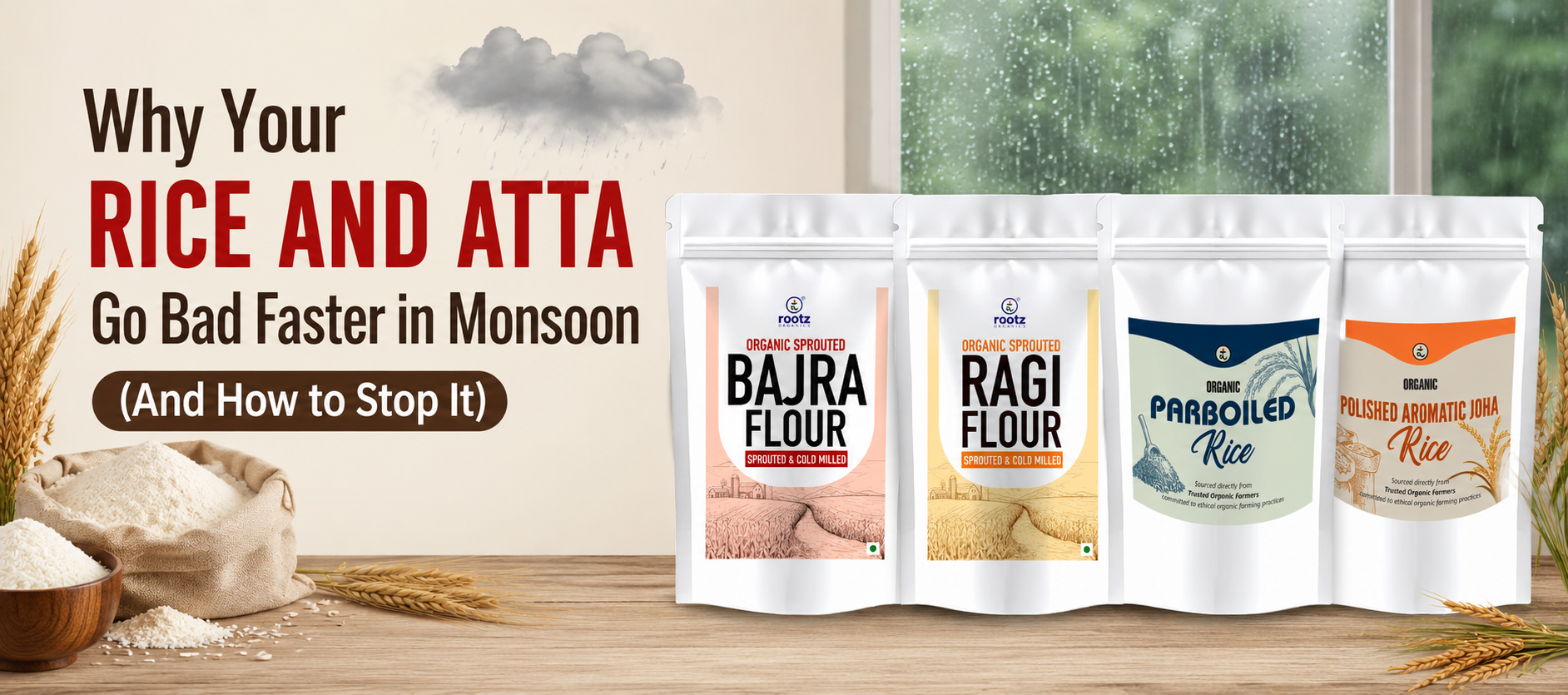
Why Your Rice and Atta Go Bad Faster in Monsoon (And How to Stop It)
Every year, as the first monsoon clouds gather over Indian cities, kitchens quietly start losing their most basic staples. Rice turns clumpy, atta smells faintly sour, and small black weevils appear in containers that were sealed just weeks ago. This isn't bad luck — it's chemistry. Understanding how to store flour and rice correctly during the humid months can mean the difference between a pantry that lasts and one that's thrown out by August. This guide breaks down exactly why monsoon accelerates spoilage, how each staple behaves differently once humidity rises, and what actually works to stop it — from container choice to timing your grocery runs.
Why does rice and atta spoil faster in monsoon? Rising indoor humidity above roughly 65% causes rice and flour to reabsorb moisture from the air, which softens starches, activates dormant pest eggs left over from milling, and creates the warm, damp environment mould needs to take hold. This is a seasonal, predictable process rather than a sign of poor-quality grain.
What Causes Rice and Atta to Spoil Faster in Monsoon?
Monsoon spoilage happens because airborne moisture raises the water content inside grain and flour, activating dormant insect eggs and encouraging mould growth. Relative humidity above 65%, common across most of India from June to September, is the tipping point at which stored grains begin to degrade within days rather than months.
The Role of Humidity and Temperature
Flour and rice are hygroscopic, meaning they absorb moisture directly from the surrounding air. During monsoon, indoor humidity in coastal and northern Indian homes routinely climbs past 70%, well above the 60% threshold at which starches begin to reabsorb water. Combined with the warm temperatures typical of an Indian monsoon (28–33°C), this creates near-ideal breeding conditions for pantry pests like rice weevils (Sitophilus oryzae) and flour beetles.
Weevil Eggs Are Already Present Before Monsoon Begins
Most people assume weevils "appear" during monsoon, but entomological studies on stored grain show otherwise: weevil eggs are frequently laid in the field or during milling and remain dormant in dry conditions. Monsoon humidity simply provides the moisture needed for these eggs to hatch, which is why infestations often seem to erupt overnight in July and August.
This is also why simply buying a "fresh" pack of atta or rice at the start of monsoon doesn't guarantee immunity from pests. The eggs travel with the grain from the field or mill, sitting dormant regardless of packaging date, and only become active once the surrounding humidity and temperature cross their hatching threshold. The real variable a household can control isn't the age of the stock — it's how well the storage environment resists moisture once the grain reaches the kitchen.
How Mould Differs From Pest Infestation
It's worth separating two distinct problems that both worsen in monsoon: pest infestation and mould growth. Weevils and beetles are living organisms that need oxygen and a food source, while mould is a fungal growth that thrives specifically on excess surface moisture, often appearing as fine grey-green patches on the inside walls of a flour container. Mould-affected flour should always be discarded entirely, since some mould strains produce mycotoxins that survive cooking temperatures, whereas a light pest presence in rice can sometimes be managed by sieving and re-drying if caught early enough.
Signs Your Rice or Atta Has Already Gone Bad
The earliest signs of spoiled flour or rice are a musty or slightly sour smell, visible clumping, and fine webbing near the container's rim. Catching these signs early prevents the spoilage from spreading to fresh stock stored nearby.
- Smell: A sour, musty, or "damp cardboard" odour is one of the first indicators of mould activity in atta.
- Texture: Rice that clumps together or feels slightly sticky has absorbed excess moisture.
- Visible pests: Small reddish-brown weevils, larvae, or fine silky webbing point to an active infestation.
- Colour change: Greyish or greenish specks in flour usually indicate early mould growth, not just dust.
- Taste: A bitter aftertaste in cooked rice or rotis is a late-stage sign that the batch should be discarded.
The Best Way to Store Flour During Monsoon
The best way to store flour in monsoon is in an airtight, food-grade container kept in a cool, dry, dark spot — away from the stove, sink, or any exterior wall that carries dampness. Refrigeration extends shelf life further for small batches, particularly for low-gluten and millet flours that spoil faster than refined wheat flour.
Step-by-Step: Monsoon-Proofing Your Flour Storage
- Dry the container first. Even a few drops of residual moisture inside a jar can trigger clumping within days.
- Add a moisture absorber. A small muslin pouch of dried neem leaves, a few cloves, or a food-safe silica packet placed inside the container helps draw out ambient moisture without affecting taste.
- Fill containers only 80% full. Leaving headspace reduces condensation build-up on the inside of the lid.
- Store away from heat sources. Keep flour at least a metre from the stove or any wall that faces direct rain exposure.
- Buy smaller quantities in monsoon. Purchasing a 15–20 day supply rather than a full month's stock reduces the window in which spoilage can set in.
- Refrigerate perishable flours. Millet-based and low-gluten flours benefit from refrigeration in an airtight box once the monsoon humidity crosses 75%.
Storing Rice the Right Way in Humid Weather
Rice should be stored in a sealed steel or glass container with a rubber-gasket lid, ideally after a quick sun-drying session before the monsoon sets in fully. A layer of dried bay leaves or a few dried red chillies tucked into the container acts as a natural pest deterrent without introducing chemical residue.
Why Sun-Drying Before Monsoon Matters
Spreading rice out in direct sunlight for two to three hours before storage reduces its internal moisture content and helps kill any surface-level pest eggs through heat exposure. This single step, common in many Indian households for generations, remains one of the most effective pre-monsoon precautions.
Traditional Kitchen Wisdom That Still Works
Long before airtight containers existed, Indian households relied on simple, chemical-free tricks passed down through generations to protect grain during the rains. Many of these methods hold up well even by modern food-safety standards.
- Neem leaves: A handful of dried neem leaves layered through a rice or flour container repels weevils naturally, thanks to compounds in neem that insects find repellent.
- Cloves and bay leaves: Both release aromatic oils that deter pantry pests without leaving a strong flavour in the final cooked dish.
- Turmeric-dusted cloth: Some households line the base of grain containers with a cloth lightly dusted in turmeric, which has natural antimicrobial properties.
- Camphor tablets (in small, sealed sachets): Used sparingly and never in direct contact with the grain, this is an old but effective deterrent for larger rice drums.
At Rootz Organics, sourcing decisions are guided by this same principle: grains and flours are milled in smaller batches and packed with minimal processing so households receive fresher stock with a naturally longer shelf life, rather than relying on preservatives to mask spoilage.
Steel vs Plastic vs Glass: Which Container Actually Works Best?
Steel and glass containers with rubber-sealed lids outperform standard plastic bins for monsoon storage because they resist moisture absorption and don't develop micro-scratches that trap humidity over time.
Container Type | Moisture Resistance | Pest Resistance | Best For |
Stainless steel with gasket lid | High | High | Long-term rice and atta storage |
Glass jars with rubber seal | High | Medium-High | Small batches, millet and gluten-free flours |
Food-grade plastic (BPA-free) | Medium | Medium | Short-term, 2–3 week supply |
Cloth or jute sacks | Low | Low | Not recommended during monsoon |
Special Storage Considerations for Gluten-Free and Millet Flours
Millet-based and other gluten free flours spoil faster in monsoon than refined wheat flour because they contain higher natural oil content, which turns rancid more quickly in humid, warm conditions. This makes airtight, refrigerated storage far more important for these flours than for standard atta.
An organic ragi flour, for instance, has a naturally higher moisture-absorption rate than wheat flour and should ideally be consumed within four to six weeks of opening during the monsoon months. Similarly, an organic jowar flour benefits from being stored in smaller batches, since its coarser texture creates more surface area for humidity to act on.
Choosing the Right Flour and Where to Source It
A well-milled, minimally processed organic wheat flour naturally resists spoilage better than mass-processed flour sitting in warehouse storage for months, simply because it reaches the kitchen fresher. Buying in smaller, more frequent quantities during monsoon — rather than one large bulk order — is one of the simplest ways to reduce exposure to humidity-driven spoilage.
Households increasingly prefer shopping for organic flours online during monsoon specifically because smaller, on-demand batches reduce the time flour spends sitting in storage before it's used. Pairing this with a reliable online organic grocery source for other pantry staples helps ensure that everything entering the kitchen is fresh-milled rather than stockpiled.
Where You Keep Your Containers Matters as Much as the Container Itself
Even the best airtight container underperforms if it's placed against an exterior wall, near a window that lets in rain-splash, or directly above a gas stove where steam collects during cooking. Kitchen placement is one of the most overlooked factors in monsoon grain spoilage, largely because it doesn't change from season to season the way shopping habits do.
Practical Placement Adjustments for Monsoon
A few small shifts in where containers sit can meaningfully extend shelf life. Moving flour and rice bins away from any wall shared with the building's exterior reduces exposure to dampness that seeps through masonry during heavy rain. Elevating containers slightly off the floor, even on a simple wooden or plastic stand, also helps in homes where ground-level humidity tends to be higher due to water pooling near doorways or drains.
It also helps to avoid storing grain directly beneath open shelving in a kitchen that lacks exhaust ventilation, since steam from daily cooking rises and settles on nearby surfaces, including container lids. Over weeks, this repeated low-level moisture exposure can be just as damaging as one major humidity spike.
A Quick Monsoon Pantry Checklist
- Sun-dry rice for 2–3 hours before storing, if the weather allows a dry window.
- Use airtight steel or glass containers, filled no more than 80% full.
- Add a neem, clove, or bay leaf sachet as a natural pest deterrent.
- Buy flour and rice in 2–3 week quantities rather than monthly bulk stock.
- Refrigerate millet and low-gluten flours once humidity crosses 75%.
- Check containers weekly for smell, clumping, or visible pests.
In short, monsoon doesn't have to mean wasted grain. Choosing airtight steel or glass containers, buying smaller and fresher batches, and reviving a few traditional tricks like neem and sun-drying together form the most reliable way to keep rice and flour fresh through even the heaviest rainfall months. The households that adapt their storage habits each June, rather than relying on last year's routine, are the ones who reach September with a pantry — and a grocery bill — that stayed intact.
Frequently Asked Questions
Why does atta get weevils only during monsoon?
Weevil eggs are often already present in the flour from milling, but they stay dormant in dry conditions. Monsoon humidity provides the moisture these eggs need to hatch, which is why infestations tend to appear suddenly during the rainy season rather than being introduced fresh.
Can refrigerating flour prevent spoilage in monsoon?
Yes. Refrigeration slows both moisture absorption and pest activity significantly. This is especially useful for millet and low-gluten flours, which have higher oil content and spoil faster than refined wheat flour once humidity levels rise above 70–75%.
Is it safe to eat rice with a slightly musty smell?
A musty smell usually indicates early mould activity, and it's best to discard that batch rather than risk consuming mycotoxins, which aren't destroyed by cooking. Rice with only a very mild change in smell and no visible clumping or pests can sometimes be salvaged by thorough sun-drying, but caution is advised.
Do neem leaves actually work to keep pantry pests away?
Yes, dried neem leaves contain natural compounds that pantry insects find repellent, making them an effective, chemical-free deterrent when layered through rice or flour containers. This traditional method remains widely used across Indian households even today.
How often should I buy flour and rice during monsoon?
Buying a 2–3 week supply rather than a full month's stock is the most practical approach during monsoon. Smaller, more frequent purchases reduce the amount of time grain spends sitting in storage, which directly lowers its exposure to humidity-driven spoilage.
-

Healthy School Tiffin Ideas Using Millets and Sprouted Flours
July 22nd, 2026 -

Why Modern Indian Wheat Isn't the Same as It Was 30 Years Ago
July 16th, 2026 -
 July 16th, 2026