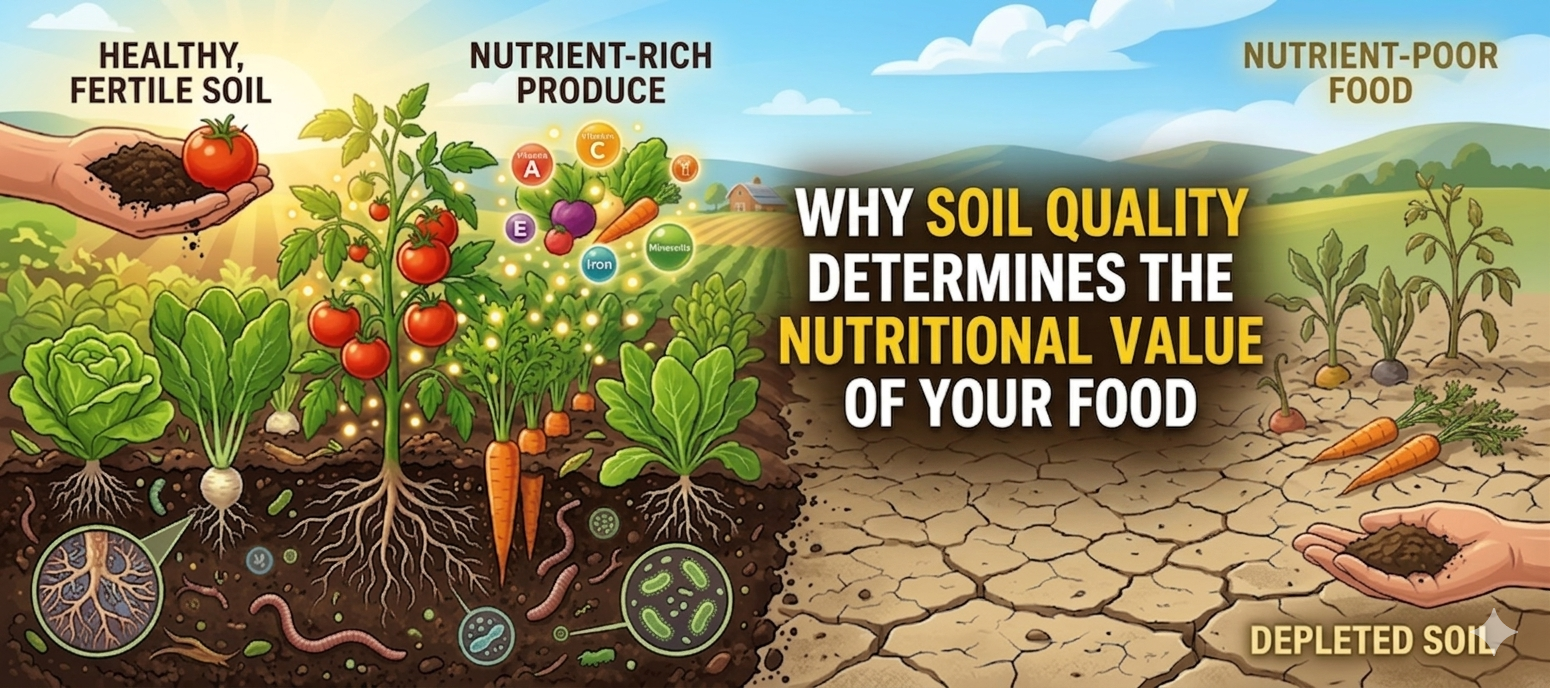
Why Soil Quality Determines the Nutritional Value of Your Food
In the modern quest for wellness, we often scrutinize food labels for calories, proteins, and vitamins. However, the most critical factor influencing the quality of our diet isn't listed on the packaging: the health of the soil in which the food was grown. As India transitions back to traditional agricultural wisdom combined with modern science, understanding the symbiotic relationship between earth and health is paramount.
The Foundation of Human Health: Understanding Soil as a Living Organism
Soil is not merely "dirt" or a medium to hold plants upright; it is a complex, living ecosystem. A single teaspoon of healthy soil contains more microorganisms than there are people on Earth. These microbes—bacteria, fungi, and protozoa—act as the "digestive system" of the planet. They break down organic matter and minerals, converting them into a form that plants can absorb.
When soil health is compromised by heavy chemical usage and monocropping, this biological bridge is broken. Even if a plant looks healthy and green, it may be "hollow" in terms of micronutrients. This is why the Nutritional Value of Your Food is intrinsically tied to the biodiversity beneath our feet. For an India-based consumer, choosing Online Organic Grocery options ensures that the produce comes from farms that prioritize this living soil over chemical shortcuts.
The Declining Mineral Density in Modern Produce
Research over the last several decades has shown a startling trend: the fruits and vegetables we eat today are less nutritious than those our grandparents consumed. Studies indicate significant declines in calcium, iron, potassium, and magnesium across common crops.
The culprit? Soil depletion. Industrial farming focuses on "NPK" (Nitrogen, Phosphorus, Potassium) to maximize yield and size. While NPK makes plants grow fast and large, it often ignores the 70+ other trace minerals required for human metabolic functions. When we consume food grown in mineral-poor soil, our bodies remain hungry for nutrients despite consuming adequate calories.
[Image comparing mineral content in healthy soil vs depleted soil]How Healthy Soil Enhances Phytonutrients and Antioxidants
Beyond basic minerals, soil quality influences the production of secondary metabolites in plants, such as polyphenols and antioxidants. These compounds are the plant’s natural defense mechanisms against pests and diseases. In a vibrant, organic soil environment, plants are "challenged" naturally and develop robust immune systems, which translate into higher antioxidant levels for the consumer.
When you buy Organic Food Products Online, you are essentially investing in food that had to "work" for its nutrients. These plants develop deeper root systems to find minerals, resulting in a more complex flavor profile and superior health benefits.
The Role of Mycorrhizal Fungi in Nutrient Absorption
One of the most fascinating aspects of soil health is Mycorrhizal fungi. These fungi form a symbiotic relationship with plant roots, effectively extending the root surface area by hundreds of times. They can dissolve rock minerals and transport water from deep underground directly to the plant.
Chemical fertilizers and tilling destroy these delicate fungal networks. Without them, plants become "addicted" to external chemical feeds and fail to accumulate the diverse mineral profile necessary for the Nutritional Value of Your Food. This is why regenerative practices, common in the production of Organic Food Online, are vital for long-term human vitality.
From Soil to Soul: Traditional Indian Wisdom and Soil Health
India has a rich history of "Vrikshayurveda" (the science of plant life). Ancient Indian farmers understood that "Dharti Maa" (Mother Earth) needed to be nourished with organic matter like cow dung, neem, and green manure. This traditional approach ensures the soil remains "Pranik" or full of life energy.
Products like Organic A2 Ghee are a testament to this cycle. The cows graze on grass grown in pesticide-free, mineral-rich soil. The nutrients from the soil pass into the grass, then to the A2 milk, and finally into the ghee. If the soil is dead, the ghee loses its therapeutic potential. Similarly, Cold Pressed Oils extracted from seeds grown in healthy soil retain their natural vitamins and Omega fatty acids that would otherwise be absent in chemically-farmed alternatives.
The Impact of Pesticides on Gut Microbiome
Soil health and human gut health are mirrors of each other. The pesticides used to treat poor soil often end up in our food, where they can disrupt our delicate gut flora. Since 70% of the human immune system resides in the gut, eating food grown in healthy, chemical-free soil is a primary pillar of preventive healthcare in India.
How to Identify High-Quality, Soil-Nourished Food
- Traceability: Know where your food comes from. Platforms like Rootz Organics prioritize clean-label products.
- Seasonality: Soil nutrients fluctuate with seasons. Eating seasonal produce ensures you get the peak mineral density.
- Flavor Profile: Nutrient-dense food tastes "brighter" and more intense. A tomato grown in healthy soil has a depth of flavor that a hydroponic or chemically-grown one lacks.
Conclusion: Saving the Soil to Save Ourselves
The crisis of hidden hunger—where the belly is full but the body is malnourished—can only be solved by returning our focus to the earth. By supporting organic farming and choosing mineral-rich staples, we send a signal to the market that soil health matters. Your health is quite literally a reflection of the earth's health.
Frequently Asked Questions (FAQs)
1. Does organic food really have more nutrients than conventional food?
Yes, multiple meta-analyses have shown that organic crops, grown in healthier soil, contain significantly higher levels of antioxidants, Vitamin C, and minerals like iron and zinc compared to conventional crops treated with synthetic fertilizers.
2. How does soil quality affect the taste of my food?
Soil quality creates "terroir." Microorganisms in the soil help plants produce aromatic compounds and sugars. Richer soil leads to a higher Brix (sugar and mineral content) level, which results in better flavor and aroma.
3. Why is Indian soil specifically in danger?
Decades of intensive farming during the Green Revolution led to the over-extraction of micronutrients and the overuse of urea, which has turned some Indian soils acidic and biologically inactive. Moving toward organic and regenerative practices is essential to restore this balance.
4. Can I get all my nutrients from supplements if the soil is poor?
Supplements can help, but they lack the "food matrix"—the complex combination of fiber, enzymes, and phytonutrients found in whole foods. Nutrients are most bioavailable when consumed in the form nature intended, grown in vibrant soil.
5. Is "Cold Pressed" related to soil health?
While cold-pressing is an extraction method, its value is maximized when the source seeds are grown in high-quality soil. Healthy soil ensures the seeds are rich in natural antioxidants, which the cold-pressing process then preserves for your consumption.
-
 August 6th, 2026
 -
 August 6th, 2026