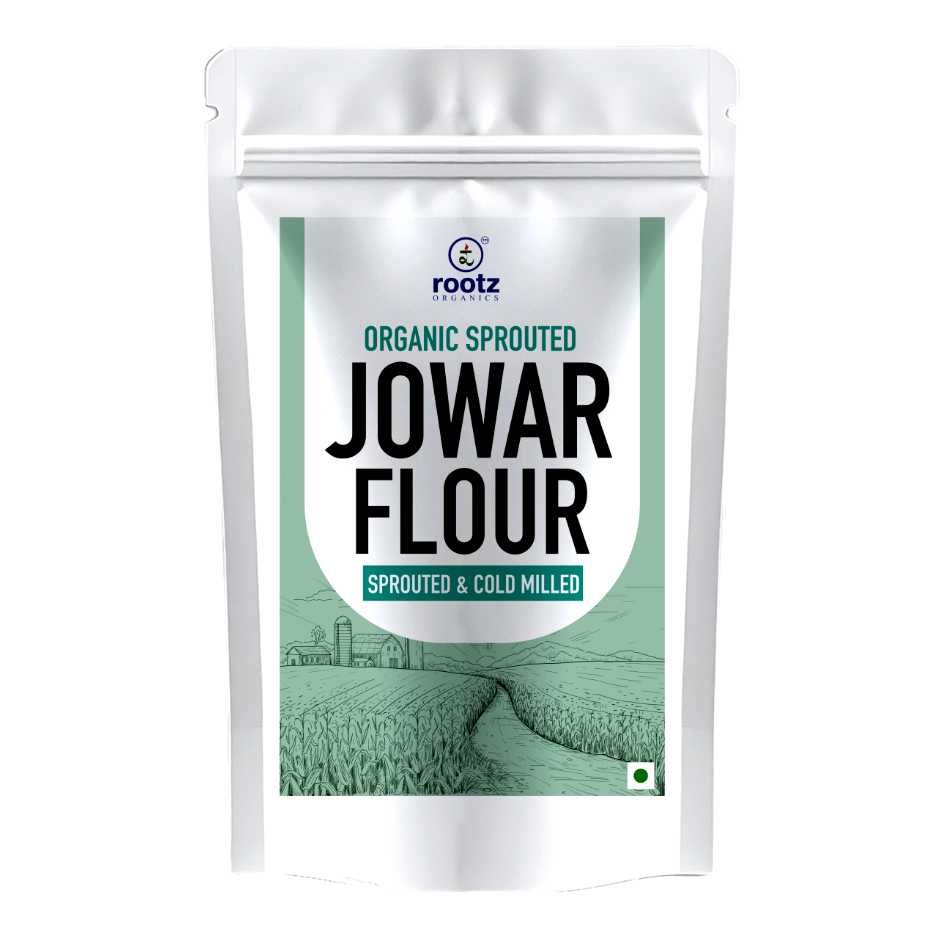

Jowar Flour: The Grain Your Grandmother Swore By Is Back. And Your Gut Is Relieved.
Available in 900g and 1800g at rootzorganics.in
There is a specific kind of tired that no amount of sleep fixes.
You wake up fine. You eat a sensible breakfast. By mid-morning something is off: a low-grade heaviness, a stomach that feels like it has not quite settled, an energy that never fully arrives. You have been doing this long enough to accept it as normal.
It is not normal. And it almost certainly starts with what your flour is doing inside you.
Here is something nobody in the wheat industry will tell you. Research now shows that 6 to 8 percent of Indians have some level of gluten sensitivity without ever being diagnosed with celiac disease. That is tens of millions of people experiencing inflammation, digestive discomfort, and daily fatigue without ever connecting it to the wheat flour they eat at every meal.
You do not have to be celiac to feel the effects of a grain your body was never fully comfortable with.
And here is the part that makes this interesting: the solution is not new. Your grandmother already knew it. She just called it jowar.
The Grain That Fed India Before Wheat Took Over
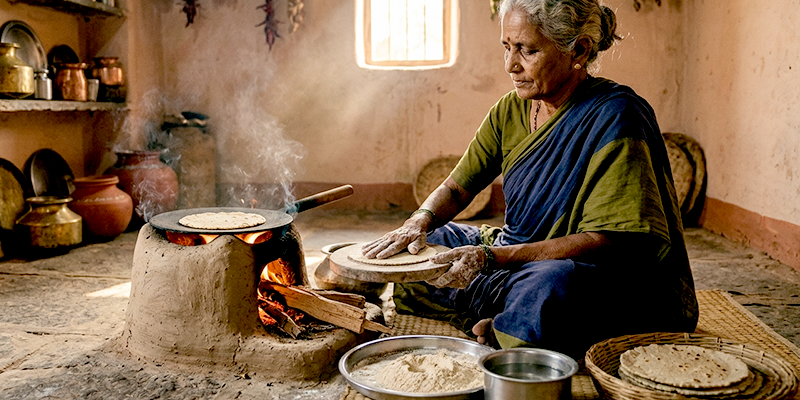
Jowar, known as sorghum, cholam, jonna and great millet, has been grown on Indian soil for over 5,000 years. The earliest records of domesticated sorghum trace back to the Harappan civilisation. For most of Indian history, this was the grain. The bhakri your grandparents ate in Maharashtra. The jolada rotti in Karnataka. The jonna rotte in Andhra. Thick, warm, deeply satisfying rotis made from a grain that grew in poor soil with minimal water and no chemical intervention.
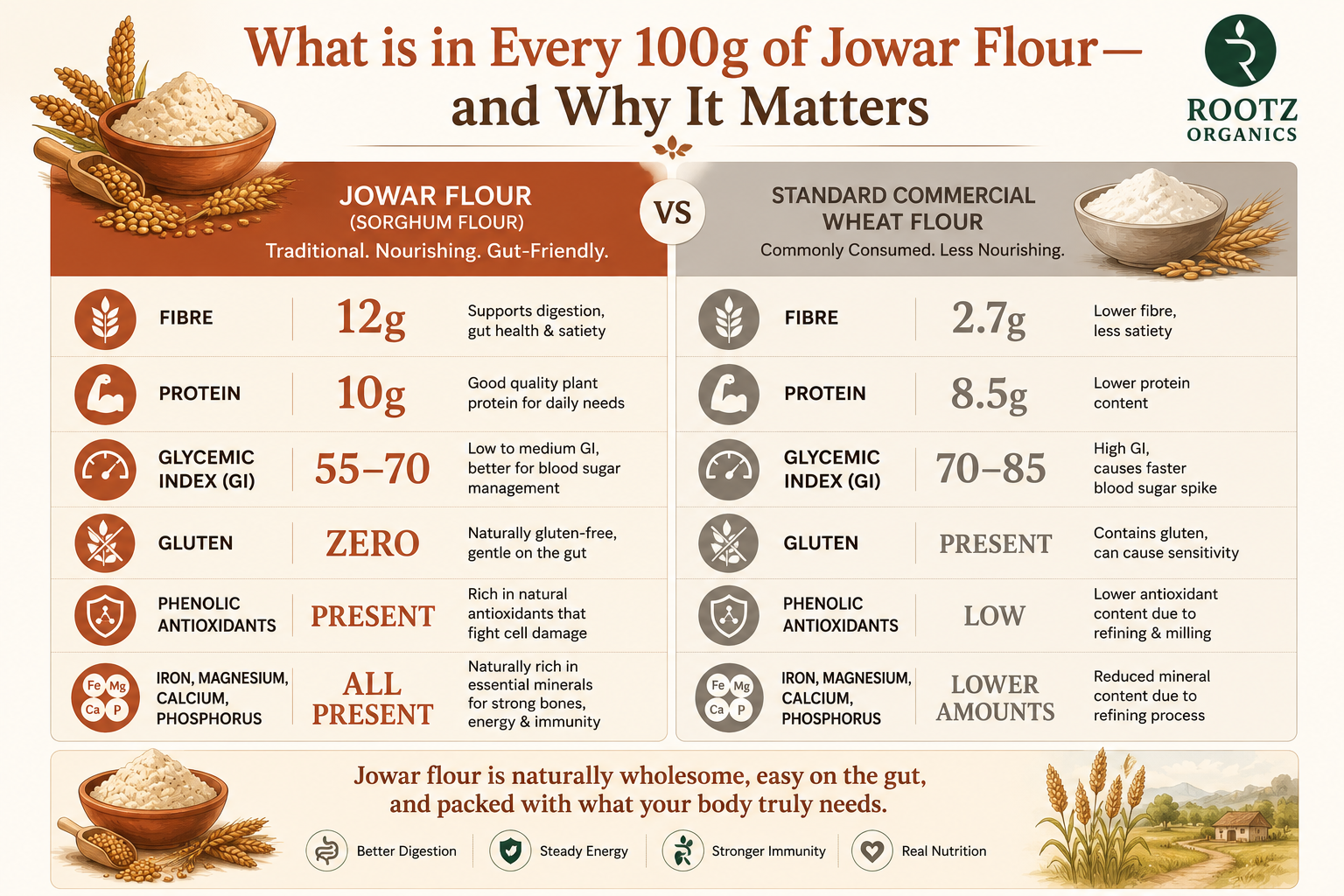
Then wheat arrived with the Green Revolution, hybrid seeds, government subsidies, and industrial milling infrastructure. Within two decades, wheat became the default flour in every Indian kitchen. Jowar got quietly retired. Not because it was inferior. Because wheat was easier to scale.
The health consequences of that trade-off are showing up now. In bloated stomachs. In sluggish digestion. In blood sugar numbers that keep moving in the wrong direction. In the low-grade tiredness that millions of Indians have normalised because they do not know what eating without it feels like.
Jowar did not go anywhere. It just got forgotten. And it is exactly what your body has been asking for.
What Jowar Actually Does: The Science Behind the Bhakri
Jowar is not a trend. It is not the "new quinoa." It is an ancient Indian grain with a nutritional profile that modern science keeps confirming was exceptional all along.
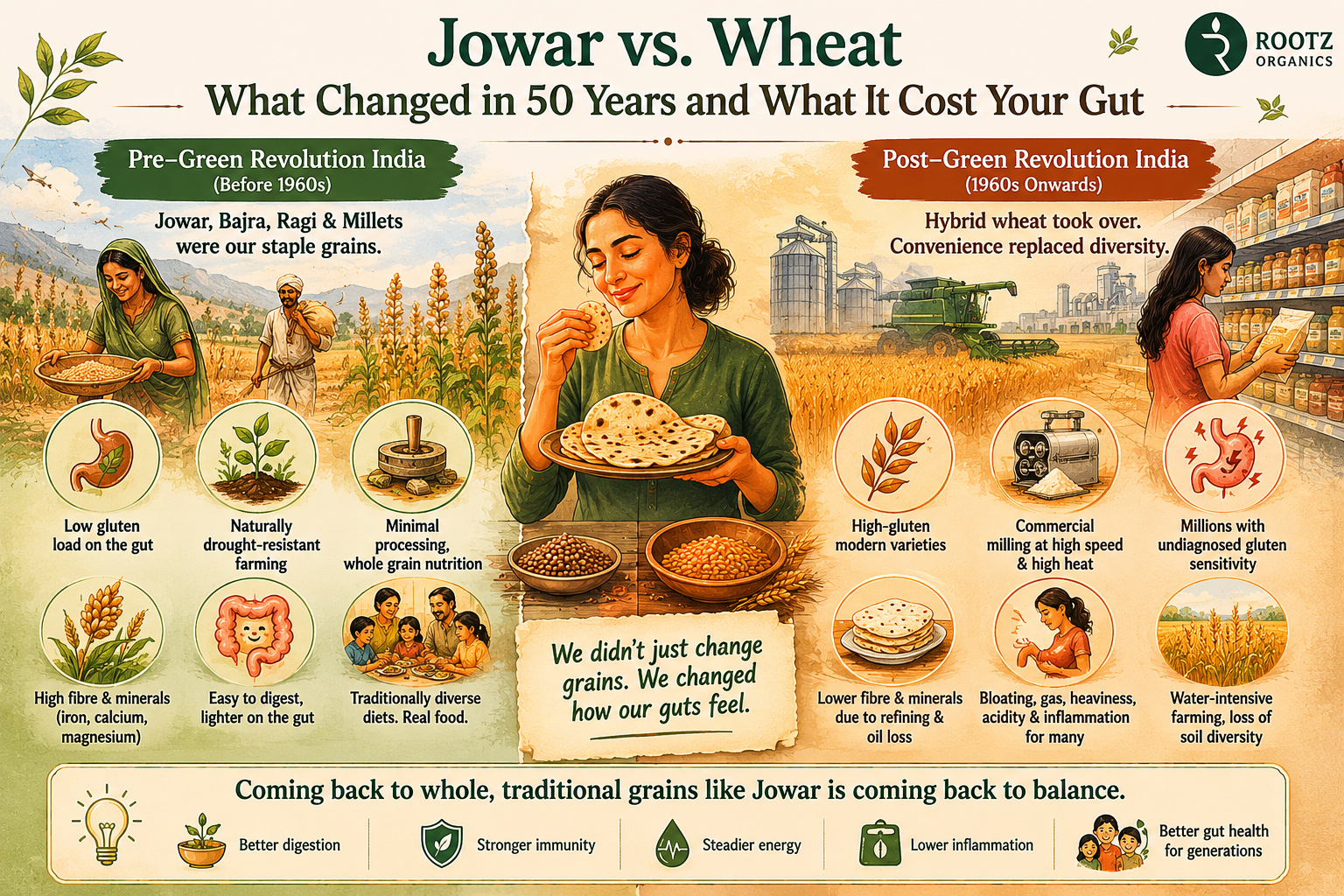
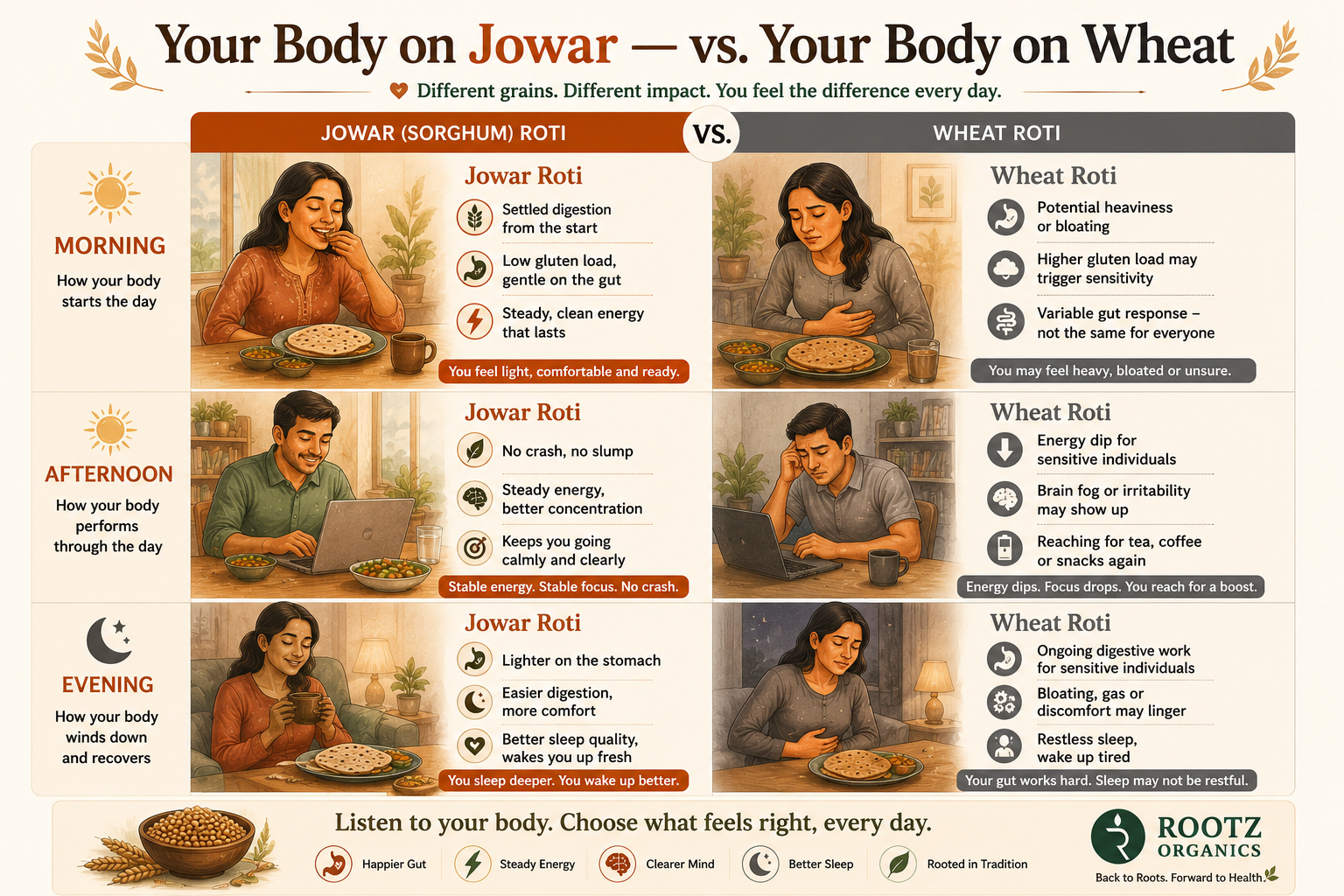
It is completely and naturally gluten-free. Not because anything was removed. Wheat's gluten protein was never there to begin with. For the millions of Indians with undiagnosed gluten sensitivity, every jowar roti is a meal that does not trigger the inflammation, heaviness, and digestive friction that wheat flour creates daily.
Its glycaemic index sits between 55 and 70 depending on preparation, meaningfully lower than refined flour, and when eaten as a thick bhakri or roti with dal and sabzi, the effective glucose response is even lower. Research published in peer-reviewed nutrition journals has specifically identified sorghum consumption as beneficial for people with Type 2 diabetes, and it is now frequently recommended by endocrinologists and dietitians working with diabetic patients in India as a direct replacement for wheat flour in daily meals. For a country with 101 million people managing diabetes and 136 million who are pre-diabetic, that is not a small recommendation.
The fibre, approximately 12g per 100g, is among the highest of any Indian grain flour. Fibre-rich foods like organic jowar flour help to aid digestion, lower bad cholesterol and increase the effects of good cholesterol. Insoluble fibre in sorghum flour benefits your body's digestive health and helps to relieve constipation. Fibre makes you feel full for longer and keeps you from overeating.
And then there are the antioxidants. Jowar contains phenolic compounds and tannins that fight oxidative stress, reduce inflammation, and protect against chronic disease. These are not present in wheat flour in any meaningful quantity. This dual mechanism of slow physical digestion through fibre and resistant starch, combined with enzymatic inhibition through phenolic compounds, makes jowar one of the most effective grain choices available for managing post-meal blood glucose spikes.
Ten grams of protein per 100g. Iron, magnesium, phosphorus, and calcium in quantities that contribute meaningfully to daily requirements. A cooling effect on the body that makes it particularly well-suited to the Indian summer and to anyone whose gut runs warm and reactive.
This is the grain your grandmother made bhakri with. She did not have the research. She had the results. And the results were: a family that digested their food properly, stayed full until the next meal, and did not need antacids to get through the afternoon.
The People Who Feel This Most
You do not have to have a diagnosed condition to benefit from switching to jowar. But there are certain people for whom this switch is less of an upgrade and more of a relief.
If you have been living with what you assume is just a "sensitive stomach": rotis that sit heavy, a gut that needs time to settle after every meal, the kind of digestive discomfort that you have quietly learned to work around. There is a very good chance your body is reacting to wheat gluten in a way that has never been formally diagnosed. It does not need to be. Removing the trigger and watching what happens is diagnosis enough.
If you are managing blood sugar and have hit the ceiling of what dietary changes with wheat flour can achieve, jowar introduces a mechanism that wheat simply does not have: the phenolic compounds that actively inhibit the enzymes responsible for breaking down starch into glucose. Less glucose released. Lower post-meal spike. More stable energy. This is not a substitute for medical management. It is a grain that works alongside it in a way wheat never can.
If you are trying to lose weight and tired of feeling hungry an hour after a meal, 12g of fibre per 100g does something that no amount of willpower can replicate. It signals genuine satiety. The cycle of eating, spiking, crashing, and reaching for something more simply does not complete itself in the same way.
And if you are a parent trying to reduce your family's wheat dependence without turning every meal into a negotiation. Jowar rotis made with good flour taste warm, slightly nutty, and genuinely satisfying. Most children accept them faster than their parents expect.
Why Rootz Organics Jowar Flour and Not Just Any Jowar
Jowar is now available from a growing number of brands. Not all of them are worth buying.
Cross-contamination is a real concern with gluten-free flours. Jowar processed in shared facilities with wheat loses its gluten-free integrity for anyone with sensitivity. And conventionally grown jowar, while less pesticide-intensive than wheat by nature, is still not free of chemical exposure unless it is certified organic.
Rootz Organics Jowar Flour is sourced from over 200 certified organic farmers across India. Zero pesticides. Zero chemical fertilisers. Zero GMOs. Third-party certified under NPOP, India's National Programme for Organic Production, independently audited with every batch traceable from farm to pack. Processed in a dedicated facility that protects the gluten-free integrity of the grain from field to flour.
Stone-ground at slow speed and low heat so the grain's natural oils, fibre, and antioxidant compounds arrive in your flour intact. One ingredient: organic jowar. Nothing added. Nothing removed. The same grain your grandmother used, grown the way she would have recognised.
The founder tests every product in her own kitchen first. Her family eats it before yours does.
Start With 900g. Stay With 1800g.
If jowar flour is new to your kitchen, the 900g pack is where to begin. About 25 to 30 rotis or bhakris. Enough for two weeks in a small household. Enough to feel, not just read, what a genuinely gluten-free, high-fibre, deeply nourishing grain does when it replaces wheat at the meal your family eats every day.
Most people who open the 900g pack order the 1800g before it is finished.
The 1800g gives a family of three to four a full month of jowar rotis. One order. No gap. No week of falling back on wheat while you wait for a reorder that never quite happens. The benefit of switching to jowar, like every grain switch, builds with consistency. A month is when it becomes genuinely felt.
A tip that most first-time jowar users find helpful: start by mixing 70 percent jowar with 30 percent whole wheat or any flour your family is comfortable with, to ease the transition in texture and taste. As the family adjusts over two to three weeks, shift to pure jowar. By the end of the 1800g pack, most families are not going back.
Order Rootz Organics Jowar Flour
900g: Order at rootzorganics.in
1800g: Order at rootzorganics.in
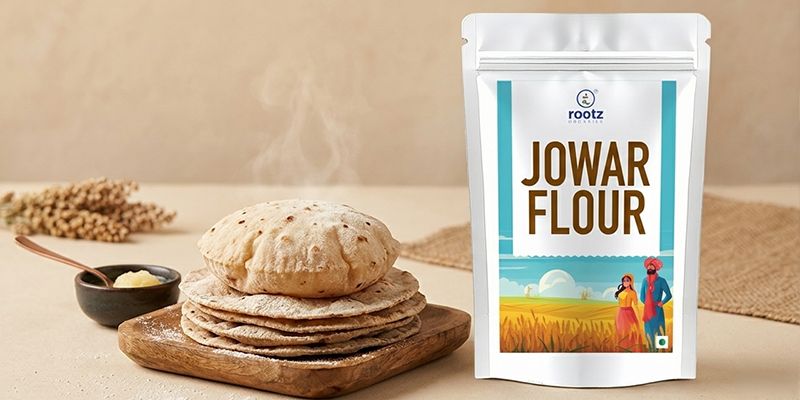
Ordering directly from rootzorganics.in gives you the freshest stone-ground batch and supports the organic farming community behind every pack.
Frequently Asked Questions
What is jowar flour and why is everyone talking about it?
Jowar is sorghum, one of India's oldest cultivated grains, eaten as bhakri and roti across Maharashtra, Karnataka and Andhra Pradesh for centuries before wheat became dominant. It is completely gluten-free, high in fibre at approximately 12g per 100g, rich in antioxidant phenolic compounds not found in wheat, and has a lower glycaemic index than refined flour. The interest in jowar is not a trend. It is a return to a grain that Indian bodies know and digest well, backed by modern nutritional science that keeps confirming what traditional kitchens already understood.
Is jowar flour gluten-free?
Yes, completely and naturally. Jowar does not contain gluten. It is a millet family grain with no relationship to wheat, barley, or rye. The Celiac Disease Foundation and USDA both confirm sorghum as a naturally gluten-free cereal. The important caveat: ensure the jowar flour you buy is processed in a dedicated gluten-free facility to avoid cross-contamination. Rootz Organics processes jowar separately from wheat-containing products, preserving its gluten-free integrity throughout.
Is jowar flour good for diabetics?
Yes, and specifically so. Jowar contains phenolic compounds that inhibit the enzymes responsible for breaking starch down into glucose, adding a blood-sugar-management mechanism that wheat flour does not have. Combined with its high fibre and resistant starch content, jowar produces a significantly lower post-meal glucose response than wheat flour. Research published in peer-reviewed nutrition journals specifically identifies sorghum as beneficial for Type 2 diabetes management. Consult your doctor before making dietary changes if you are on blood sugar medication.
My family is used to wheat rotis. Will they eat jowar rotis?
Most families adjust more easily than they expect. The taste of jowar roti is slightly nutty and warm with more character than plain wheat roti. The texture is denser and more satisfying. A helpful transition: start with a 70 to 30 blend of jowar and wheat flour, then shift gradually to pure jowar over two to three weeks. By the time the 1800g pack is finished, most families are eating pure jowar rotis without negotiation.
Do I need to use hot water to make jowar roti dough?
Traditionally yes. Warm to hot water makes jowar dough more pliable and easier to roll. Knead thoroughly and let the dough rest for five minutes before rolling. Some families add a tablespoon of flaxseed meal or psyllium husk to the dough to improve binding further. With a little practice, jowar rotis roll as easily as bhakri, which your grandmother would confirm is not actually difficult at all.
Is Rootz Organics jowar flour genuinely certified organic and gluten-free safe?
Yes on both counts. NPOP certified under India's National Programme for Organic Production, third-party audited and batch-traceable from 200-plus organic farms. Processed in a facility dedicated to gluten-free grains, protecting the integrity of the flour from cross-contamination. Zero pesticides. Zero chemical fertilisers. Zero GMOs. One ingredient: organic jowar.
How long does jowar flour stay fresh?
Store in an airtight container in a cool, dry place away from direct sunlight and moisture. Refrigerate during summer months. Jowar flour contains natural oils that are more perishable than refined flour. Consume within 45 days of opening for best freshness and full nutritional benefit.
Can children eat jowar rotis every day?
Yes. Jowar is an excellent grain for children: naturally gluten-free, with protein, iron, calcium, and phosphorus that support growing bones, brain development, and immunity. The slightly nutty flavour is one most children accept readily. It is one of the recommended grains for introducing gluten-free solids after six months, and continues to be a strong nutritional choice through childhood and beyond.
Health and Happiness Always.