Ghee Rice for an Upset Stomach: The 3-Ingredient Recipe Every Indian Parent Should Know
Every parent knows this moment.
Your child is unwell. Their stomach hurts. They won't eat. And you are standing in the kitchen at an hour when everything feels harder than it should, wondering what is actually safe, gentle, and real enough to give them.
Here's what we make at Rootz. And here's exactly why it works.
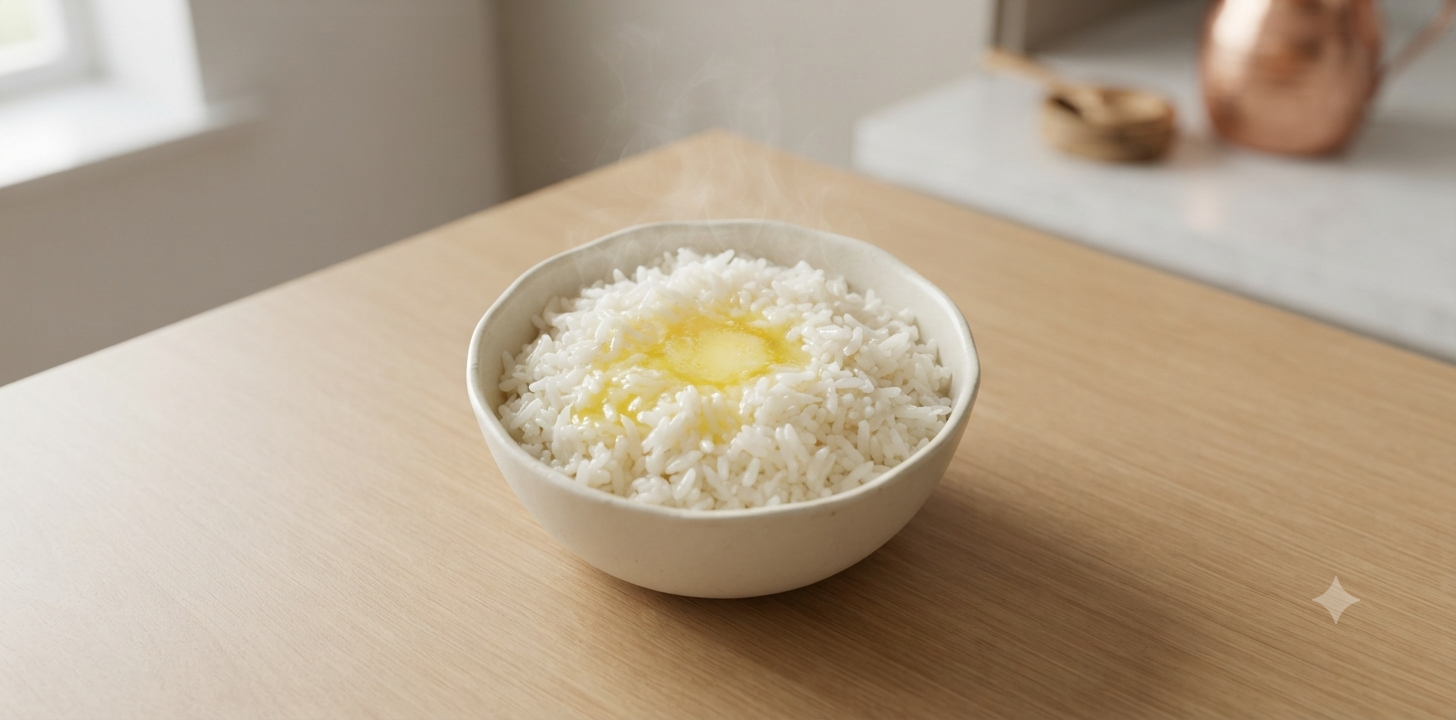
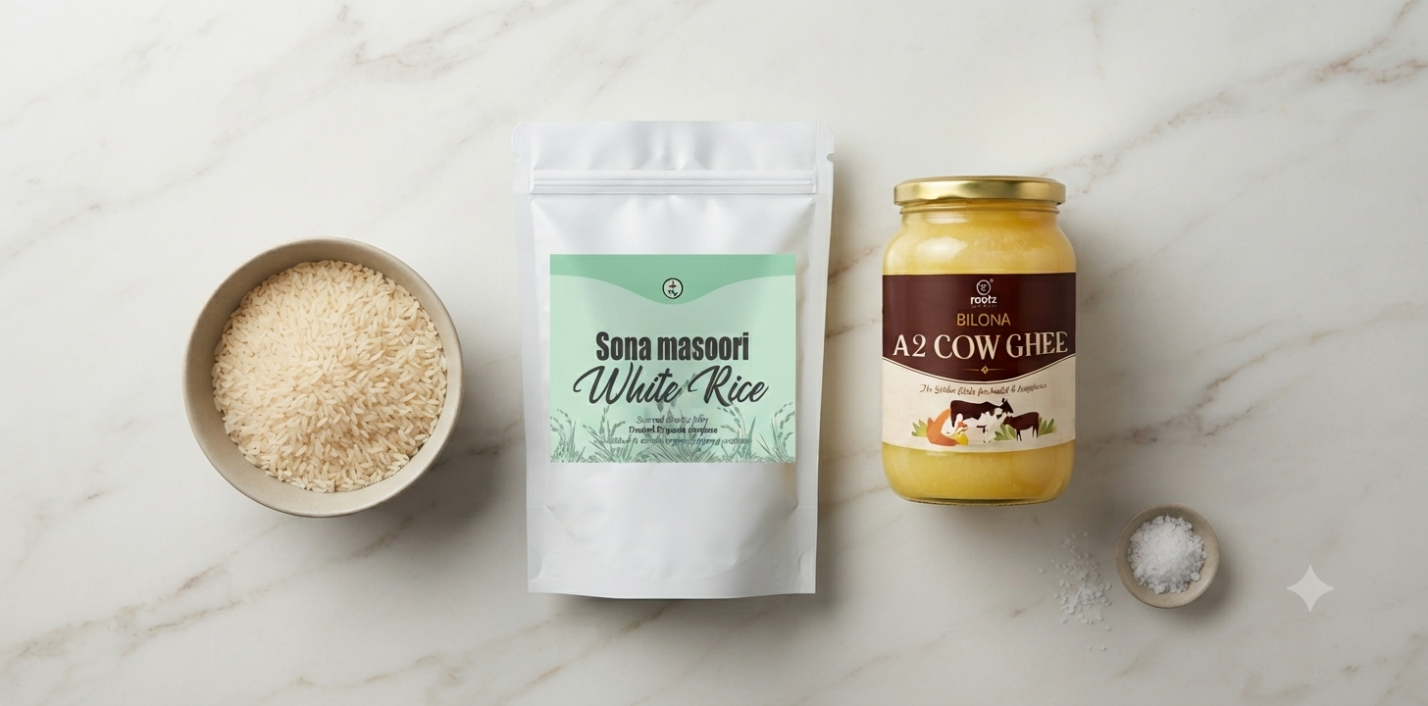
3 ingredients. 10 minutes. The bowl that makes everything better. Sonamasuri Rice · A2 Bilona Ghee · A pinch of salt.
Why Ghee Rice Works for an Upset Stomach — The Science in Plain Language
This is not folklore. Every ingredient in this recipe has a specific, science-backed reason for being there — and together, they create one of the most gut-friendly meals you can make for a child.
Sonamasuri Rice: The Lightest Grain for a Struggling Gut
Sonamasuri is a heritage rice variety cultivated primarily in Andhra Pradesh and Telangana. It is shorter, lighter, and lower in starch than most commercially available rice varieties — including Basmati.
When a child's stomach is upset, the digestive system is under stress. Enzymes are working overtime, the gut lining may be irritated, and the body is redirecting energy toward recovery. The last thing you want to give a struggling gut is food that is hard to break down.
Sonamasuri asks almost nothing of the digestive system. Its low starch content means it moves through the gut quickly and gently — providing energy without demanding effort. This is the same principle behind the medically recommended BRAT diet (Bananas, Rice, Applesauce, Toast) for gastrointestinal distress — bland, low-fibre, easy-to-digest foods that allow the gut to rest and recover.
Sonamasuri is India's own, farm-grown version of that principle.
A2 Bilona Ghee: Fuel for the Gut Lining
This is the ingredient most people underestimate — and the one that makes the biggest difference.
Ghee contains butyric acid, a short-chain fatty acid that is the primary fuel source for the cells lining your intestines. Think of it this way: your gut lining is a living barrier — it protects your bloodstream from harmful particles and helps nutrients absorb efficiently. When the gut is inflamed or unsettled, that lining needs fuel to repair and rebuild.
Butyric acid provides exactly that. Research has consistently shown that butyrate plays a key role in maintaining gut barrier integrity, reducing intestinal inflammation, and supporting the natural repair cycle of the gut lining. It is not a supplement — it is a natural compound found in genuine, traditionally made ghee.
A2 ghee specifically matters here. A2 Bilona Ghee is made from the milk of indigenous Indian cow breeds — breeds that produce only A2 beta-casein protein, as opposed to the A1 beta-casein found in most commercial dairy and processed butter. Research suggests that A2 beta-casein is significantly gentler on the digestive system, with fewer reported instances of digestive discomfort compared to A1 protein consumption.
Combined with the bilona method — traditional hand-churning that preserves the fat-soluble vitamins (A, D, E, and K) that industrial processing destroys — genuine A2 Bilona Ghee is one of the most nutrient-dense, gut-supportive fats available.
Salt: The Simple Electrolyte
A pinch of salt is not an afterthought. When a child has an upset stomach — especially if accompanied by any vomiting or diarrhoea — the body loses electrolytes and struggles to retain fluids.
Salt (sodium chloride) helps the body maintain its fluid balance and supports the absorption of water in the intestines. This is the same reason oral rehydration solutions contain salt. In the context of a warm, easy-to-digest meal, a small amount of salt keeps the body steady and supported.
It is also, incidentally, why every grandmother across India has been making salted ghee rice for sick children for generations. The science caught up with the wisdom.
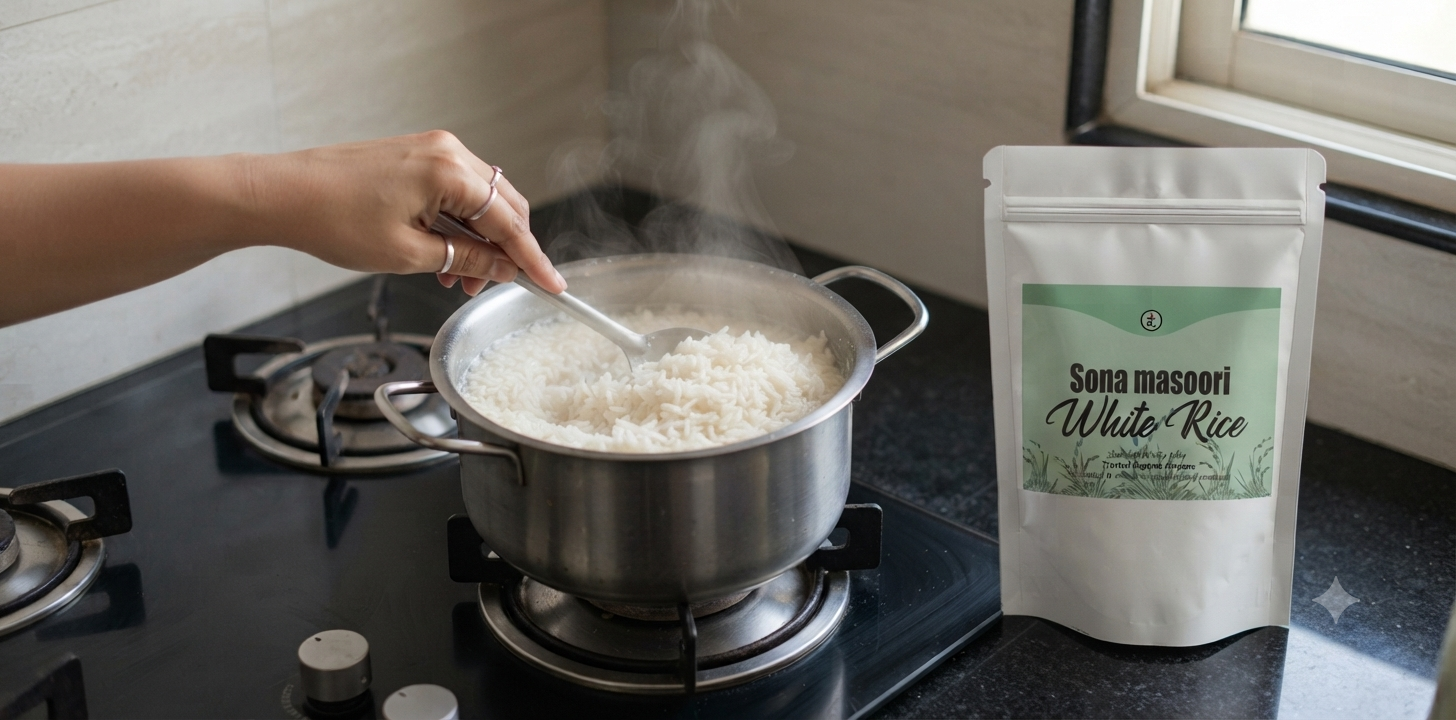
The Recipe: Ghee Rice for Gentle Tummies
Serves: 1 child · Prep time: 2 minutes · Cook time: 10 minutes · Best served: warm
What You Need
- ½ cup Organic Sonamasuri rice — washed and drained
- 1 generous dollop of A2 Bilona Ghee — approximately 1 tsp for babies, 1 tbsp for older children
- A pinch of salt — to taste. Skip entirely for babies under 12 months.
How to Make It
- Wash the Sonamasuri rice thoroughly until the water runs clear. This removes excess surface starch and makes the cooked rice even lighter.
- Cook the rice slightly softer than you normally would. A gentle stomach needs gentle rice — slightly overcooked is better than al dente here.
- While the rice is still piping hot, spoon it into a small bowl. The heat is important — it is what melts the ghee all the way through.
- Add a generous dollop of A2 Bilona Ghee directly on top. Watch it melt into the rice — golden, warm, and nourishing.
- Add a pinch of salt. Gently mix until every grain is coated.
- Serve warm, in a small bowl. Smaller portions are easier on an unsettled stomach.
Little Tips from the Rootz Kitchen
- For babies under 12 months: omit the salt and mash the rice to a soft consistency.
- For toddlers: mash slightly with a fork — the smoother texture is easier to eat when they are not feeling well.
- For older children: serve as is. You can add a small squeeze of lemon if they will tolerate it.
- For adults: the same recipe works beautifully. On days when your own stomach needs a reset, this is the bowl to make. We all need it sometimes.
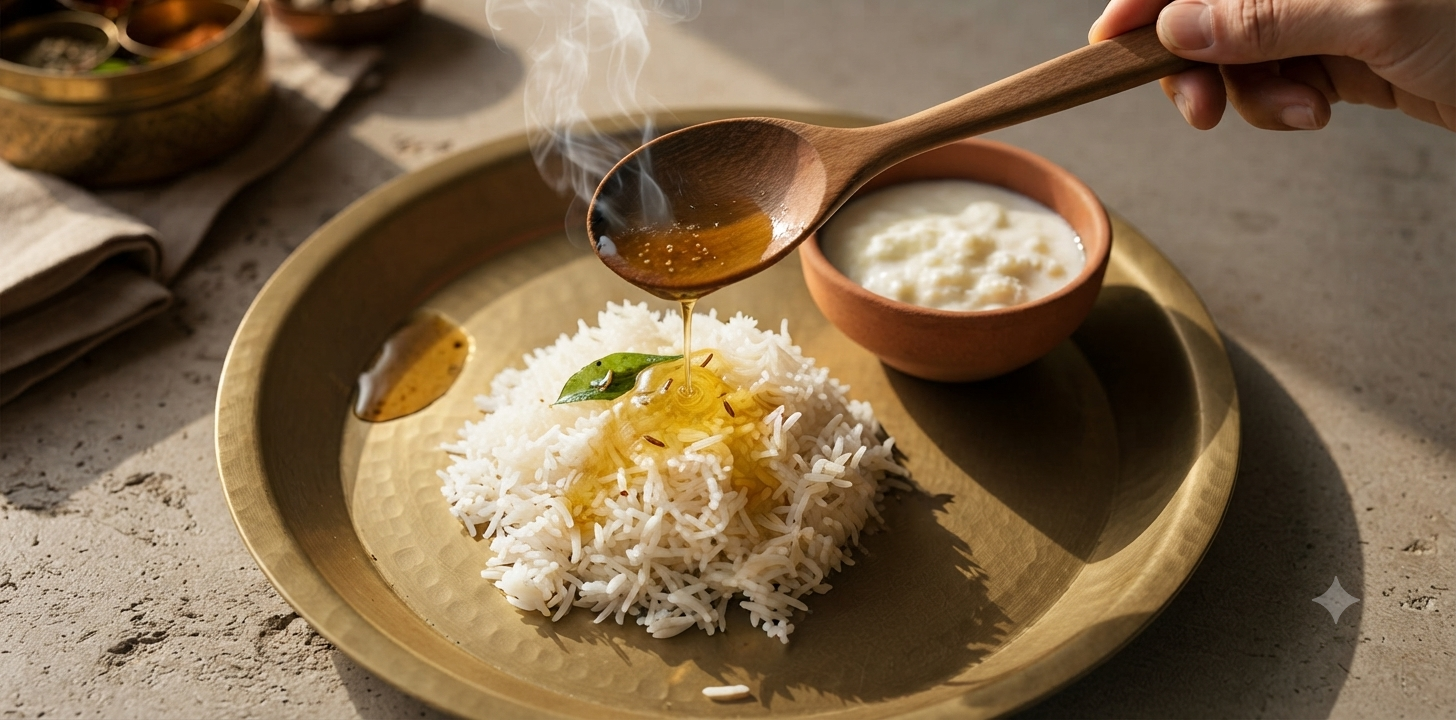
Why We Use A2 Bilona Ghee — and Why It Matters
Not all ghee is the same. The ghee you find in most supermarkets is made using centrifuge separation — an industrial process that extracts fat quickly but strips away many of the nutrients that make ghee genuinely nourishing.
Rootz A2 Bilona Ghee is made the traditional way — using the bilona method, where curd from whole A2 milk is hand-churned slowly in a clay pot. The butter that rises is then heated gently to produce ghee. This process:
- Preserves fat-soluble vitamins A, D, E, and K that industrial processing destroys
- Retains the natural butyric acid content that supports gut health
- Produces the characteristic grainy texture that is the mark of genuine, slow-made ghee
- Contains no additives, preservatives, or synthetic flavouring
We source our ghee directly from farming families we have worked with for 8 years — no middlemen, small batches, made with the same care every time.
This is what makes the difference in a recipe like this. When a child's gut is struggling, the quality of every ingredient matters more than usual.
Why Sonamasuri Rice — and Not Any Other Rice
India grows hundreds of rice varieties. For a child with an upset stomach, Sonamasuri is the right choice — and here is why.
Feature | Sonamasuri | Regular White Rice |
Starch content | Lower — easier to digest | Higher — more digestive effort |
Grain size | Small, light | Medium to large |
Cooking texture | Soft, slightly sticky — ideal for sick children | Varies — can be firm |
Origin | Heritage variety — Andhra Pradesh / Telangana | Commercially grown varieties |
Digestive load | Minimal | Moderate to high |
Sonamasuri Regular White Rice Starch content Lower — easier to digest Higher — more digestive effort Grain size Small, light Medium to large Cooking texture Soft, slightly sticky — ideal for sick children Varies — can be firm Origin Heritage variety — Andhra Pradesh / Telangana Commercially grown varieties Digestive load Minimal Moderate to high
Rootz Organics sources Sonamasuri rice directly from farms in Andhra Pradesh — the same heritage variety, grown without synthetic pesticides, and delivered to you as close to the farm as possible.
When to Make This — and When to See a Doctor
Ghee rice is a wonderful, nourishing option for mild digestive upset in children — the kind that every parent knows. A tummy ache after a long day. A stomach that feels unsettled after travel. The morning after a rich meal that didn't agree with them.
It is not a substitute for medical care. If your child has:
• A fever alongside the stomach ache
• Persistent vomiting or diarrhoea lasting more than 24 hours
• Severe abdominal pain or cramping
• Blood in their stool
• Signs of dehydration — dry mouth, no tears, very dark urine
Please consult your paediatrician. Real food is powerful — and it works best alongside, not instead of, professional medical guidance when it is needed.
This recipe supports gentle recovery from mild stomach upset. It is not a medical treatment. When in doubt, always consult your child's doctor.
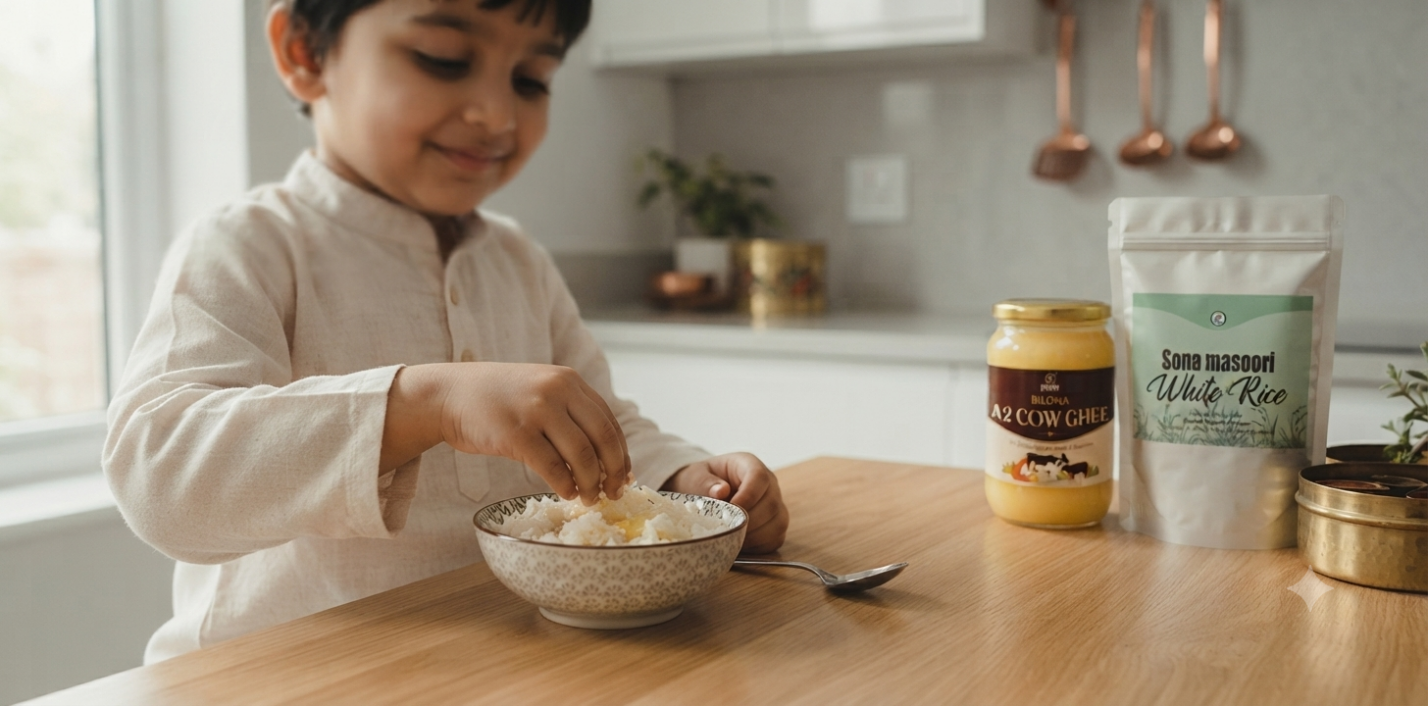
About Rootz Organics — Farm-Direct, Always
At Rootz Organics, we have spent 8 years building direct relationships with the farming families who grow and make our products. No middlemen. No shortcuts. No additives.
Our A2 Bilona Ghee is made by hand, in small batches, using the traditional bilona method — from the milk of free-grazing indigenous cows. Our Sonamasuri rice is sourced directly from heritage farms in Andhra Pradesh.
Everything we make is chosen because we would give it to our own children first.
That is the standard. That is the only standard.
Explore our A2 Bilona Ghee and Sonamasuri Rice at rootzorganics.in — and follow @rootz_organics on Instagram for more Little Roots recipes every month.
Frequently Asked Questions
Is ghee rice safe for babies?
Yes, with one modification: omit the salt for babies under 12 months, as their kidneys are not yet developed enough to process sodium efficiently. Mash the rice to a soft consistency. A small amount of A2 ghee — around half a teaspoon — is a traditional and nourishing addition to a baby's diet after 6 months, once solids have been introduced. Always consult your paediatrician before introducing new foods.
Why A2 ghee specifically — does it make a difference?
Yes. A2 ghee is made from the milk of indigenous cow breeds that produce only A2 beta-casein protein. Research suggests A2 protein is gentler on the digestive system than A1 protein found in most commercial dairy. For a child with an already-unsettled stomach, using A2 ghee reduces the chance of additional digestive discomfort. Combined with the bilona method — which preserves butyric acid and fat-soluble vitamins — A2 Bilona Ghee is significantly more gut-supportive than regular ghee.
Can I use any rice instead of Sonamasuri?
You can, but Sonamasuri is the best choice for this recipe because of its low starch content and light, easy-to-digest texture. If Sonamasuri is not available, use a short-grain white rice cooked slightly softer than usual. Avoid Basmati for a sick child — it is longer-grain and slightly harder to digest.
How much ghee should I add?
For babies (6–12 months): approximately half a teaspoon. For toddlers (1–3 years): 1 teaspoon. For older children (4 years and above): 1 generous teaspoon to 1 tablespoon. Ghee is a healthy fat — it does not need to be restricted for children. The fat helps the body absorb fat-soluble vitamins and provides sustained energy during recovery.
Is this recipe good for adults with an upset stomach too?
Absolutely. The same principles apply — Sonamasuri is gentle on an adult gut, and A2 Bilona Ghee's butyric acid supports gut lining repair regardless of age. Many adults find this the most comforting and effective meal for days when their digestion needs a reset. Scale up the quantity as needed.
Where can I buy Sonamasuri rice and A2 Bilona Ghee online in India?
Both are available at rootzorganics.in — sourced directly from our farm partners and delivered across India including Delhi NCR, Bangalore, Mumbai, Pune, Hyderabad, and Chennai. No middlemen, no additives, free delivery on first orders.
A Final Word from Rootz
Real food is not always complicated. Sometimes it is half a cup of rice, a spoonful of good ghee, and a pinch of salt — made with care, served warm, and given with the kind of quiet confidence that comes from knowing exactly why it works.
Every parent knows this moment. We hope this recipe makes it a little easier.
-
The Hidden Nutritional Power of India’s Ancient Summer Grain
August 26th, 2026 -
 August 25th, 2026
 -

The Science Behind Soaking, Sprouting, Fermenting and Grinding
August 24th, 2026