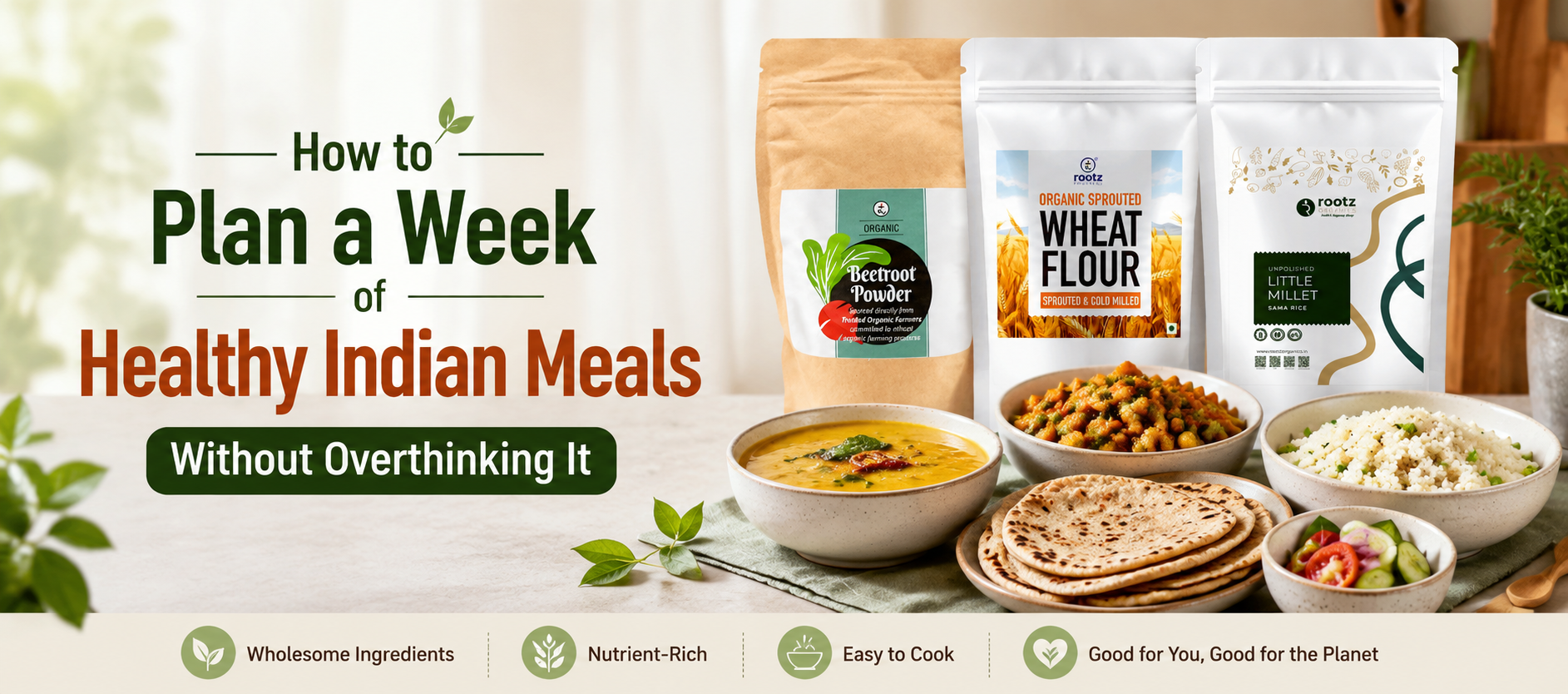
How to Plan a Week of Healthy Indian Meals Without Overthinking It
Every Sunday evening, millions of Indian households face the same question: What are we cooking this week? For many, this question spirals into stress — flipping through recipes, forgetting to soak the dal, running out of atta mid-week, and defaulting to takeout by Wednesday. Sound familiar?
The truth is, putting together a healthy Indian meal plan for an entire week does not require a nutritionist's degree or hours in the kitchen. Indian cuisine already has a deep, time-tested structure built around balance, seasonality, and nourishment. All you need is a simple framework — and a well-stocked pantry of quality ingredients — to make weekday cooking feel effortless rather than exhausting.
This guide is for real families in real kitchens. Whether you are cooking for two or ten, whether your household is fully vegetarian or not, and whether you have 20 minutes or an hour to cook on weekdays, this plan will help you eat well without burning out.
Why Meal Planning Feels Hard (And Why It Doesn't Have to Be)
Most people approach meal planning as if they need to prepare a different dish every single day. That is where the overwhelm begins. The reality of Indian home cooking is much more forgiving than that. Leftovers are welcome. Dal made in a large batch lasts two days. A good sabzi pairs well with both roti and rice. One masala base can become three different curries.
The problem is not Indian food — it is the unrealistic expectation that every meal must be freshly conceived and uniquely prepared. Once you let go of that idea, meal planning becomes a question of rotation, not reinvention.
Key InsightA well-planned week does not mean seven different dinners. It means three or four base preparations used wisely across the week, combined with seasonal vegetables and whole grains for variety and nutrition.
The other barrier is ingredient confusion. With so many flours, grains, and legumes available, it is easy to feel paralysed. But once you understand what each ingredient brings to the table — nutritionally and in terms of flavour — shopping and cooking become far more intuitive.
Building Your Week Around Indian Food Logic
Traditional Indian meals have a structural brilliance that modern nutrition science keeps validating. A complete Indian thali — even a simple one — typically contains a grain (roti, rice, or millet), a protein (dal or legume), a vegetable (sabzi), and a fermented or probiotic element (curd, raita, or pickle). Together, these cover your macronutrient and micronutrient needs in a single, satisfying meal.
When building a healthy Indian meal plan, think of your week in layers:
1 Rotate Your Grains: Do not eat wheat roti every single day. Alternate with rice, jowar rotis, ragi-based dishes, or cooked millets. This diversifies your nutrient intake naturally.
2 Cycle Your Proteins: Use different dals and legumes across the week — moong, masoor, chana, rajma, urad. Each has a different amino acid and mineral profile.
3 Eat Seasonally: Buy whatever vegetables are in season in your region. They are cheaper, fresher, more nutritious, and require less cooking time.
4 Add a Fermented Element: Curd, chaas, homemade pickle, or idli-dosa batter — including fermented foods daily improves gut health and nutrient absorption.
5 Keep Breakfast Simple: Breakfast does not need to be elaborate. Poha, upma, overnight oats, or a millet porridge takes under 15 minutes and starts the day right.
6 Think in Batches: One large pot of dal, a batch of pre-made dough, and chopped vegetables on Sunday will power 3–4 days of meals with minimal effort.
Ancient Grains That Modern Kitchens Are Rediscovering
One of the most transformative changes you can make to your weekly eating is to bring back the grains that Indian grandmothers once cooked without a second thought. Millets, ragi, and jowar were staples across India for centuries before refined wheat flour took over urban kitchens. Today, nutritionists, doctors, and health-conscious families are returning to these grains — and for very good reason.
Ragi (Finger Millet) — The Calcium Champion
Ragi is one of the richest plant-based sources of calcium available in India — far higher than most dairy products. It is also packed with iron, dietary fibre, and essential amino acids. Using organic ragi flour for rotis, porridge, or dosas is one of the simplest upgrades you can make to your daily diet. It is particularly beneficial for children, women, and older adults concerned about bone health.
Jowar (Sorghum) — The Gut-Friendly Grain
Jowar is naturally gluten-free, high in fibre, and has a lower glycaemic index than wheat. It helps with digestion, promotes satiety, and is excellent for those managing blood sugar levels or weight. Jowar rotis stay soft and are a seamless substitute for wheat rotis in everyday meals. Incorporating flour from a clean, chemical-free source ensures you get the full nutritional benefit without hidden additives. Organic jowar flour is the kind of pantry staple that earns its place on your shelf permanently.
Millets — A Family of Superfoods
Bajra, foxtail millet, little millet, and kodo millet each have distinct flavour profiles and nutritional strengths. They are rich in B vitamins, magnesium, and antioxidants. Cooked millets work beautifully as a rice substitute, in khichdi, as upma, or in soups. Choosing organic millets online from a trusted source ensures you are getting grains that are free from pesticide residue and minimally processed, preserving their natural goodness.
Whole Wheat — Still a Valuable Daily Grain
Wheat is not the enemy — refined wheat is. Stone-ground, 100% whole wheat flour retains the bran and germ layers, offering fibre, B vitamins, and minerals that maida entirely lacks. Using a cold-pressed, chemical-free wheat flour for your everyday rotis and parathas makes a meaningful nutritional difference over time.
“The most nourishing kitchens are not those with the most exotic ingredients — they are those stocked with the most honest ones.”
A Practical 7-Day Meal Guide for Indian Families
The plan below is a flexible template, not a rigid prescription. Swap ingredients based on availability, preferences, and dietary needs. The goal is to show you how variety, balance, and simplicity can coexist in an Indian kitchen through the week.
Day | Breakfast | Lunch | Dinner |
Monday | Ragi porridge with jaggery & banana | Moong dal + jeera rice + kachumber salad | Jowar roti + palak sabzi + curd |
Tuesday | Poha with peanuts & curry leaves | Rajma + whole wheat roti + onion salad | Foxtail millet khichdi + pickle + papad |
Wednesday | Ragi dosa with coconut chutney | Masoor dal + rice + aloo gobi | Jowar roti + chana masala + raita |
Thursday | Vegetable upma (semolina or millet) | Kadhi + rice + bhindi sabzi | Whole wheat roti + dal makhani (light) + salad |
Friday | Besan cheela with mint chutney | Bajra roti + methi sabzi + lassi | Millet pulao + mixed vegetable curry |
Saturday | Idli (sprouted or regular) + sambar | Chole + whole wheat bhature (baked) + onions | Light khichdi + ghee + papad (rest day meal) |
Sunday | Ragi ladoo or millet pancakes | Full thali — dal, sabzi, rice, roti, salad, curd | Leftover-friendly: paratha with yesterday's curry |
Healthy Snack Ideas for the Week
Roasted chana, makhana, a small handful of mixed seeds, seasonal fruit, or a small bowl of curd with honey. These are easy, satisfying, and require no preparation.
What to Keep in Your Organic Pantry
A healthy week of eating is largely determined not by your cooking skills but by what you have available. When your pantry is stocked thoughtfully, healthy meals practically make themselves. The key is choosing ingredients that are clean — free of pesticides, chemicals, and unnecessary additives.
Today, it is easier than ever to access quality ingredients by shopping for organic food products online, where you can find everything from ancient grains and cold-pressed oils to natural sweeteners and chemical-free spice blends in one place.
Here is a foundational pantry list for healthy Indian cooking:
Flours & Grains: Whole wheat flour, ragi flour, jowar flour, bajra flour, various millets (foxtail, kodo, little millet), rice (hand-pounded or parboiled), oats.
Dals & Legumes: Moong dal (split and whole), masoor dal, chana dal, urad dal, rajma, kabuli chana, matki. These are your protein backbone for the week.
Condiments & Spices: Turmeric, cumin, coriander, mustard seeds, red chilli, garam masala, asafoetida (hing), dried fenugreek (kasuri methi). Buy whole and grind at home when possible.
Healthy Fats & Sweeteners: Cold-pressed groundnut oil or sesame oil, pure cow ghee, coconut oil. Jaggery and raw honey instead of refined sugar.
When you buy your weekly groceries from a reliable online organic grocery platform, you can trust the quality of what goes into your food — especially important when feeding children, elderly family members, or anyone managing a health condition.
Smart Weekend Prep Tips to Save Weekday Time
Sunday is the unsung hero of a smooth food week. You do not need to batch-cook every single meal — even 45 minutes of thoughtful prep can cut your daily cooking time in half.
1 Soak and Pressure-Cook Legumes
Soak rajma, chana, or matki on Saturday night. Pressure cook on Sunday and refrigerate. They stay good for 3–4 days and can be turned into different dishes.
2 Make a Large Batch of Dal
One big pot of moong or masoor dal can serve as a base for 2–3 dinners. Temper it differently each day for variety — one day cumin-coriander, next day with spinach added.
3 Prep Your Roti Dough
Knead whole wheat or jowar dough on Sunday and store in an airtight container in the fridge. It stays fresh for 3 days, cutting daily roti prep time to minutes.
4 Chop and Store Vegetables
Wash, dry, and chop onions, tomatoes, capsicum, and leafy greens. Store in airtight containers. This alone saves 15–20 minutes per meal.
5 Prepare a Ready Masala Base
Cook a large batch of onion-tomato-ginger-garlic masala. Freeze in portions. Use as the base for any curry across the week — sabzi, chole, paneer, or eggs.
6 Stock a Millet Jar
Rinse and dry-roast a batch of your chosen millet once a week. Roasted millets cook faster and have a nuttier flavour in khichdi or porridge.
The beauty of Indian cooking is its inherent efficiency. Because many dishes use overlapping ingredients and techniques, once you cook one thing well, the rest of the week often follows naturally. The key is trusting the process — and trusting your pantry.
A Note on Ingredient Quality
The grain you choose matters as much as the recipe you follow. Organically grown millets and flours retain more nutrients, have not been treated with synthetic pesticides, and often taste notably better than conventionally grown alternatives. Small-batch, clean-label products from brands that care about soil health make a real difference to what ends up on your plate.
Bringing It All Together
Planning a week of healthy Indian meals is not about perfection — it is about intention. When you have a loose framework (rotate your grains, cycle your proteins, prep on Sunday), cooking becomes less of a daily puzzle and more of a creative, nourishing ritual. Indian cuisine, at its core, is already one of the most nutritionally complete food traditions in the world. It does not need to be fixed — just practised with better ingredients and a little more structure.
Start small. Plan just three days. Stock your pantry with two or three quality grains and a variety of dals. Cook in batches. And give yourself permission to repeat meals that work. Over time, you will find your rhythm — and your family will eat better for it.
Frequently Asked Questions
How do I start a healthy Indian meal plan as a beginner?
Start by deciding your meals for just 3–4 days instead of a full week. Focus on a simple formula: one grain (roti, rice, or millet), one dal or legume, one vegetable sabzi, and a small portion of curd or raita. Gradually build to a full 7-day plan as the habit sets in. The goal is consistency, not complexity — even a rough plan beats no plan at all.
Which millets are best to include in a weekly Indian meal plan?
Foxtail millet, bajra (pearl millet), ragi (finger millet), and jowar (sorghum) are excellent choices for an Indian kitchen. Each has distinct nutritional strengths — ragi is rich in calcium and iron, jowar is great for digestion and blood sugar, bajra is warming and protein-rich, and foxtail millet is light and easily digestible. Start with one or two and expand as you get comfortable with their preparation.
Can I follow a healthy Indian meal plan for weight loss?
Yes. Replace refined grains with millets and whole grains, include more dal, legumes, and vegetables, reduce deep-fried snacks, and eat smaller portions spread across 3 main meals and 1–2 light snacks. Millet-based rotis and ragi porridge are particularly beneficial for weight management due to their high fibre content, which promotes satiety and supports stable blood sugar levels. Avoid skipping meals — consistent, balanced eating is more effective than restrictive dieting.
Is ragi flour healthy enough for daily use in Indian cooking?
Absolutely. Ragi (finger millet) flour is one of the most calcium-rich plant foods available in India. It can be used daily to make rotis, porridge, dosas, or even ladoos. It is especially beneficial for children's bone development, post-menopausal women, elderly individuals, and people looking to manage blood sugar levels. The key is choosing organically grown, stone-ground ragi flour to preserve its full nutritional profile.
How can I make weekly Indian meal planning less time-consuming?
Batch-cook dal and sabzi on Sundays, pre-soak legumes overnight, keep a stocked organic pantry with flours, grains, and spices, and use a simple rotation system — different grains and dals on different days. Spending 30–45 minutes on Sunday prep — chopping vegetables, making dough, cooking a base dal — can save you hours through the week. Most weekday meals should ideally take 20–30 minutes once your prep is done.
-
 August 6th, 2026
 -
 August 6th, 2026