Why More Indian Families Are Switching to Organic Atta
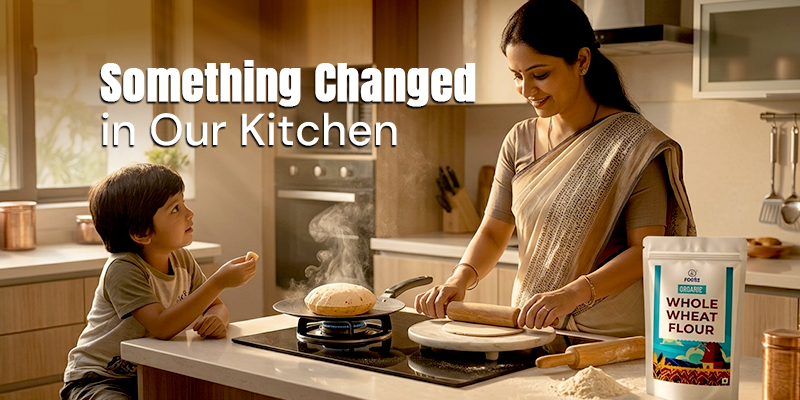
Introduction: Something Is Changing in the Indian Kitchen
It did not make headlines. There was no viral moment, no celebrity endorsement, no government campaign behind it. And yet, slowly and steadily, something is shifting in the most private room of the Indian home.
The Kitchen.
More specifically, the shelf where the atta bag sits.
For decades, that shelf told the same story. The same familiar brand, the same clean white packaging, bought out of habit, never questioned. Atta was atta. You ran out, you bought more. It was perhaps the last item on the online organic grocery list any Indian family ever thought twice about.
That is changing. And the change is not coming from nutritionists or wellness influencers. It is coming from ordinary Indian mothers who noticed their child was always bloated after dinner. From fathers who could not explain why they felt heavy and tired every afternoon despite eating what felt like a healthy meal. From young couples who read the back of a flour packet for the first time and quietly wondered what half those ingredients were doing in something as simple as ground wheat.
It is coming from a feeling, almost impossible to name precisely, that something in our most everyday food has quietly drifted away from what it used to be. And the growing, collective instinct that it is time to bring it back.
Organic atta is not a premium product for a niche audience anymore. It is the answer to a question that millions of Indian families are now asking out loud: what exactly are we eating every single day…and is there a better way?
This is the story of why the answer, for more Indian households than ever before, is beginning with the atta bag.
The Moment Families Start Asking Different Questions
Most families who make the switch to organic atta do not arrive at that decision through a research paper or a doctor's advice. They arrive through a moment of ordinary curiosity that snowballs into something bigger.
It might begin with a parent noticing that their child complains of a heavy, uncomfortable feeling after meals. Or a grandmother mentioning, almost offhandedly, that flour used to smell different, used to feel different between the fingers, and that rotis had a taste they simply do not have anymore.
These are not dramatic health crises. They are quiet nudges. But they share a common thread: the growing sense that something in our most ordinary, daily food has quietly changed without our permission.
Organic atta is, in many ways, the answer to a question Indian families are increasingly ready to ask: what if we went back to the real thing?

The Problem With What We Normalised
For a generation raised on branded commercial atta, the heavily processed, bleached, additive-treated flour sitting on supermarket shelves became the default definition of normal. It arrived in neat packaging, behaved consistently in the kitchen, and produced rotis that looked picture-perfect. What it did not do was nourish the way wheat flour is meant to nourish.
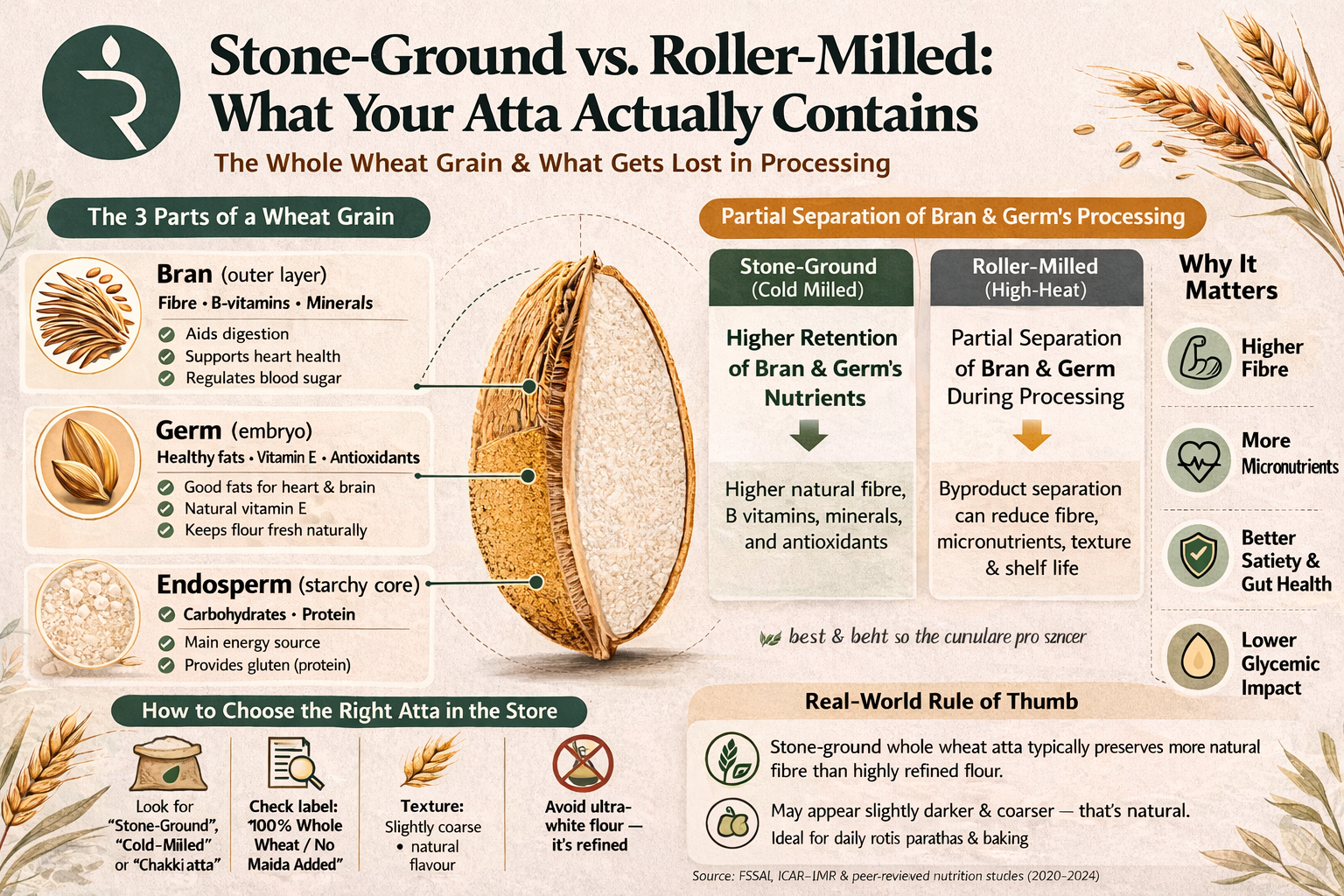
Commercial wheat flour in India undergoes a production process built around shelf life and visual appeal. The wheat bran and germ, which carry the most nutritional value in the grain, are largely removed. The flour is then bleached to achieve uniformity of colour. Dough improving agents are added for consistent texture. The wheat itself is grown using synthetic pesticides and fertilisers that leave traces in the grain long before it reaches your kitchen.
None of these steps make the flour better for the human body. Every single one of them makes it more convenient and commercially viable for the manufacturer. Over years of eating this flour daily, Indian families have been consuming a product that has very little in common with the stone-ground, whole-grain atta their parents and grandparents used.
The switch to organic atta is, at its core, the decision to stop accepting that compromise.
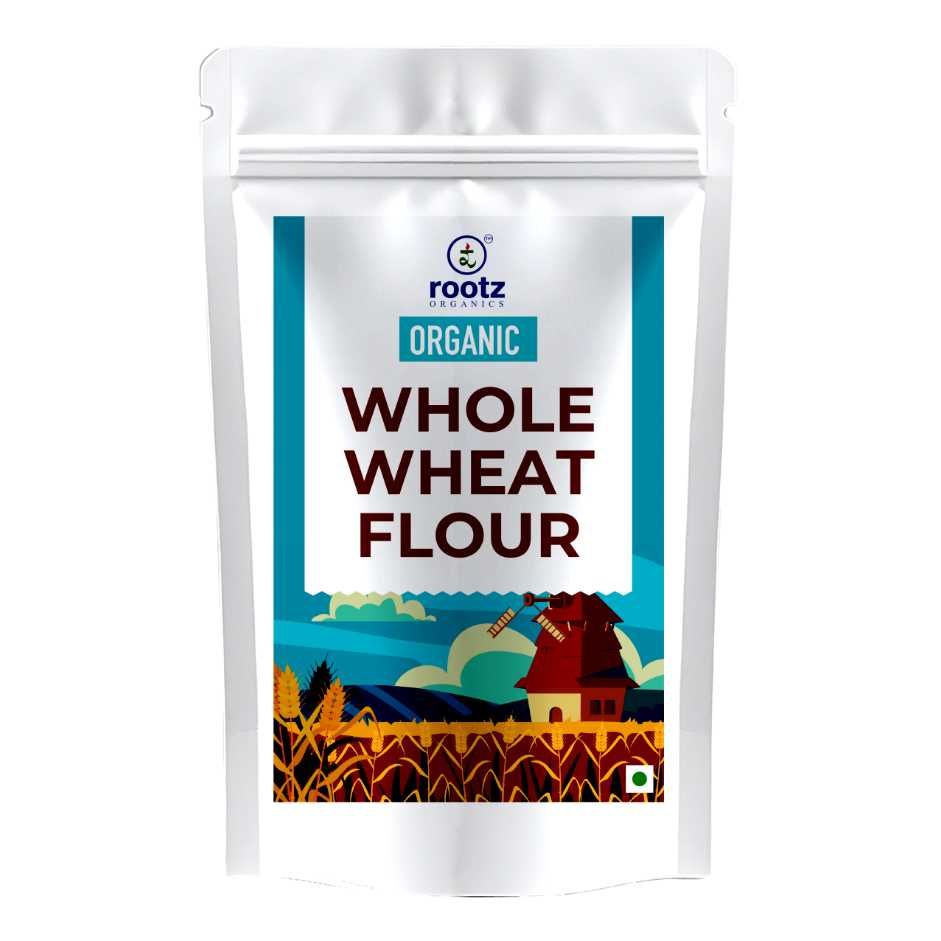
Five Reasons: Indian Families Are Making the Switch Right Now
The Children Are the Turning Point
Across India, the family member who most often triggers the switch to organic atta is not the health-conscious adult. It is the child. Parents who might accept their own digestive discomfort as a fact of life become considerably less accepting when they see it showing up in their children.
Bloating, irregular digestion, low energy after meals, and poor concentration in school-going children are complaints that paediatricians across Indian cities are hearing with increasing frequency. When parents begin connecting these patterns to daily food rather than stress or screen time, the atta bag becomes one of the first things they reconsider.
Children's bodies are still developing, and what they consume daily during their formative years has a disproportionate influence on their long-term health. Organic atta, free from chemical residues and rich in natural fibre and nutrients, is simply the safer, more supportive daily staple for a growing child.
The Return of the Chakki Mindset
There is a cultural memory embedded in the idea of the chakki that no amount of branded packaging has fully erased. The neighbourhood stone mill. Wheat brought from home, ground fresh, taken back the same day. The smell of freshly milled flour that was unmistakably alive in a way that bagged commercial flour never quite is.
Organic stone-ground atta is bringing this experience back, not as a nostalgia exercise but as a genuinely superior product. Stone grinding preserves the wheat germ and bran that industrial roller mills destroy. The result is flour that is nutritionally whole, easier on the digestive system, and noticeably richer in taste and aroma.
For the generation of Indian consumers in their thirties and forties who grew up with both experiences, the difference is immediately recognisable. And once recognised, it is very hard to go back.
Urban India Is Rethinking Its Relationship With Food
The Indian urban consumer today is fundamentally different from the one who bought the same brand of atta their parents bought, without question, for thirty years. They read labels. They research. They have watched documentaries about industrial food production. They follow nutritionists on social media. They have, in many cases, dealt with enough lifestyle health issues in their own families to know that diet and chronic health are deeply connected.
This consumer is not chasing a trend. They are making a considered, informed decision. And organic atta fits squarely within a broader shift towards food that is transparent, traceable, and genuinely aligned with long-term health rather than short-term convenience.
What is particularly notable about this shift is that it is no longer confined to premium, high-income urban households. The awareness is spreading to Tier 2 cities, to younger first-time parents, and to middle-income families who have decided that the food they eat every single day is worth prioritising in their household budget.
The Lifestyle Disease Conversation Is Reaching the Kitchen
India is in the middle of a lifestyle disease crisis.
Diabetes, thyroid disorders, gut issues, and inflammatory conditions are being diagnosed in progressively younger populations. The conversation around these conditions has traditionally focused on sugar consumption, sedentary habits, and stress. Increasingly, however, nutritionists, integrative doctors, and wellness practitioners are pointing a steady finger at something more fundamental: the quality of the daily staple.
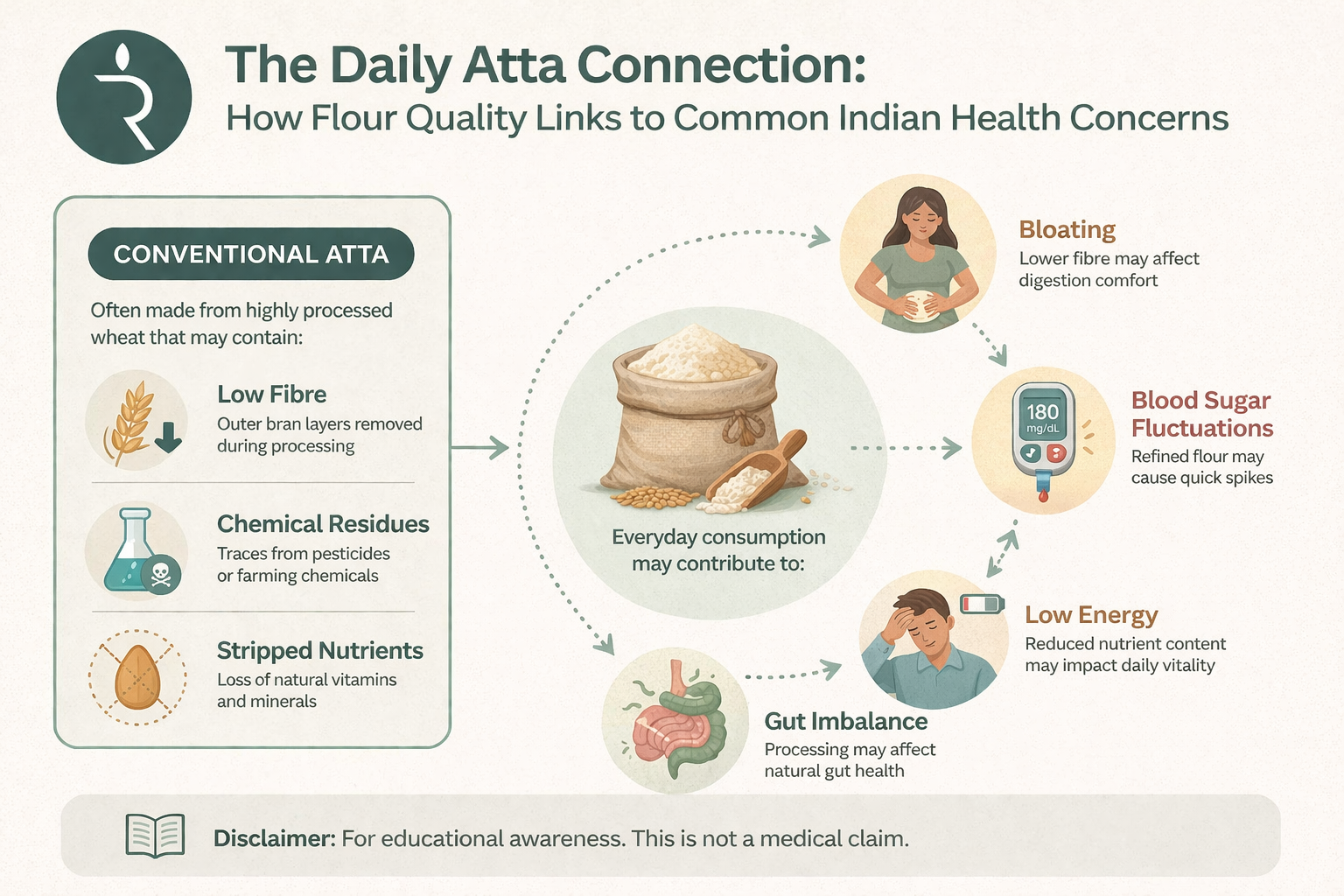
When the flour that forms the base of most Indian meals is stripped of fibre, loaded with chemical residues, and processed in ways that disrupt gut health, the connection to digestive disorders, blood sugar instability, and inflammatory conditions becomes harder to ignore. Families dealing with these conditions are switching to organic atta not as a cure but as a logical, foundational step towards removing unnecessary daily chemical and nutritional stress from their diets.
Organic Is Becoming Accessible, Not Just Aspirational
One of the most significant shifts of the past few years is that organic atta has moved from being a niche product found only in specialty health stores to being genuinely accessible, both in terms of availability and price.
Direct-to-consumer organic brands have changed the economics significantly. By sourcing directly from certified organic farms and selling through their own platforms, these brands have removed the layers of middlemen that once made organic food prohibitively expensive. The price premium for good organic atta today is meaningful but no longer out of reach for most urban and semi-urban Indian families.
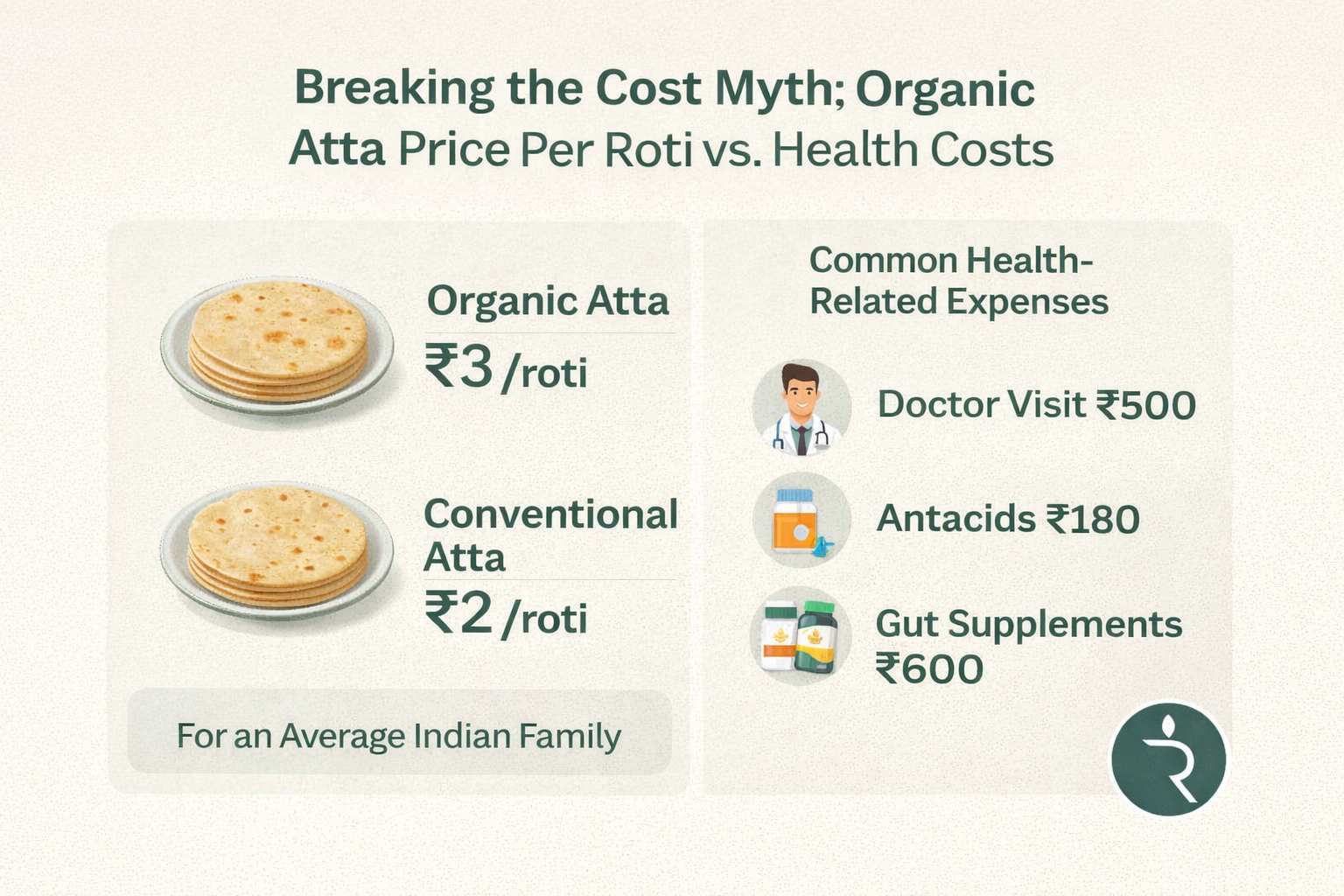
When you calculate the cost per roti rather than the cost per kilogram, the difference becomes even more manageable. And when you weigh that difference against the cost of even one medical consultation, one round of gut health medication, or one missed day of work due to chronic fatigue, the calculation shifts entirely.
At Rootz Organics, this accessibility is something we have built our model around. Certified organic atta should not be a luxury. It should be a genuine, reachable choice for every Indian family that wants to eat better without overcomplicating their lives. Our sourcing goes directly from verified Indian farms to your kitchen, with complete transparency at every step, because knowing where your flour comes from should be the most ordinary thing in the world.
What the Switch Actually Looks Like in Real Life
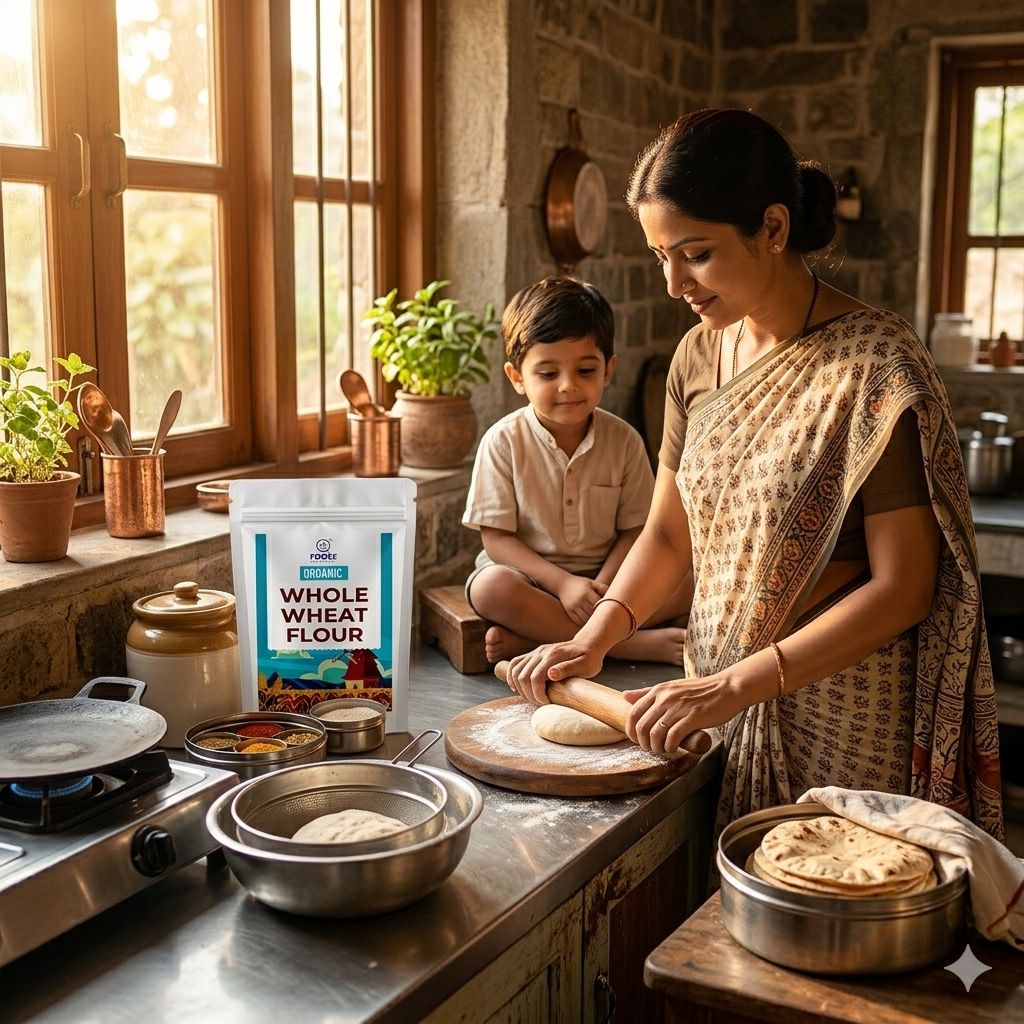
For most families, switching to organic atta is one of the least disruptive dietary changes they will ever make. The roti still looks like a roti. The paratha still tastes like a paratha. The cooking process is identical.
What changes is what happens after the meal. The feeling of heaviness that many people have simply accepted as part of eating wheat begins to lift. Digestion becomes more regular and comfortable. Energy after meals feels steadier. Over weeks and months, these small improvements compound into a noticeably different baseline of how the family feels day to day.
The transition period, if any, is brief. Some people notice that organic whole wheat atta produces rotis with a slightly deeper colour and a nuttier aroma than the bright white commercial flour they were using before. This is not a flaw. It is the wheat germ and bran doing exactly what they are supposed to do. It is, quite simply, what real flour looks and smells like.
Conclusion: This Is Not a Trend. It Is a Return.
Organic atta is not new. Stone-ground, chemical-free wheat flour is what every Indian household used for centuries before industrial food production decided to improve upon something that did not need improving.
What is happening now, across Indian kitchens, is not a trend catching on. It is a recognition catching up. The recognition that the food we eat every single day, in the most unremarkable and routine way, has more power over our health than almost anything else we do. And that choosing better flour is not a grand lifestyle overhaul. It is one simple, quiet, powerful decision.
More Indian families are making that decision every day. The kitchen is where it all begins.
Join the Families Already Eating Better
Rootz Organics brings you certified organic, stone-ground whole wheat atta sourced directly from trusted Indian farms. Fully traceable, genuinely clean, and made for the Indian kitchen.
Shop Rootz Organic Atta | Freshly milled. Honestly sourced. Delivered to your door.
Real wheat. Real milling. Real transparency. That is what Rootz means.
FAQs
Q: Why are Indian families switching to organic atta?
A: Indian families are switching to organic atta because of growing awareness around pesticide residues in conventional wheat, the loss of nutrition in commercially processed flour, and the tangible health benefits of stone-ground whole organic wheat flour for daily digestion and long-term wellbeing.
Q: Is organic atta really different from regular branded atta?
A: Yes, significantly. Organic atta is made from wheat grown without synthetic pesticides, is typically stone-ground to preserve the wheat germ and bran, and contains no bleaching agents or chemical dough improvers that are standard in commercial flour production.
Q: Does organic atta taste different?
A: Organic stone-ground atta has a slightly nuttier, more natural aroma and produces rotis with a deeper, warmer colour. Most families find the taste noticeably richer and more satisfying than commercially processed white atta.
Q: Is organic atta worth the extra cost for an average Indian family?
A: When calculated as a cost per roti, the premium for organic atta is often less than ₹2 to ₹3 per meal per person. Weighed against the long-term health benefits and reduced dependence on digestive medications, most families who make the switch consider it one of the most worthwhile food investments they have made.
Q: How do I know if organic atta is genuinely certified in India?
A: Look for the Jaivik Bharat logo from FSSAI on the packaging. Brands like Rootz Organics go further by providing full farm sourcing information and milling details, so you know exactly what you are buying and where it came from.
-
 August 6th, 2026
 -
 August 6th, 2026