Top Reasons Indian Families Are Choosing Organic Food
Introduction:Something Has Quietly Shifted in Indian Kitchens
Nobody announced it. There was no single moment that changed everything. But across Indian homes…in Mumbai, Bengaluru, Jaipur, Chennai, and smaller cities in between, a quiet but significant shift is happening at the grocery list level.
Families who have bought the same branded atta, the same polished rice, and the same commercial ghee for twenty years are asking different questions. Reading labels more carefully. Seeking out certified organic options they would not have considered three years ago.
The reasons behind this shift are not uniform. Every family arrives at organic food through a different door. But the doors they come through tell a very consistent story about what Indian households are experiencing right now — and what they are no longer willing to accept.
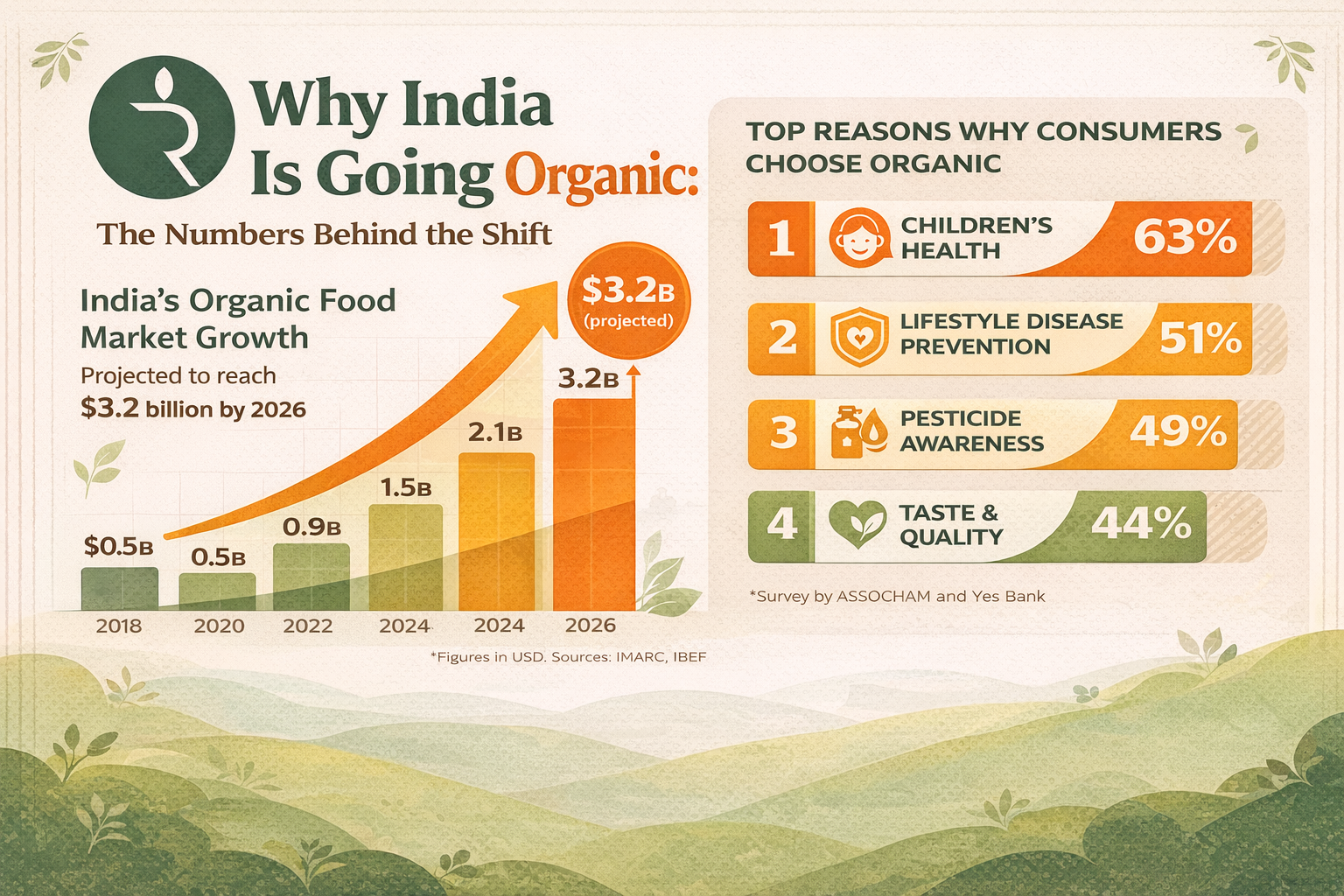
Reason 1: Their Children Are the Turning Point
Ask any Indian parent who switched to organic food when they made the decision, and the answer is almost always the same: when they had children.
The logic is simple and impossible to argue with. Children eat proportionally more food relative to their body weight than adults. Their organs are still developing. Their detox pathways are not yet fully mature. Every residue, additive, and chemical that enters their daily diet has a compounding effect over years of rapid growth and development.
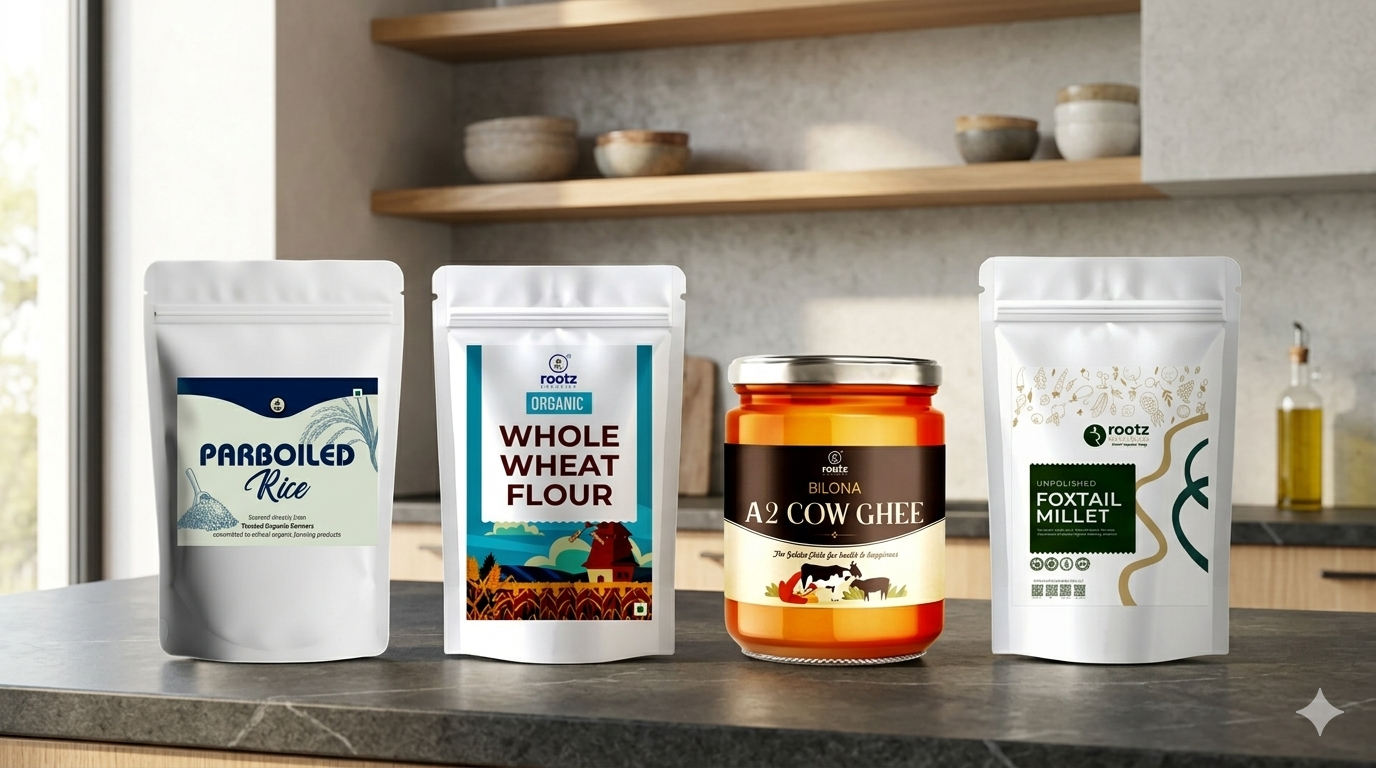
When a parent connects their child's frequent bloating, low energy, or recurring illness to the food on the plate rather than the season or stress, the conversation changes entirely. Organic food…particularly → Rootz Organic Rice, → Rootz Organic Atta, and → Rootz Organic Cow Ghee… becomes less of a lifestyle choice and more of a straightforward health decision.
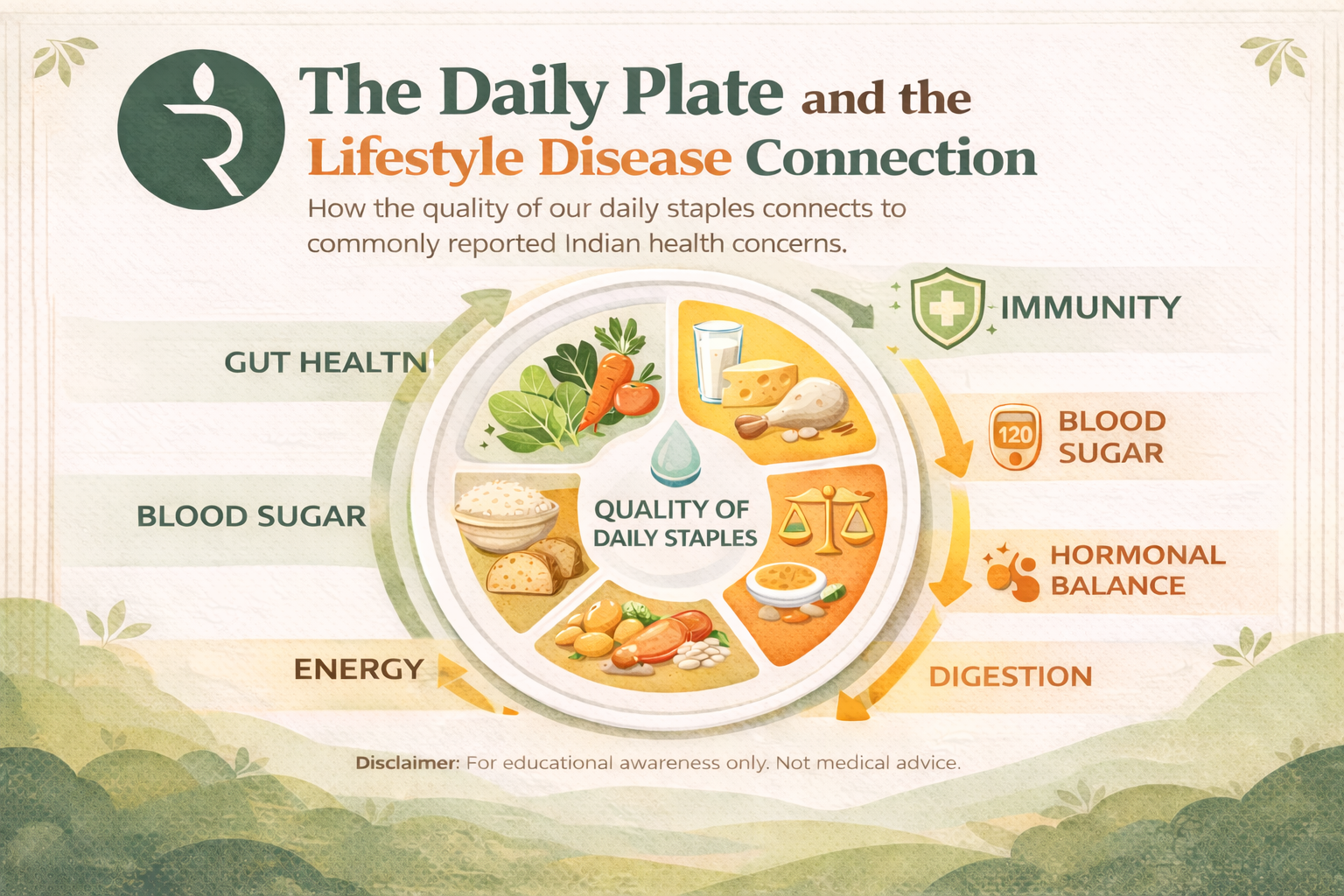
Reason 2: Lifestyle Diseases Are Arriving Too Young
India is facing a lifestyle disease crisis that is no longer only affecting the elderly. Diabetes, thyroid disorders, gut issues, and inflammatory conditions are being diagnosed in people in their thirties and forties — and increasingly in their twenties.
Families watching parents, siblings, or spouses navigate these conditions are beginning to trace the thread backward. What is in the food we eat every day? What has changed in the last two or three decades? And what can we realistically change at home?
Organic staples address this at the most foundational level. When the rice, flour, and fats that form the backbone of every meal are free from synthetic residues and nutritionally more complete, the daily chemical and nutritional stress on the body reduces — quietly but meaningfully over time.
Reason 3: The Taste Has Become Undeniable
This one surprises people who have not yet made the switch. They expect health benefits. They do not expect to notice the difference immediately on the plate.
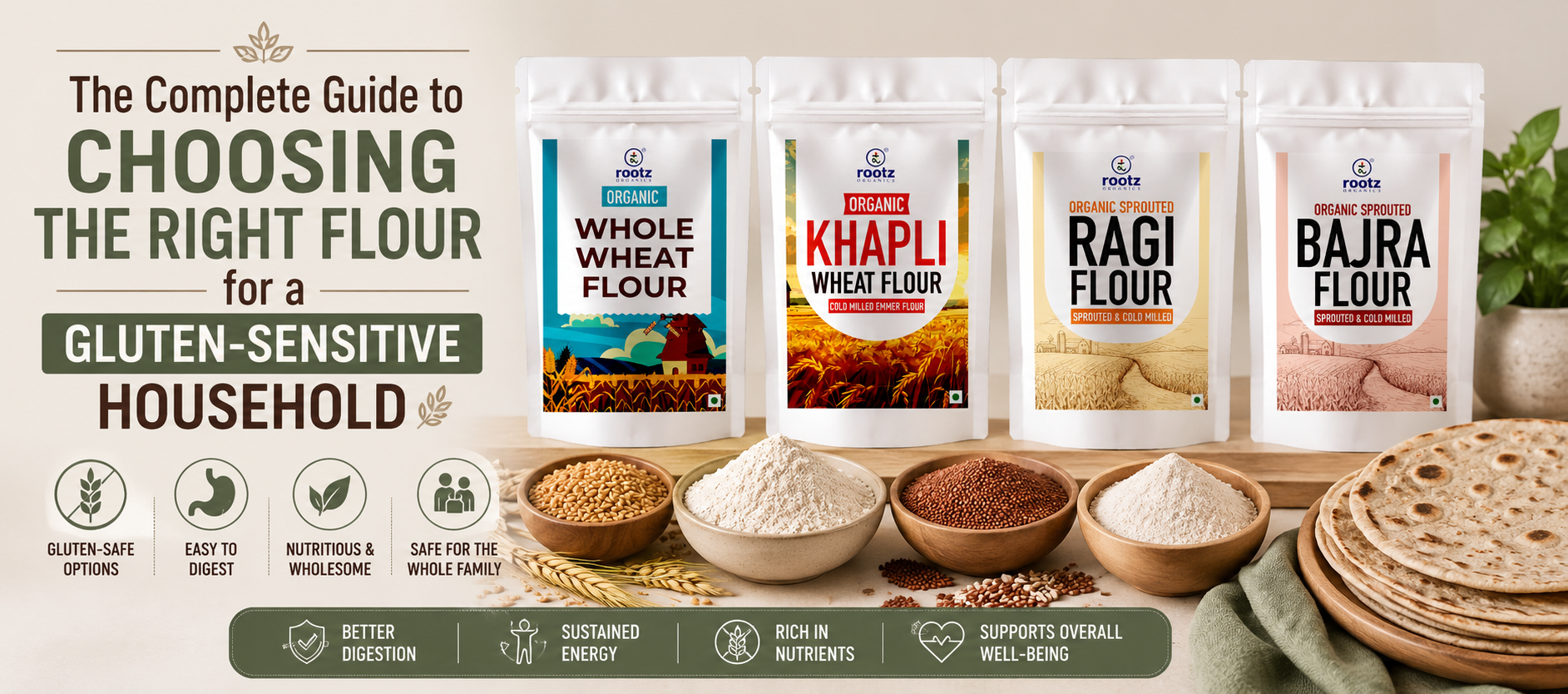
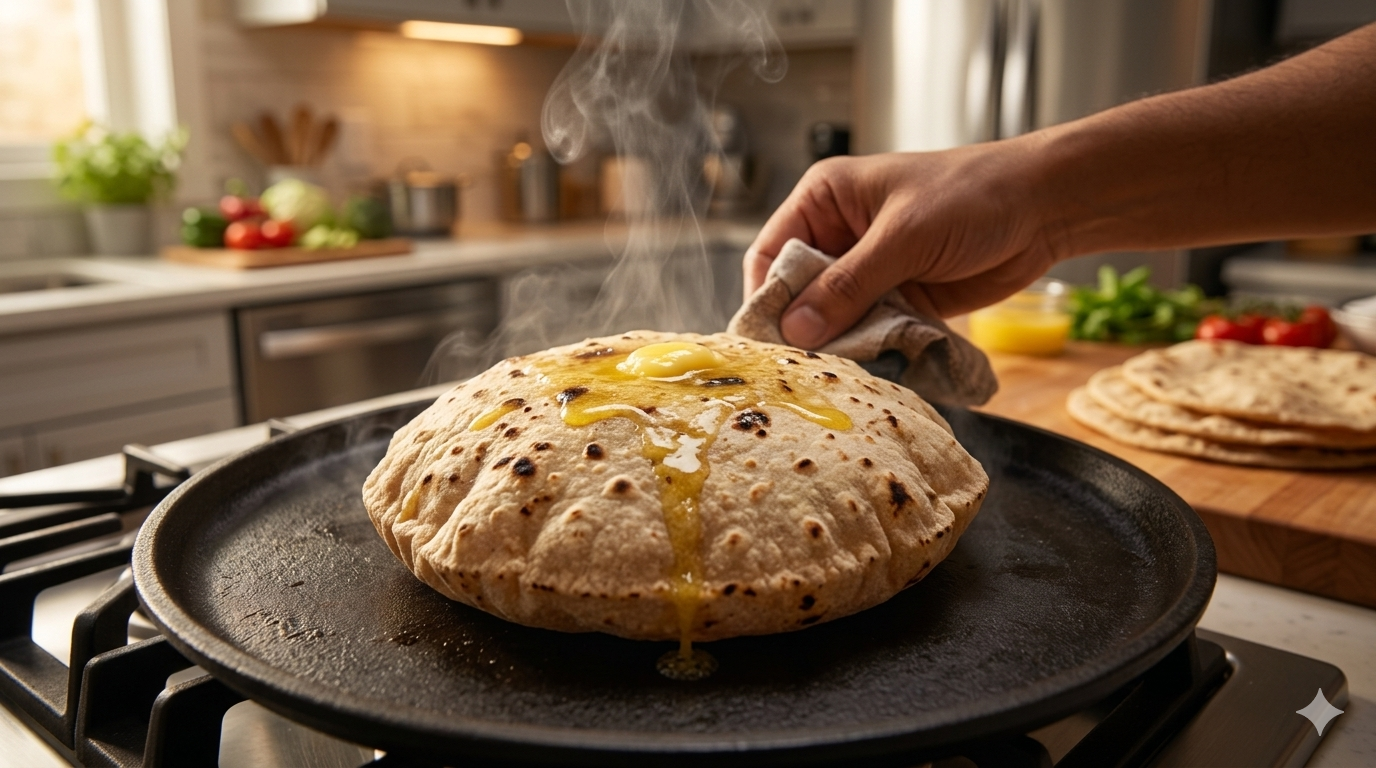
But organically grown food, particularly unpolished grains, stone-ground flour, and traditionally made ghee from desi cows, tastes measurably different. The aroma of → Rootz Organic Atta when it hits a hot tawa. The depth of flavour in a bowl of organic dal. The richness of → Rootz Organic Cow Ghee compared to commercial alternatives.
This is not nostalgia. It is the direct result of food grown in living, nutrient-rich soil and processed without the chemical shortcuts that strip away the natural character of the ingredient. Once a family experiences this difference, going back to the processed alternative feels like a genuine step backward.
Reason 4: Awareness of What is Actually in Regular Food
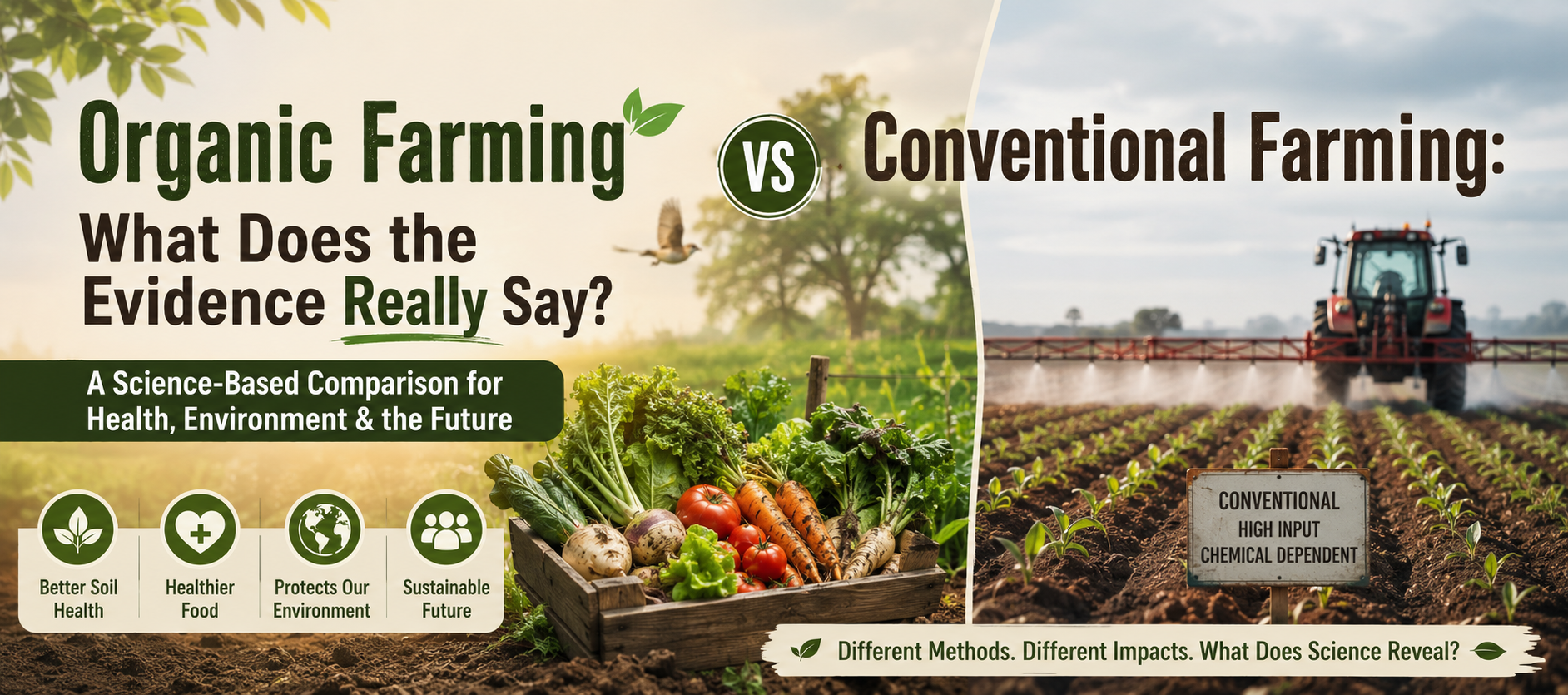
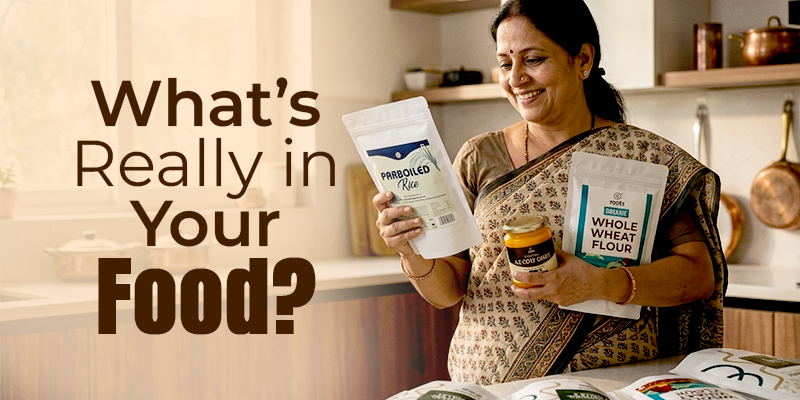
India's urban consumer in 2025 is more informed than ever before. They watch documentaries. They follow nutritionists. They read research that their parents never had access to. And increasingly, what they are learning about conventionally grown food in India is difficult to ignore.
Pesticides that are banned in Europe remain in use on Indian farms. Adulteration in commercial ghee is widespread, with studies finding significant percentages of tested samples containing vanaspati, hydrogenated oils, or synthetic additives. Commercial atta is bleached, improved with chemical agents, and stripped of the bran and germ that make wheat nutritionally valuable.
For a family that has learned even a fraction of this, the decision to switch is not a difficult one. It is the only sensible response to information they cannot unknow.
Reason 5: Organic Has Become Genuinely Accessible
The most practical barrier to switching to organic food has always been price and availability. Both of those barriers have changed significantly.
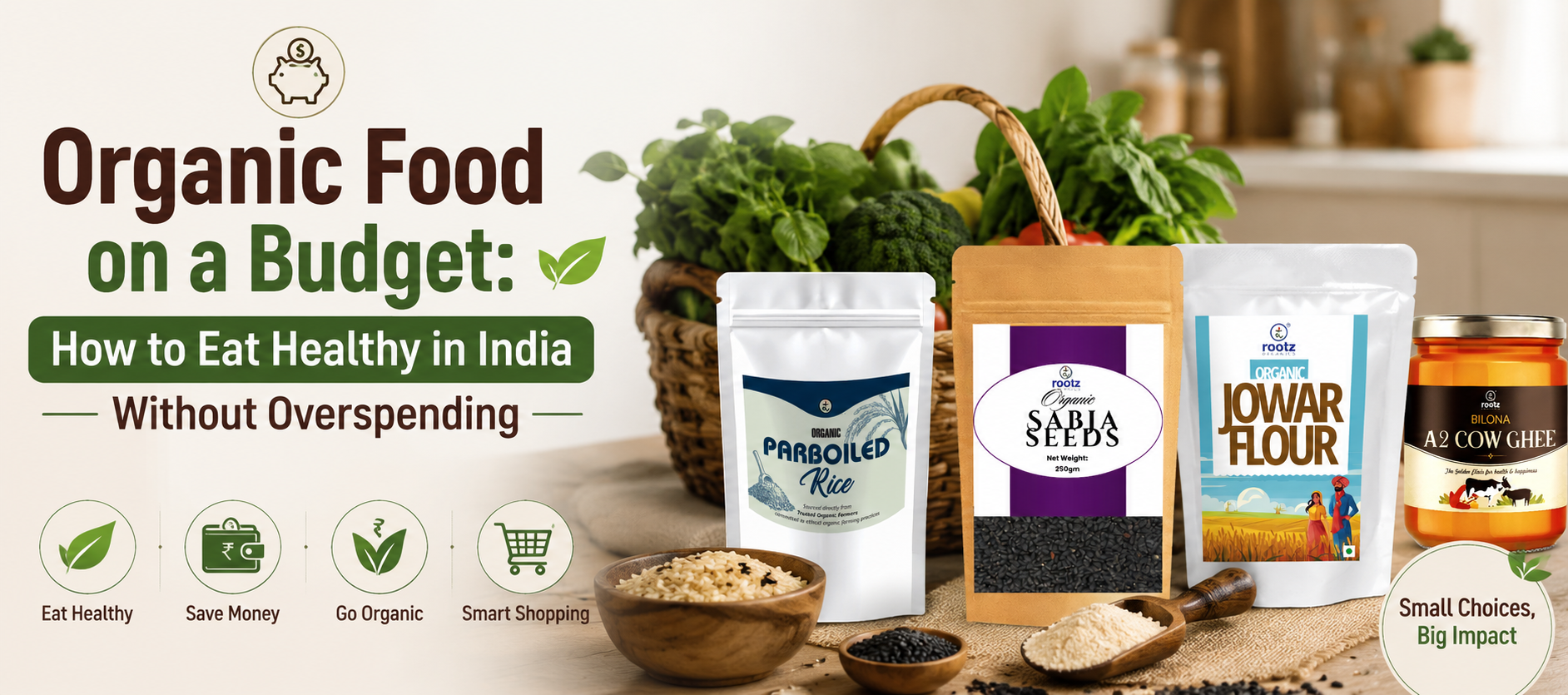
Direct-to-consumer organic brands have removed the layers of middlemen that once made organic food a premium category accessible only to high-income households. When calculated as a cost per meal rather than a cost per kilogram, the difference is often less than ₹10 per person…a figure that reframes the entire conversation for middle-income Indian families.
At Rootz Organics, accessibility is not an afterthought. It is the foundation. Certified organic staples sourced directly from verified Indian farms, delivered to your door with complete transparency about where every product comes from. Because eating clean food should be a reachable choice for every Indian family…not a privilege reserved for a few.
Conclusion: They Are Not Choosing a Trend. They Are Choosing Better.
The Indian families switching to organic food are not chasing a wellness aesthetic. They are making a considered, practical, increasingly affordable decision to reduce what goes into their bodies daily — and to replace it with food that is closer to what their grandparents ate, before industrial agriculture changed everything.
The reasons are different for every family. The child who keeps getting sick. The parent, diagnosed with diabetes at fifty. The grandmother who remembers what rice used to taste like. The young couple who read one too many ingredient labels.
But the destination is the same: a kitchen where the food is real, traceable, and genuinely worth eating.
Make the Switch With Rootz Organics
Certified organic. Directly sourced. Fully transparent.
Shop Rootz Organic Rice | Shop Rootz Organic Atta | Shop Rootz Organic Cow Ghee | Shop Rootz Organic Millets
Your family deserves food as clean as your intention to feed them well.
Health and Happiness always
FAQs
Q: Why are Indian families switching to organic food?
A: The primary reasons are children's health, awareness of pesticide residues in conventional food, the rise of lifestyle diseases, and the noticeably better taste and quality of organically grown staples.
Q: Is organic food affordable for average Indian families?
A: When calculated per meal rather than per kilogram, the premium for organic staples is often ₹5 to ₹15 per person. Most families who switch consider this a worthwhile investment given the long-term health benefits.
Q: Where should I start when switching to organic food in India?
A: Start with the foods your family eats every single day — rice, wheat flour, ghee, and millets. These daily staples carry the highest cumulative impact and offer the greatest return from switching to certified organic.
Q: How do I know if organic food in India is genuinely certified and not just labelled that way?
A: Look for the Jaivik Bharat logo issued by FSSAI on the packaging — this is India's official government-backed organic certification mark. Trustworthy brands like Rootz Organics go further by providing complete farm sourcing information and batch-level traceability, so you know exactly where your food comes from before it reaches your kitchen.
Q: Does switching to organic food mean changing how I cook or what I eat?
A: Not at all. Organic staples are used exactly the same way as their conventional counterparts. The roti still rolls the same way. The rice still cooks in the same pot. The ghee still goes into the same tadka. The only thing that changes is what is no longer on your plate…the residues, the additives, and the chemical shortcuts that came with the conventional version.
-
 August 6th, 2026
 -
 August 6th, 2026