Organic Food vs Regular Food: What You Need to Know
Introduction: A Question Worth Asking Properly
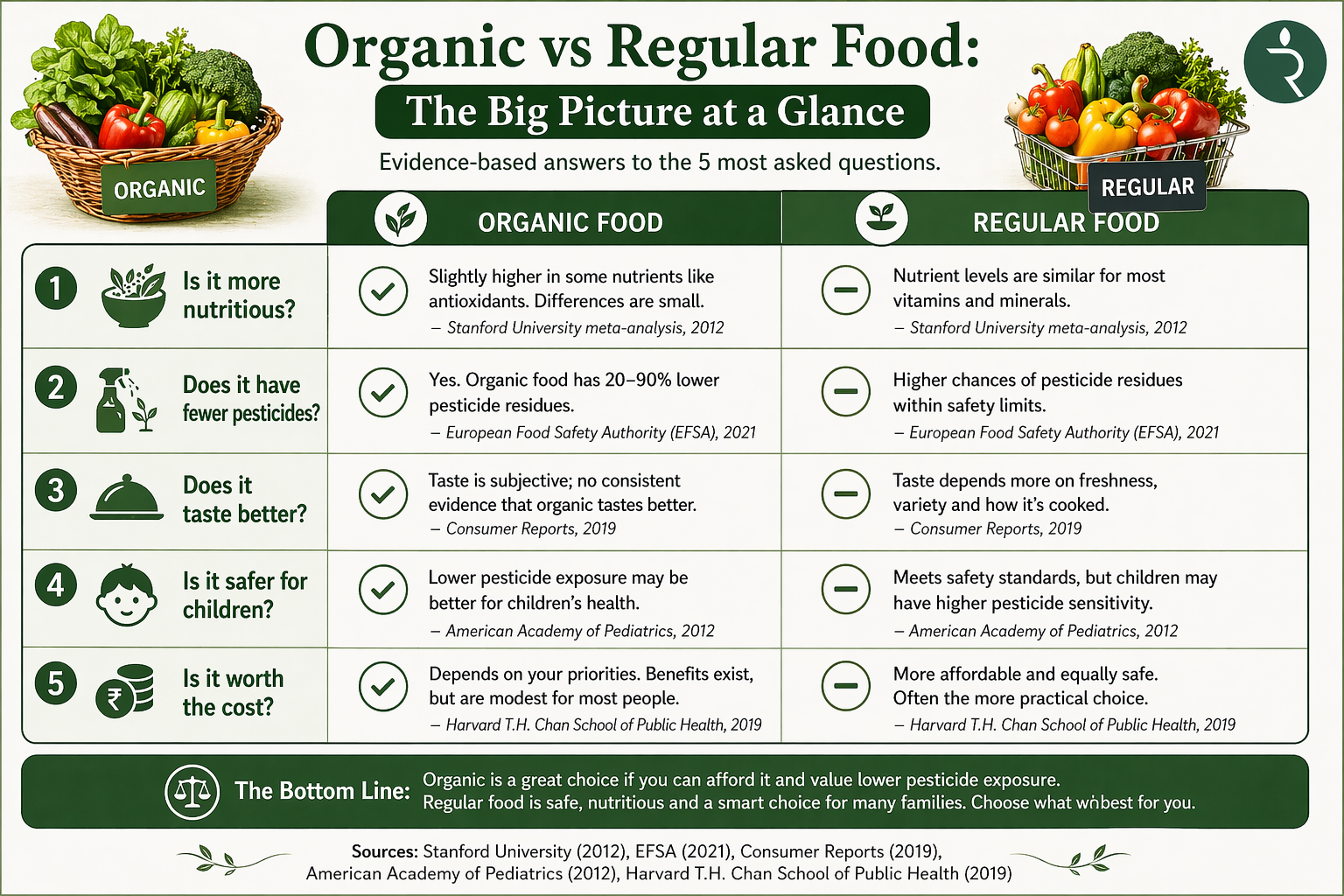
Walk into any supermarket in India today and you will find two versions of almost everything. Regular atta and organic atta. Regular rice and organic rice. Regular vegetables and organic vegetables. The organic version costs more. The packaging looks different. But both claim to be food.
So what is actually different? Is organic food genuinely better for you, or is it a premium you are paying for a label? Is the price difference justified, or is it marketing dressed up as health advice?
These are fair questions. And they deserve fair, research-backed answers…not the kind of answers that dodge complexity to sell you something, but the kind that give you a clear, honest picture so you can decide for yourself.
The truth, as with most things in nutrition, sits somewhere more nuanced than either side of the debate likes to admit. Organic food is not a miracle category that transforms everything you eat. But it is meaningfully, measurably different from conventionally grown food in ways that matter …particularly for Indian families eating the same staples every single day.
Here is what science actually says.
What Organic Actually Means and What It Does Not
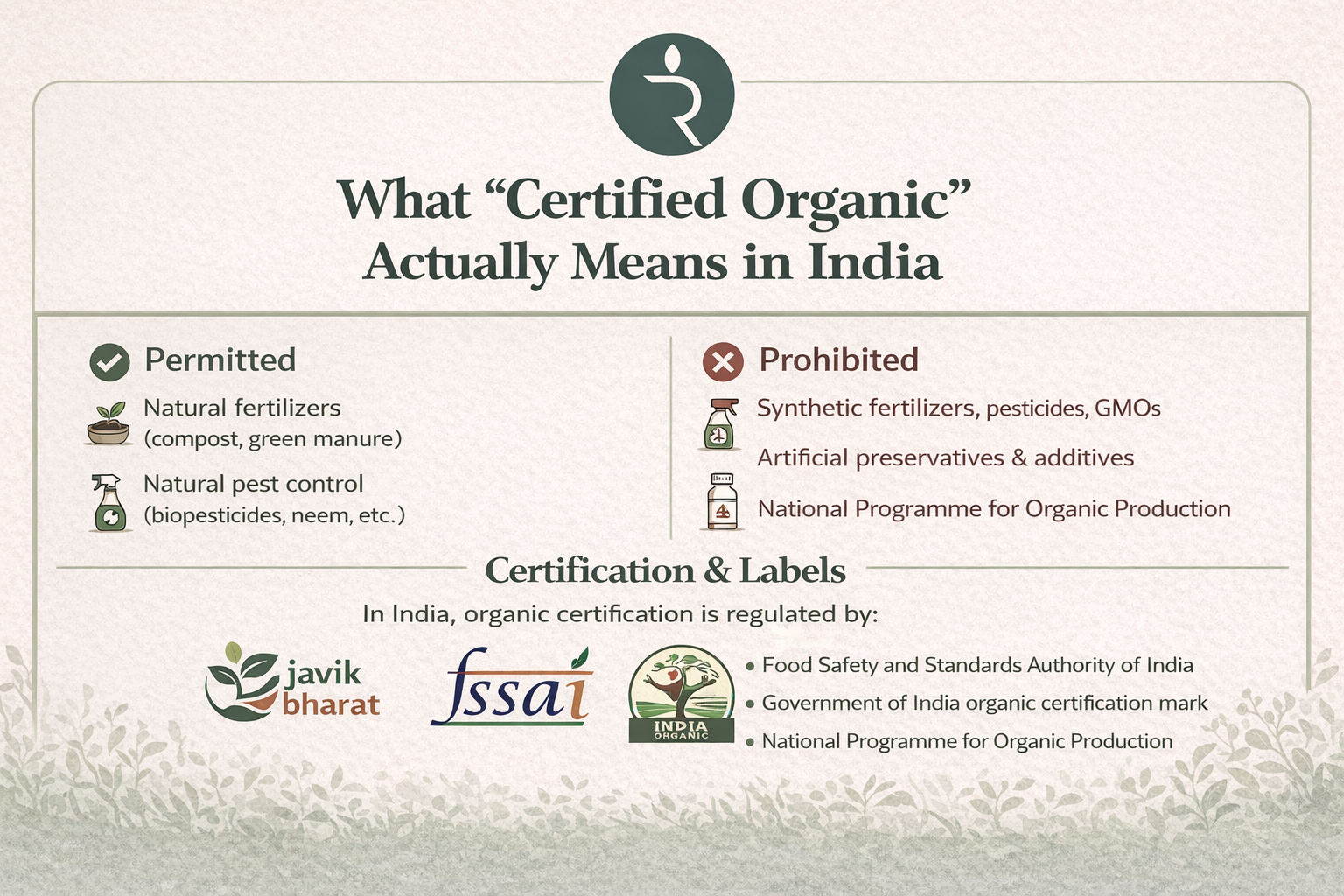
Before comparing, it helps to be precise about what the word "organic" means in the context of food in India.
Organic food is grown and processed without the use of synthetic pesticides, chemical fertilisers, genetically modified organisms, or artificial post-harvest treatments. In India, this is governed by the Food Safety and Standards Authority of India (FSSAI) through the Jaivik Bharat programme, and by the National Programme for Organic Production (NPOP) administered by APEDA under the Ministry of Commerce. Certified organic food has been independently verified to meet these standards.
What organic does not mean is that the food is grown in a completely chemical-free environment. Organic farming permits certain naturally derived inputs for pest and soil management. It also does not automatically mean the food is locally grown, freshly harvested, or nutritionally perfect in every case.
What it does mean….consistently, verifiably, and across every category of food, is that it carries significantly lower chemical residues than its conventional counterpart and is produced through methods that protect soil health, water quality, and the broader ecosystem.
That distinction is where the real comparison begins.
The Pesticide Question: This Is Where It Gets Real
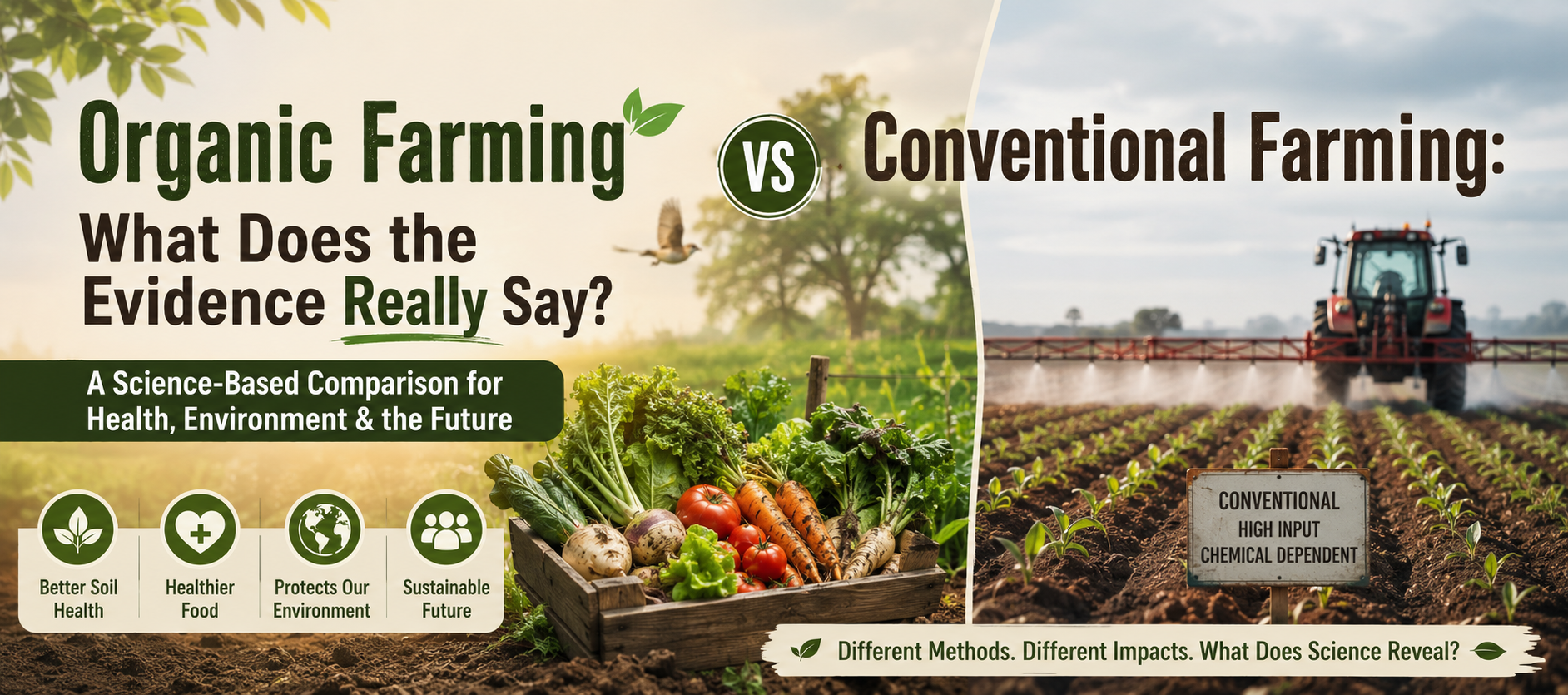
The most consistent, well-documented difference between organic and conventional food is not nutritional content. It is pesticide residue levels.
Organic produce has a 30 percent lower pesticide residue level than conventional foods. Harvard Health This finding has been replicated across multiple large-scale reviews and is one of the most robust conclusions in the organic food research literature.
For India, this matters more than it might in many other countries. Intensive agriculture practices in India to meet the food demand of the increasing population have led to the use of agrochemicals such as pesticides in higher quantities to increase productivity, resulting in contamination of the environment. Through the soil, pesticides can enter surface or groundwater, and even the plants or crops take up the pesticide residues which are ultimately received by different organisms and humans.
Pesticide poisoning can lead to numerous disorders such as dyslipidemia, diabetes, liver, kidney, and cardiovascular diseases. PubMed Central. These are not rare or exotic conditions. They are among the fastest-growing health concerns in urban India today.
The critical point to understand here is the difference between acute exposure and chronic, cumulative exposure. Pesticide levels in both organic and non-organic foods are generally within allowable safety limits. However, just because these foods are not going over what they call an acceptable limit does not mean they are safe for everyone, particularly in children and pregnant women.
This is the everyday reality: the concern is not a single meal. It is the same conventionally grown rice, atta, vegetables, and fruits eaten three times a day, every day, for years. The cumulative picture is what the "acceptable limit" framing does not capture.
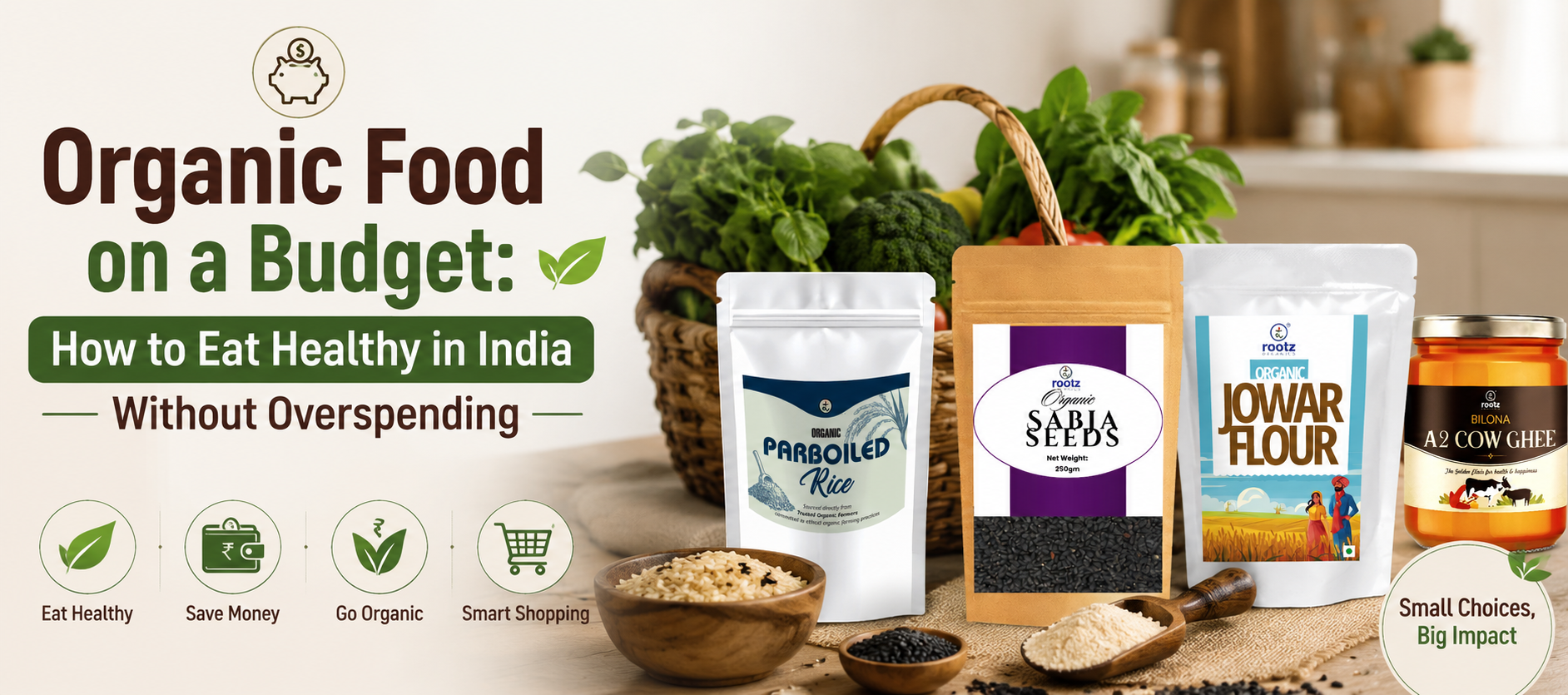
Switching to certified organic food across your daily staples, your Rice , your Atta, your Millets…is the most direct way to reduce this daily chemical load without changing anything else about how you cook or eat.

The Nutrition Debate: An Honest Answer
This is where the organic vs regular food debate gets genuinely complicated, and where both sides tend to overstate their case.
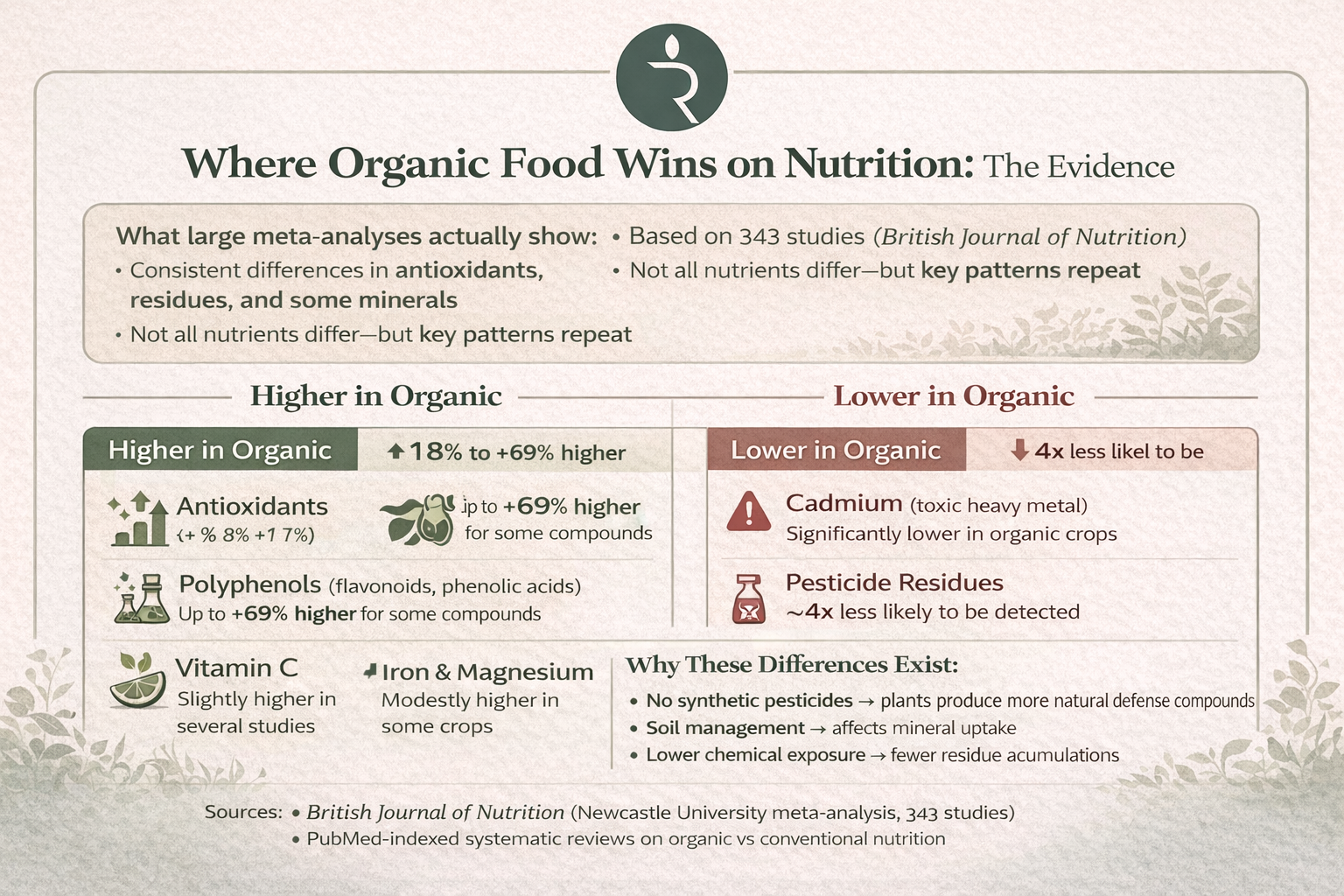
The honest answer is this: the nutritional differences between organic and conventional food are real but not dramatic for most nutrients. Where the differences are most meaningful is in antioxidants, polyphenols, and certain micronutrients.
A landmark meta-analysis published in the British Journal of Nutrition, drawing on 343 peer-reviewed studies, found that organic crops contained 18 to 69 percent higher concentrations of antioxidant compounds, depending on the type of antioxidant. Researchers concluded that consumers who switch to organic fruit, vegetables, and cereals would get 20 to 40 percent more antioxidants. Tufts Health & Nutrition Letter
The researchers speculated that those nutritional benefits might be connected to the way organic crops are produced. A plant on a conventionally managed field will typically have access to high levels of synthetic nitrogen and will marshal the extra resources into producing sugars and starches. As a result, the harvested portion of the plant could contain lower concentrations of other nutrients, including antioxidants. Without the synthetic chemical pesticides applied on conventional crops, organic plants might produce more phenols and polyphenols to defend against pest attacks.
For specific nutrients, published research found that organic varieties provide significantly greater levels of Vitamin C, iron, magnesium, and phosphorus than non-organic varieties of the same foods. While being higher in these nutrients, they are also significantly lower in nitrates and pesticide residues. Organic foods typically provide greater levels of a number of important antioxidant phytochemicals, including anthocyanins, flavonoids, and carotenoids.
Conventional crops also had roughly twice as much cadmium, a toxic heavy metal contaminant, as organic crops. Cadmium accumulates in the body over time and is associated with kidney damage, bone weakening, and increased cancer risk.
The nutritional case for organic food is therefore not that it delivers dramatically more of every vitamin. It is that it delivers meaningfully more of specific protective compounds — antioxidants, polyphenols, certain minerals…while simultaneously delivering less of what your body does not need: pesticide residues, heavy metals, and synthetic chemical additives.
The Indian Context: Why This Conversation Is Different Here
The global organic vs conventional debate happens against a backdrop of relatively well-regulated food safety systems in the countries where most of the research is conducted. India's context is different in ways that significantly strengthen the case for organic food for Indian consumers specifically.
India's agricultural paradox is one where low per capita pesticide application is related to disproportionately high public health expenditures, including early deaths due to chronic diseases. In states like Uttar Pradesh and Bihar, small and marginal farmers have limited access to agricultural extension services and remain reliant on chemical pesticides without adequate guidance on safer options.
The regulatory gap matters too. Many pesticides that have been banned or heavily restricted in the European Union and other developed markets remain in active use on Indian farms. The cumulative exposure profile for an Indian consumer eating domestically grown conventional food is therefore meaningfully higher than for a consumer in a country with tighter pesticide regulation.
For Indian families eating rice once or twice a day, wheat flour in every roti and paratha, and the same seasonal vegetables repeatedly across months…the daily, repeated nature of staple food consumption makes the quality of those staples disproportionately important.
This is why the decision to switch to organic is not the same decision for every family in every country. For India, the argument is particularly strong.
What the Research Says About Health Outcomes Over Time
Beyond individual nutrients and residue levels, a growing body of research is now looking at what happens to people who eat organic food consistently over years.
A large French population study involving over 34,000 participants found that organic food consumers had diets that were healthier and richer in plant-based food than conventional food consumers. Regular consumption of organic food was associated with reduced risks of obesity, type 2 diabetes, postmenopausal breast cancer, and lymphoma. Organic food consumers also recorded lower concentrations of urinary pesticide metabolites compared to conventional food consumers. American Society for Nutrition
These are population-level associations, not controlled clinical trials, and the researchers are careful to note that organic food consumers may have other healthy lifestyle factors that contribute to these outcomes. But the direction of the evidence…consistently, across multiple studies and populations points the same way.
The picture emerging from the research is not that organic food is medicine. It is that a daily diet based on organic food reduces the body's background chemical load, provides slightly better nutritional density in protective compounds, and over years of consistent consumption, appears to be associated with meaningfully better health outcomes.
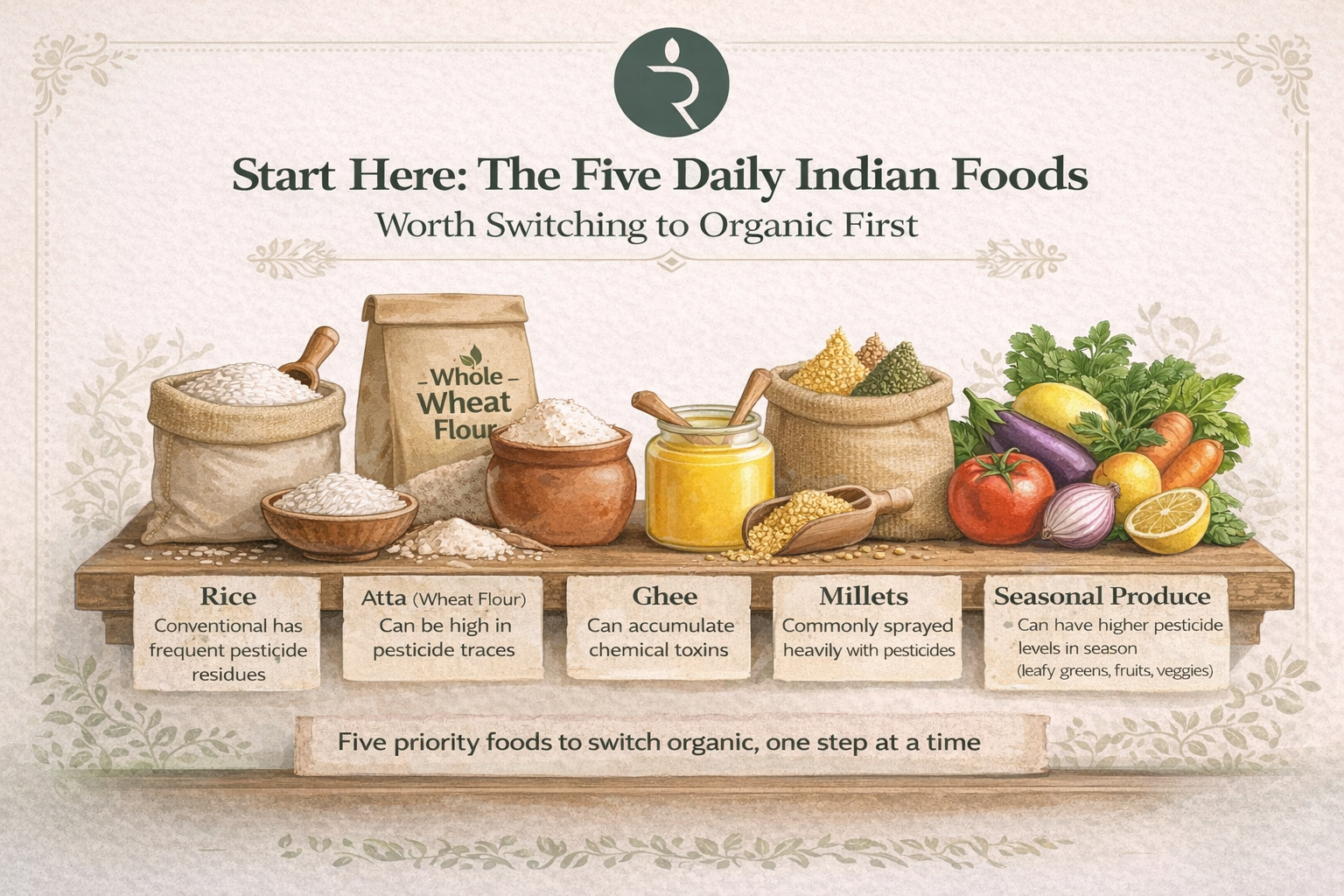
The Five Daily Foods Where Switching to Organic Makes the Most Difference
Not every food requires the same level of urgency when it comes to choosing organic. But for the foods that form the foundation of the daily Indian diet — the ones eaten every meal, every day — the case for organic is strongest and most impactful.
Rice. Eaten once or twice daily by most Indian families. One of the most chemically treated staple crops in Indian agriculture, with multiple rounds of pesticide application during the growing season and post-harvest fumigants during storage. → Explore Rootz Organic Rice
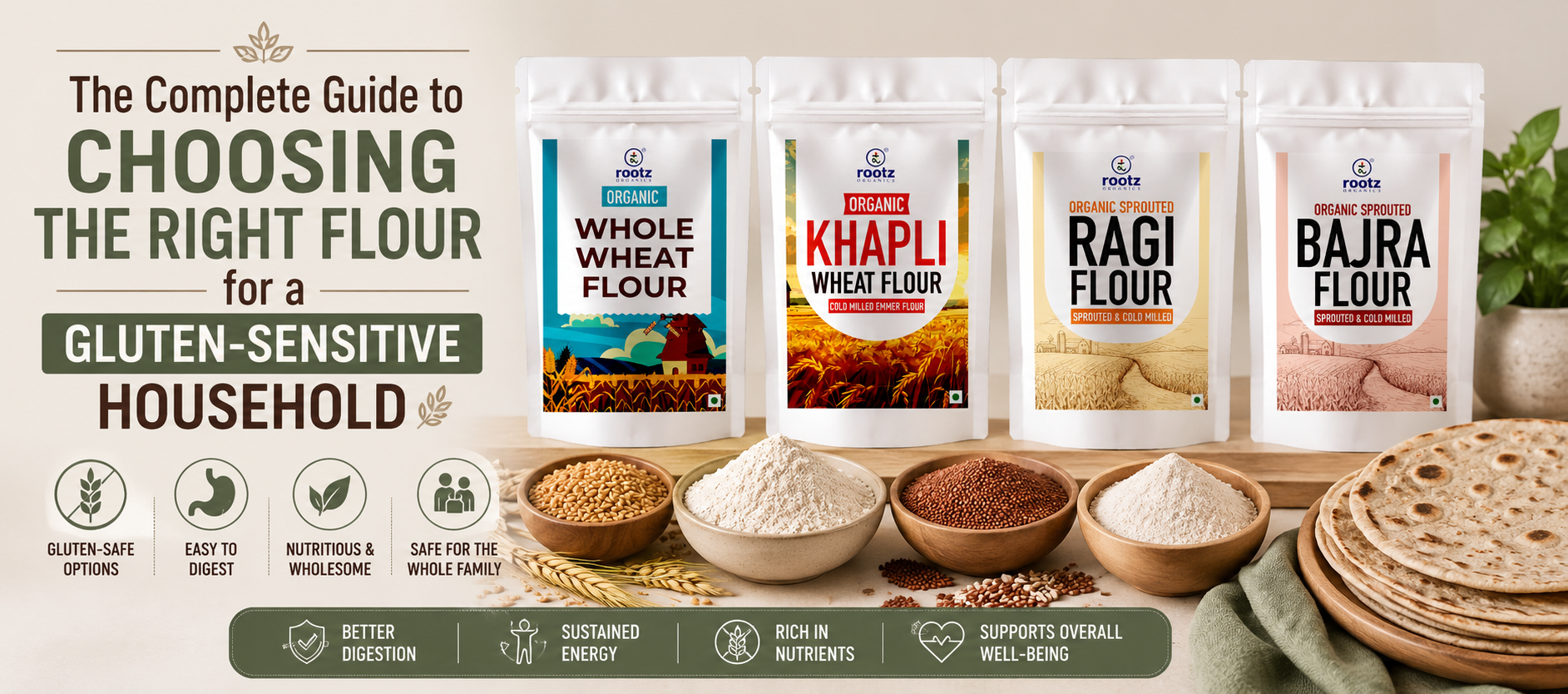
Wheat flour. The base of every roti, paratha, and chapati. Commercial wheat cultivation in India's grain belt relies heavily on synthetic pesticides and fertilisers, with residues that carry through to the flour. → Explore Rootz Organic Atta
Cow ghee. Consumed daily in most Indian households for cooking and direct consumption. Commercial ghee is frequently adulterated and sourced from cows raised on chemically treated feed in industrial dairy conditions. → Explore Rootz Organic Cow Ghee
Millets. Increasingly part of the daily diet as Indian families rediscover ancestral grains. The nutritional benefit of millets lives in the bran layer — which must be unpolished and organically grown to deliver its full value. → Explore Rootz Organic Unpolished Millets
Fruits and vegetables. Among the most heavily pesticide-treated food categories in India, with thin-skinned fruits like grapes, strawberries, and tomatoes carrying the highest residue loads. → Explore Rootz Organic Produce
These five categories, switched to organic, cover the majority of what most Indian families eat daily. The impact of that one change, applied consistently, compounds into something genuinely meaningful over months and years.
The Cost Question: Reframing What You Are Actually Paying For
Every honest conversation about organic food in India eventually arrives here. Organic costs more. That is a fact. And for most Indian families, every rupee in the household budget matters.
The framing that helps most people is this: organic food is not more expensive than regular food. It is more expensive than the cheapest available version of food that has had its true cost subsidised by compromises to your health, the farmer's health, and the soil's long-term viability.
The actual per-meal cost premium for switching your daily rice and atta to organic is, for most families, between ₹5 and ₹15 per meal. Weighed against even one doctor's consultation (₹500 to ₹1,500), one round of medication for a gut issue (₹200 to ₹500), or the invisible daily cost of low energy and compromised immunity…the calculation changes.
Organic systems have been shown to produce 40 percent higher yields in times of drought, use 45 percent less energy, and release 40 percent fewer carbon emissions than conventional farming methods. York College of Pennsylvania. When you buy organic, you are also paying for a farming system that will still be able to produce food in twenty years…on living, healthy soil, without the chemical dependency that is quietly degrading India's agricultural land.
The question is not whether you can afford organic food. It is whether the food you are currently buying is actually as affordable as it appears, once the full cost is accounted for.
Conclusion: The Choice Is Simpler Than the Debate Suggests
Organic food is not perfect. It is not a magical cure for every health condition. The science is still evolving, and reasonable researchers disagree about the magnitude of some of its benefits.
But on the two questions that matter most for Indian families…does it carry fewer harmful residues, and does it deliver meaningful nutritional advantages…the answer from the research is clearly yes to both.
And in a country where the daily staple diet is chemically intensive by global standards, where the same foods are eaten repeatedly every single day from childhood through old age, and where lifestyle diseases are accelerating across every age group, choosing food that does less harm and delivers more nutrition is not a luxury decision.
It is a logical one.
Start With What You Eat Every Day
Rootz Organics brings you certified organic staples for the Indian kitchen… rice, atta, ghee, millets, and more…sourced directly from verified Indian farms, grown clean, and delivered with complete sourcing transparency.
Jaivik Bharat certified. Genuinely traceable.
Real food. Real farming. Real difference. That is the Rootz promise.
FAQs
Q: Is organic food actually better than regular food?
A: Yes, in two consistently documented ways. Organic food carries significantly lower pesticide residues — around 30 percent less than conventional food — and higher levels of antioxidants, polyphenols, and certain minerals. Long-term population studies also associate regular organic food consumption with reduced risks of obesity, type 2 diabetes, and certain cancers.
Q: Is organic food worth the extra cost in India?
A: For daily staples like rice, atta, ghee, and millets that are consumed multiple times a day, the cost premium per meal is often ₹5 to ₹15. Given the cumulative health benefits of reduced pesticide exposure and better nutritional density, most families who switch consider it one of the highest-return changes they can make to their household diet.
Q: Does organic food taste different from regular food?
A: Many people find that organically grown food, particularly staples like rice, atta, and seasonal produce, has a noticeably richer, more natural flavour. This is partly because organic crops tend to develop more secondary plant compounds, including the antioxidants and polyphenols that also contribute to better nutrition.
Q: Which foods should I switch to organic first in India?
A: Start with the foods your family eats every day — rice, wheat flour, cow ghee, millets, and the vegetables and fruits consumed most frequently. These daily staples carry the highest cumulative exposure and therefore offer the greatest health benefit when switched to organic.
Q: How do I know if organic food in India is genuinely certified?
A: Look for the Jaivik Bharat logo from FSSAI on packaged organic products. Trustworthy brands provide clear sourcing information including farm origin, growing practices, and batch-level traceability. At Rootz Organics, every product comes with complete farm-to-kitchen transparency so you always know exactly what you are buying.
-
 August 6th, 2026
 -
 August 6th, 2026