
How Organic Flour Improves Digestion and Gut Health
Introduction: The Roti You Eat Every Day Deserves a Second Look
In nearly every Indian household, the roti is non-negotiable. It shows up at breakfast as a paratha, at lunch rolled around sabzi, at dinner alongside dal. The average Indian family goes through kilograms of atta every single month. It is the most quietly consumed food in the country, so ordinary that most people never stop to think about it at all.
But here is the thing about ordinary foods: because we eat them every day without thinking, they have the greatest cumulative effect on our health for better or for worse.
The flour that goes into your daily roti is one of the most processed, chemically treated staples in the average Indian kitchen. And its impact does not show up in dramatic ways. It shows up slowly, in the form of bloating after meals, irregular digestion, unexplained fatigue, and a gut that never quite feels settled. Millions of Indians are experiencing exactly these symptoms and attributing them to stress, spicy food, or simply "a sensitive stomach" when the answer may be far simpler.
Organic flour changes this equation entirely. And understanding why starts with understanding what is actually happening inside your gut every time you eat.

What Is Happening to Your Flour Before It Reaches You?
Most commercially sold atta in India, including many popular branded varieties, goes through an industrial process that is designed around shelf life, appearance, and cost efficiency rather than nutrition or digestive compatibility. Here is what that process typically involves, explained simply:
Bleaching for whiteness. Freshly milled organic wheat flour has a natural off-white, slightly yellowish colour. To achieve the bright white appearance consumers have come to associate with "clean" flour, commercial producers treat it with chemical bleaching agents. These agents accelerate the whitening process but also alter the natural protein structure of the flour in ways that affect how your digestive system processes it.
Synthetic additives for texture and shelf life. Commercial flour is regularly treated with improving agents that strengthen gluten artificially, helping it produce uniformly fluffy, consistent results in bread and baked goods. These additives serve the food industry's need for standardisation. They do not serve your gut.
Heavy pesticide use on wheat crops. Wheat grown through conventional farming in India, particularly across Punjab, Haryana, and Uttar Pradesh, is treated with pesticides at multiple stages. The residues that remain in the grain carry through to the flour that reaches your kitchen.
High-heat roller milling. Industrial milling uses high-speed steel rollers that generate significant heat during processing. This heat destroys a large portion of the natural enzymes, fibre, and B-vitamins present in the wheat grain. What is left after this process is flour that is structurally intact but nutritionally hollowed out.
The roti made from this flour looks normal. It tastes familiar. But what it does inside your digestive system, eaten day after day, year after year, tells a very different story.
Your Gut: The System That Bears the Cost
To understand why flour quality matters so deeply for digestion, it helps to understand what your gut is actually doing every time you eat a roti.
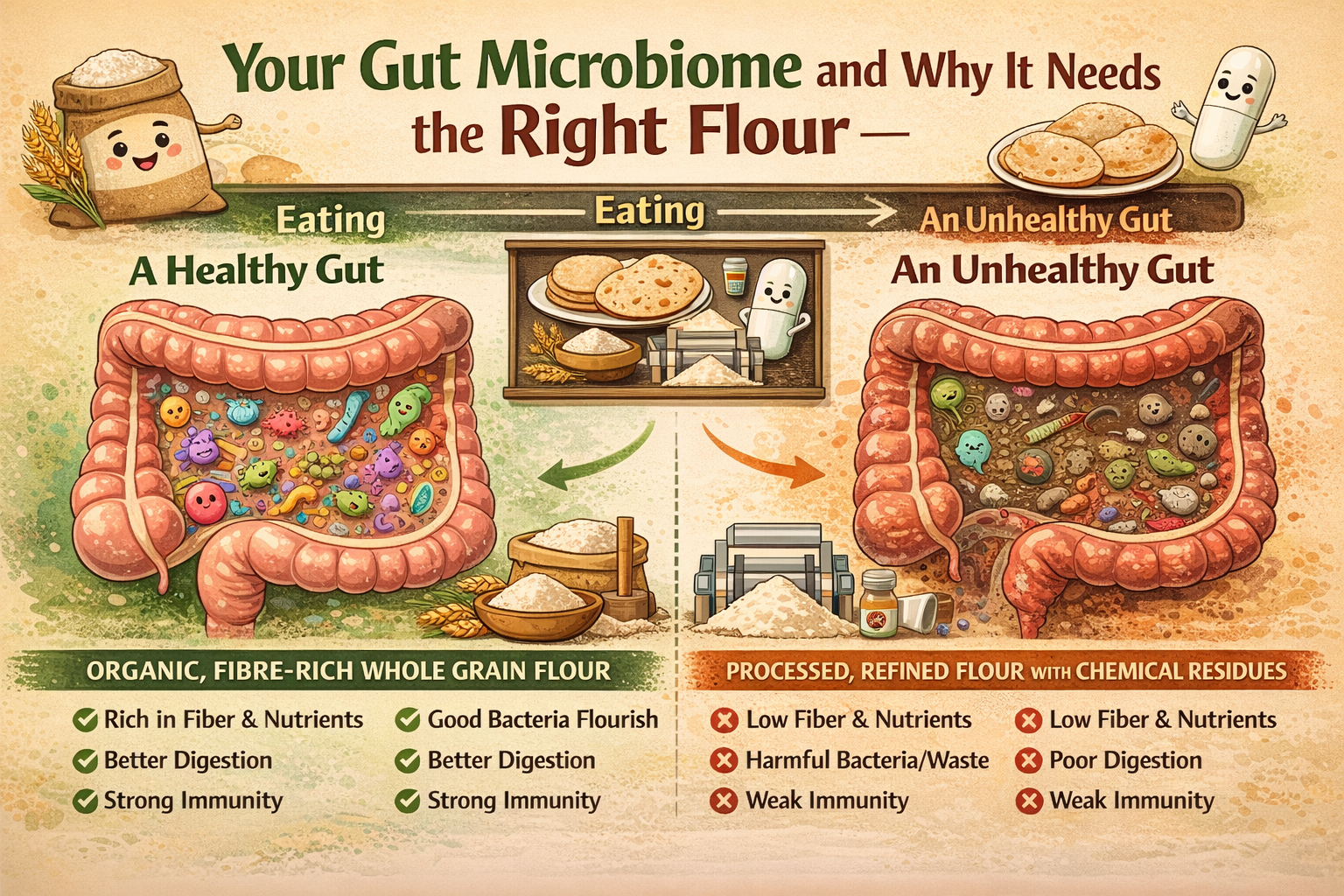
Your digestive system is not just a pipe that food passes through. It is home to trillions of microorganisms, collectively called the gut microbiome, that are responsible for breaking down food, producing essential vitamins, regulating immunity, managing inflammation, and even influencing your mood and mental clarity. This microbiome is extraordinarily sensitive to what you feed it.
When you eat flour that is stripped of its natural fibre, treated with chemical residues, and altered by industrial processing, here is what happens:
The beneficial bacteria in your gut depend on fibre as their primary food source. Without adequate natural fibre from wholesome flour, these bacteria are effectively being starved. Over time, the balance in the gut shifts toward less beneficial microorganisms, leading to what gut health researchers call dysbiosis —> an imbalance in the gut ecosystem that manifests as bloating, irregular bowel movements, acidity, brain fog, and lowered immunity.
The chemical residues and additives in processed flour add another layer of stress. Your gut lining, which is only one cell thick in places, is your body's first barrier against harmful substances. Repeated exposure to chemical residues irritates this lining, contributing to low-grade inflammation that, over time, has been linked to a wide range of conditions from irritable bowel syndrome to skin issues to autoimmune responses.
This is not a distant, theoretical concern. Gut health issues are among the fastest growing health complaints in urban India today. And the daily roti, made from the most chemically processed version of wheat flour, is sitting right at the centre of most people's diets.
So What Makes Organic Flour Different?
Organic wheat flour begins with wheat that is grown without synthetic pesticides, chemical fertilisers, or seed treatments. The grain arrives at the mill carrying its full natural integrity. What happens at the milling stage matters enormously, and this is where certified organic flour, particularly stone-ground organic atta, pulls far ahead.
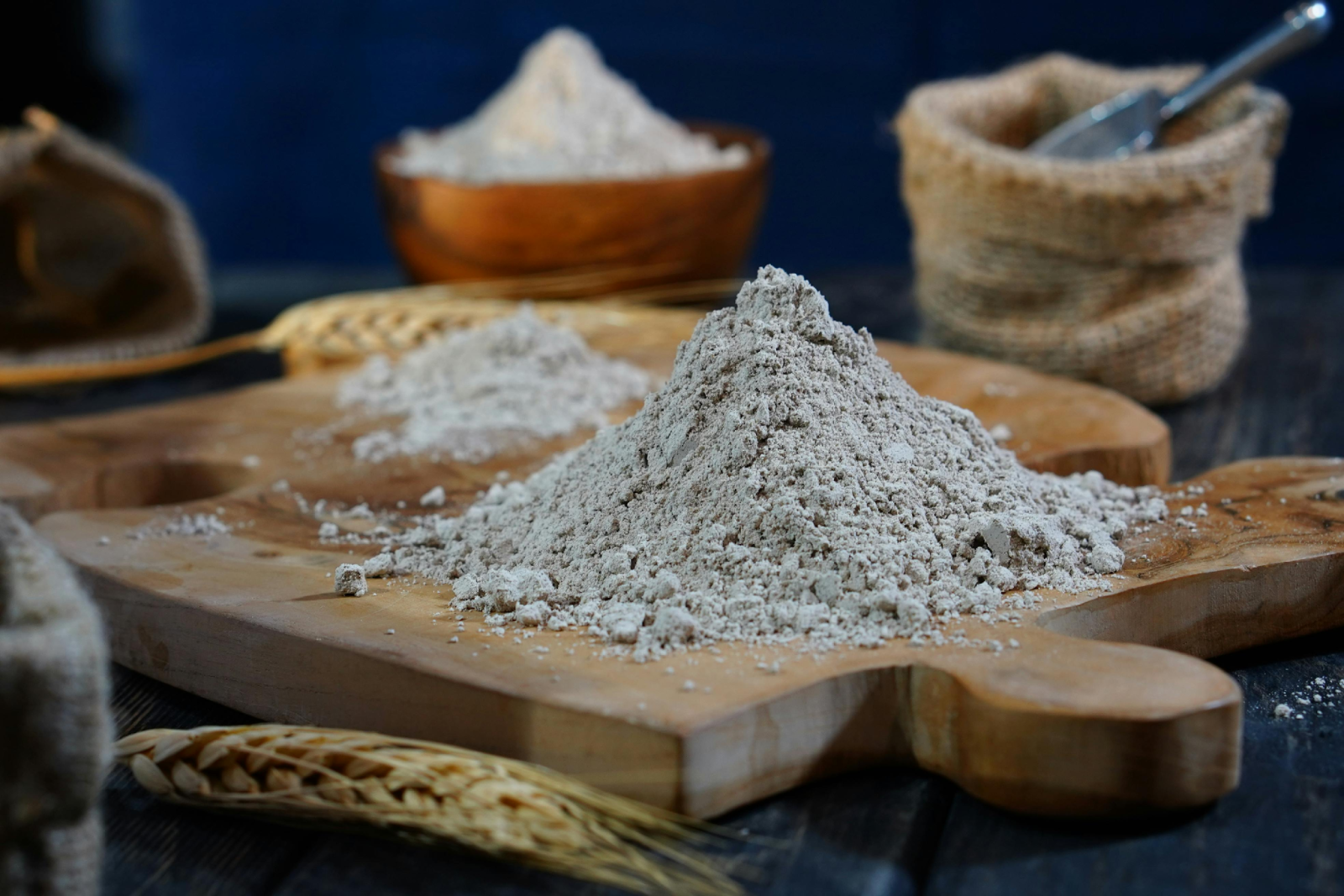
Stone grinding preserves everything the wheat was meant to contain. Traditional chakki or stone-ground milling uses low-speed grinding that generates minimal heat, keeping the wheat germ and bran intact. This is where the real nutritional value of wheat lives: the fibre that feeds your gut bacteria, the natural B-vitamins that support your nervous system and energy metabolism, the wheat germ oils that carry Vitamin E and essential fatty acids, and the natural enzymes that actively assist digestion.
No bleaching, no improvers, no additives. Organic flour standards prohibit synthetic bleaching agents and chemical dough improvers. What you get is flour that looks the way flour is supposed to look and behaves the way traditionally milled atta always did in Indian kitchens.
Grown in living soil. Organic wheat comes from farms where soil health is actively maintained. Soil rich in natural microorganisms produces wheat with a more complete mineral profile, including magnesium, zinc, and iron, minerals that play direct roles in digestive enzyme production and gut lining health.
At Rootz Organics, our atta is sourced from certified organic wheat farms where we know the origin of every batch. Stone-ground, unbleached, and free from synthetic treatment, it is flour as it was always meant to be, brought to your kitchen with full transparency about where it came from and how it was made.
The Digestion Difference You Will Actually Feel
Switching to organic stone-ground flour is one of those changes where the difference is noticeable relatively quickly, often within two to four weeks of consistent use. Here is what many people report experiencing:
Less bloating after meals. The natural fibre in organic atta moves through the digestive tract in a way that processed flour simply cannot replicate. It supports regular, comfortable digestion rather than the sluggishness and gas that often follow a meal made with refined or over-processed flour.
More stable energy after eating. Processed flour causes a faster spike in blood sugar followed by an energy crash. Organic whole wheat flour, with its intact bran and germ, releases energy more gradually, giving you sustained energy rather than the post-meal heaviness that many Indians experience and accept as normal.
A calmer gut overall. Many people who switch to organic atta report a reduction in the low-grade acidity and discomfort they had grown accustomed to. When the gut is no longer managing chemical residues and is being fed adequate natural fibre, it simply functions better.
Better long-term immunity. Since approximately seventy percent of the immune system is housed in the gut, a healthier gut microbiome fed by organic, fibre-rich flour directly supports your body's ability to resist illness, manage inflammation, and recover faster.
These are not dramatic overnight transformations. They are the quiet, compounding benefits of feeding your body food that works with its natural systems rather than against them.

Making the Switch: What to Look For
Navigating the flour aisle or an online organic store can feel overwhelming when every product claims to be wholesome and natural. Here is what genuinely matters:
Look for certified organic labelling. The Jaivik Bharat logo from FSSAI is your most reliable indicator in the Indian market. It means the wheat was grown without synthetic pesticides or chemical fertilisers under a certified programme.
Prioritise stone-ground or chakki-ground atta. The milling method is just as important as the farming method. Stone grinding preserves the wheat germ and bran that industrial roller mills destroy. Look for this explicitly on the packaging.
Choose whole wheat over refined. Even within organic flour, whole wheat retains the complete grain profile. Refined organic flour online is cleaner than its conventional counterpart but has still lost much of its fibre and nutritional value through the milling process.
Know your source. Brands that clearly state where their wheat is sourced from, which state, which farm collective, and which milling process are the brands worth trusting. Vague sourcing language on an organic packet is a sign that the transparency stops at the label.

Conclusion: The Roti Has Always Been Sacred. Now Make It Truly Nourishing.
In Indian culture, the act of making roti carries generations of love and intention. The person rolling the roti in your household is doing it with care. The least we can do is ensure the flour they start with is worthy of that care.
Switching to organic stone-ground flour is not a trend or a wellness experiment. It is a return to the way this staple was always meant to be made from clean wheat, grown in healthy soil, milled with respect for what the grain contains.
Your gut will notice. Your energy will notice. And over time, your whole family will feel the difference in the most ordinary, everyday way possible: a meal that sits well, digests comfortably, and leaves you feeling genuinely nourished.
Try Organic Flour That Your Gut Will Thank You For
Rootz Organics brings you certified organic, stone-ground whole wheat atta sourced directly from verified Indian farms. No bleaching, no additives, no compromise.
Shop Rootz Organic Atta | Freshly milled. Fully traceable. Delivered to your door.
From our farms to our chakki to your family's table. That is the Rootz promise.
FAQs
Q: Is organic flour really better for digestion?
A: Yes. Organic stone-ground flour retains the natural fibre, wheat germ, and enzymes that support gut health and regular digestion. Commercially processed flour loses much of this through bleaching, chemical treatment, and high-heat milling.
Q: What is the difference between organic atta and regular atta in India?
A: Organic atta is made from wheat grown without synthetic pesticides or fertilisers and is typically stone-ground to preserve nutritional value. Regular commercial atta is often bleached, chemically treated, and roller-milled at high heat, which strips away fibre and nutrients.
Q: Can switching to organic flour reduce bloating?
A: Many people report noticeable reduction in bloating and digestive discomfort within a few weeks of switching to organic whole wheat flour, primarily because of its higher natural fibre content and absence of chemical additives.
Q: Is organic atta good for people with gut issues like IBS?
A: Organic whole wheat atta is generally easier on the digestive system than commercially processed flour. However, people with diagnosed conditions like IBS or gluten sensitivity should consult their doctor and may also want to explore organic alternatives like jowar, bajra, or organic ragi flour.
Q: How do I know if my organic flour is genuinely certified in India?
A: Look for the Jaivik Bharat logo issued by FSSAI on the packaging. Trustworthy brands like Rootz Organics also provide clear sourcing information including farm origin and milling method, so you always know exactly what you are buying.
-
 August 6th, 2026
 -
 August 6th, 2026