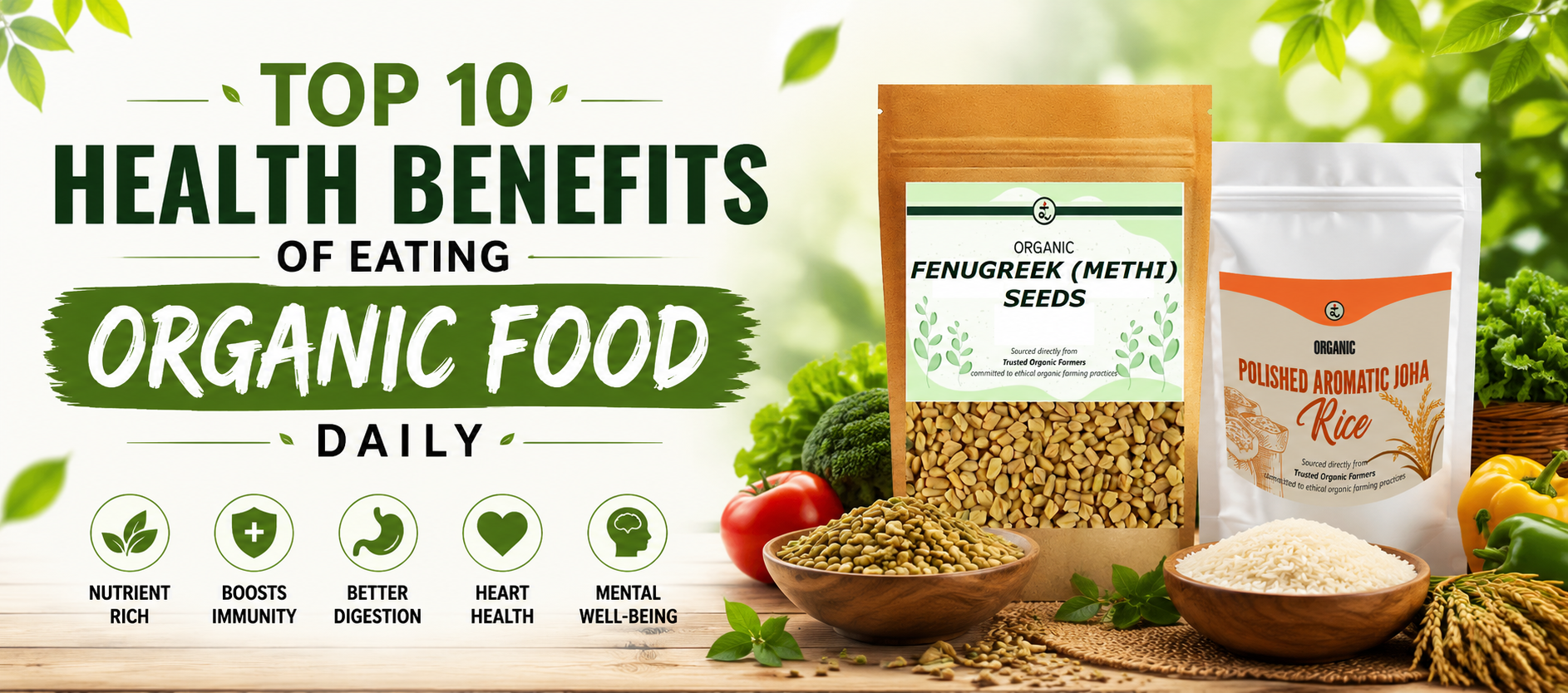
Top 10 Health Benefits of Eating Organic Food Daily
Quick Answer: Organic food is grown without synthetic pesticides, chemical fertilisers, or GMOs. Eating it daily delivers measurably higher antioxidants, cleaner gut health, stronger immunity, better skin, and a reduced risk of lifestyle diseases — making it one of the most impactful long-term choices for your family's well-being.
India is in the middle of a quiet food revolution. Walk through any urban neighbourhood in Delhi, Mumbai, or Bengaluru and you will notice that families are reading labels more carefully, asking where their food comes from, and consciously choosing products that carry NPOP or PGS-India certification. The shift is not driven by trend alone — it is driven by growing awareness of what chemically laden, pesticide-treated, additive-filled food actually does to the human body over time.
The health benefits of organic food are no longer anecdotal. They are increasingly backed by peer-reviewed science and lived experience. From stronger immunity to better gut flora, from glowing skin to sharper cognitive function, the advantages of making organic a daily habit are substantial and compounding. This article unpacks each of these benefits in detail — so you can make a fully informed decision for yourself and your family.
What Makes Food Truly "Organic"?
Before diving into the benefits, it is important to clarify what organic actually means in the Indian context. In India, organic food certification is governed by two primary standards: NPOP (National Programme for Organic Production), overseen by APEDA under the Ministry of Commerce, and PGS-India (Participatory Guarantee System), managed by the Ministry of Agriculture. Both systems ensure that certified products are grown without synthetic chemical pesticides, artificial fertilisers, sewage sludge, irradiation, or genetically modified organisms (GMOs).
When you buy from a certified organic source, you are not just paying for a label — you are paying for a rigorous audit trail that confirms the food on your plate was grown in clean soil, nurtured with traditional and sustainable methods, and free from chemical contamination at every stage of the supply chain.
Top 10 Proven Health Benefits of Eating Organic Food Daily
Higher Antioxidant Levels for Cellular Protection
Organically grown fruits and vegetables consistently contain significantly higher concentrations of antioxidants compared to their conventionally grown counterparts. Antioxidants — including flavonoids, polyphenols, and carotenoids — protect your cells from oxidative damage caused by free radicals. Oxidative stress is a root contributor to chronic illnesses including heart disease, diabetes, and certain cancers. When you eat organic produce daily, your antioxidant intake increases naturally, without the need for supplements.
Why this matters in India:
Indian diets are traditionally rich in spices and plant foods that carry antioxidant compounds. Choosing organic versions of staples like turmeric, tomatoes, spinach, and lentils amplifies this benefit considerably.
Significantly Reduced Exposure to Harmful Pesticide Residues
Studies consistently show that conventionally grown produce carries detectable levels of synthetic pesticide residues, many of which are known endocrine disruptors, neurotoxins, and potential carcinogens. Children are particularly vulnerable, as their developing systems are more sensitive to low-level chemical exposure. Switching to organic food dramatically reduces pesticide load in the body. Research published in Environmental Health Perspectives found that families who switched to organic diets reduced urinary pesticide metabolite levels by as much as 70% within one week.
Healthier Gut Microbiome and Improved Digestion
Your gut microbiome — the trillions of bacteria that live in your digestive tract — is the foundation of your immune system, mental health, and metabolic function. Synthetic pesticides and antibiotics used in conventional farming actively disrupt gut flora. Organic foods, especially whole grains, sprouted flours, and certified organic legumes, are rich in dietary fibre and natural prebiotics that feed beneficial gut bacteria. If you experience chronic bloating, irregular digestion, or food sensitivities, making the shift to organic may be one of the most impactful interventions you can try.
Stronger Natural Immunity
The immune system's efficiency depends directly on nutritional inputs. Organic produce delivers higher levels of zinc, vitamin C, iron, and polyphenols — all of which are critical for immune function. Since organic farming builds soil health rather than depleting it with chemical inputs, the micronutrient density of organically grown food is markedly superior. Families who eat organic daily, especially during seasonal transitions, tend to report fewer recurring infections and faster recovery.
Immunity-focused Indian foods like amla, giloy, turmeric, and moringa are especially powerful when sourced organically — their active compounds are present in greater concentration when grown without synthetic interference.
Better Heart Health Through Clean Nutrition
Cardiovascular disease is the leading cause of death in India, and diet is one of the most modifiable risk factors. Organic foods tend to have a more favourable omega-6 to omega-3 fatty acid ratio, particularly in organic dairy, eggs, and certain plant oils. They are also free from trans fats, artificial preservatives, and high-fructose corn syrup — common additions in processed, conventionally produced foods. Replacing everyday staples with organic alternatives — from cold-pressed cooking oils to unpolished organic rice — creates a cumulative protective effect on heart health over time.
Cleaner Nutrition for Children and Pregnant Women
For the most vulnerable members of a household — growing children and expecting mothers — organic food is not a luxury, it is a necessity. Foetal development and early childhood are critical windows during which chemical exposure causes disproportionately greater harm. Neurotoxic pesticides like organophosphates have been linked to developmental delays, lower IQ, and behavioural disorders in children exposed during gestation. Organic food is the cleanest, safest nutritional foundation for these high-priority life stages.
A growing concern in Indian cities:
Air pollution and urban chemical exposure are already high for most city-dwelling Indian families. The food system should be a source of nourishment, not an additional channel of chemical load — especially for children.
Improved Skin Health and Visible Glow
Skin is the body's largest organ and a direct reflection of what you consume. Organic fruits and vegetables — berries, carrots, leafy greens, and citrus — are rich in vitamins A, C, and E, which support collagen synthesis, cell regeneration, and protection against UV-induced oxidative damage. When your diet is free from synthetic hormone disruptors (commonly found in non-organic dairy and conventionally farmed produce), hormonal acne and skin inflammation tend to reduce measurably. Many people who transition to organic diets report clearer, more hydrated skin within weeks.
Better Weight Management and Metabolic Health
The health benefits of organic food extend powerfully into weight and metabolic management. Organic whole grains, millets, and legumes are inherently more fibre-dense and lower on the glycaemic index compared to their refined, conventionally processed counterparts. This means steadier blood sugar levels, longer satiety, and reduced cravings for processed snacks. Research from the British Journal of Nutrition suggests that people who eat organic food regularly have lower rates of overweight and obesity. Choosing organic whole foods is one of the most sustainable foundations for long-term weight balance.
Millets like jowar, bajra, ragi, and foxtail — available as organic varieties — are traditional Indian grains with exceptional nutritional profiles that support metabolic health. If you are looking for quality millet-based options, exploring gluten free flours made from certified organic millets is an excellent starting point.
Reduced Risk of Lifestyle Diseases and Chronic Conditions
The cumulative daily exposure to pesticide residues, synthetic additives, and hormone-disrupting chemicals in conventional food has been strongly linked to a higher incidence of type 2 diabetes, hormonal disorders, neurological conditions, and certain cancers. While no single food can claim to prevent disease, the aggregate evidence strongly supports that reducing chemical food load through organic consumption lowers biomarkers of inflammation and metabolic dysfunction over time. For individuals already managing conditions like PCOS, hypothyroidism, or insulin resistance, transitioning to organic is particularly meaningful.
Superior Taste and Genuine Food Integrity
Ask anyone who has eaten a truly vine-ripened organic tomato or fresh organic dal and they will tell you the difference is unmistakable. Organic produce grown in nutrient-rich soil and allowed to mature naturally develops a fuller, more complex flavour profile. This is not subjective — it is because organic farming does not use artificial ripening agents, wax coatings, or chemical preservatives that alter the natural taste and texture of food. When your food tastes better, you enjoy it more, cook with it more, and build a more consistent healthy eating habit naturally.
The Ayurvedic Connection: Why Organic Aligns With India's Ancient Food Wisdom
India's relationship with clean, unprocessed food is thousands of years old. Ayurveda — the world's oldest healthcare system — emphasises that food grown in sattvic (pure) conditions and eaten in its natural form carries superior prana (life force). The principles of organic farming closely mirror Ayurvedic prescriptions: soil nourishment, seasonal eating, no chemical interference, and food that is alive with natural energy.
Traditional Indian superfoods like sprouted fenugreek, amla, turmeric, ashwagandha, and cold-pressed sesame oil are most potent in their organic, unadulterated form. Integrating these into daily cooking — sourced from reliable certified organic suppliers — reconnects families with the nutritional intelligence that Indian culture has always possessed.
How to Make the Switch to Organic Without Overwhelming Your Budget
Start With Your Daily Staples
The smartest entry point into organic eating is not to overhaul your entire pantry overnight. Begin with the foods you eat most frequently and in the largest quantities — grains, flour, rice, pulses, and the vegetables your family consumes daily. Since these are consumed in significant volume, even a partial shift here reduces your household's chemical load considerably.
For families in the Delhi NCR region, buying fresh organic vegetables online delhi means access to produce that is not only chemical-free but also locally grown and fresher — reducing the nutritional loss that occurs during long transit times in conventional supply chains.
Prioritise the "High Residue" Foods First
Certain foods carry significantly higher pesticide residue levels than others. Spinach, strawberries, peppers, grapes, apples, potatoes, and rice are among those where organic substitution delivers the greatest benefit. Prioritising organic versions of these specific foods is a high-impact, cost-effective strategy.
For those who regularly cook with flour, making the shift to certified organic options makes a meaningful difference. Everyday baking and rotis become cleaner nutrition when you source from a trusted organic flours online provider that maintains transparency about sourcing and certification.
Explore Whole Grains and Ancient Indian Grains
Many Indian households have unknowingly moved away from the diverse grain diets of their grandparents' generation — ragi, jowar, bajra, amaranth, and various types of unpolished rice. Reintroducing these in their organic form is one of the most nutritionally significant changes a family can make. Exploring a reliable organic rice online range that includes heritage varieties like red rice, black rice, and hand-pounded rice opens up an entirely new dimension of flavour and health.
Why Certified Organic Matters — And What to Look For
In India's growing organic market, labels can be misleading. Terms like "natural," "farm fresh," or "chemical-free" have no regulatory definition and are often used without accountability. When buying organic, look specifically for:
NPOP certification (for products sold commercially, especially exports) and PGS-India certification (for direct-to-consumer or local organic produce). These are the only two certifications that carry legal weight in India and involve actual third-party or participatory audits of farming practices.
Shopping from a trusted online organic grocery platform that displays certification information clearly, maintains transparent sourcing, and offers consistent product quality removes the guesswork from this process entirely.
The Long-Term Compound Effect of Daily Organic Eating
One of the most underappreciated aspects of organic food is its compounding benefit over time. A single organic meal does not transform your health. But a year of daily organic eating — where every grain of rice, every roti, every bowl of vegetables is free from synthetic chemicals and rich in natural nutrition — creates a fundamentally different cellular and hormonal environment in your body.
Blood tests among long-term organic eaters show lower markers of systemic inflammation, better lipid profiles, and improved vitamin and mineral status. Children raised on organic diets show stronger developmental outcomes. Elderly individuals who transition to organic report improved digestion and energy levels. This is the power of accumulated clean nutrition.
Whether you begin by exploring the range of organic staples available through organic food online or start by replacing just your cooking oil and flour with certified organic versions, every step taken toward clean nutrition compounds meaningfully over time.
Conclusion: Every Meal Is a Choice
The food you eat every day is either building your health or slowly depleting it. The evidence for organic food's superiority in terms of nutrient density, absence of chemical residues, gut health support, and long-term disease prevention is compelling and growing. For Indian families navigating rising rates of diabetes, hormonal disorders, and lifestyle diseases, transitioning to organic is one of the most meaningful and actionable changes available.
You do not need to change everything at once. Start with your grains, your flour, your daily vegetables. Source from certified organic suppliers. Read labels. Ask questions. And trust that each clean meal is an investment in a longer, healthier, more vibrant life for you and your family.
Explore certified organic staples, fresh produce, millet-based foods, and artisanal healthy snacks at Rootz Organics — rootzorganics.in.
Frequently Asked Questions
Q1. Is organic food really healthier than conventional food?
Yes. Multiple peer-reviewed studies indicate that organically grown produce contains higher concentrations of antioxidants, vitamins, and essential minerals. Organic food is also free from synthetic pesticide residues and harmful additives, making it a safer and more nutrient-dense choice for daily consumption.
Q2. What are the most important health benefits of organic food for children?
For children, organic food significantly reduces exposure to neurotoxic pesticides that can impair cognitive development and growth. Organic dairy and produce also tend to have a better fatty acid profile, supporting brain development. Parents choosing organic for their children are protecting them from long-term hormonal disruption caused by chemical residues found in conventional produce.
Q3. Can eating organic food daily help with digestion and gut health?
Absolutely. Organic food — especially sprouted grains, whole millets, and certified organic pulses — is rich in dietary fibre and natural prebiotics that nourish the gut microbiome. Since organic farming avoids antibiotics and synthetic chemicals, organic food does not disrupt gut flora the way conventionally grown food can, leading to better digestion and reduced bloating over time.
Q4. Does organic food help in managing weight and metabolism?
Yes. Organic whole grains, millet-based foods, and chemical-free vegetables are naturally high in fibre and micronutrients. They keep you full longer, reduce sugar cravings, and support a healthier metabolism. Research also suggests that people who consume organic food regularly are less likely to be overweight, partly because organic diets tend to be less processed and additive-free.
Q5. How can I start buying organic food conveniently in India?
The easiest way is to shop from a trusted online organic grocery store that carries NPOP or PGS-India certified products. You can browse certified organic vegetables, flours, grains, rice, snacks, and daily essentials at Rootz Organics, which delivers fresh, clean-label organic products across Delhi NCR with full transparency on sourcing and certification.
-
 September 15th, 2026
 -
The Hidden Nutritional Power of India’s Ancient Summer Grain
August 26th, 2026 -
 August 25th, 2026