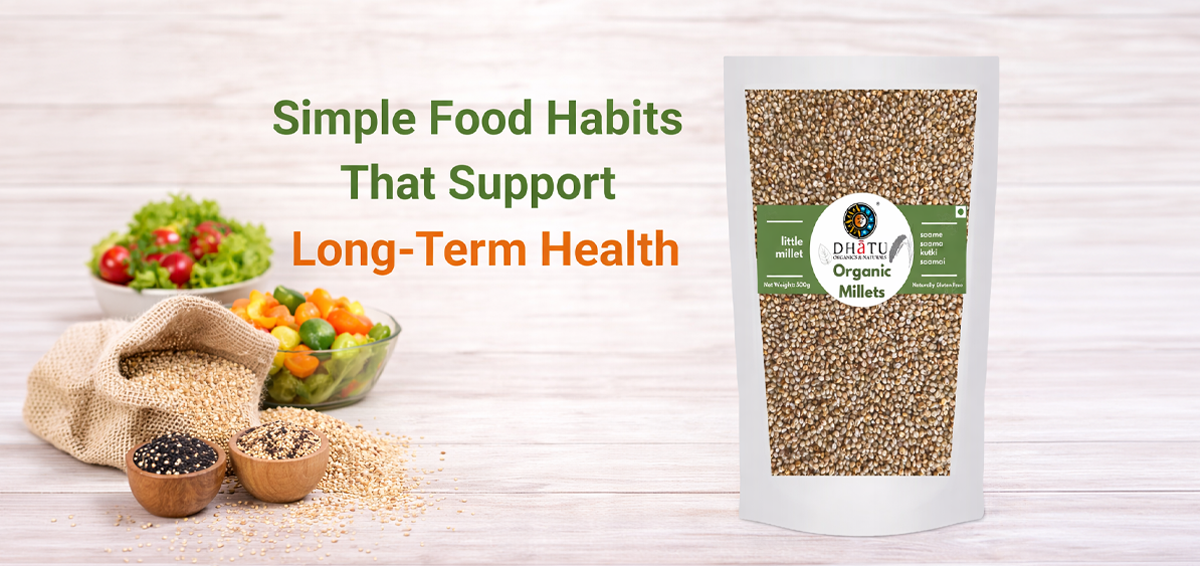
Simple Food Habits That Support Long-Term Health
In today’s fast-paced lifestyle, maintaining good health is no longer about following strict diets or temporary wellness trends. Instead, it is about building simple, consistent food habits that nourish the body every day. In India, where traditional diets once focused on seasonal, home-cooked meals, modern lifestyles have introduced processed foods, irregular eating schedules, and nutrient imbalances. These changes have contributed to rising concerns such as low immunity, digestive issues, fatigue, and lifestyle-related health conditions.
The good news is that long-term health does not require drastic changes. Small, sustainable habits—like choosing natural ingredients, eating balanced meals, and focusing on food quality—can create a strong foundation for lifelong wellness. These habits align with both modern nutritional science and traditional Indian wisdom, including Ayurveda’s principle of “food as medicine.”
This guide explores practical and realistic food habits that support long-term health for Indian families. Whether you are a working professional, a parent planning nutritious meals, or someone aiming to improve overall wellness, these habits will help you make informed food choices that deliver lasting benefits.
Why Simple Food Habits Matter for Long-Term Health
Health is built gradually through daily choices. Consistent eating patterns influence energy levels, immunity, digestion, and overall well-being. Research in nutrition science confirms that sustainable dietary habits reduce the risk of chronic diseases and support healthy aging.
In India, traditional diets emphasized seasonal produce, whole grains, lentils, and natural cooking methods. However, increasing consumption of refined foods and packaged snacks has reduced nutrient intake in many households. Returning to simple food habits helps restore nutritional balance while supporting long-term health.
Simple food habits are effective because they are easy to maintain. They do not rely on expensive supplements or restrictive diets. Instead, they focus on everyday foods that provide essential nutrients and support the body’s natural functions.
Start Your Day with a Balanced Breakfast
Breakfast is often called the most important meal of the day because it provides energy after overnight fasting. Skipping breakfast can lead to low energy levels, poor concentration, and unhealthy snacking later in the day.
A balanced breakfast should include carbohydrates, protein, healthy fats, and fiber. In Indian households, traditional options like vegetable poha, millet porridge, idli with sambar, or stuffed paratha with curd offer a nutritious start to the day.
Adding fresh vegetables and whole grains improves digestion and supports sustained energy throughout the morning. Many families now prefer sourcing fresh ingredients through Organic Vegetables Online platforms to ensure quality and safety.
Healthy Breakfast Ideas for Indian Families
- Vegetable upma made with seasonal vegetables
- Sprouted moong salad with lemon and spices
- Millet porridge with nuts and seeds
- Whole wheat vegetable sandwich
- Oats cooked with vegetables and herbs
Starting the day with a balanced breakfast improves metabolism, supports brain function, and reduces cravings for unhealthy snacks.
Include Seasonal Fruits and Vegetables in Daily Meals
Seasonal fruits and vegetables are rich in vitamins, minerals, and antioxidants that protect the body from infections and support overall health. In India, seasonal produce is naturally suited to the climate and provides nutrients required for each season.
For example, leafy greens in winter support immunity, while hydrating fruits like watermelon and cucumber help maintain hydration during summer. Eating seasonal produce also ensures freshness and better taste.
Many households now choose to buy vegetables through trusted sources offering Organic Vegetables Online services to reduce exposure to harmful chemicals and maintain consistent quality.
Benefits of Seasonal Produce
- Improves immunity and disease resistance
- Supports digestion and gut health
- Provides essential vitamins and minerals
- Enhances natural energy levels
- Promotes healthy skin and hair
Choose Whole Grains Over Refined Grains
Whole grains contain fiber, vitamins, and minerals that support digestion and regulate blood sugar levels. Refined grains, on the other hand, lose many nutrients during processing.
Traditional Indian grains such as millets, brown rice, and whole wheat provide sustained energy and improve gut health. These grains are especially beneficial for individuals managing weight, diabetes, or digestive concerns.
Health-conscious consumers are increasingly turning to platforms offering Organic Millets Online to access nutrient-rich grains grown without harmful chemicals.
Popular Whole Grains for Daily Meals
- Ragi (finger millet)
- Bajra (pearl millet)
- Jowar (sorghum)
- Brown rice
- Whole wheat
Replacing refined grains with whole grains is one of the simplest food habits that significantly improves long-term health.
Use Healthy Cooking Oils in Moderation
Cooking oil plays a vital role in nutrient absorption and overall health. However, the type and quantity of oil used can influence heart health, digestion, and energy levels.
Traditional Indian kitchens relied on cold-pressed oils such as mustard oil, groundnut oil, and coconut oil. These oils retain natural nutrients and support balanced nutrition when used in moderation.
Today, many families prefer purchasing cooking oils through reliable sources offering Organic Oil Online to ensure purity and quality.
Healthy Cooking Oil Practices
- Use cold-pressed oils instead of refined oils
- Avoid reheating oil multiple times
- Rotate different oils for balanced nutrition
- Use minimal oil for cooking
Healthy oil choices support heart health, improve digestion, and enhance nutrient absorption.
Stay Hydrated Throughout the Day
Water is essential for digestion, nutrient absorption, and temperature regulation. Even mild dehydration can cause fatigue, headaches, and reduced concentration.
Adults should aim to drink sufficient water throughout the day, especially in hot climates like India. Herbal drinks, coconut water, and fresh fruit juices can also contribute to hydration.
Signs of Dehydration
- Dry mouth and thirst
- Low energy levels
- Dark-colored urine
- Headaches or dizziness
- Reduced concentration
Maintaining hydration supports physical performance, digestion, and overall well-being.
Practice Portion Control and Mindful Eating
Eating the right quantity of food is just as important as choosing healthy ingredients. Overeating can strain digestion and lead to weight gain, while undereating may result in nutrient deficiencies.
Mindful eating involves paying attention to hunger signals, chewing food slowly, and avoiding distractions during meals. This habit improves digestion and helps maintain a healthy weight.
Tips for Mindful Eating
- Eat slowly and chew food thoroughly
- Avoid using mobile phones during meals
- Stop eating when you feel satisfied
- Use smaller plates to control portions
Reduce Consumption of Processed and Packaged Foods
Processed foods often contain excess sugar, salt, unhealthy fats, and artificial additives. Regular consumption of these foods increases the risk of obesity, diabetes, and heart disease.
Replacing packaged snacks with fresh, homemade alternatives is a simple way to improve diet quality. Choosing natural ingredients supports long-term health and reduces exposure to harmful chemicals.
Consumers seeking healthier alternatives often explore trusted platforms offering Organic Food Products Online to access clean-label groceries.
Healthy Snack Alternatives
- Roasted nuts and seeds
- Fresh fruits
- Homemade vegetable sandwiches
- Sprouted lentil salads
- Roasted chickpeas
Include Protein in Every Meal
Protein is essential for muscle growth, tissue repair, and immune function. Many Indian diets rely heavily on carbohydrates, leading to inadequate protein intake.
Adding protein-rich foods such as lentils, beans, dairy products, nuts, and seeds ensures balanced nutrition and sustained energy.
Protein-Rich Indian Foods
- Dal and legumes
- Paneer and curd
- Chickpeas and kidney beans
- Peanuts and almonds
- Sprouted grains
Switch to Unpolished Millets for Better Nutrition
Millets are among the oldest grains consumed in India. Unlike polished grains, Unpolished Millets retain their natural fiber, vitamins, and minerals. These nutrients support digestion, regulate blood sugar levels, and improve overall health.
Unpolished millets are particularly beneficial for individuals seeking gluten-free or low-glycemic food options. They are also suitable for people managing diabetes or weight concerns.
Health Benefits of Unpolished Millets
- Supports digestive health
- Improves energy levels
- Helps maintain healthy weight
- Provides essential nutrients
- Supports heart health
Maintain Regular Meal Timings
Eating meals at consistent times helps regulate metabolism and improve digestion. Irregular eating patterns can lead to acidity, bloating, and energy fluctuations.
Establishing fixed meal timings ensures steady nutrient supply and supports long-term health.
Ideal Meal Timing Routine
- Breakfast within one hour of waking up
- Lunch between 12 PM and 2 PM
- Light dinner before 8 PM
- Healthy snacks between meals if needed
Cook More Meals at Home
Home-cooked meals allow better control over ingredients, portion sizes, and cooking methods. They also reduce dependence on restaurant food, which often contains excess oil and salt.
Preparing meals at home supports healthier eating habits and strengthens family bonding. Using fresh ingredients and natural cooking methods ensures balanced nutrition.
Build Long-Term Health Through Consistency
Long-term health is not achieved through quick fixes or temporary diets. It is built through consistent habits practiced daily. Small improvements in food choices can create significant health benefits over time.
By focusing on simple food habits—such as eating balanced meals, choosing natural ingredients, staying hydrated, and maintaining regular meal schedules—individuals can support lifelong wellness and prevent lifestyle-related health problems.
These habits are practical, sustainable, and suitable for Indian households. They align with traditional dietary wisdom while meeting modern nutritional needs.
Conclusion
Simple food habits form the foundation of long-term health. They do not require expensive diets or complicated routines. Instead, they focus on consistent, mindful choices that nourish the body every day.
For Indian families, adopting these habits can improve energy levels, strengthen immunity, and support overall well-being. Choosing fresh ingredients, balanced meals, and natural cooking methods ensures sustainable health for years to come.
By making small changes today, individuals can build a healthier future for themselves and their families.
Frequently Asked Questions (FAQs)
1. What are the most important food habits for long-term health?
The most important food habits include eating balanced meals, consuming seasonal fruits and vegetables, staying hydrated, maintaining regular meal timings, and reducing processed food intake.
2. Why are whole grains better than refined grains?
Whole grains contain more fiber, vitamins, and minerals than refined grains. They support digestion, regulate blood sugar levels, and provide sustained energy.
3. How can I improve my family’s eating habits?
You can improve eating habits by planning meals in advance, cooking more meals at home, including a variety of vegetables and grains, and limiting processed foods.
4. Are millets suitable for daily consumption?
Yes, millets are nutritious and suitable for daily consumption. They provide fiber, protein, and essential nutrients that support digestion and overall health.
5. How does hydration affect long-term health?
Proper hydration supports digestion, nutrient absorption, and energy levels. Drinking enough water helps maintain overall health and prevents dehydration-related issues.
-
 August 6th, 2026
 -
 August 6th, 2026