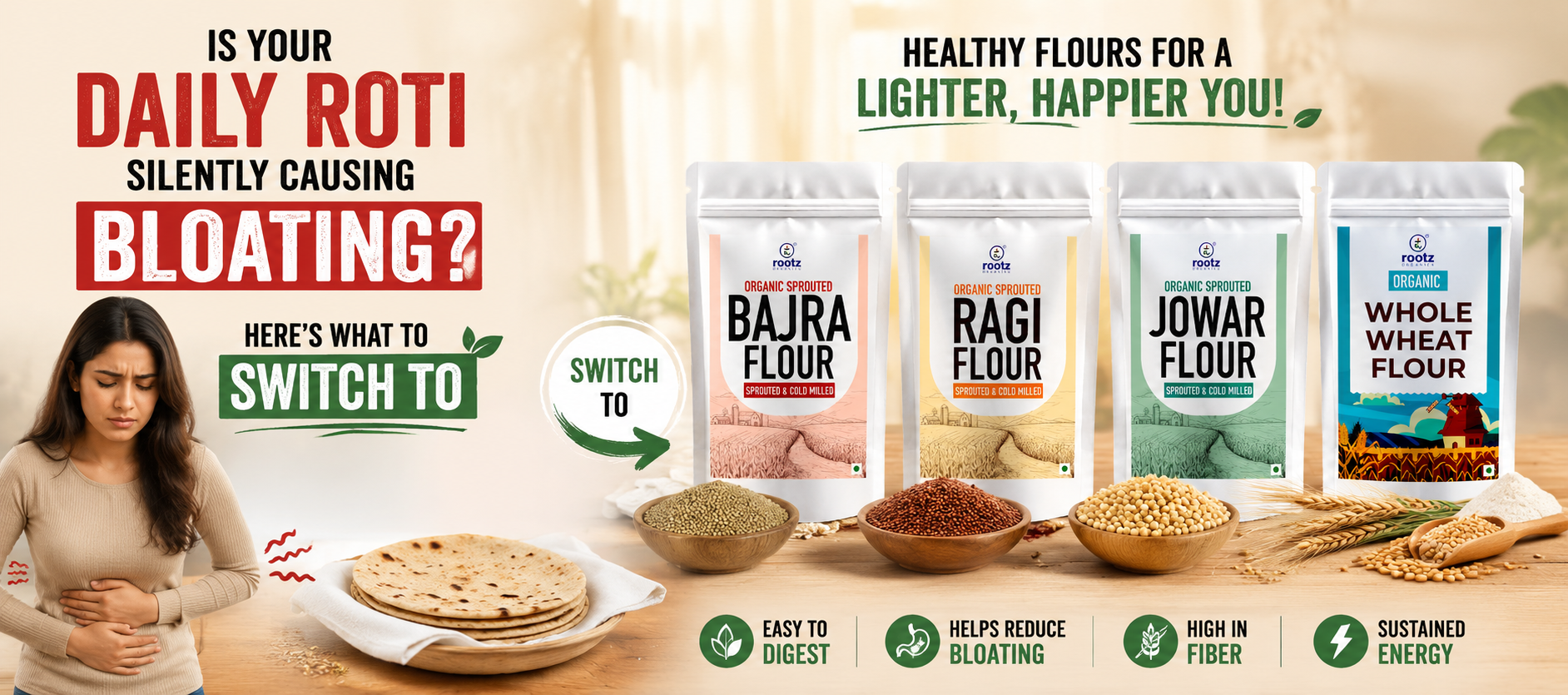
Is Your Daily Roti Silently Causing Bloating? Here's What to Switch To
Most of us have eaten two to three rotis every single day for as long as we can remember. But what if your everyday atta is the quiet trigger behind that post-meal puffiness, gas, or heaviness? Here's what the science — and your gut — is trying to tell you.
Roti is more than food for an Indian household — it is ritual, warmth, and nourishment handed down through generations. Two or three rotis at lunch, another two at dinner — it is as natural as breathing. So when your stomach starts protesting after every meal with bloating, gas, or a dull heaviness, the last thing you suspect is the humble chapati on your plate.
Yet this is exactly what millions of Indians are beginning to discover: the refined, commercially processed wheat atta sitting in most kitchens may be silently wreaking havoc on gut health. According to available health data, nearly 30% of Indians suffer from chronic digestive discomfort, with bloating being one of the most common complaints. And increasingly, wheat gluten is being identified as a key culprit.
This does not mean you need to give up rotis. What it does mean is that it may be time to look more carefully at which flour is going into your dough.
30% Indians experience chronic digestive discomfort
68% Indians have some degree of lactose intolerance
1%+ Indian population affected by celiac disease
3–4x Average daily roti intake per person
Why Does Your Roti Cause Bloating in the First Place?
Before we talk about alternatives, it is important to understand the mechanism at work. Bloating after roti is not random. There is a logical biological reason — and it centres on a protein called gluten.
Gluten is a group of proteins found naturally in wheat, barley, and rye. It is the substance that gives roti and bread their characteristic soft, chewy texture. When you knead wheat flour with water, gluten forms a stretchy, elastic network that traps air and moisture during cooking. That is what makes your roti puff up on the tawa so beautifully.
However, gluten is notoriously difficult for many digestive systems to break down completely. For people with celiac disease, gluten triggers a full immune response that damages the intestinal lining. For those with non-celiac gluten sensitivity — a far more common condition — the result is milder but still disruptive: bloating, gas, stomach cramps, and fatigue after wheat-based meals.
Quick Answer : If you regularly feel bloated after rotis, your digestive system may be struggling to process gluten — the protein in wheat flour. This is more common than most people realise, and switching to millet or ancient grain flours often brings fast, noticeable relief.
Beyond gluten, modern commercial wheat atta compounds the problem. Most packaged atta available in Indian markets today is made from hybrid wheat varieties bred specifically for high yield and refined to produce the whitest, smoothest flour possible. In this process, much of the natural bran and germ — which contain the fibre and enzymes that aid digestion — is stripped away. What remains is starchy, low-fibre flour that ferments rapidly in the gut, producing excess gas and triggering that post-meal heaviness we have all experienced.
Other Reasons Your Roti May Be Hard to Digest
Overprocessed commercial atta: Most mass-market wheat flour is heavily refined, stripping away natural fibre and digestive enzymes that help the gut process food smoothly.
Eating too quickly: Swallowing food without chewing thoroughly causes more air to enter the digestive tract, contributing directly to bloating regardless of which flour you use.
Accompaniments matter too: Pairing rotis with rajma, chole, or dairy-heavy gravies adds to the digestive load because legumes contain oligosaccharides that ferment in the colon.
Eating cold or undercooked roti: As per Ayurvedic wisdom, cold and inadequately cooked wheat is harder on the digestive fire (agni), slowing down gut motility and causing gas build-up.
The Best Healthy Flour Alternatives for Your Daily Roti
The good news is that Indian food culture has always been rich in diverse grain traditions. Long before modern wheat became dominant, our kitchens were using ragi, jowar, bajra, and a whole range of nutritious millet-based flours that are naturally gentler on the gut. These are not just trendy health food items — they are ancient staples making a well-deserved comeback as healthy flour alternatives to refined wheat.
Ragi (Finger Millet) Flour
One of the most nutrient-dense grains in the Indian pantry. Ragi is exceptionally high in calcium — higher than milk, gram for gram — and is loaded with dietary fibre that supports healthy bowel movements and reduces gut fermentation. Organic ragi flour retains all these nutrients without chemical processing, making it ideal for people with gluten sensitivity, lactose intolerance, and digestive issues.
Jowar (Sorghum) Flour
Jowar has a long history in Indian cooking, particularly in Maharashtra and Karnataka where Bhakri is a daily staple. It is low in fat, high in protein, and completely gluten-free. Organic jowar flour is especially rich in antioxidants and iron, making it excellent not just for digestion but also for immunity and energy. Those new to jowar can mix it with a small quantity of wheat flour to achieve a softer roti initially.
Bajra (Pearl Millet) Flour
A winter staple in Rajasthan and Gujarat, bajra is gluten-free and packed with magnesium, iron, and fibre. It is highly alkaline in nature, which makes it soothing for people who suffer from acidity alongside bloating. Bajra rotis keep you fuller for longer due to their slow-digesting complex carbohydrates, reducing the urge to overeat — a common trigger of post-meal bloating.
Organic Wheat Flour (Stone-Ground)
Not everyone needs to eliminate wheat entirely. For those without confirmed gluten sensitivity, switching to Organic flour — especially stone-ground or chakki-fresh varieties — can make a significant difference. Organic wheat is grown without synthetic pesticides, and whole-grain stone-ground milling preserves the bran and germ, delivering more fibre and nutrients that support digestion naturally.
Besan (Chickpea Flour)
Rich in plant protein and soluble fibre, besan roti is a traditional option in many Indian regions. It has a nutty flavour and pairs beautifully with greens like methi or spinach blended into the dough. Besan has a low glycaemic index, making it ideal for people managing blood sugar along with digestive issues. Note: those with chickpea sensitivity should introduce it gradually.
Kuttu (Buckwheat) Flour
Despite its name, buckwheat is not related to wheat and is completely gluten-free. Popular during fasting seasons in India, kuttu flour is rich in magnesium, manganese, and antioxidants. Its earthy, slightly nutty flavour is distinct and pairs well with yoghurt-based gravies or dry sabzis. It is one of the few grains that is both high in protein and deeply anti-inflammatory.
"Ancient Indian grains like ragi, jowar, and bajra were not replaced because they were inferior — they were replaced because they were inconvenient to grow at scale. Their nutritional superiority was never in question."
How to Switch Without Disrupting Your Daily Cooking Routine
One of the most common hesitations people have about switching flours is the fear that their rotis will turn out hard, dry, or impossible to roll. This concern is understandable — gluten-free flours behave very differently from wheat because they lack the elasticity gluten provides. But with the right approach, making soft, delicious millet rotis is entirely achievable.
A Practical Transition Plan That Works for Indian Kitchens
- Start with a blend: Begin by replacing just 25–30% of your regular atta with ragi or jowar flour. This allows your palate to adjust gradually while still producing rotis with familiar texture and taste.
- Use warm water for kneading: Millet flours absorb water differently from wheat. Warm water activates the starch more effectively, resulting in a softer, more pliable dough that is easier to roll without cracking.
- Add a binding agent if needed: A small amount of flaxseed gel (soaked flax seeds) or psyllium husk mixed into the dough helps gluten-free flours hold together, mimicking the binding role that gluten plays in wheat flour.
- Roll between cling wrap or plastic sheets: Gluten-free doughs can stick and tear easily on the chakla. Rolling between two sheets of cling wrap makes the process significantly easier, especially for beginners.
- Cook on medium-high heat: A slightly hotter tawa helps millet rotis cook through evenly and develop a light char that enhances their earthy flavour. Avoid cooking on low heat, which dries them out without cooking properly.
Comparing Common Flours: Which One Is Right for You?
Different individuals have different digestive needs. Below is a quick reference comparison to help you identify which flour aligns best with your specific health goals.
Flour | Gluten-Free? | Good for Bloating? | Rich in Fibre? | Best Suited For |
Ragi Flour | ✓ Yes | ✓ Excellent | ✓ High | Calcium deficiency, digestion, weight management |
Jowar Flour | ✓ Yes | ✓ Excellent | ✓ High | Anaemia, immunity, daily roti substitute |
Bajra Flour | ✓ Yes | ✓ Very Good | ✓ High | Winter diet, acidity, blood sugar control |
Organic Wheat (Whole) | ✗ No | ~ Moderate | ~ Moderate | Mild gluten tolerance, everyday use |
Besan (Chickpea) | ✓ Yes | ~ Moderate | ✓ High | Protein boost, diabetics, vegetarians |
Kuttu (Buckwheat) | ✓ Yes | ✓ Good | ✓ High | Anti-inflammatory diet, fasting, keto-adjacent |
What to Look for When Buying Flour for Better Gut Health
Switching to a millet-based or ancient grain flour is only half the equation. The quality and sourcing of the flour matters just as much as the grain itself. Here is what to prioritise when shopping.
The Case for Sourcing Organic Flours Online
Most commercial flours — even those marketed as "multigrain" or "healthy" — contain bleaching agents, synthetic preservatives, or are processed in facilities that use chemical treatments to extend shelf life. When you explore organic flours online, you gain access to clean-label products that have been stone-ground, unbleached, and free of artificial additives — precisely what your gut needs to function optimally.
Organic certification also ensures that the grain was grown without synthetic pesticides and fertilisers, which can leave residues in the flour and potentially aggravate gut permeability — a condition increasingly linked to bloating, food sensitivities, and inflammatory bowel concerns.
Signs of a High-Quality Flour
✓ Stone-ground or chakki-milled to retain natural bran, germ, and nutritional value
✓ No added preservatives, anti-caking agents, or artificial whitening agents on the ingredient list
✓ Certified organic by a recognised Indian body such as NPOP or USDA Organic equivalents
✓ Packed fresh in small batches to preserve natural oils, aroma, and nutritional potency
✓ Transparent sourcing — you should ideally know which region or farm the grain comes from
Beyond the Flour: Other Changes That Help Reduce Bloating
While switching to a gut-friendly flour is the most impactful single change you can make, a few supporting habits can significantly amplify the results. Think of these as the ecosystem changes that help your new flour choice work to its full potential.
Eat warm and freshly made rotis: Cold or reheated rotis are significantly harder to digest. The starches in cooled flatbreads undergo a process called retrogradation, forming a more resistant structure that ferments in the gut rather than being smoothly absorbed.
Add digestive spices to your dough: Traditional Indian wisdom has always incorporated ajwain (carom seeds), hing (asafoetida), and jeera into flatbreads for good reason. These spices are carminative — they actively reduce gas formation in the gut and support digestive enzyme activity.
Pair rotis with light, easily digestible accompaniments: Opt for moong dal or toor dal over rajma or chole when you are already experiencing digestive sensitivity. The oligosaccharides in heavy legumes compound the fermentation already occurring from gluten or refined starch.
Chew slowly and eat mindfully: Research consistently shows that eating quickly and swallowing air is one of the most direct causes of post-meal bloating, entirely independent of what you eat. Slowing down is free medicine.
Where Does Organic Food Fit Into This Conversation?
It is worth pausing to address a broader question: why does it matter whether your flour is organic, beyond just the grain type?
When you purchase organic food products online from trusted sources, you are not just choosing a grain variety — you are choosing a philosophy of growing, milling, and packaging that prioritises purity at every step. Glyphosate, a widely used herbicide in conventional wheat farming, has been the subject of significant research regarding its potential impact on gut microbiome balance and intestinal permeability. While regulatory bodies continue to assess safe exposure levels, many consumers in India are reasonably choosing to eliminate unnecessary chemical exposure from their daily staples.
Organic, clean-label flours also tend to be fresher — milled in smaller batches without the chemical preservatives that allow large-scale commercial flours to sit in warehouses for months before reaching your kitchen. Fresh flour simply tastes better, cooks better, and is more nutritionally intact.
Platforms like online organic grocery stores have made it remarkably convenient for Indian households to access this quality without premium inconvenience. You can now get stone-ground ragi, jowar, bajra, and organic wheat flour delivered to your doorstep with the same ease as ordering from a neighbourhood kirana.
Should You Consider Going Gluten-Free Entirely?
A question many readers will be asking: do I need to go fully gluten-free?
The answer, for most people, is no — not immediately and not completely. Unless you have been diagnosed with celiac disease or confirmed non-celiac gluten sensitivity by a medical professional, eliminating gluten entirely is not a prerequisite for better digestive health. What is more important is reducing the volume of refined, low-quality wheat flour in your diet and replacing it progressively with more diverse, nutrient-rich options.
A practical approach is to dedicate two or three days a week to millet-based rotis — ragi one day, jowar another, bajra on a third — while retaining organic whole wheat rotis on other days. This dietary diversity is itself deeply protective for the gut microbiome, which thrives on variety rather than monotony.
For those who do want to explore gluten free flours as a more sustained lifestyle choice, the current availability of high-quality millet flours in India makes this easier and more delicious than ever before.
Your daily roti does not have to be the enemy of your gut. The problem is rarely roti itself — it is the quality and type of flour going into it. By making informed, incremental switches to ancient grains, organic options, and minimally processed alternatives, you can continue enjoying the rotis that have always anchored Indian meals while giving your digestive system the relief it has been quietly asking for.
Frequently Asked Questions
Can eating roti every day cause bloating?
Yes, for many people — especially those with gluten sensitivity or wheat intolerance — eating wheat roti daily can cause bloating, gas, and heaviness. The gluten protein in regular wheat is difficult for some digestive systems to break down efficiently. Switching to millet-based or low-gluten flours like ragi, jowar, or bajra can significantly reduce these symptoms. The quality of the flour also matters: commercially refined, chemically treated atta is harder on the gut than freshly stone-ground, organic alternatives.
Which flour is best for digestion and reducing bloating?
Ragi (finger millet) and jowar (sorghum) are among the best flours for digestion. Both are naturally gluten-free, high in dietary fibre, and easy on the gut. Jowar roti is particularly gentle for people prone to bloating, while ragi supports calcium absorption and gut health due to its rich mineral content. Bajra is another excellent option, especially for those who also experience acidity, as it is highly alkaline in nature.
Is organic wheat flour better than regular wheat flour for digestion?
Organic wheat flour is grown without synthetic pesticides or chemical fertilisers, which may reduce some of the digestive irritants associated with chemical residues in conventional wheat. While organic wheat still contains gluten, many people find that clean-label, stone-ground organic wheat flour is lighter on the stomach compared to heavily processed commercial atta. For those with confirmed gluten sensitivity, however, millet-based flours remain the better choice.
How do I make soft rotis with ragi or jowar flour?
Ragi and jowar flours are gluten-free and therefore lack the natural elasticity of wheat dough. To get softer results, use warm water to knead the dough to a slightly softer consistency than regular chapati dough. Roll the roti between two sheets of cling wrap or a greased plastic sheet to prevent tearing. Cooking on a medium-high tawa and pressing gently with a cloth ensures even cooking. Beginners can start by mixing 20–30% organic wheat or besan flour into the dough to improve pliability while transitioning.
Where can I buy good quality organic millet flours in India?
You can buy certified organic ragi, jowar, bajra, buckwheat, and other millet-based flours through trusted online organic stores in India. Look for products that are stone-ground, free from preservatives and bleaching agents, and carry organic certification. Rootz Organics (www.rootzorganics.in) offers a curated range of clean-label organic flours — sourced responsibly, packed fresh in small batches, and delivered directly to your home across India. Purchasing online also gives you the advantage of reading ingredient labels and sourcing information before buying.
-
 August 6th, 2026
 -
 August 6th, 2026