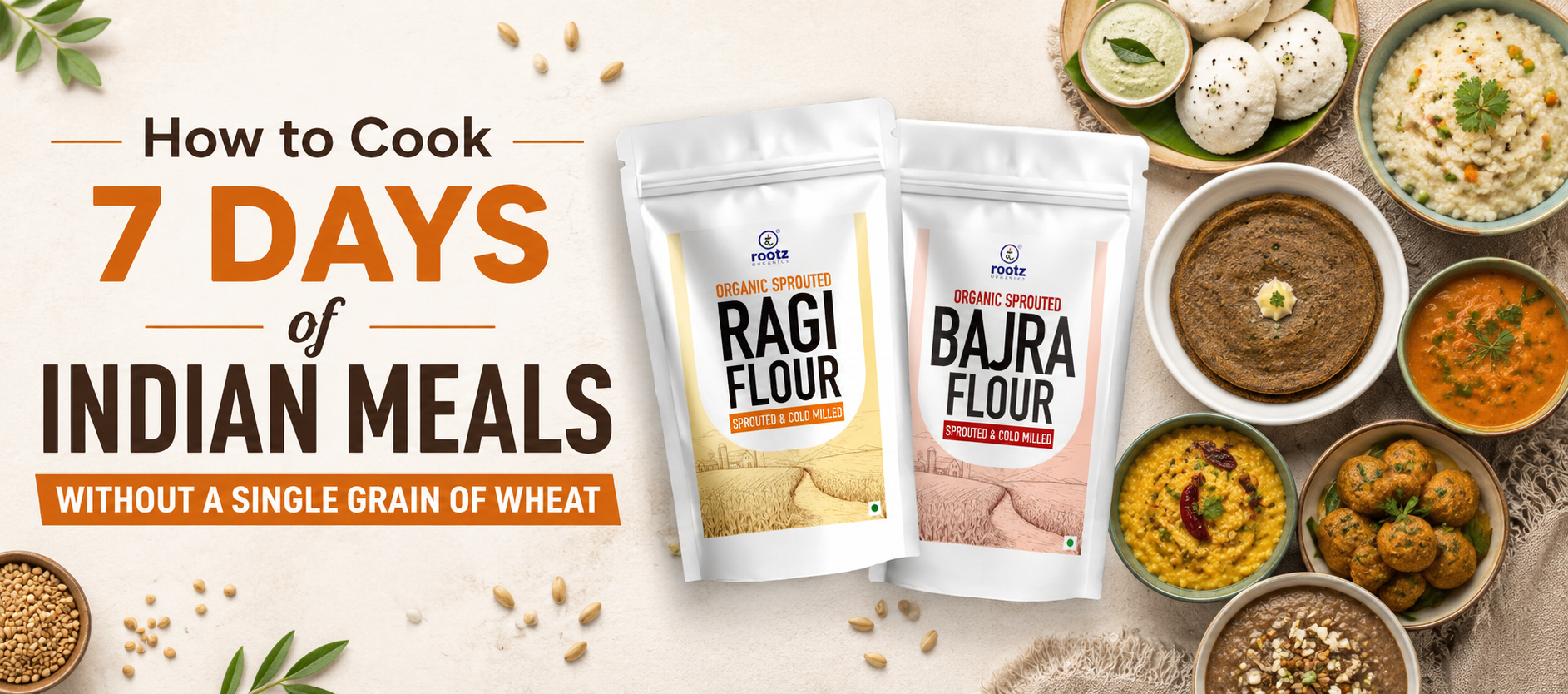
How to Cook 7 Days of Indian Meals Without a Single Grain of Wheat
Quick Answer: Yes, you can cook an entire week of satisfying, nutritious Indian meals without touching wheat. From ragi rotis at breakfast to jowar bhakri at dinner, India's ancient grain pantry has always been wheat-free — we just forgot about it. This guide brings it all back, meal by meal.
For most Indian households, the kitchen day begins and ends with atta — wheat flour. Rotis, parathas, poori, and naan have become so deeply embedded in our daily routines that cooking without wheat seems almost unthinkable. But here is the truth: wheat is a relatively recent addition to the mainstream Indian plate. Long before wheat dominated our kitchens, our ancestors thrived on millets, sorghum, finger millet, and rice — wholesome grains that naturally contain no gluten.
Whether you have been diagnosed with celiac disease, non-celiac gluten sensitivity, or simply want to eat cleaner and reduce processed carbohydrates, a well-planned gluten free Indian meal plan is entirely doable — and genuinely delicious. This guide walks you through seven full days of Indian meals, breakfast to dinner, using ingredients you can source organically and eat with complete confidence.
Why More Indians Are Moving Away from Wheat
The shift away from wheat in Indian kitchens is not just a wellness trend. It is a return to roots. India has over 10,000 years of millet cultivation history. Grains like jowar (sorghum), bajra (pearl millet), ragi (finger millet), and kuttu (buckwheat) were everyday staples across Maharashtra, Karnataka, Rajasthan, and Tamil Nadu long before modern wheat farming took over agricultural land.
Today, a growing number of health-conscious Indians — especially those dealing with digestive issues, blood sugar fluctuations, or autoimmune conditions — are rediscovering these grains. Millets have a lower glycemic index than wheat, are rich in fibre, and offer a superior mineral profile in many respects. They are also naturally gluten-free, making them a safe and intelligent choice for anyone avoiding wheat.
Did you know? India is one of the world's largest producers of millets. In 2023, the Indian government and the United Nations jointly declared it the International Year of Millets — a recognition of how vital these grains are to both nutrition and sustainable farming.
Your Wheat-Free Pantry: Flours That Do All the Work
Before we get into the meal plan, it helps to know your ingredient palette. Here are the key gluten-free flours that will power your week. Each brings its own nutritional strengths, and knowing them helps you plan meals confidently.
Ragi Flour (Finger Millet / Nachni)
One of the richest plant-based sources of calcium. Earthy flavour, great for rotis, dosas, porridge, and malt drinks. Ideal for children, new mothers, and people managing osteoporosis. Organic ragi flour from trusted sources ensures no cross-contamination.
Jowar Flour (Sorghum / White Millet)
High in fibre, iron, and antioxidants with a low glycemic index. Mild, slightly nutty taste. Used for bhakri, rotis, and savoury pancakes. Organic jowar flour retains maximum nutrients when stone-ground without heat processing.
Besan (Chickpea / Gram Flour)
Protein-dense, naturally gluten-free, and incredibly versatile. Used in cheelas, kadhi, pakoras, and dhokla. A daily workhorse in Indian gluten-free cooking.
Bajra Flour (Pearl Millet)
Warming and iron-rich. Traditionally consumed in winter months across Rajasthan and Gujarat. Works for thick bhakri and rotlas. Best eaten fresh with ghee.
Rice Flour (Chawal ka Atta)
Fine-textured and mildly flavoured. Essential for idli, dosa, akki roti, and phirni. Readily available and budget-friendly across India.
Kuttu Flour (Buckwheat Flour)
Despite its name, buckwheat contains no wheat. Used in Navratri fasting foods and North Indian cooking. Excellent for parathas and chillas. Rich in rutin, which supports heart health.
If you are looking to stock these flours conveniently, exploring Organic flours online through a reliable, certified organic store ensures quality without preservatives or additives — especially important when avoiding wheat due to health reasons.
Hidden Gluten in Indian Kitchens: What to Watch Out For
Watch for These Sneaky Sources of Gluten
- Maida (refined flour) — used as a thickener in gravies, sauces, and restaurant dishes
- Semolina / Rava / Suji — made from durum wheat; avoid in upma and halwa
- Store-bought spice blends and masalas — may use wheat flour as a filler or anti-caking agent
- Soy sauce, vinegar, packaged chutneys — often contain wheat-based additives
- Packaged snacks (samosas, kachori, mathri) — almost always made with maida
- Some processed dals and ready-to-cook mixes — may contain wheat starch as a stabiliser
Always read ingredient labels carefully and choose whole, unprocessed foods whenever possible.
The Complete 7-Day Gluten Free Indian Meal Plan
The meal plan below is designed for one adult and can easily be scaled for families. All breakfasts, lunches, dinners, and snacks are completely wheat-free. Most recipes use simple techniques requiring no special equipment.
DAY 1
Monday — The Comfort Classic
Breakfast
Ragi dosa with coconut chutney and sambar
Mix ragi flour with rice flour in a 2:1 ratio. Ferment overnight or use a quick batter with yogurt.
Mid-Morning
Handful of roasted makhana (fox nuts) with green tea
Lunch
Steamed rice + dal tadka + aloo gobhi sabzi + cucumber raita
Evening Snack
Besan cheela with green chutney
2 tbsp besan, grated carrot, coriander, green chilli. Cook on a non-stick tawa.
Dinner
Jowar bhakri + mixed vegetable curry + small bowl of curd
Tip: Make the jowar bhakri dough fresh — it does not store well overnight. Pat it into rounds using wet hands; a rolling pin tends to crack the dough.
DAY 2
Tuesday — South Indian Morning
Breakfast
Idli (rice + urad dal batter) with sambar and tomato chutney
A naturally gluten-free breakfast when prepared with proper fermented batter — no additives needed.
Mid-Morning
Banana + a glass of ragi malt
Ragi flour cooked with milk and jaggery for a nourishing, calcium-rich drink.
Lunch
Rajma chawal (kidney beans with basmati rice) + papad + salad
Choose papad carefully and check for a wheat-free label before buying.
Evening Snack
Peanut chikki with chai
Jaggery-roasted groundnuts make a filling snack when prepared without atta.
Dinner
Ragi roti + palak paneer + dal makhani
Ensure no maida is used as a thickener in restaurant-style gravies.
Tip: Ragi roti stays softer when you add a small amount of warm water while kneading. Press gently while cooking on the tawa rather than applying pressure.
DAY 3
Wednesday — The Power-Packed Midweek
Breakfast
Poha (flattened rice) with mustard seeds, curry leaves, peas, and lemon
A quick, naturally gluten-free breakfast ready in 10 minutes. Use thick poha for better texture.
Mid-Morning
Mixed fruit bowl with a sprinkle of flaxseeds
Lunch
Bajra roti + sarson da saag (mustard greens) + lassi
Evening Snack
Dhokla made from besan batter
Steamed, light, and naturally gluten-free when prepared without semolina or wheat flour.
Dinner
Brown rice + chana masala + lauki sabzi (bottle gourd) + pickle
Tip: Bajra roti tastes best with generous ghee. If bajra alone feels heavy, try a 50:50 mix with jowar flour for a softer, easier-to-roll roti.
DAY 4
Thursday — Light and Nourishing
Breakfast
Moong dal chilla with coriander chutney
Soak split green moong overnight. Blend to a smooth batter and cook on a greased tawa like a crepe.
Mid-Morning
Handful of almonds and dates
Lunch
Khichdi (rice + moong dal) with ghee + roasted papad + mixed vegetable sabzi
Evening Snack
Sabudana khichdi
Sago/tapioca pearls cooked with potato and peanuts for a filling evening meal.
Dinner
Jowar roti + methi chicken OR paneer tikka masala + dal
Ensure the gravy is prepared without cornstarch or wheat-based thickening agents.
Tip: Khichdi is one of India's oldest healing foods. The combination of rice and moong dal provides a complete amino acid profile — ideal on a low-energy day.
DAY 5
Friday — Weekend Begins with Flavour
Breakfast
Akki roti (Karnataka-style rice flour flatbread) with coconut chutney
Mix rice flour with grated carrot, onion, and coriander. Shape directly on the tawa using wet fingers.
Mid-Morning
Coconut water or chaas
Buttermilk seasoned with cumin and salt keeps digestion light and refreshing.
Lunch
Chole (chickpeas) + rice + onion salad + mango pickle
Evening Snack
Baked or air-fried masala peanuts with roasted chana
Dinner
Ragi dosa with potato-onion filling (masala dosa style) + sambar + coconut chutney
Tip: Chole cooked from scratch after soaking overnight tastes far superior to canned versions. Skip restaurant-style cream or wheat-based gravies — the spice itself carries the flavour beautifully.
DAY 6
Saturday — Family Feast Day
Breakfast
Ragi porridge with jaggery, cardamom, and chopped banana
A warm, filling bowl ideal for children and adults alike. Ragi is particularly rich in calcium.
Mid-Morning
Besan laddoo
Made with ghee and jaggery, without any wheat added.
Lunch
Full South Indian thali
Rice, rasam, sambar, kootu (vegetable and lentil curry), papad, curd, and banana.
Evening Snack
Corn on the cob (bhutta)
Roasted with lemon and chilli salt for a smoky, naturally gluten-free snack.
Dinner
Jowar bhakri + Kolhapuri-style vegetable curry + cucumber raita
Tip: Saturday is a great day to prepare batters in advance. Ferment rice and urad dal batter tonight for Sunday morning idlis or dosas.
DAY 7
Sunday — Slow, Wholesome, and Restorative
Breakfast
Soft idli with ghee + piping hot sambar + coconut chutney
The perfect Sunday ritual using the fermented batter prepared the previous night.
Mid-Morning
Seasonal fruit with a small bowl of curd and honey
Lunch
Dal baati (gluten-free version) + churma + lehsun chutney
Prepare the baati using a besan and jowar flour blend, while churma can be made with bajra, jaggery, and ghee.
Evening Snack
Kuttu (buckwheat) cheela with mint yogurt dip
Dinner
Light moong soup + ragi roti + stir-fried seasonal vegetables with mustard seeds
Tip: End the week light. Moong dal soup is deeply soothing, easy to digest, and helps reset the gut after a week of rich eating. Add a pinch of turmeric and ginger for an Ayurvedic touch.
Nutritional Overview: How Does a Wheat-Free Week Stack Up?
A common concern is whether eliminating wheat leads to nutritional gaps. With the variety of grains, lentils, and vegetables in this plan, the answer is reassuring.
Nutrient | Key Source in This Plan | Why It Matters |
Calcium | Ragi flour, sesame, dairy (curd, paneer) | Bone density, muscle function |
Iron | Ragi, jowar, bajra, green leafy vegetables | Prevents anaemia, supports energy |
Fibre | Jowar, bajra, lentils, whole rice | Digestive health, blood sugar regulation |
Protein | Besan, moong dal, rajma, chole, paneer | Muscle repair, satiety |
Complex Carbs | Rice, jowar, ragi, sabudana | Sustained energy throughout the day |
Antioxidants | Jowar, seasonal vegetables, spices | Immunity, cellular health |
The only nutrient to monitor carefully when transitioning away from fortified wheat products is Vitamin B1 (thiamine). Ensure adequate intake through whole dals, sunflower seeds, and leafy greens.
Practical Tips for Successfully Following a Wheat-Free Indian Kitchen
Switching from wheat takes some initial adjustment. Here are field-tested tips that make the transition smoother and more sustainable for Indian households:
- Stock your pantry wisely: Keep at least three gluten-free flours at home at all times. Ragi, jowar, and rice flour together can cover nearly 80% of Indian flatbread and breakfast requirements.
- Read labels carefully: When buying packaged foods, look for phrases like "gluten-free certified" or "contains no wheat, barley, or rye." Terms such as "natural" or "healthy" do not guarantee the product is wheat-free.
- Rotate your grains weekly: Avoid relying on a single millet. Rotating between ragi, jowar, bajra, rice, and kuttu improves nutritional diversity and prevents flavour fatigue.
- Adjust water quantities: Gluten-free flours absorb moisture differently from wheat flour. Ragi and bajra especially require slightly more water, and the dough should feel softer than standard atta dough.
- Batch-cook smartly: Prepare soaked legumes, partially cooked rice, chopped vegetables, and fermented dosa batter over the weekend. This dramatically reduces weekday cooking time.
- Communicate clearly when dining out: When ordering from restaurants, specify "no maida, no rava, no soy sauce." Most Indian restaurants can adapt dal-based and rice-based dishes if informed in advance.
Why Choosing Organic Grains Makes a Difference
There is a meaningful difference between ordinary commercially milled flour and stone-ground, organically grown flour. Conventional farming practices often use synthetic pesticides and fertilisers, residues of which can remain in the grain even after milling. For people with sensitive digestive systems — particularly those already dealing with gluten-related conditions — consuming pesticide-residue-free grains reduces the overall toxic load on the body.
Organic stone-milled ragi and jowar flours retain the bran and germ layers, which are the most nutrient-dense parts of the grain. Heat-treated industrial milling can destroy delicate B vitamins and beneficial natural enzymes. If you are cooking wheat-free for health reasons, choosing clean-label organic flours is not a luxury — it is a logical extension of the same health intention.
For families in India looking to source such products conveniently, platforms focused on Online organic grocery shopping have made it far easier to access certified, preservative-free grains, flours, and millets without visiting multiple specialty stores.
A note on Organic Wheat Flour: If you are transitioning gradually, or if only some family members are wheat-free, choosing certified organic wheat flour for others in the household is still a meaningful upgrade over refined commercial atta. Organic wheat is grown without synthetic pesticides and generally retains more nutrients and fibre than heavily processed flour.
How to Transition Your Family to a Wheat-Free Diet Without Resistance
The biggest challenge in any dietary shift within an Indian household is not nutrition — it is habit. Here is a realistic, gentle approach that helps families adapt naturally without feeling deprived.
Start With Two Wheat-Free Days Per Week
Begin by declaring two fixed days each week as "millet days." Replace regular wheat rotis with jowar bhakri, or serve ragi porridge instead of upma. Once the family adjusts to the flavours and notices that meals still feel satisfying, gradually increase the frequency from two days to three, and eventually more.
Introduce Ragi and Jowar Quietly Into Familiar Dishes
One of the easiest transition strategies is blending millet flours into foods your family already enjoys. Mix around 30% ragi flour into dosa batter or add jowar flour to idli batter. In many cases, people barely notice the difference — and when they do, the reaction is often curiosity rather than resistance. This method works especially well for children.
Make the Change Feel Exciting, Not Restrictive
Instead of presenting the shift as "giving up wheat," frame it as rediscovering India's regional food traditions. Dishes like Rajasthani bajra roti, Maharashtrian jowar bhakri, and Karnataka-style akki roti are celebrated culinary staples in their own right — not substitutes or compromises. This simple reframing creates a much more positive emotional response to the transition.
Bringing It All Together
Eating wheat-free in an Indian kitchen is not a sacrifice — it is a homecoming. Every grain in this meal plan has a deep history in Indian cuisine and a nutritional profile strong enough to stand entirely on its own. Ragi has nourished Indian babies and mothers for generations. Jowar has sustained Maharashtra's farming communities through difficult droughts. Bajra has warmed Rajasthani winters long before modern packaged foods existed.
A thoughtfully planned gluten free Indian meal plan is not about imitating wheat-based foods with inferior substitutes. It is about returning to the original diversity of Indian cooking — seasonal, regional, flavourful, and deeply connected to the grains traditionally grown across the country.
This seven-day meal plan is simply a starting point. Adapt it to your climate, your regional cuisine, your family's tastes, and your daily routine. The only real principle is this: no wheat, all flavour.
When you source these grains from trusted organic producers who prioritise clean-label, chemical-free processing, you are doing more than following a gluten-free lifestyle. You are embracing a way of eating that is closer to how Indian food was traditionally prepared — pure, nourishing, and rooted in real ingredients.
Frequently Asked Questions
Can I follow a gluten-free Indian meal plan without missing out on traditional taste?
Absolutely. Indian cuisine has always been rich in naturally gluten-free staples — rice, lentils, millets, legumes, and a spectacular range of spices. Swapping wheat flour with ragi, jowar, or besan lets you enjoy traditional rotis, dosas, cheelas, and curries with zero compromise on flavour. In fact, many people report that millet-based rotis have a more complex, satisfying taste than plain wheat roti once they adjust to the flavour profile.
Which flour is the best substitute for wheat in everyday Indian cooking?
It depends on the dish. Ragi flour works beautifully for rotis, dosas, and porridge. Jowar flour is ideal for bhakri, rotis, and savoury pancakes. Besan (chickpea flour) excels in cheelas, pakoras, and kadhi. Rice flour is the foundation of South Indian idli and dosa batters. A blend of jowar and ragi is increasingly popular for everyday flatbreads — it combines the mild taste of jowar with the nutritional punch of ragi.
Is a gluten-free diet only necessary for people with celiac disease?
Not exclusively. While a gluten-free diet is medically essential for people with celiac disease or non-celiac gluten sensitivity, many people in India are voluntarily adopting millet and ragi-based diets for general digestive wellness, better blood sugar control, and cleaner eating. Ancient Indian dietary wisdom — rooted in Ayurveda — has long recommended rotating grains seasonally and limiting heavy wheat consumption. That said, before making significant dietary changes, it is always advisable to consult a registered dietitian or healthcare professional.
Where can I buy organic ragi, jowar, and other gluten-free flours in India?
You can conveniently source certified organic gluten-free flours through trusted online organic stores in India. Look for platforms that specifically offer clean-label, chemical-free, and preservative-free products with clear sourcing information. Rootz Organics is one such destination, offering a wide range of organic millet-based and gluten-free flours, along with other organic food products, delivered across India. Always check for relevant certifications and read product descriptions before purchasing.
Are millets complete nutritional substitutes for wheat? Will I get all my nutrients?
Millets are highly nutritious in their own right — in several respects they are superior to wheat. Ragi is one of the richest plant-based sources of calcium. Jowar is high in fibre, iron, and antioxidants. Bajra supports bone health and warmth during cooler months. However, since millets are lower in certain B vitamins compared to fortified commercial wheat products, a well-balanced Indian diet that also includes a variety of dals, seasonal vegetables, dairy, eggs (or plant-based alternatives), and fresh fruits will comfortably cover all nutritional bases without wheat.
-
 August 6th, 2026
 -
 August 6th, 2026