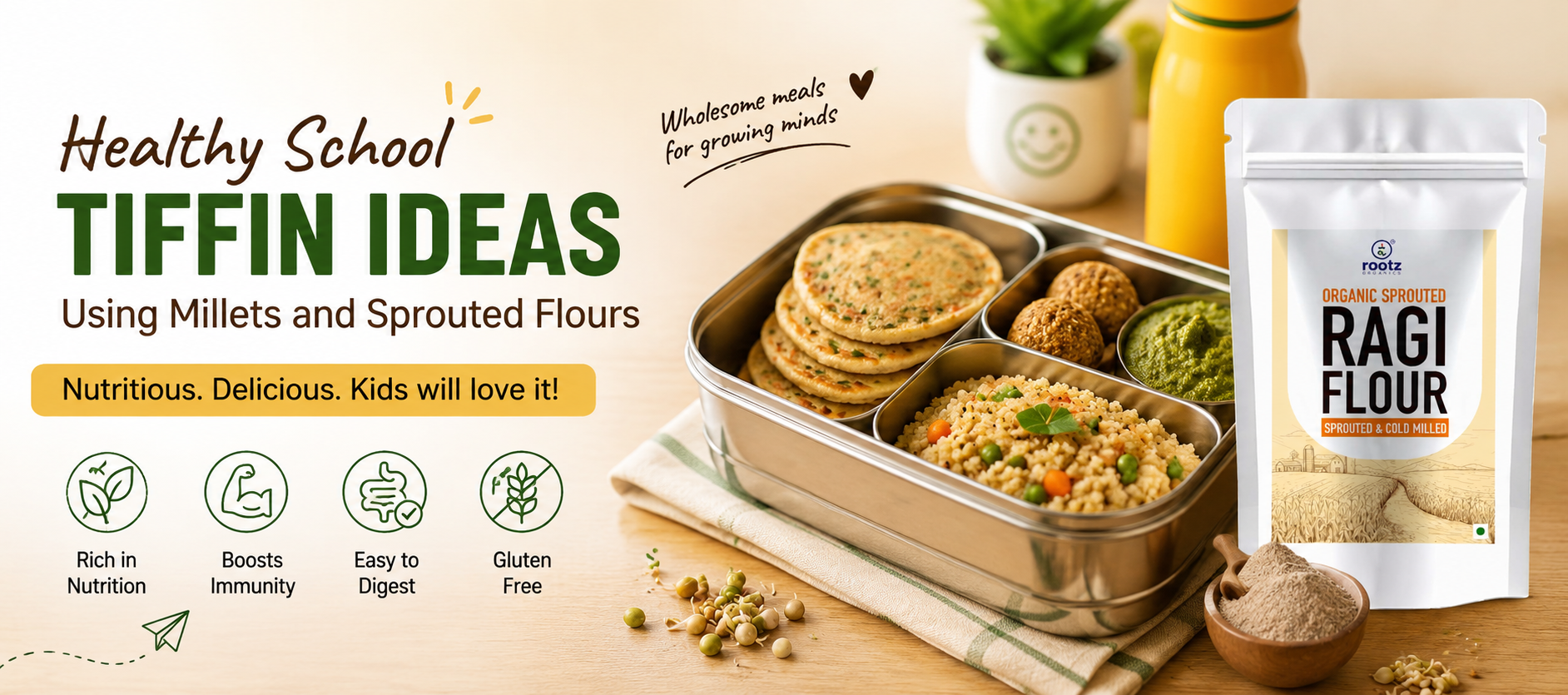
Healthy School Tiffin Ideas Using Millets and Sprouted Flours
Quick Answer: Millets such as ragi, bajra, and jowar, along with sprouted wheat and sprouted moong flour, make school tiffins more filling and nutrient-dense than refined-flour meals. Building healthy Indian lunch box recipes around these grains keeps blood sugar steady through the school day and adds fibre, iron, and calcium that a maida-based lunch simply cannot match.
Why the Standard Tiffin Box Needs a Rethink
Most Indian lunch boxes are still built around maida parathas, white bread sandwiches, or plain rice. These fill a child up for an hour, then leave them tired and reaching for a snack by 1 pm. The fix isn't a complicated recipe overhaul — it's a flour and grain swap that keeps the same familiar dishes but changes what they're made from.
This is where millets and sprouted flours earn their place. A single swap, like using sprouted wheat atta instead of regular refined atta for a paratha, can noticeably change how long a child stays full without changing the recipe your child already recognises.
Teachers and school nutrition counsellors in many Indian cities have started nudging parents toward this exact change, not because it's trendy, but because the mid-afternoon energy dip in children is one of the most common and preventable complaints heard during PTA meetings. A tiffin built on slow-digesting grains addresses that dip directly, rather than trying to fix it with an extra snack box.
Cost is often the first objection parents raise, but millets and sprouted flours are priced comparably to good-quality wheat atta and basmati rice once bought in reasonable bulk packs. The bigger barrier is usually habit — most households simply haven't cooked with ragi or bajra flour outside of a festival recipe, so the recipes below are deliberately built around dishes that are already part of the everyday Indian kitchen.
What Makes Millets and Sprouted Flours Different
Millets are naturally gluten-free grains — ragi, jowar, bajra, foxtail, and kodo among them — that carry a lower glycemic index than polished wheat or rice, meaning they release energy more gradually. Sprouting, on the other hand, is a process where wheat, moong, or bajra is soaked and allowed to germinate before milling, which breaks down anti-nutrients like phytic acid and makes the iron, zinc, and calcium in the grain more easily absorbed by the body.
Millets vs Sprouted Flours vs Refined Flour: A Quick Comparison
- Fibre content: Millets and sprouted wheat both carry significantly more fibre than refined maida, which has almost none left after processing.
- Digestion speed: Millets and sprouted flours digest more slowly, which is what helps a child stay full through a long school stretch.
- Mineral absorption: Sprouting specifically improves how well the body absorbs iron and calcium already present in the grain.
- Gluten content: Millets are inherently gluten-free; sprouted wheat flour still contains gluten, just in a more digestible form.
- Everyday use: Both work in parathas, dosas, noodles, and pulao — the same dishes kids already eat, just rebuilt from a stronger base.
Building a Balanced Tiffin: The Simple Plate Framework
A tiffin box that actually keeps a child full and focused doesn't need to be complicated. A useful mental model is to fill roughly half the box with a millet or sprouted-flour base — a paratha, noodles, or rice — a quarter with a protein source like paneer, sprouted moong, or nuts, and the remaining quarter with a vegetable or fruit component. This structure is easy for any parent or school cook to repeat daily without recalculating a diet plan each morning.
A 5-Day Millet and Sprouted Flour Tiffin Plan
Rotating five simple bases across a school week avoids the boredom that makes kids swap or skip their lunch. Below is a practical plan built around ingredients that already exist in most Indian kitchens, with millet and sprouted-grain swaps built in.
Monday: Millet Noodles Stir-Fry
Boil noodles made from a millet blend such as ragi, bajra, or kodo instead of the usual maida-based hakka noodles. Toss them with grated carrot, capsicum, and a spoon of sesame oil, then finish with a dash of soy sauce or lemon. Rootz Organics' millet noodles online range works well here since the noodles cook in the same time as regular ones but leave a child fuller for longer.
Tuesday: Sprouted Ragi Uttapam
Blend sprouted ragi flour with curd and a pinch of salt into a thick batter, then pour it onto a hot tawa and top with finely chopped onion and tomato before flipping. This dish is naturally soft, mildly sweet, and rich in calcium — a good option for younger children who are still adjusting to spiced food.
Wednesday: Sprouted Wheat Paratha with A2 Ghee
Knead sprouted wheat flour with grated bottle gourd or carrot, roll it out, and cook it on a tawa with a spoon of ghee for a softer texture and a richer aroma. Using organic a2 ghee instead of refined oil adds fat-soluble vitamins that help a child absorb nutrients from the vegetables mixed into the dough.
Thursday: Millet Pulao with Vegetables
Swap white rice for a heritage rice or millet-rice blend, then cook it the usual pulao way with peas, carrots, and whole spices. Choosing organic rice online for this dish ensures the grain is free from synthetic pesticide residue, which matters more for children given their smaller body weight and developing systems.
Friday: Sprouted Moong Cheela with Roasted Seeds
Grind sprouted moong into a batter with ginger and a pinch of turmeric, pan-cook into thin cheelas, and pack alongside a small pouch of roasted pumpkin or sunflower seeds. This combination delivers plant protein and healthy fats in a form most children can eat with their hands.
Cooking Notes That Actually Matter
The oil used to roast, sauté, or finish a dish affects both flavour and how well fat-soluble nutrients are absorbed. Wood-pressed and cold-pressed oils retain more of their natural nutrients than heavily refined ones, since they skip the high-heat extraction and chemical processing refined oils go through. Using cold pressed oils for light sautéing in tiffin recipes is a small change that carries forward into daily nutrition without needing a separate line item in a child's diet.
Tips for Packing Tiffins Kids Will Actually Eat
Even the most nutrient-dense recipe fails if it comes back home untouched. A few practical habits make millet and sprouted-flour meals more likely to be finished:
- Introduce one new millet dish at a time, alongside a food the child already likes, rather than replacing the entire box at once.
- Cut parathas and dosas into finger-sized strips so younger children can eat without cutlery.
- Pack sauces or chutneys separately in a small container to keep noodles or parathas from turning soggy by lunchtime.
- Keep portion sizes realistic — a smaller box finished completely is more useful than a large one that comes back half full.
- Rotate the same five or six bases rather than inventing a new recipe daily; repetition with small flavour changes works better for most children than constant novelty.
Prepping Millet and Sprouted Flour Meals Ahead of Time
Weekday mornings rarely leave room for elaborate cooking, which is why most of these recipes are built to be prepped in advance. Sprouted ragi and moong batters can be mixed the night before and left covered in the refrigerator, ready to pour onto a tawa in the morning. Millet noodles and pulao rice both hold up well when cooked a day ahead and reheated briefly with a splash of water to loosen them up.
Dry millet flours themselves store well in an airtight container for four to six weeks in a cool, dry spot, though sprouted flours are best used within three to four weeks since the germination process makes them slightly more perishable than plain refined flour. Buying smaller 500g to 900g packs rather than large sacks helps keep the flour fresh through the full pack rather than letting the last few servings go stale.
Common Mistakes Parents Make When Switching to Millet Tiffins
A handful of avoidable missteps are usually behind a millet tiffin coming back untouched. Recognising these early makes the transition smoother for both the parent and the child.
- Switching everything at once: Replacing every dish in the weekly rotation with millets in the same week overwhelms a child's palate. One new dish at a time works far better.
- Skipping the seasoning a child is used to: Millet dishes still need the same onion, garlic, and mild spice base a child already recognises — an under-seasoned millet paratha will taste unfamiliar even if the nutrition is right.
- Ignoring texture: Millet doughs can turn crumbly if rolled too thin; keeping parathas slightly thicker than a maida version usually solves this without any extra ingredient.
- Not accounting for gluten in blended noodles: Some millet noodle blends use a small amount of wheat for binding, so families managing coeliac disease specifically should check the ingredient list rather than assuming every millet noodle is entirely gluten-free.
Sourcing the Right Ingredients for a Healthy Tiffin
The nutritional gap between a regular tiffin and a genuinely healthy one usually comes down to where the base ingredients are sourced from. Choosing an online organic grocery that certifies its millets, flours, and oils reduces the guesswork around pesticide residue and adulteration that's harder to check for in loose market grains. For parents building a broader pantry beyond tiffin staples, browsing organic food products online is a practical way to stock sprouted flours, millets, and cold-pressed oils in one place rather than sourcing each separately.
Among the many lunch ideas parents try each school term, the ones that stick long-term are almost always the simplest — a familiar dish rebuilt with a stronger base, not a completely new cuisine. That's what makes millets and sprouted flours practical rather than just trendy.
Frequently Asked Questions
Are millet-based tiffins safe for young children?
Yes. Millets like ragi, jowar, and bajra are naturally gluten-free and generally well tolerated by children above one year, though it's best to introduce them gradually and watch for any individual sensitivity, as with any new grain.
How is sprouted flour different from regular atta?
Sprouted flour is milled from grain that has been soaked and allowed to germinate before drying, a process that reduces anti-nutrients and improves how easily the body absorbs the iron, zinc, and calcium already present in the grain, compared with regular atta.
Will millet noodles and parathas taste different from regular ones?
They carry a slightly nuttier, earthier flavour than refined-flour versions, but most children adjust within a few tries, especially when the dish is paired with a familiar sauce, chutney, or vegetable mix they already enjoy.
How often can millets be included in a school tiffin?
Millets can be rotated through tiffins most days of the week, since different varieties (ragi, jowar, bajra, foxtail) bring slightly different nutrients, and rotating them also prevents the diet from becoming too repetitive for a child.
Do sprouted flour recipes need extra cooking time?
Not significantly. Sprouted flours cook in roughly the same time as regular atta for parathas and cheelas, though batters made from sprouted flour may need slightly less water since the grain absorbs moisture differently after sprouting.
In summary: Building healthy Indian lunch box recipes doesn't require an entirely new cuisine — it requires swapping refined flour and polished rice for millets and sprouted flours in the same dishes a child already eats. A five-day rotation of millet noodles, sprouted ragi uttapam, sprouted wheat parathas, millet pulao, and moong cheela covers a full school week with minimal repetition, while sourcing clean-label millets, flours, ghee, and oils from a certified organic grocer removes the guesswork around what actually ends up in the box.
-
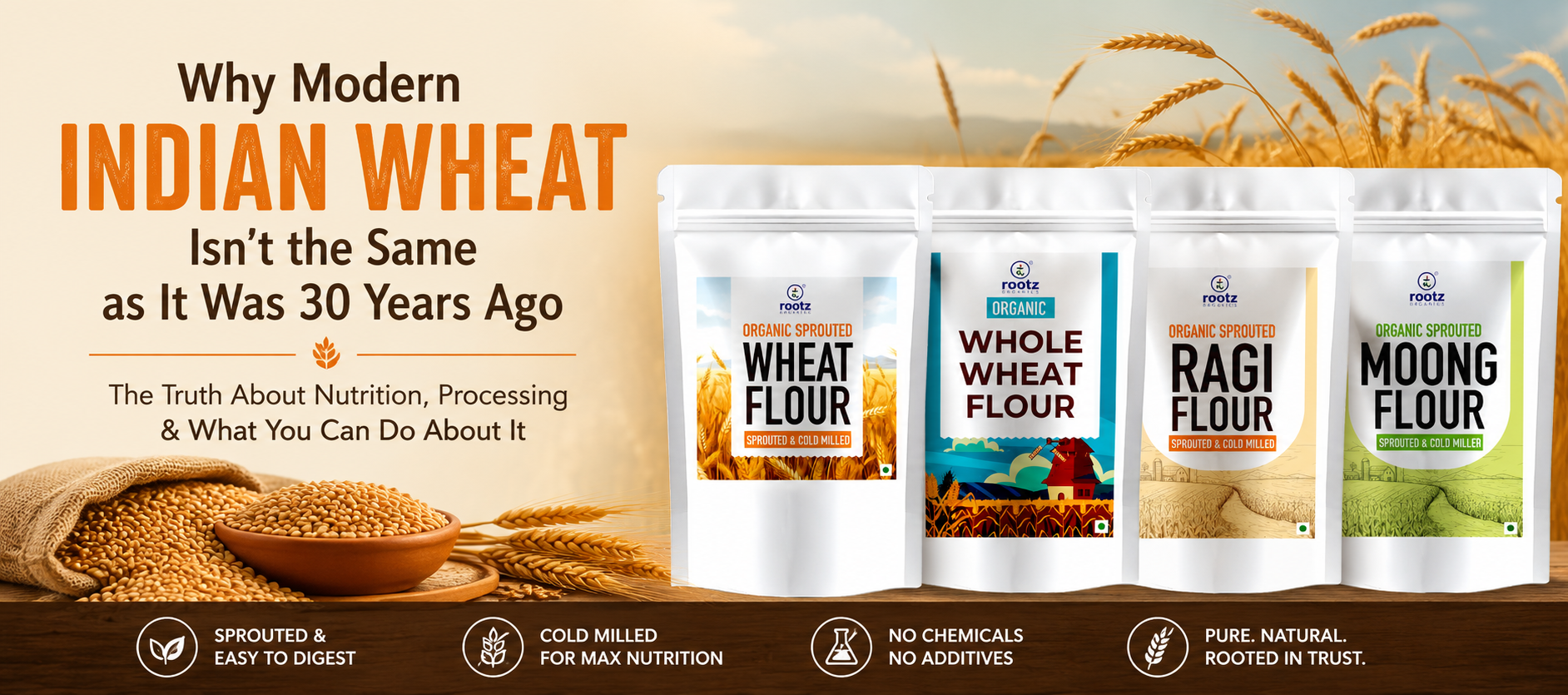
Why Modern Indian Wheat Isn't the Same as It Was 30 Years Ago
July 16th, 2026 -
 July 16th, 2026