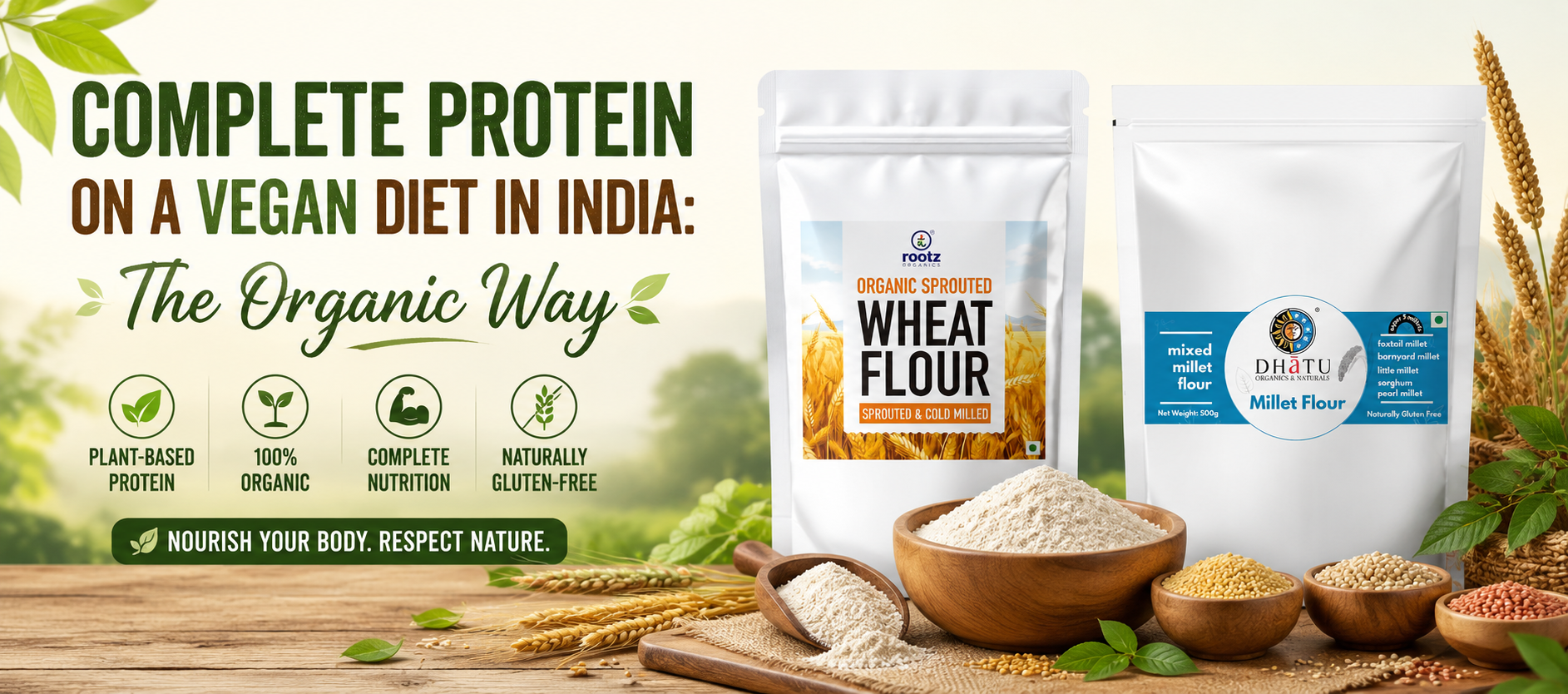
Complete Protein on a Vegan Diet in India: The Organic Way
Quick Answer: Yes — you can get all nine essential amino acids on a vegan diet in India. The key lies in understanding complementary proteins, choosing nutrient-dense organic whole foods, and building meals around India's rich tradition of legumes, ancient grains, seeds, and fermented foods. This guide shows you exactly how.
Protein is the building block of life — it repairs muscle, supports immunity, balances hormones, and keeps your skin, hair, and organs functioning at their best. Yet one of the most persistent concerns surrounding plant-based eating is the question of protein quality. Are vegan proteins "complete"? Can a purely plant-based diet in India supply everything the body needs?
The short answer is a confident yes — but with nuance. Understanding how to get complete protein on a vegan diet requires knowing what "complete protein" actually means, which Indian foods deliver it, and how smart food combinations unlock the full amino acid spectrum nature has to offer. The organic route makes this even more powerful, ensuring every bite is free from synthetic chemicals and rich in nutrition.
What Is a Complete Protein — And Why Does It Matter?
Proteins are made up of amino acids. Of the twenty amino acids the human body uses, nine are classified as essential — meaning the body cannot manufacture them internally and must obtain them through food. A food source that contains all nine essential amino acids in adequate quantities is called a complete protein.
Animal-based foods — meat, eggs, dairy — are typically complete proteins. Most plant foods are considered "incomplete" because they may be low in one or two of the nine essential amino acids. However, this does not mean plant-based diets are protein-deficient. It simply means that variety and pairing matter.
The nine essential amino acids: Histidine, Isoleucine, Leucine, Lysine, Methionine, Phenylalanine, Threonine, Tryptophan, and Valine. A balanced vegan diet consumed across the day can and does supply all of these.
The Myth of Protein Combining at Every Meal
Earlier nutritional thinking held that vegans needed to combine complementary proteins at every single meal. Modern dietary science has clarified this: the body maintains an amino acid pool throughout the day, and as long as a variety of protein-rich plant foods are consumed across meals, all nine essential amino acids will be available. You do not need to engineer every plate precisely — but eating diverse, whole, organic foods consistently is key.
How to Get Complete Protein on a Vegan Diet: India's Own Superfoods
India's culinary and agricultural heritage is extraordinarily protein-rich. Long before protein powders existed, Indian communities thrived on plant-based diets rooted in legumes, millets, ancient grains, and fermented foods. Here is a deep look at the best organic sources of plant-based complete and complementary protein available in India today.
1. Organic Soy: Nature's Complete Plant Protein
Soy is one of the very few plant foods that is a true complete protein, containing all nine essential amino acids. Tofu, tempeh, edamame, and unsweetened soy milk are all excellent forms. Organic soy, cultivated without genetically modified seeds or synthetic pesticides, is the cleanest way to consume this powerhouse food.
Organic tofu can be stir-fried with seasonal organic vegetables online delhi, added to curries, or blended into smoothies for a protein boost. Just 100 grams of firm tofu provides approximately 8–10 grams of protein.
2. Quinoa: The Andean Grain That India Is Embracing
Quinoa is another complete plant protein — it contains all nine essential amino acids and is also gluten-free, making it valuable for people with wheat sensitivity. Available today across Indian cities and health food platforms, quinoa can replace rice in pulao, be cooked as upma, or tossed into salads. It provides around 8 grams of protein per cooked cup.
3. Amaranth (Rajgira): India's Ancient Grain, Rediscovered
Amaranth — known in India as rajgira, and widely used during fasting — is a complete protein grain with an exceptional amino acid profile. It is particularly rich in lysine, an amino acid that many grains lack. Amaranth is also high in iron, calcium, and magnesium. It can be popped like popcorn, cooked as porridge, or milled into flour for rotis and chillas.
4. Hemp Seeds: A Tiny Seed With Complete Nutrition
Hemp seeds contain a well-balanced ratio of essential amino acids and are among the most bioavailable plant proteins available. Three tablespoons of hemp seeds provide roughly 10 grams of protein. They also deliver an ideal omega-3 to omega-6 fatty acid ratio. Sprinkle them over salads, blend into chutneys, or stir into smoothies.
5. Chia Seeds: Protein, Fibre, and Omega-3 in One
Chia seeds are a complete protein and an outstanding source of plant-based omega-3 fatty acids and soluble fibre. Two tablespoons deliver approximately 4 grams of protein. Soak them overnight to make chia pudding, or add to lemonade and buttermilk alternatives for a nutritious twist.
The Power of Protein Pairing: India's Smartest Meal Traditions
Indian cuisine has intuitively practised protein combining for centuries, long before nutritional science gave it a name. The traditional pairings that form the backbone of Indian meals are, in fact, precisely the complementary protein combinations nutrition experts now recommend.
Traditional Indian Meal | Protein Pairing | Why It Works |
Dal (lentils) + Rice | Legume + Grain | Legumes supply lysine; rice supplies methionine — together they form a complete amino acid profile. |
Rajma + Whole Wheat Roti | Beans + Whole Grain | Kidney beans are rich in lysine; wheat flour fills the methionine gap. |
Chana + Bajra Roti | Chickpea + Millet | High-protein pairing with complementary amino acid profiles and excellent fibre content. |
Peanut Butter + Whole Wheat Bread | Legume + Grain | Classic complete-protein combination; peanut butter provides lysine that wheat lacks. |
Moong Dal Chilla + Coconut Chutney | Legume + Seed | Coconut adds complementary fats and amino acids to the protein-rich lentil pancake. |
These are not new innovations — they are the wisdom of generations, validated by modern nutritional science. When sourced organically, these combinations deliver pure, chemical-free nutrition at its finest.
Organic Grains and Flours: Your Daily Protein Foundation
The flour you cook with every day matters more than most people realise. Beyond simple carbohydrates, whole grain and alternative flours carry meaningful amounts of protein, fibre, and micronutrients. Choosing organic flours online ensures these everyday staples are free from pesticide residue and artificial bleaching agents.
Best Protein-Rich Organic Flours for a Vegan Diet
Chickpea Flour (Besan)
One of the highest-protein flours used in Indian cooking, besan delivers approximately 22 grams of protein per 100 grams. It is the base for chilla (savoury pancakes), pakoras, and kadhi. Organic chickpea flour is also naturally gluten-free and high in folate and iron.
Amaranth Flour (Rajgira Atta)
As discussed above, amaranth is a complete protein grain. Its flour — when used in rotis, pancakes, or baked goods — delivers all essential amino acids. It is also gluten-free, making it a dual-purpose ingredient for those avoiding gluten.
Soy Flour
Soy flour is among the most protein-dense flours available, containing up to 36 grams of protein per 100 grams. Mix a small proportion into regular atta or besan recipes to boost the protein content of everyday flatbreads and pancakes without changing flavour significantly.
Sprouted Wheat and Millet Flours
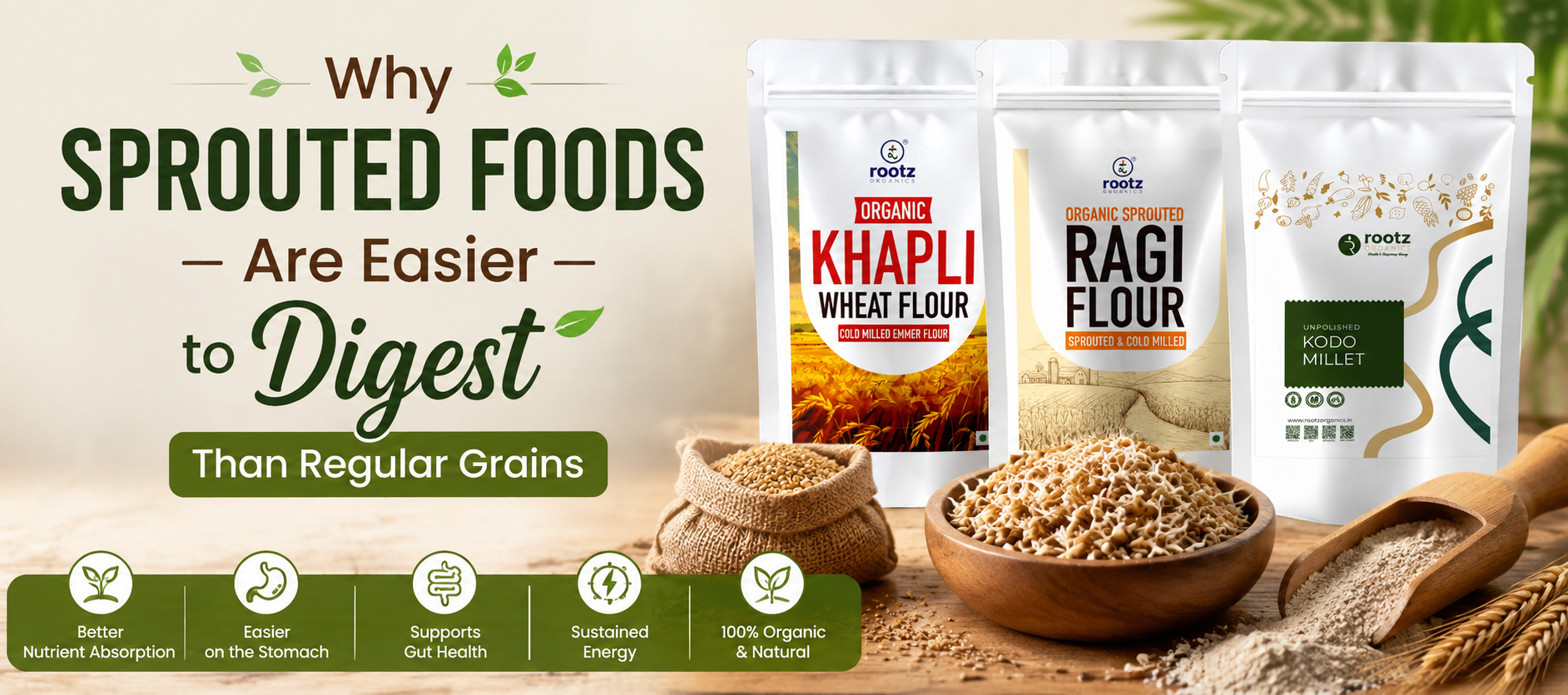
Sprouting grains and legumes before milling into flour increases their protein bioavailability, neutralises anti-nutrients like phytic acid, and improves digestibility. Sprouted moong, wheat, and ragi flours are a traditional Indian approach to getting more nutrition from everyday ingredients.
For those managing gluten sensitivity alongside their vegan diet, exploring gluten free flours made from millets, buckwheat, amaranth, and chickpeas opens up a wide world of high-protein, allergen-friendly cooking.
Legumes, Pulses, and Sprouts: The Heart of Vegan Protein in India
If there is one food group that defines Indian vegan protein nutrition, it is legumes. Lentils, beans, and pulses have been the protein anchor of Indian diets for thousands of years — and for good reason. They are affordable, versatile, fibre-rich, and when organically grown, extraordinarily clean sources of nutrition.
Key Legumes and Their Protein Content (per 100g cooked)
Legume | Protein (approx.) | Key Amino Acid Strength |
Black Chickpeas (Kala Chana) | 9g | Lysine, Arginine |
Yellow Moong Dal | 7g | Easily digestible; good lysine content |
Masoor Dal (Red Lentil) | 9g | Lysine, Threonine |
Rajma (Kidney Beans) | 9g | Lysine, Isoleucine |
Urad Dal (Black Lentil) | 7g | Methionine, Threonine |
Toor Dal (Pigeon Pea) | 7g | Lysine, Tryptophan |
Sprouting any of the above legumes — a simple overnight soak and rinse process — increases their vitamin C content dramatically, neutralises phytic acid (which can block mineral absorption), and improves the bioavailability of their amino acids. Sprouts can be eaten raw in salads or lightly stir-fried for a quick, high-protein snack.
Nuts, Seeds, and Nut Butters: Protein Between Meals
Seeds and nuts are the snacking superheroes of a high-protein vegan diet. They are dense in healthy fats, micronutrients, and protein, and they require zero cooking. The key is to choose organic, cold-pressed, and additive-free versions to avoid rancidity and unwanted chemical exposure.
Top Seeds for Daily Protein
Pumpkin seeds lead among commonly available seeds with approximately 19 grams of protein per 100 grams — and they are a particularly rich source of zinc and magnesium. Sunflower seeds provide around 21 grams per 100g. Flaxseeds, while lower in protein, add essential omega-3 fatty acids and lignans that support hormonal health. Sesame seeds (til) are rich in methionine, making them an excellent complement to lysine-rich legumes.
Nut Butters: A Versatile Protein Addition
Organic nut butters — including almond butter, peanut butter, cashew butter, and sunflower seed butter — are concentrated protein sources that can be stirred into smoothies, spread on whole-grain bread, or used as dips. Look for versions made from a single ingredient: just the nut or seed, with no added sugar, hydrogenated oils, or preservatives.
Ancient Grains and Organic Rice: More Than Just Carbohydrates
Rice is often dismissed as "just a carbohydrate," but when you look at whole, unpolished, and heirloom rice varieties, the protein picture changes. Brown rice, red rice, and black rice all carry meaningful protein and a richer micronutrient profile than white polished rice. Organic, unprocessed rice varieties retain their bran layer, which is where much of the protein, fibre, and B-vitamins live.
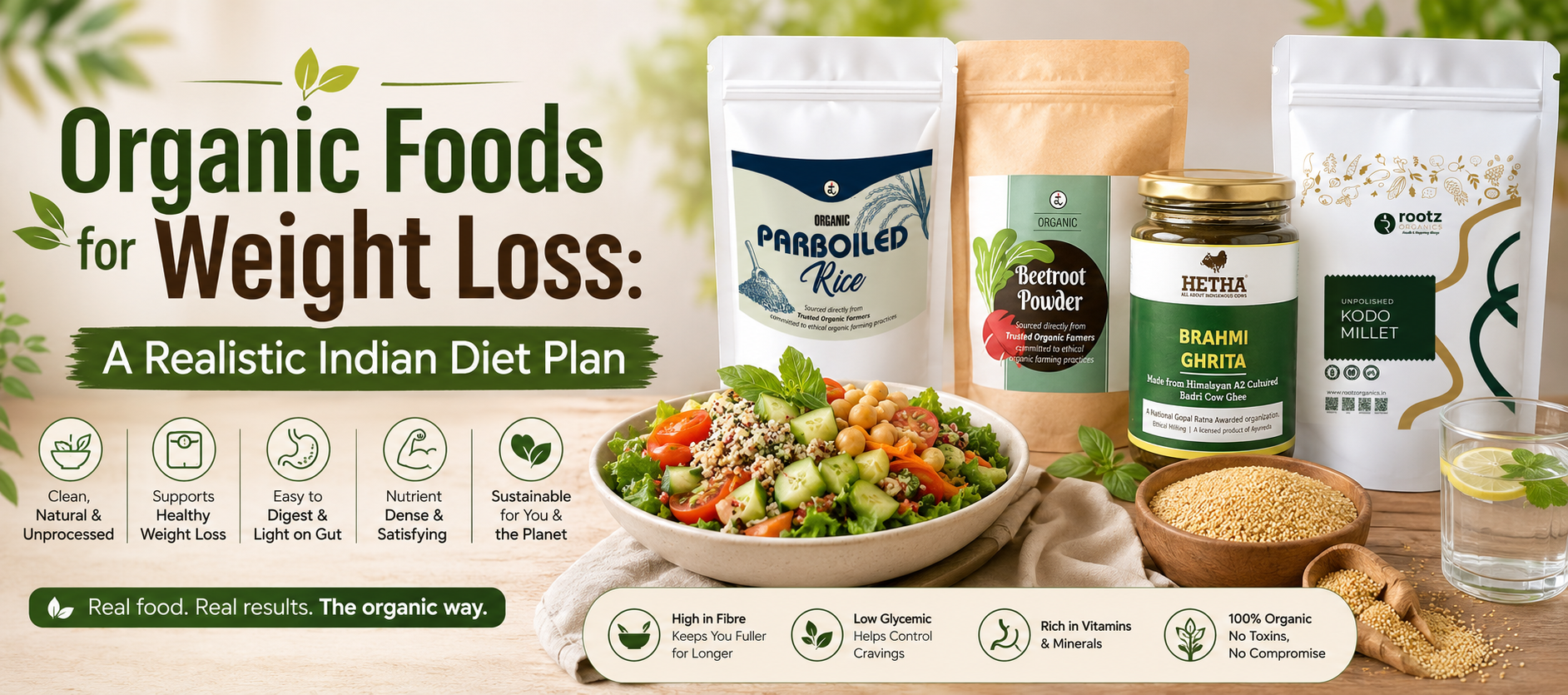
For those building their pantry thoughtfully, exploring organic rice online reveals a diverse range of heirloom and traditional rice varieties — from Sona Masoori and Gobindobhog to red Matta rice and black Forbidden rice — each with distinct nutritional profiles and culinary characters.
Millets: India's Superfood Grain Comeback
The Indian government declared 2023 the International Year of Millets, and for good reason. Foxtail millet, pearl millet (bajra), finger millet (ragi), kodo millet, and little millet are all high-protein, gluten-free, and deeply rooted in Indian culinary tradition. Millets provide between 7 and 12 grams of protein per 100 grams, contain essential amino acids complementary to legumes, and are extremely low on the glycaemic index.
Building a Full-Day Vegan Protein Meal Plan: The Indian Organic Way
Understanding individual ingredients is only part of the picture. Here is a practical, realistic example of how a complete protein vegan day could look — using whole, organic Indian foods.
Sample Day of High-Protein Vegan Eating
Morning (Breakfast)
Sprouted moong dal chilla (2–3 pieces) with coconut chutney. Or: overnight chia pudding made with plant-based milk, topped with pumpkin seeds and banana. Protein contribution: 15–20g.
Mid-Morning (Snack)
A handful of mixed seeds and roasted organic kala chana (black chickpeas). Or: 2 tablespoons of organic peanut or almond butter on whole-grain toast. Protein contribution: 10–12g.
Lunch
Masoor dal (red lentil) with brown rice or bajra roti, a side of sabzi made with seasonal organic vegetables, and a small salad with tofu cubes. Protein contribution: 20–25g.
Evening (Snack)
Hemp seed smoothie: blend 3 tablespoons hemp seeds, plant milk, banana, and spinach. Or: hummus (chickpea + sesame tahini) with vegetable crudités. Protein contribution: 10–12g.
Dinner
Rajma curry with quinoa or amaranth grain, plus a side salad with sunflower seeds. Protein contribution: 18–22g.
Total estimated protein for the day: 73–91 grams — well above the recommended daily intake for most adults, achieved entirely through organic Indian plant foods.
Why Organic Matters Even More for a Protein-Centric Vegan Diet
When legumes, grains, and seeds form the majority of your caloric and nutritional intake — as they do in a vegan diet — the quality of those foods becomes non-negotiable. Conventionally grown pulses and grains are often treated with synthetic pesticides, stored with fumigants, and milled using bleaching chemicals. Cumulative exposure to these residues is a legitimate health concern.
Organic certification under NPOP (National Programme for Organic Production) and PGS-India standards guarantees that the food has been grown without synthetic pesticides, chemical fertilizers, or genetically modified inputs. For vegans who depend on these foods daily, this is not a luxury — it is a health imperative.
Building your vegan pantry through a trusted organic food online platform ensures transparency of sourcing and certification at every step. Look for platforms that carry the NPOP seal and can trace products back to the farm.
The Role of Clean Labels and No Additives
Many packaged protein foods — protein bars, plant-based yogurts, vegan cheeses — contain a long list of additives, gums, and artificial flavourings. A food-first approach, centered on whole organic ingredients purchased through a reliable online organic grocery platform, eliminates this problem entirely. Your protein comes from the food itself — not from a lab.
Fermented Foods: Protein, Probiotics, and Gut Health in One
Indian fermented foods deserve a special mention in any discussion of vegan protein. Idli and dosa batter (fermented rice and urad dal), kanji (fermented carrot or beetroot drink), fermented pickles, and homemade plant-based yogurts made from soy or coconut milk all offer protein alongside probiotic bacteria that dramatically improve gut health and nutrient absorption.
A healthy gut microbiome is central to protein utilisation. Even if you consume adequate dietary protein, poor gut health and impaired digestive enzyme activity can reduce how much of it your body actually absorbs. Fermented foods are an ancient Indian solution to this modern problem.
Understanding How to Get Complete Protein on a Vegan Diet: The Three-Pillar Approach
After exploring the landscape of plant-based proteins in India, the framework for success becomes clear. Understanding how to get complete protein on a vegan diet rests on three pillars:
Pillar 1 — Diversity
No single plant food provides everything. Rotate across legumes, grains, millets, seeds, nuts, and soy-based foods throughout the week. The greater the variety, the fuller the amino acid spectrum your body accesses.
Pillar 2 — Complementarity
Pair legumes with grains intentionally across the day. Traditional Indian meals already do this brilliantly — dal-rice, rajma-roti, chana-bajra. Respect this wisdom and build on it with seeds, nut butters, and ancient grains like quinoa and amaranth.
Pillar 3 — Organic Quality
Choose certified organic sources wherever possible. Chemical-free cultivation preserves the nutritional integrity of the food and protects your long-term health. Organic legumes, flours, seeds, grains, and vegetables all contribute to a body that absorbs and utilises nutrition more effectively.
A note on B12: Vitamin B12 is not naturally present in plant foods and is the one supplement that all vegans require. This is unrelated to protein — it is a separate consideration. Speak with a qualified nutritionist about the appropriate supplement form and dosage for your needs.
Final Thoughts
A vegan diet in India does not represent a nutritional compromise. It represents one of the most nutritionally intelligent, environmentally responsible, and culturally rooted ways to eat on the planet. The protein question — once the biggest challenge levelled at plant-based eaters — dissolves when you understand the extraordinary depth and variety of India's organic plant food ecosystem.
From the dal that has simmered on Indian stoves for millennia to the quinoa grain that is finding its place in modern Indian kitchens, the tools for complete protein nourishment are all here — grown from the earth, rooted in tradition, and now available in certified organic form. Choose clean, choose organic, and let India's food wisdom power your plant-based journey.
Frequently Asked Questions
Q1. Can a vegan diet provide all essential amino acids in India?
Yes, absolutely. A well-planned vegan diet can provide all nine essential amino acids. The key is combining complementary plant proteins throughout the day — rice with dal, roti with rajma, or hummus made with chickpeas and sesame seeds. Foods like organic soy, quinoa, and amaranth are complete proteins on their own
Q2. How much protein does a vegan adult need per day in India?
The average adult requires approximately 0.8 to 1 gram of protein per kilogram of body weight per day. Active individuals and athletes may need 1.2 to 1.6 grams per kilogram. For a 60 kg adult, this means roughly 48 to 60 grams of protein daily — easily achievable on a balanced plant-based diet centered on legumes, grains, and seeds.
Q3. Which Indian foods are the best plant-based sources of all essential amino acids?
In India, excellent plant-based complete protein sources include organic soy products (tofu, tempeh, soy milk), quinoa, amaranth (rajgira), and hemp seeds. Complementary combinations like rice and dal or whole wheat roti with chickpea curry also deliver all essential amino acids when consumed together. Sprouted legumes and seeds further improve amino acid bioavailability.
Q4. Is it expensive to follow a high-protein vegan diet in India?
Not at all. India is rich in affordable plant-based protein sources such as masoor dal, moong dal, chana, rajma, and groundnuts — among the most cost-effective protein sources globally. Buying certified organic versions through a dedicated online platform ensures clean, pesticide-free produce, often available in economical bulk packs.
Q5. Why is organic food better for a protein-rich vegan diet?
When plant foods form your primary protein source, their quality directly determines your health outcomes. Organically grown legumes, grains, and seeds are cultivated without synthetic pesticides, chemical fertilizers, or artificial additives. This eliminates chemical residue exposure that accumulates over daily consumption and may preserve higher levels of naturally occurring phytonutrients. For vegans, where these foods are eaten at every meal, organic sourcing is a meaningful long-term investment in wellness.
-
 August 6th, 2026
 -
 August 6th, 2026