
Product description
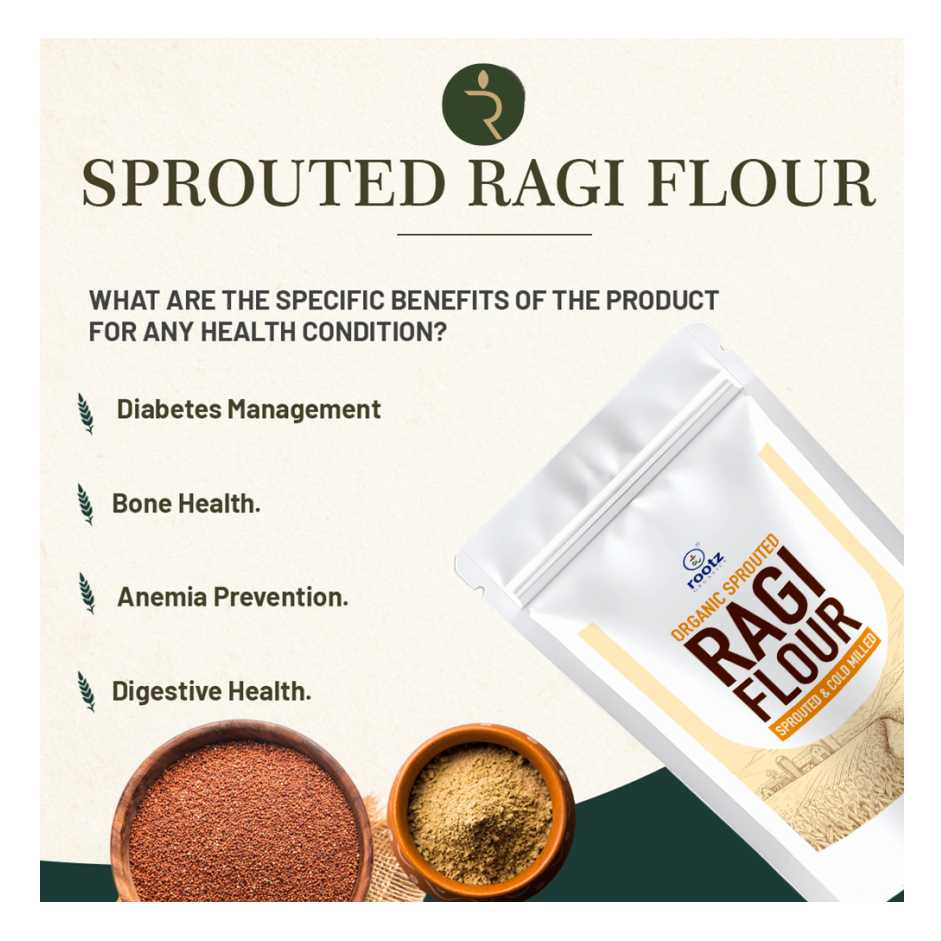
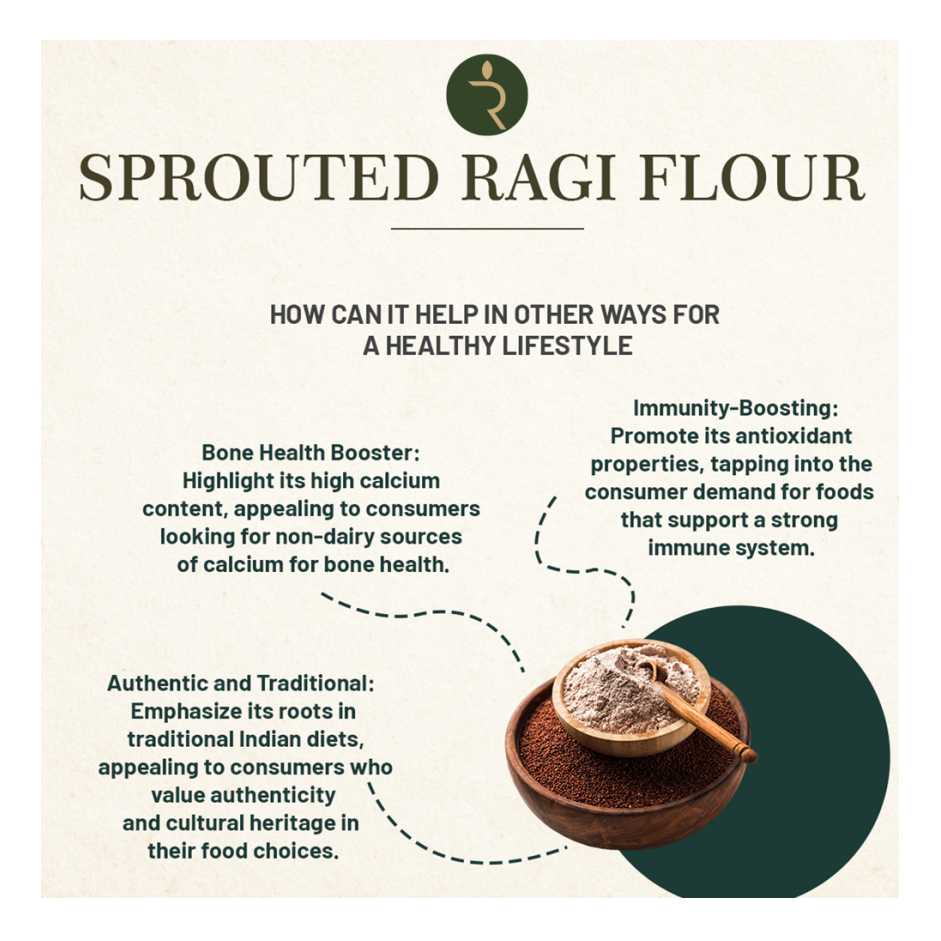
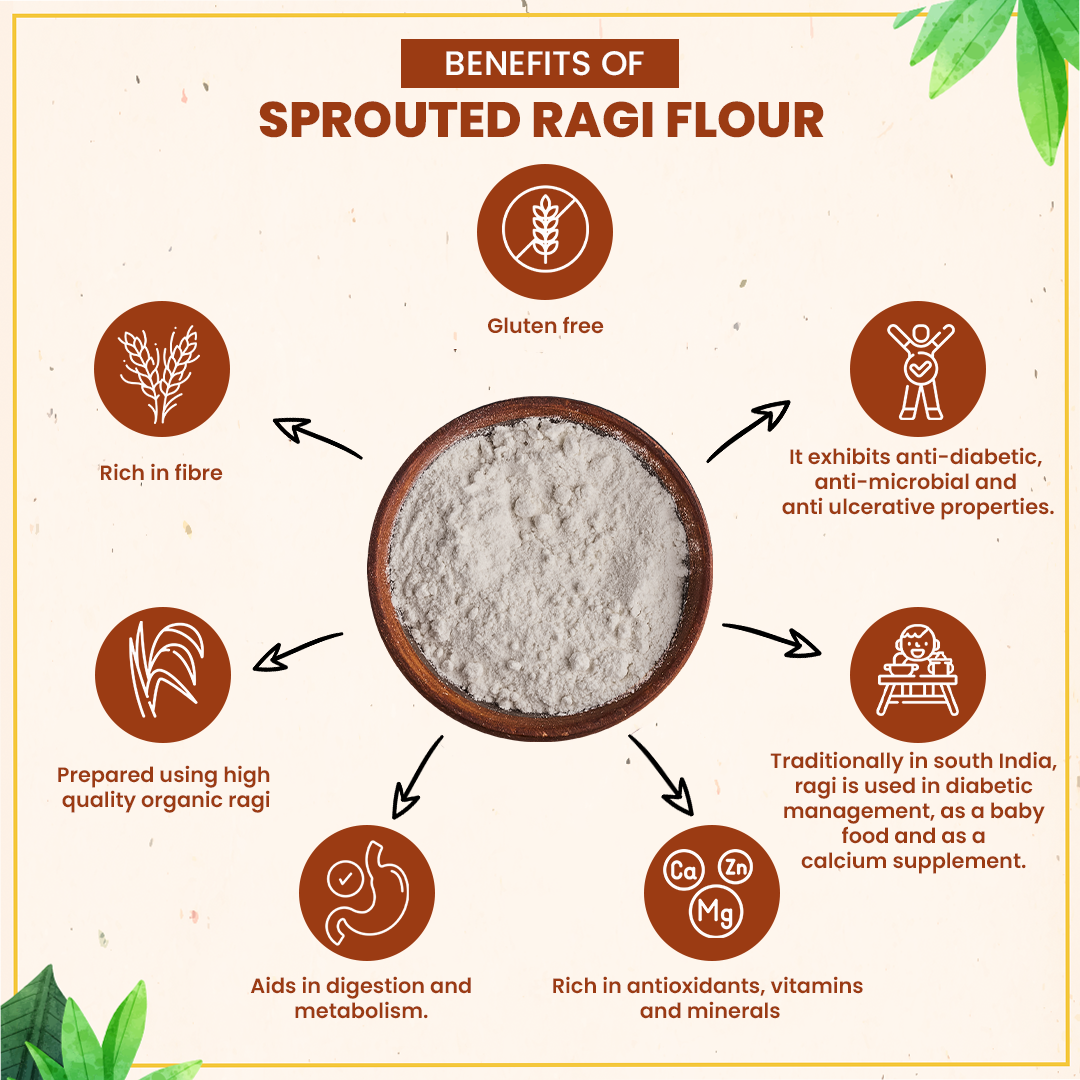
Ragi (finger millet) is one of the oldest cultivated millet in India. It is rich in antioxidants, vitamins, and minerals. It exhibits anti-diabetic, anti-microbial, and anti-ulcerative properties. Traditionally in south India, ragi is used in diabetic management, as baby food, and as a calcium supplement.
Key Features
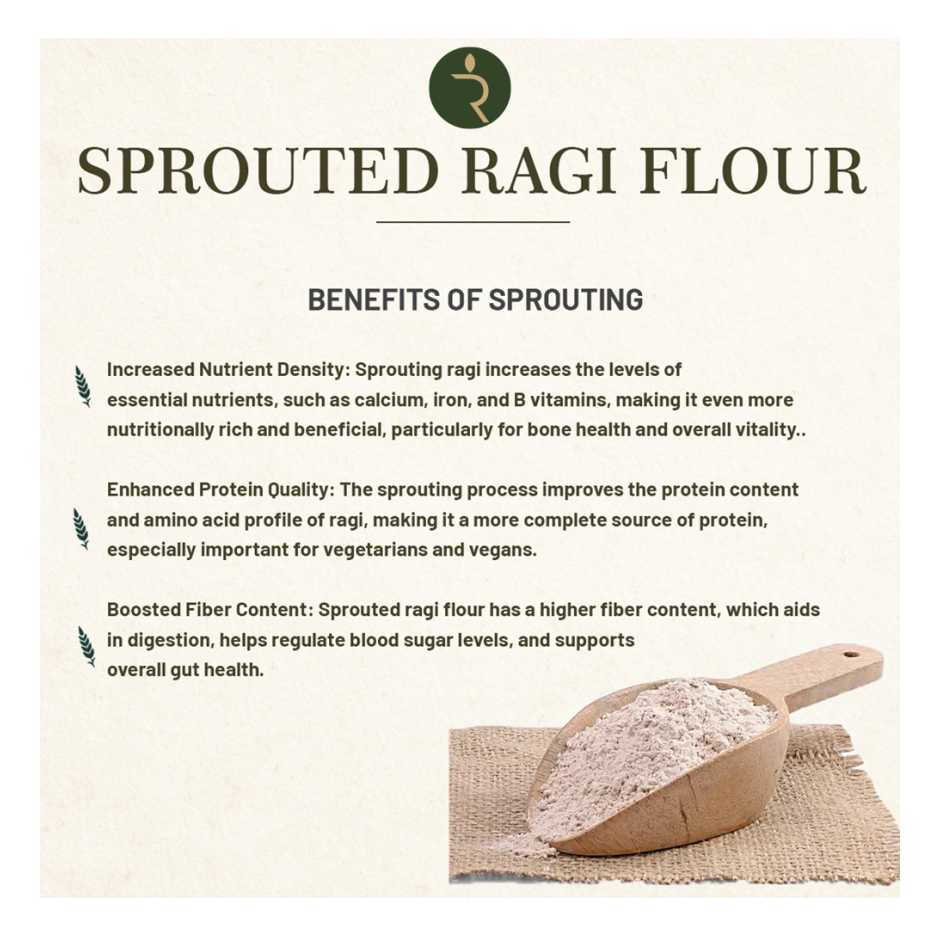
· Sprouted ragi flour is rich in Calcium, Iron, and health-promoting polyphenols
· It is a great source of fiber and contains both soluble and insoluble fibers. Insoluble fibers are known as “Prebiotics” as they promote healthy biomes in the gut.
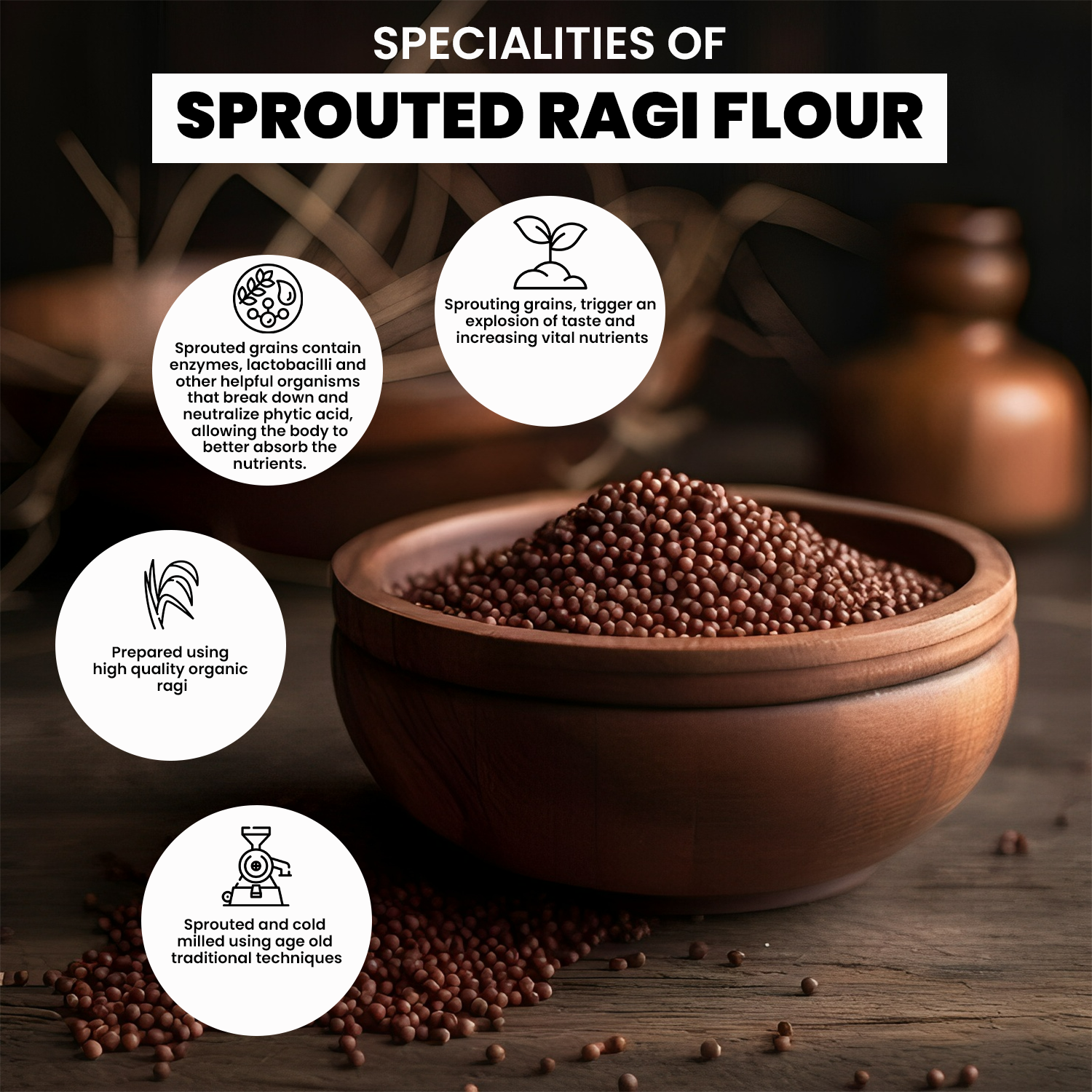
· The sprouting process also reduces the anti-nutrients (like phytic acid) which essentially bind to the minerals and does not allow the body to digest them.
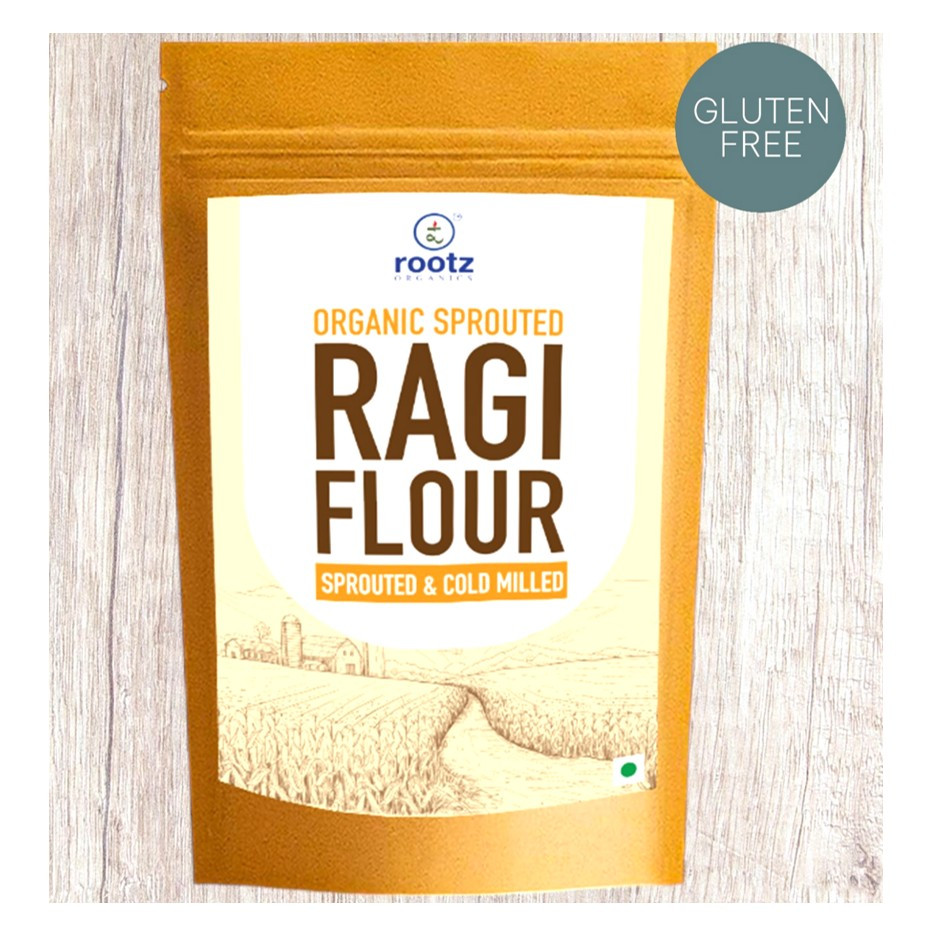
· It is naturally gluten-free
· It is greatly suited for diabetic diet plans
· It has an alkalizing effect on the body and is a non-acid-forming food
Benefits of sprouted grains and flours
The sprouting process increases the nutritional content of the grains. The grains become alive, and the nutrition is readily bio-available
It is easily digestible and greater nutrition assimilation in the body happens due to bioavailability
The sprouting process also reduces the anti-nutrients (like phytic acid) which essentially bind to the minerals and does not allow the body to digest them.
How to use Sprouted Ragi Flour?
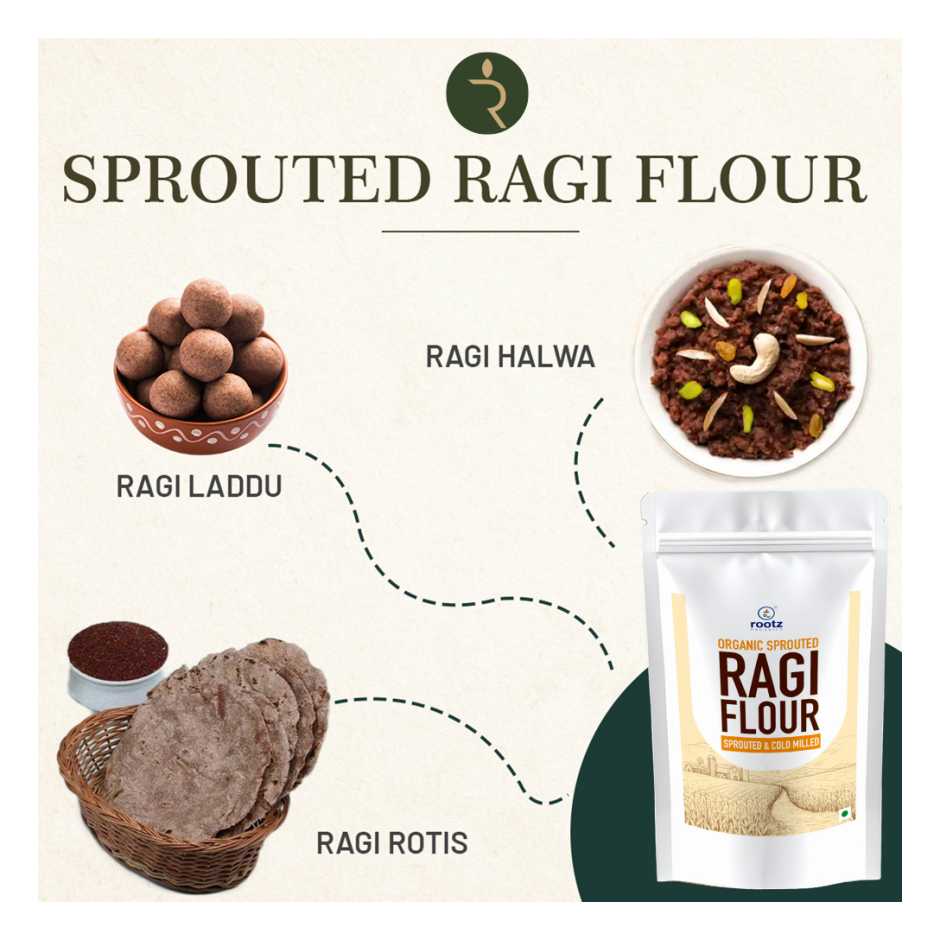
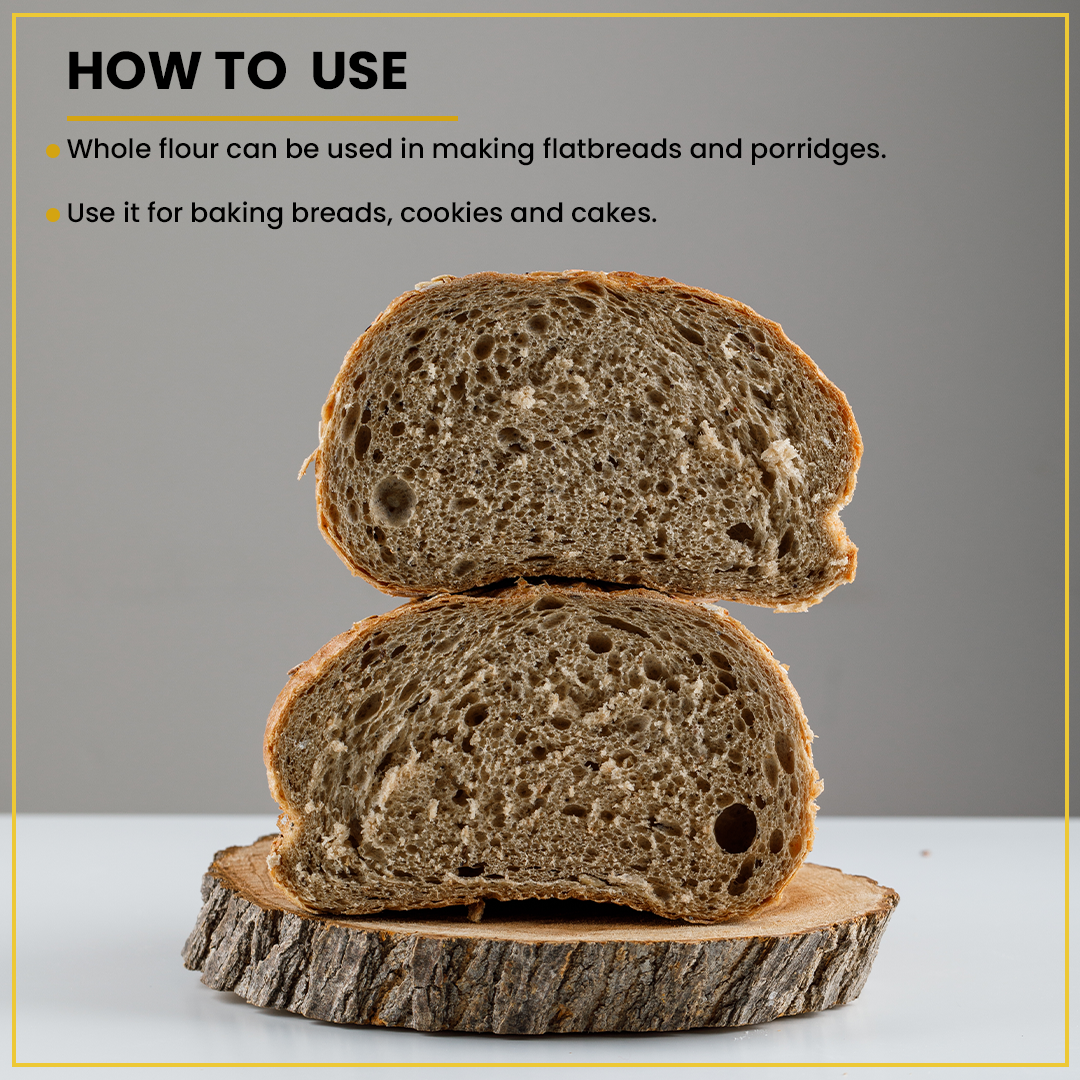
Make Bhakri or ragi roti . It is a tasty substitute for wheat roti. It can also be used in baking for baking gluten free cakes and cookies.
Reviews
Login
Don't have an account?
Sign UpRagi is naturally gluten-free and is one of the richest cereal sources of calcium, gram for gram, and also provides iron, magnesium and good dietary fibre. We share this for general information only; for personalised dietary advice, please consult a qualified professional. Values are approximate references and vary by batch.
Ragi is wonderfully versatile. Whisk it into water or milk and cook to a smooth porridge or a jaggery-sweetened drink; make soft ragi rotis by mixing with hot water so the gluten-free dough binds; use it in pancakes, muffins and energy bars; or blend it with wheat, rice or other flours for multigrain recipes. Add liquid gradually for a smooth, lump-free consistency.
Yes — ragi, or finger millet, is naturally gluten-free, which makes this flour suitable for gluten-free cooking and baking. As with any gluten-free product, if you have coeliac disease, check the packaging for your needs and look out for certified options.Yes — ragi, or finger millet, is naturally gluten-free, which makes this flour suitable for gluten-free cooking and baking. As with any gluten-free product, if you have coeliac disease, check the packaging for your needs and look out for certified options.


