
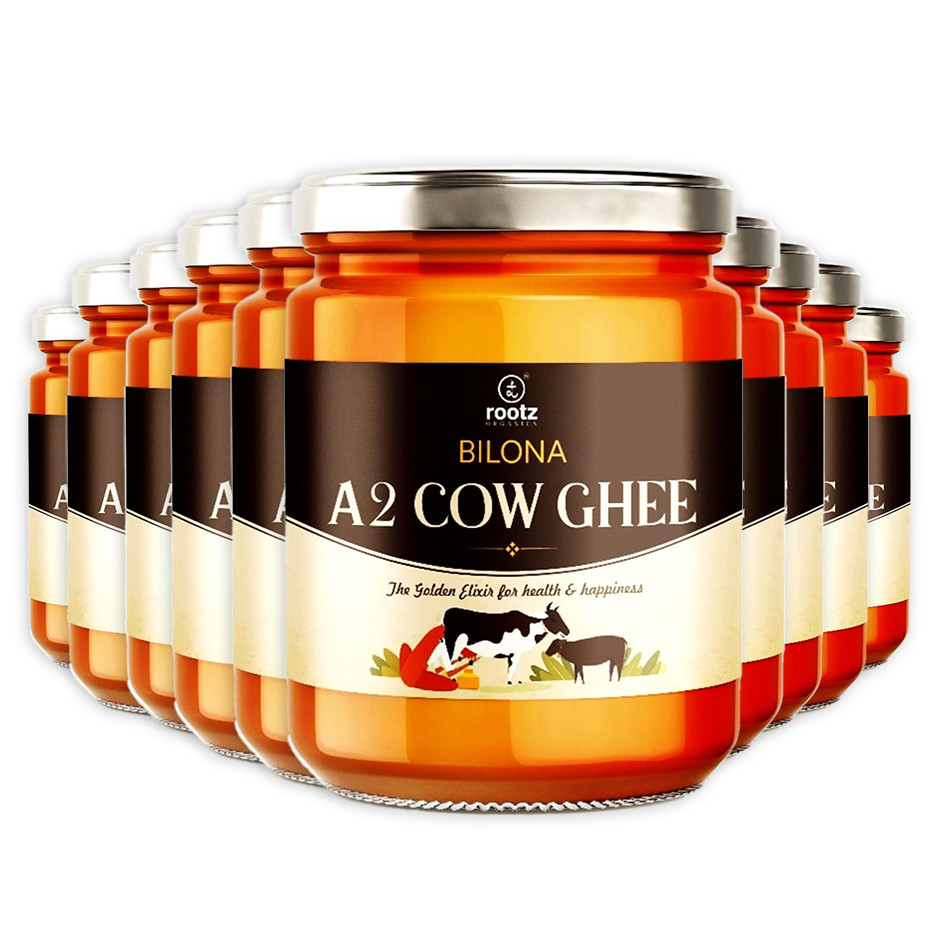
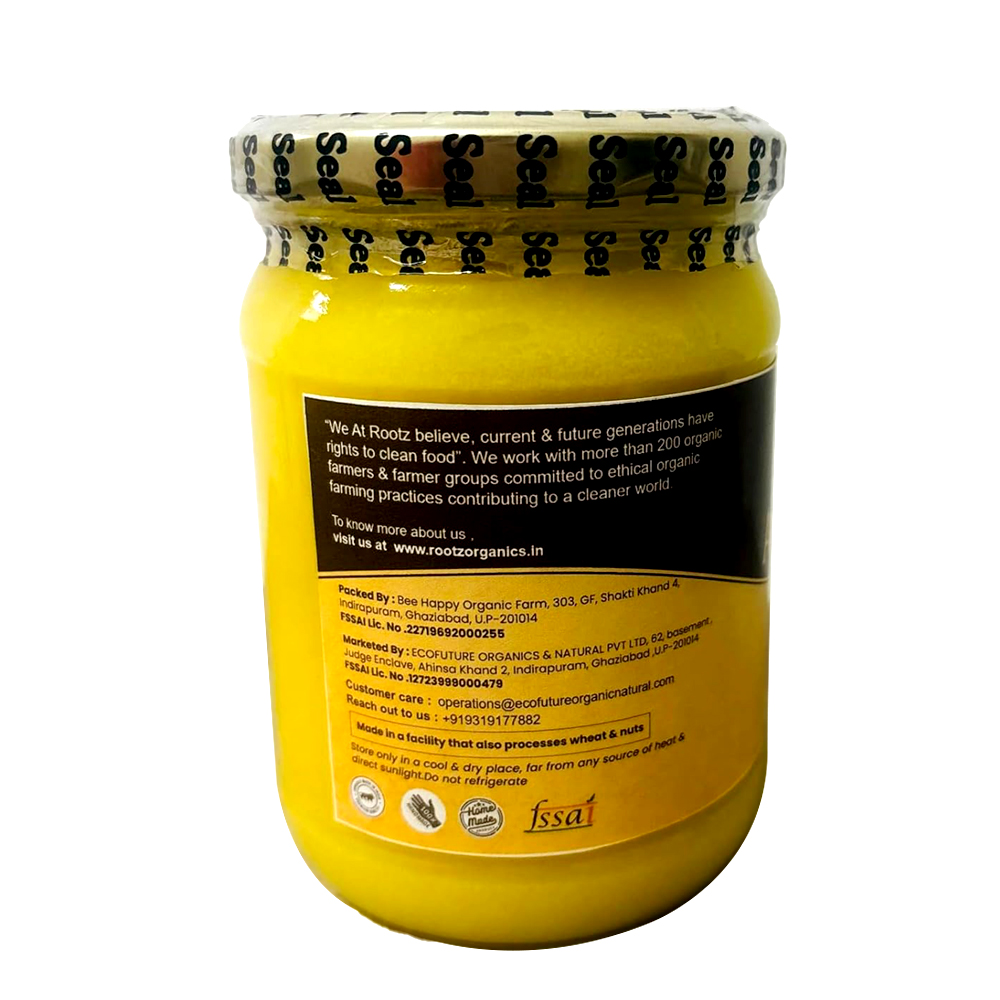
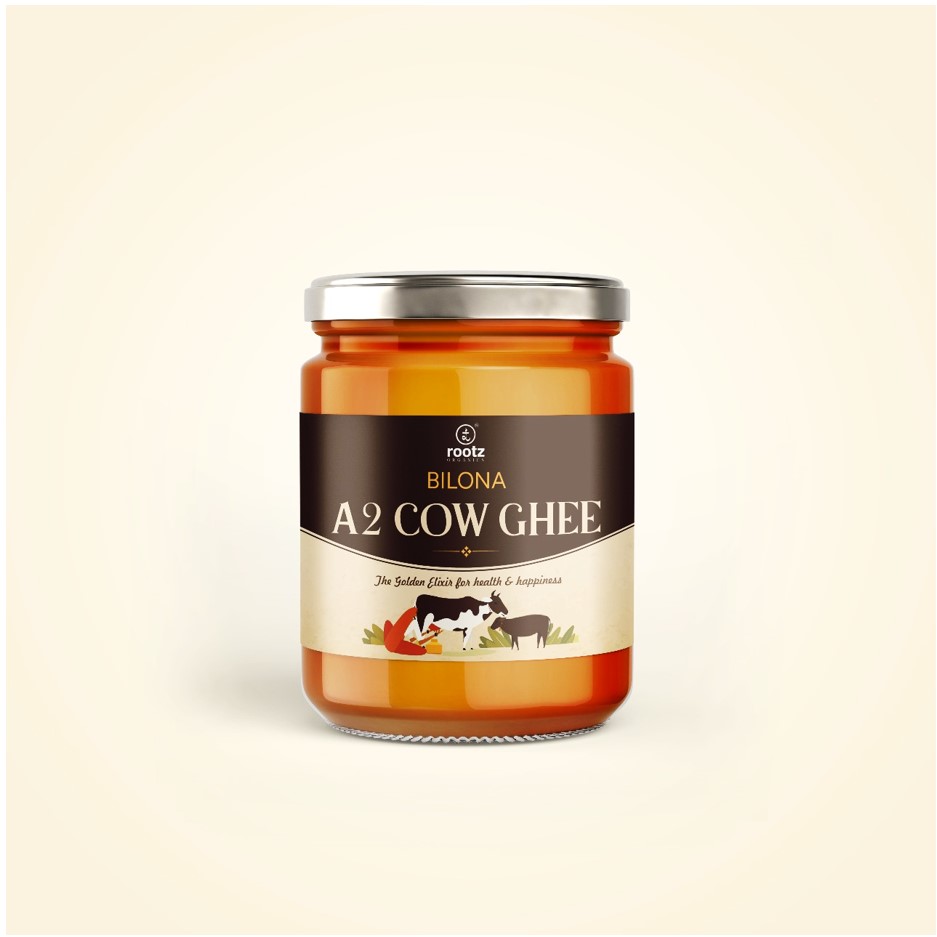
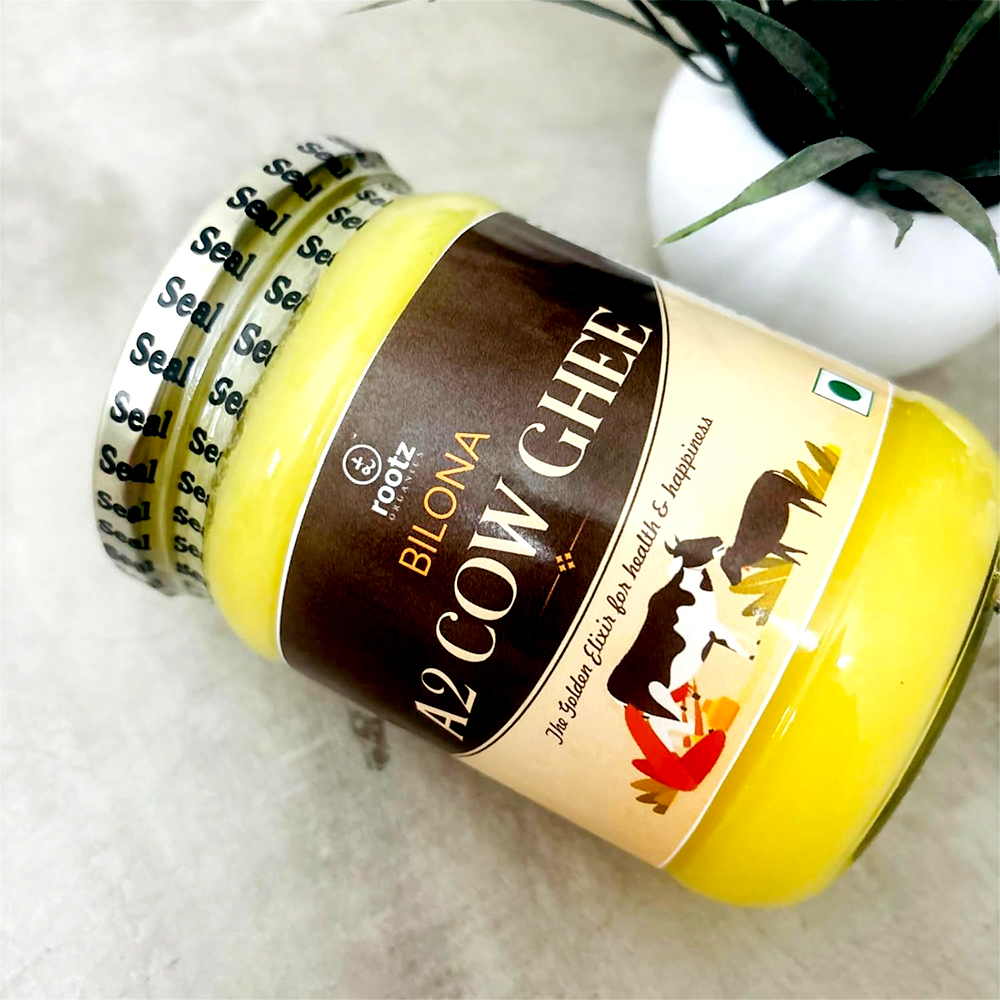
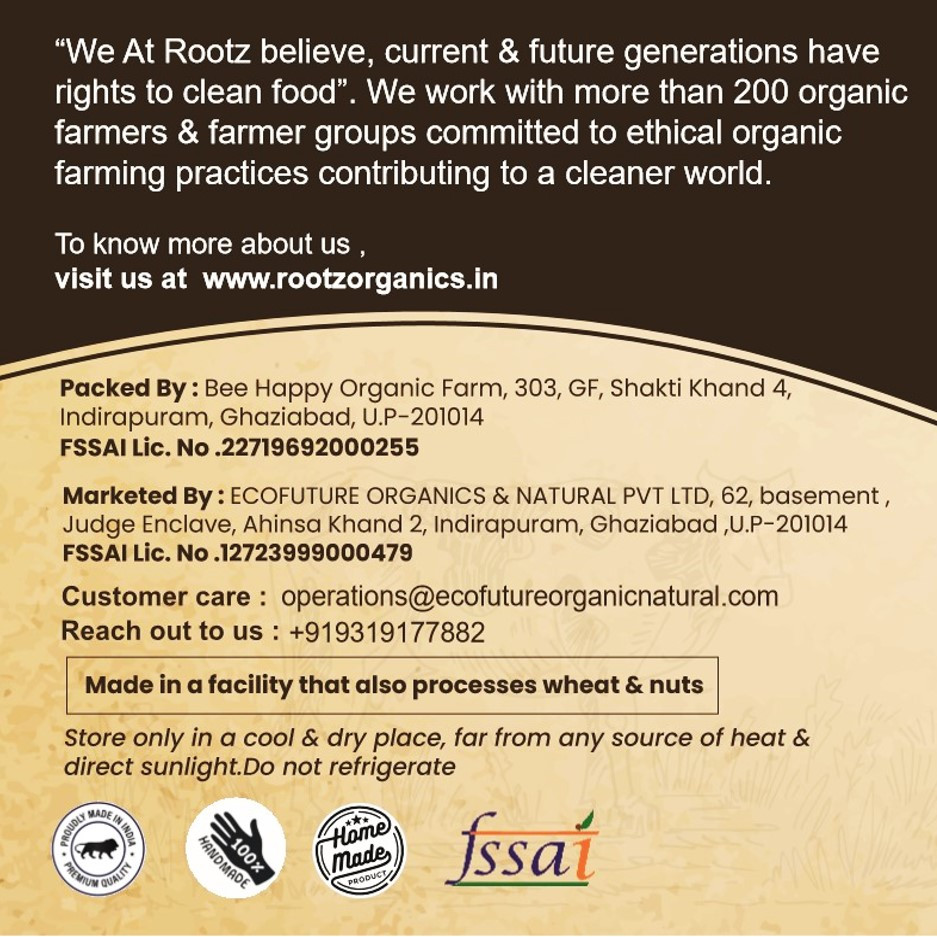
Product description
What is A2 Ghee & why does it matter?
Not all ghee is the same. Most commercial ghee—even those labeled "pure" or "desi"—are made from A1 cow milk or a blend of A1 and A2, processed at high speed, and often sourced from cows raised in cramped conditions on grain-heavy diets.
A2 Desi Cow Ghee is made exclusively from the milk of indigenous desi cows—breeds like Gir—that naturally produce only the A2 beta-casein protein. This is the protein variant your body is better adapted to process. A1 beta-casein, found in most hybrid European breeds, behaves differently in the gut and is increasingly associated with digestive discomfort.
We source our A2 milk from farms where cows are grass-fed, free-roaming, and carefully monitored from fodder to milking. No factory farming. No hormones. No shortcuts.
The Bilona Method — Why It Changes Everything
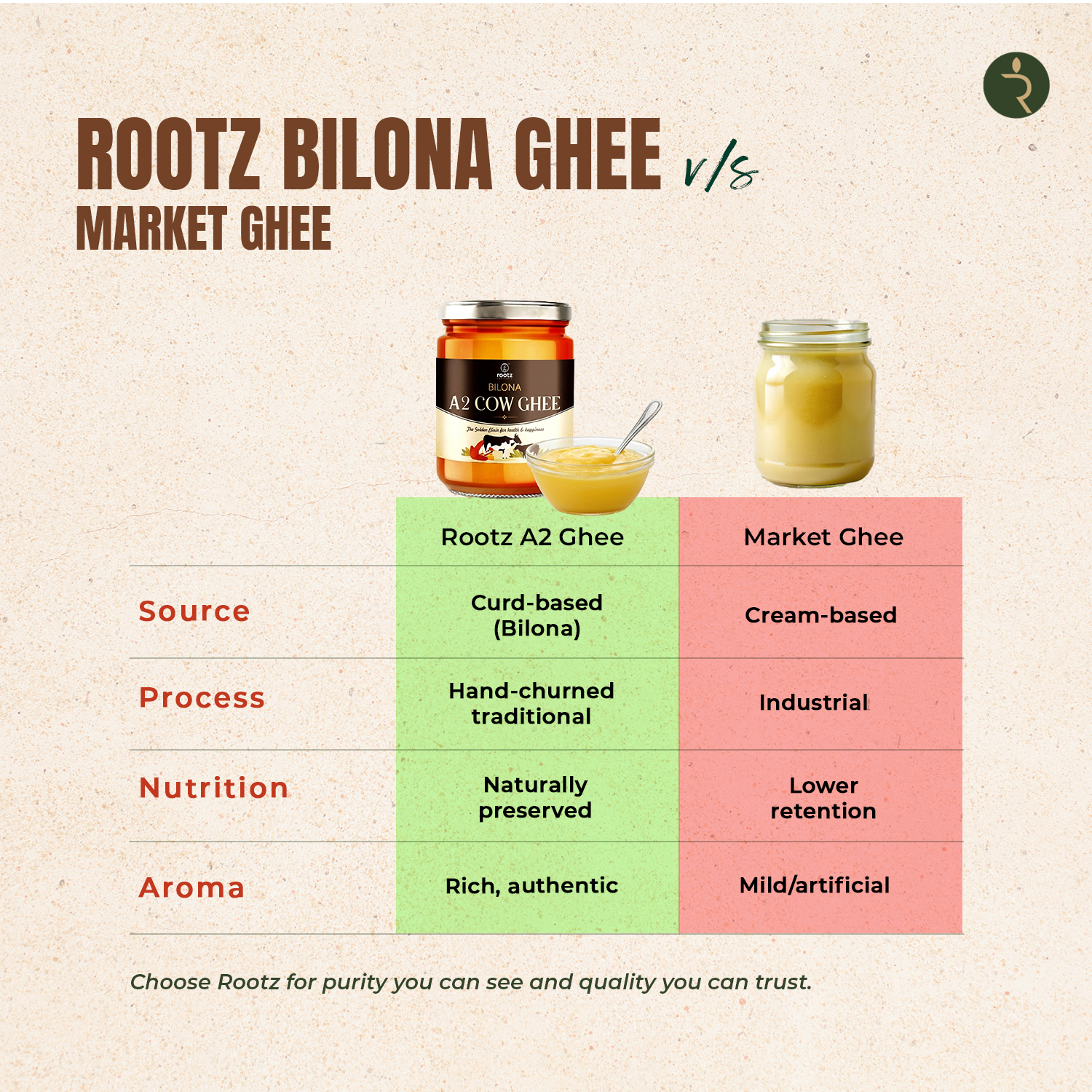
The traditional Bilona method begins with curd, not cream—preserving nutrition, digestibility, and depth of flavor.
Step 1: Fresh A2 milk is cultured into curd overnight using a natural live culture.
Step 2: The curd is hand-churned in a clay pot using a wooden churner to extract white butter.
Step 3: The butter is slowly simmered over a low flame until milk solids separate, leaving pure golden ghee.
Commercial cream-separator methods skip fermentation—making production faster but compromising quality, nutrition, and taste.
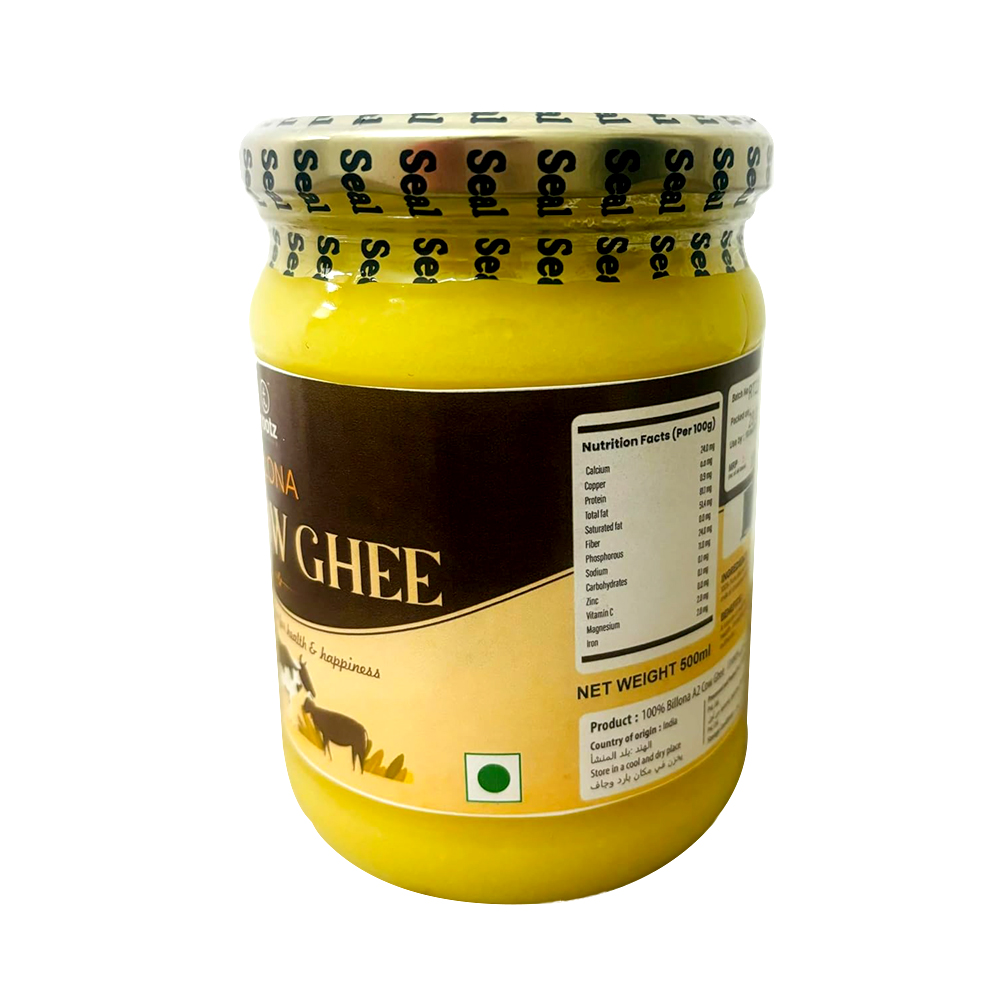
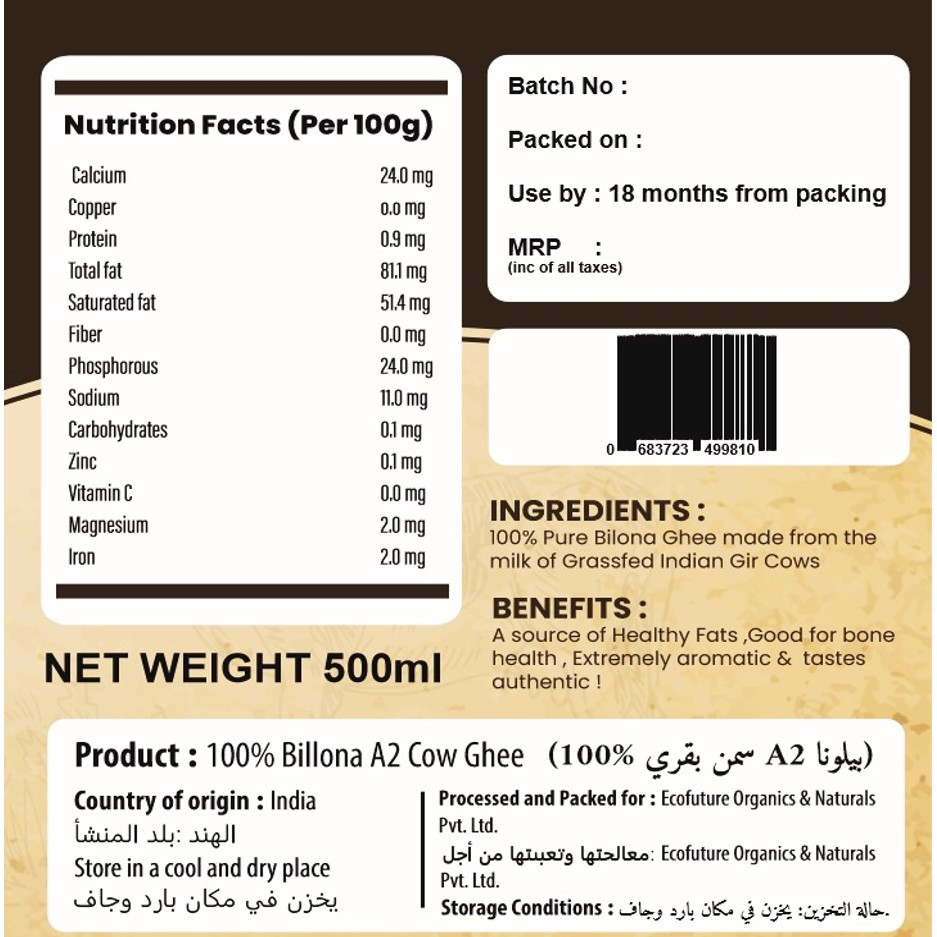
Nutrition
Serving size: 1 tablespoon (14g)
| Nutrient | Value | % Daily Value |
|---|---|---|
| Energy | 123 kcal | — |
| Saturated Fat | 9g | 45% |
| Omega-3 Fatty Acids (ALA) | 40mg | — |
| Butyric Acid (C4:0) | 0.5g | — |
| Vitamin A (Retinol) | 438 IU | 15% |
| Vitamin D | 12 IU | 3% |
| Vitamin E (Tocopherol) | 0.4mg | 3% |
| Vitamin K2 (MK-4) | 1.5mcg | 1% |
| Conjugated Linoleic Acid (CLA) | ~20–40mg | — |
How to Use It
Use it for everyday cooking—sabzi, dal, tadka, or biryani. Add a spoon to warm A2 milk at night for recovery. Spread it on fresh roti, use it in baking as a butter alternative, or take half a teaspoon on an empty stomach as part of a traditional Ayurvedic routine.
Watch Videos
Reviews
Login
Don't have an account?
Sign UpThe Bilona method is a traditional Ayurvedic process of making ghee that begins by culturing full-fat A2 milk into curd, then hand-churning the curd to extract white butter, and finally simmering that butter slowly into ghee. Unlike the more common cream-separator method used in commercial ghee production, the Bilona method retains more of the natural fat-soluble vitamins, butyric acid, and omega-3 fatty acids from the original milk. It is more labour-intensive and produces a smaller yield, which is why Bilona ghee is priced higher — but the nutritional and flavour difference is significant.
Yes. During the ghee-making process, milk solids (which contain lactose and casein) are removed when butter is simmered and strained. The result is a product that is both lactose-free and casein-free, making it suitable for most people with dairy sensitivities. Our A2 Desi Cow Ghee is made exclusively from A2 beta-casein milk, which is also associated with easier digestion compared to A1 varieties. If you have a severe dairy allergy, we recommend consulting your healthcare provider before use. Yes.
A2 Desi Cow Ghee has a high smoke point of approximately 250°C (480°F), which makes it one of the most stable cooking fats for high-heat applications including deep frying, sautéing, roasting, and baking. Unlike refined vegetable oils or butter, ghee does not break down into harmful compounds at high temperatures. This makes it a safe and flavourful choice for everyday Indian cooking — from tempering spices to preparing rotis and biryanis.


