
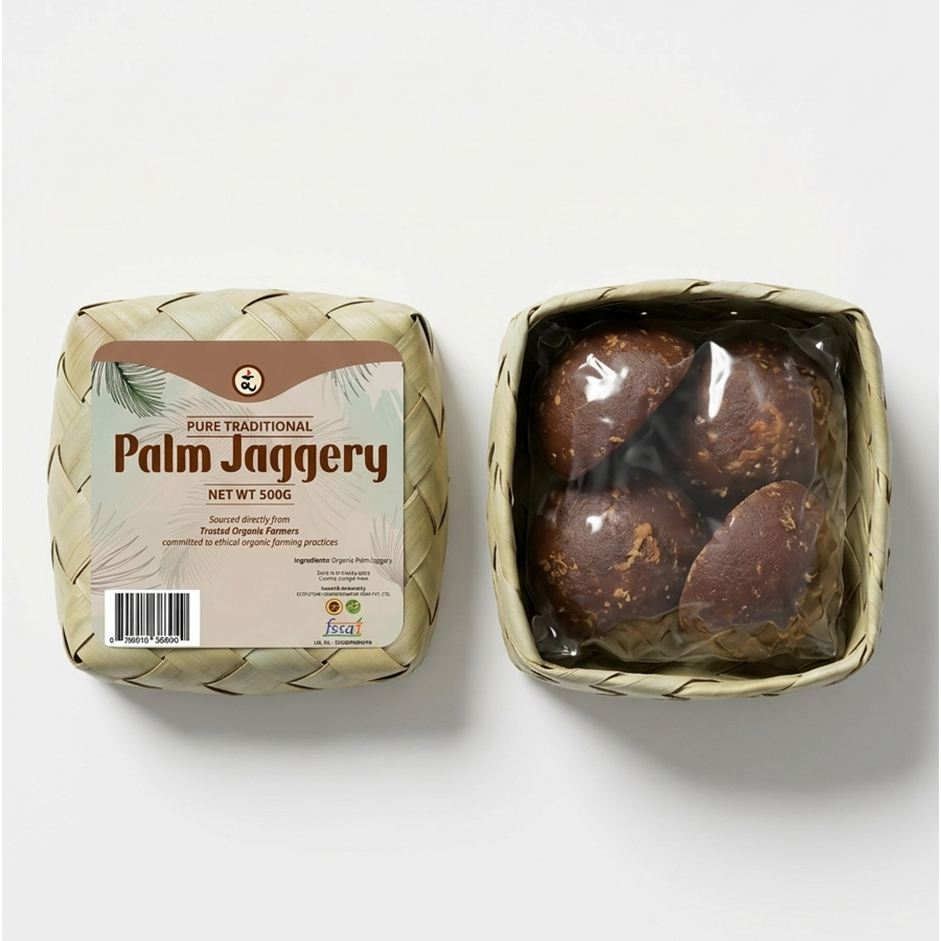
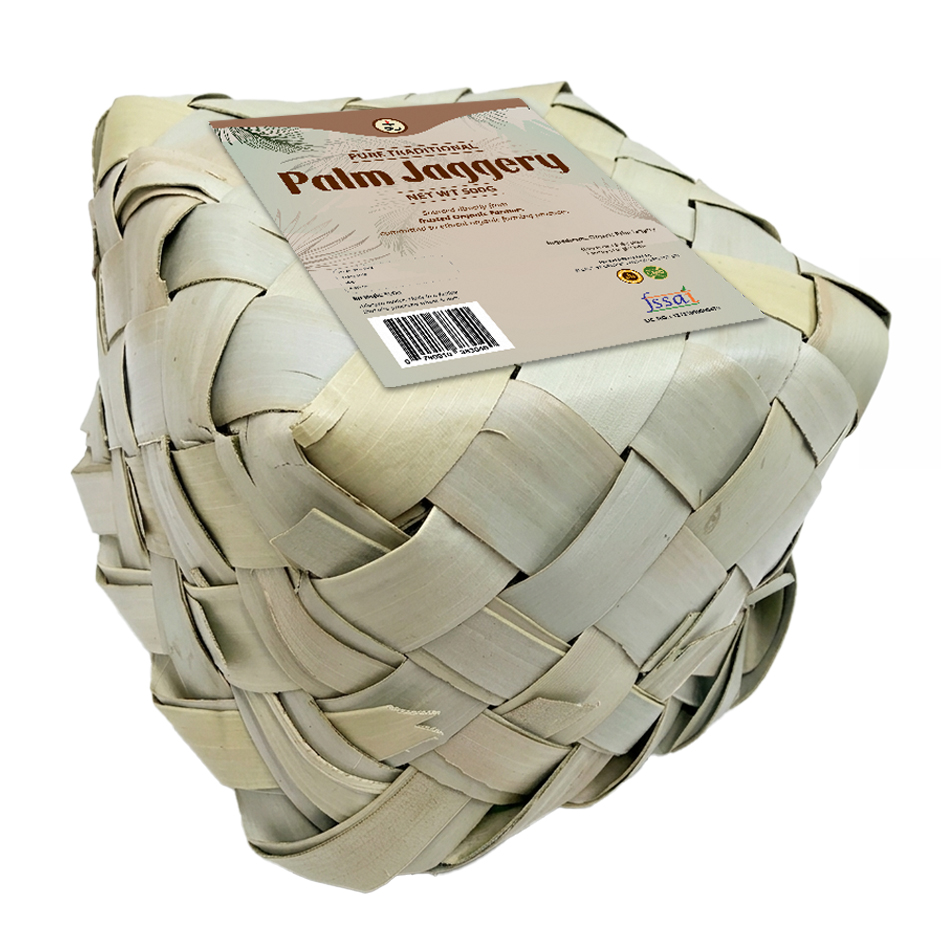
Product description
PALMYRA PALM JAGGERY (KARUPATTI) – WHAT MAKES IT SPECIAL
Palmyra Palm Jaggery, popularly known as Karupatti, is a traditional unrefined natural sweetener made from the fresh sap of the Palmyra Palm (Borassus flabellifer). Unlike regular jaggery made from sugarcane, Palmyra palm jaggery has a naturally rich caramel flavour with earthy, smoky notes and has been treasured in South Indian kitchens for generations.
India is home to several traditional natural sweeteners:
- Sugarcane Jaggery (Gur): Made from concentrated sugarcane juice and commonly used across India.
- Coconut Jaggery: Produced from coconut palm sap with a mild caramel flavour.
- Palmyra Palm Jaggery (Karupatti): Made from Palmyra palm sap and prized for its distinctive flavour, traditional preparation, and seasonal availability.
WHY PALMYRA PALM JAGGERY IS UNIQUE
The Palmyra palm takes nearly 15–20 years to mature before it can be tapped for sap. During the harvesting season, fresh sap is collected early each morning from the flower stalks before natural fermentation begins.
The sap is slowly simmered over a wood fire until it thickens and naturally solidifies into jaggery. No refining, bleaching, artificial colours, flavours, or preservatives are added during this traditional process.
The result is a naturally unrefined sweetener with a deep caramel flavour, subtle smoky aroma, and rich colour that is distinctly different from sugarcane jaggery.
NATURALLY OCCURRING MINERALS
Unlike refined white sugar, which is almost entirely sucrose, Palmyra Palm Jaggery naturally retains minerals present in the palm sap.
- Naturally contains iron.
- Provides potassium.
- Contains calcium.
- Source of magnesium.
Mineral levels may vary depending on the growing region, harvest season, and traditional processing methods.
HOW TO USE
- Tea & Coffee: Sweeten tea, filter coffee, black coffee, or herbal drinks with grated palm jaggery for a naturally rich caramel flavour.
- Traditional Indian Recipes: Perfect for sweetening payasam, pongal, kozhukattai, appam, adai, paniyaram, aval, and other South Indian favourites.
- Breakfast: Sprinkle over oats, millet porridge, daliya, curd, smoothie bowls, or breakfast cereals.
- Indian Sweets: Ideal for laddoos, halwa, chikki, kheer, sesame sweets, peanut chikki, and festive desserts.
- Baking: Replace brown sugar in cakes, cookies, muffins, banana bread, and granola for a deeper caramel flavour.
- Everyday Cooking: Use in sambhar, rasam, chutneys, marinades, salad dressings, sauces, and vegetable glazes to add natural sweetness and depth of flavour.
| Nutrient | Per Serving (10g) | Per 100g | % DV* |
|---|---|---|---|
| Basis / Serving Size | Serving size: 10g (approx. 2 tsp) | Servings per 500g pack: 50 | ||
| Energy | 38 kcal / 158 kJ | 383 kcal | 2% |
| Total fat | 0.1g | 0.1g | 0% |
| Total carbohydrates | 9.8g | 98g | 4% |
| Dietary fibre | 0g | 0g | 0% |
| Total sugars | 9.8g | ~96–98g | — |
| Protein | 0.03g | 0.3g | 0% |
| Sodium | 2mg | 20mg | 0% |
| Iron | 1.1mg | ~11mg | 6% |
| Potassium | 105.6mg | ~1056mg | 22% |
| Calcium | 8mg | ~80mg | 1% |
| Magnesium | 7mg | ~70mg | 2% |
| Phosphorus | 2mg | ~20mg | 0% |
- Store in a cool, dry place away from direct sunlight.
- Keep in an airtight container after opening.
- Refrigerate during humid weather to prevent moisture absorption.
- If the jaggery hardens naturally, grate it as required or wrap it in a slightly damp cloth for a short time to soften before use.
Palmyra Palm Jaggery (Karupatti) is a traditional, minimally processed natural sweetener that adds authentic flavour and rich caramel notes to everyday cooking, festive sweets, beverages, and baking.
Reviews
Login
Don't have an account?
Sign UpRegular jaggery is made from sugarcane juice. Palm jaggery is made from the sap of the Palmyra palm tree (Borassus flabellifer), which takes 15–20 years to reach tapping maturity. The sap is collected from the cut flower bud before sunrise and must be processed the same morning due to rapid fermentation. Palm jaggery has a notably deeper flavour profile — complex caramel, slightly earthy, with a faint smokiness — compared to the plainer sweetness of sugarcane jaggery. Palm jaggery also retains higher potassium (~1056mg/100g vs ~300mg/100g in sugarcane jaggery) and iron. Known as Karupatti in Tamil Nadu and Nattu Sakkarai across South India.


