



Product description
WHY PARBOILING PRESERVES NUTRIENTS
Regular white rice is milled to remove the bran layer — the part of the grain where most B vitamins and minerals are naturally present. This refining process significantly reduces its nutrient content.
Parboiled rice follows a different process. The paddy is soaked, pressure-steamed, and dried before milling. This allows water-soluble nutrients from the bran to move inward into the grain.
When the outer bran layer is later removed, these nutrients remain locked inside the grain — resulting in a more nutritionally retained rice compared to standard white rice.
WHY IT STANDS OUT
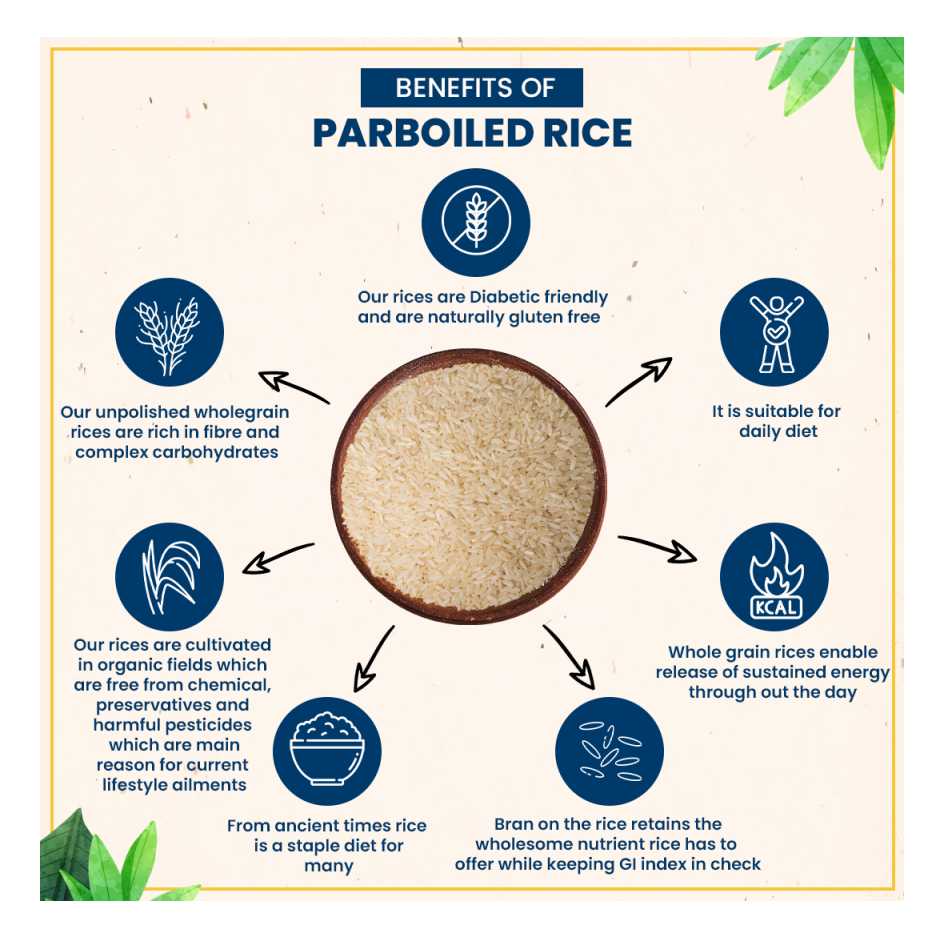
- Better Nutrient Retention: Higher levels of B vitamins and iron compared to regular white rice.
- Higher in B Vitamins: Thiamine (B1) and Niacin (B3) are retained at significantly higher levels due to parboiling.
- Firm, Non-Sticky Texture: Grains remain separate and fluffy even after cooking and cooling.
- Lower Glycaemic Impact: The parboiling process increases resistant starch, which slows digestion compared to regular white rice.*
*Glycaemic response may vary depending on cooking method and individual factors.
NUTRIENT COMPARISON
- Thiamine (B1): ~0.26 mg/100g vs ~0.07 mg in white rice (≈3–4× higher)
- Niacin (B3): ~3.4 mg/100g vs ~1.6 mg in white rice (≈2× higher)
- Iron: ~1.5 mg/100g vs ~0.8 mg in white rice (≈2× higher)
HOW TO COOK PARBOILED RICE
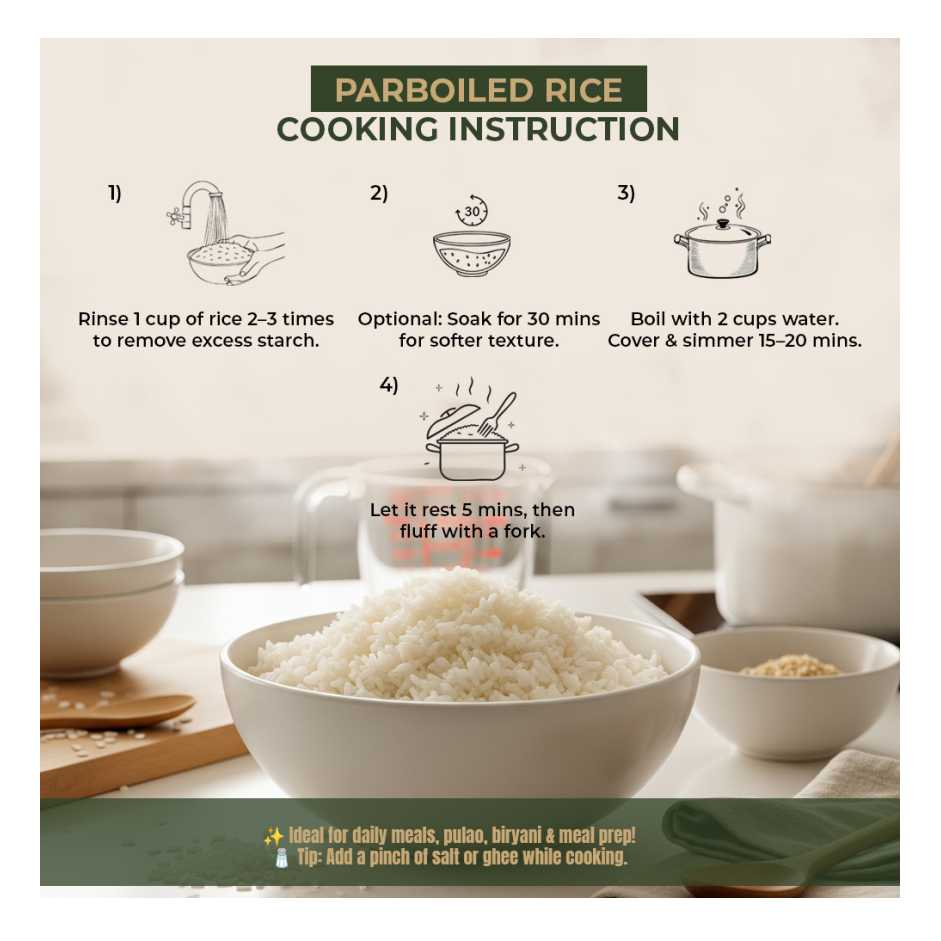
- Rinse: 2–3 times under cold water.
- Optional Soak: 20–30 minutes for slightly faster cooking.
- Water Ratio: 1 cup rice : 2.5 cups water.
- Open Pot: Bring to boil, simmer covered for 20–25 minutes.
- Pressure Cooker: 1 cup rice + 2 cups water, 2 whistles, natural release.
- Result: Fluffy, separate grains that do not clump.
HOW TO USE
- Fried Rice: Ideal for high-heat cooking — grains stay separate and don’t break.
- Pilaf & Pilau: Absorbs stock well while maintaining grain structure.
- Rice Salads: Holds texture even when cooled and mixed.
- Stuffed Vegetables: Retains shape during second cooking.
- Grain Bowls: Perfect base for vegetables, proteins, and sauces.
- Soups & Stews: Add cooked rice without it turning mushy.
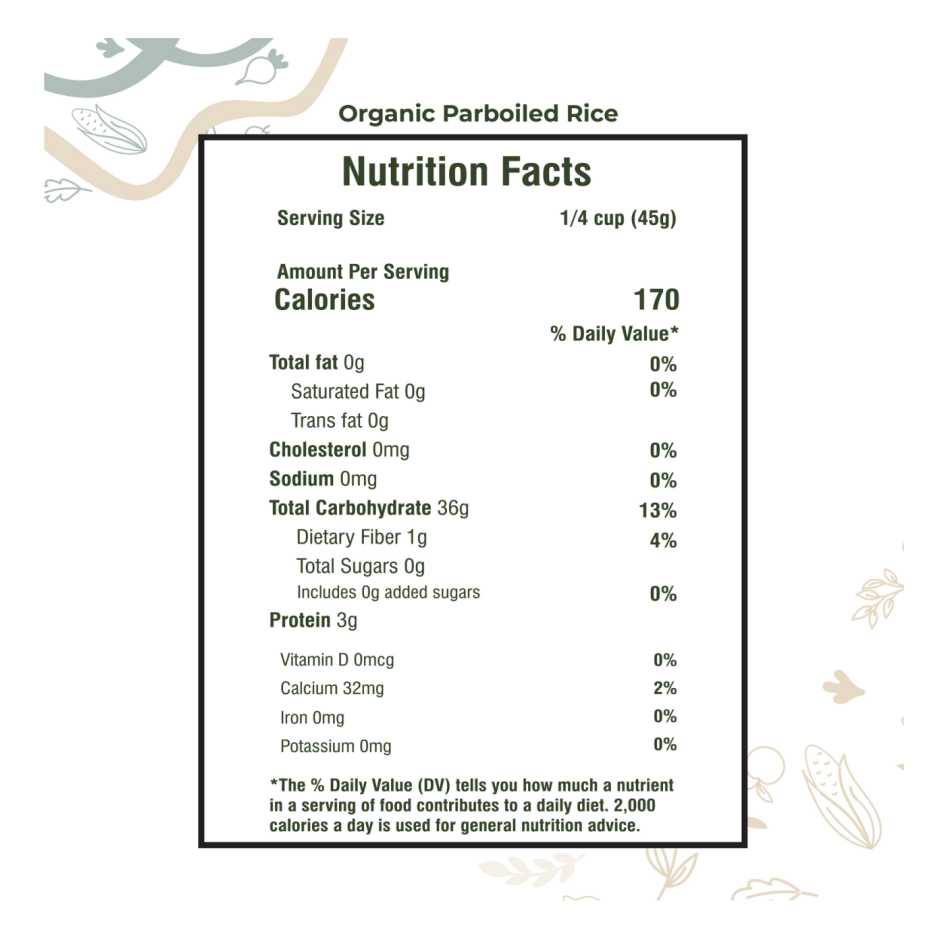
| Nutrient | Per Serving (50g dry) | Per 100g | % DV* |
|---|---|---|---|
| Serving Size | 50g dry (approx. 130g cooked) | ~36 servings per 1.8kg pack | ||
| Energy | 179 kcal | 358 kcal | 9% |
| Total Carbohydrates | 38.9g | 77.9g | 14% |
| Dietary Fibre | 1.1g | 2.1g | 4% |
| Protein | 3.5g | 7.1g | 7% |
| Total Fat | 0.4g | 0.7g | 1% |
| Sodium | 2.5mg | 5mg | 0% |
| Iron | 0.75mg | 1.5mg | 4% |
| Thiamine (B1) | 0.13mg | 0.26mg | 11% |
| Niacin (B3) | 1.7mg | 3.4mg | 11% |
| Vitamin B6 | 0.15mg | 0.30mg | 9% |
| Magnesium | 34mg | 68mg | 8% |
| Manganese | 0.9mg | 1.8mg | 39% |
| Resistant Starch | ~1.5–2.5g | ~3–5g | — |
| B1 vs White Rice | Up to ~3–4× higher | ||
| B3 vs White Rice | Up to ~2× higher | ||
STORAGE
- Store in a cool, dry place away from moisture.
- Shelf life: up to 12 months when sealed.
- After opening, store in an airtight container and use within 2–3 months.
- Cooked rice: refrigerate and consume within 3 days. Can be frozen.


