





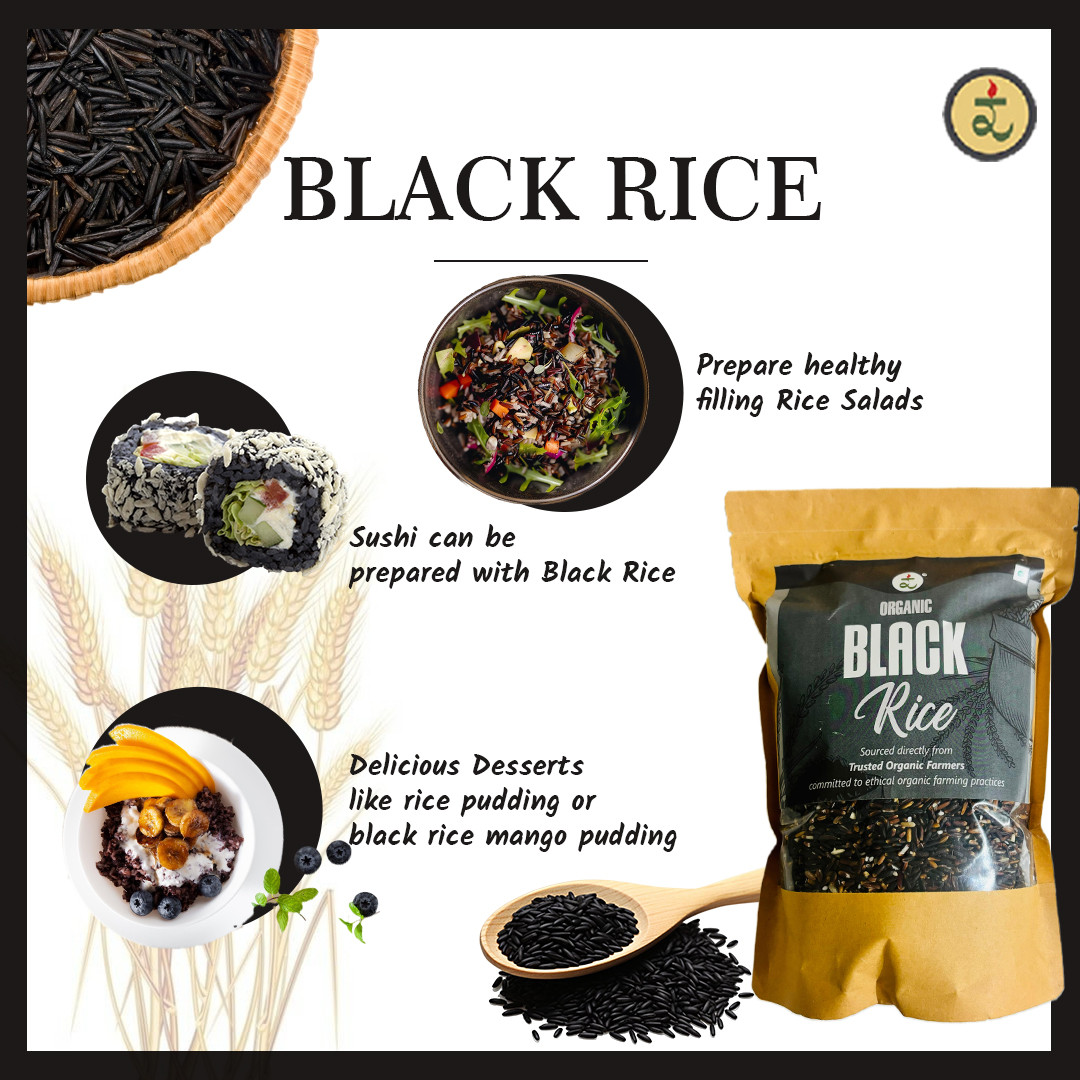

Product description
- Rich in Anthocyanins: ~200–400 mg per 100g — comparable to blueberries, known for their antioxidant content.
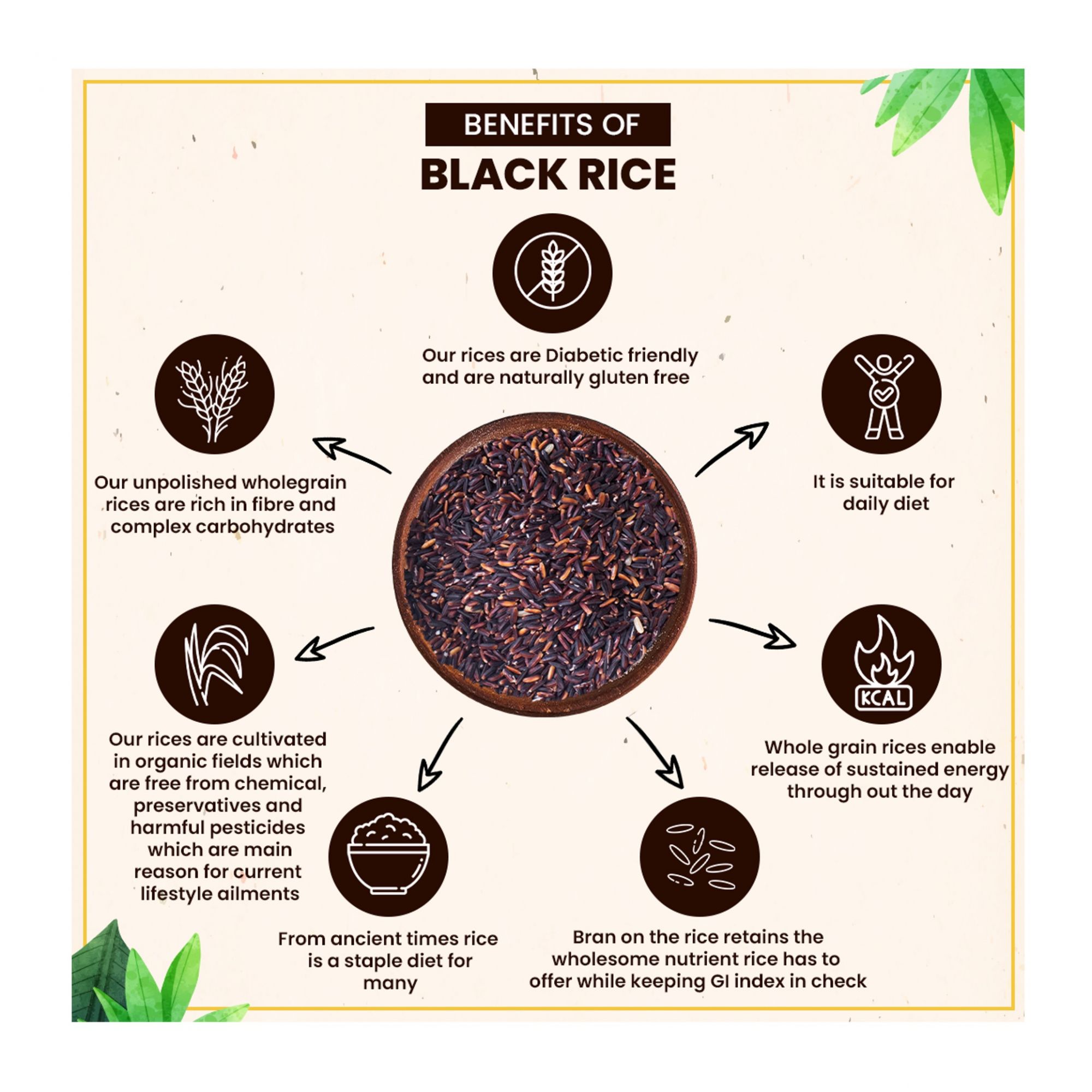
- Unpolished Whole Grain: Retains bran layer for natural fibre, nutrients, and colour.
- Higher Fibre Content: ~4.9g per 100g vs ~0.4g in polished white rice — over 10× more fibre.
- Complete Amino Acid Profile: Contains 18 amino acids, including all 9 essential amino acids.
- Lower Glycaemic Impact: The intact bran slows starch digestion compared to polished white rice.*
- Rinse: 2–3 times under cold water. Water turning purple is natural.
- Soak: 30–60 minutes recommended for even cooking.
- Water Ratio: 1 cup rice : 2.5 cups water.
- Cooking: Bring to boil, simmer covered for 35–40 minutes. Rest 10 minutes before fluffing.
- Pressure Cooker: 1 cup soaked rice + 2 cups water, 3 whistles, natural release.
- Grain Bowls: Pair with avocado, edamame, and sesame dressing.
- Sushi: Use less water (1:2) for firmer grains.
- Risotto: Slow-cook with stock for a naturally creamy texture.
- Cold Salads: Toss with mango, herbs, lime, and olive oil.
- Rice Pudding: Cook with coconut milk and jaggery for a rich dessert.
- Breakfast Bowl: Top with banana, berries, honey, and granola.
- Stuffed Vegetables: Use in peppers, zucchini, or mushrooms.
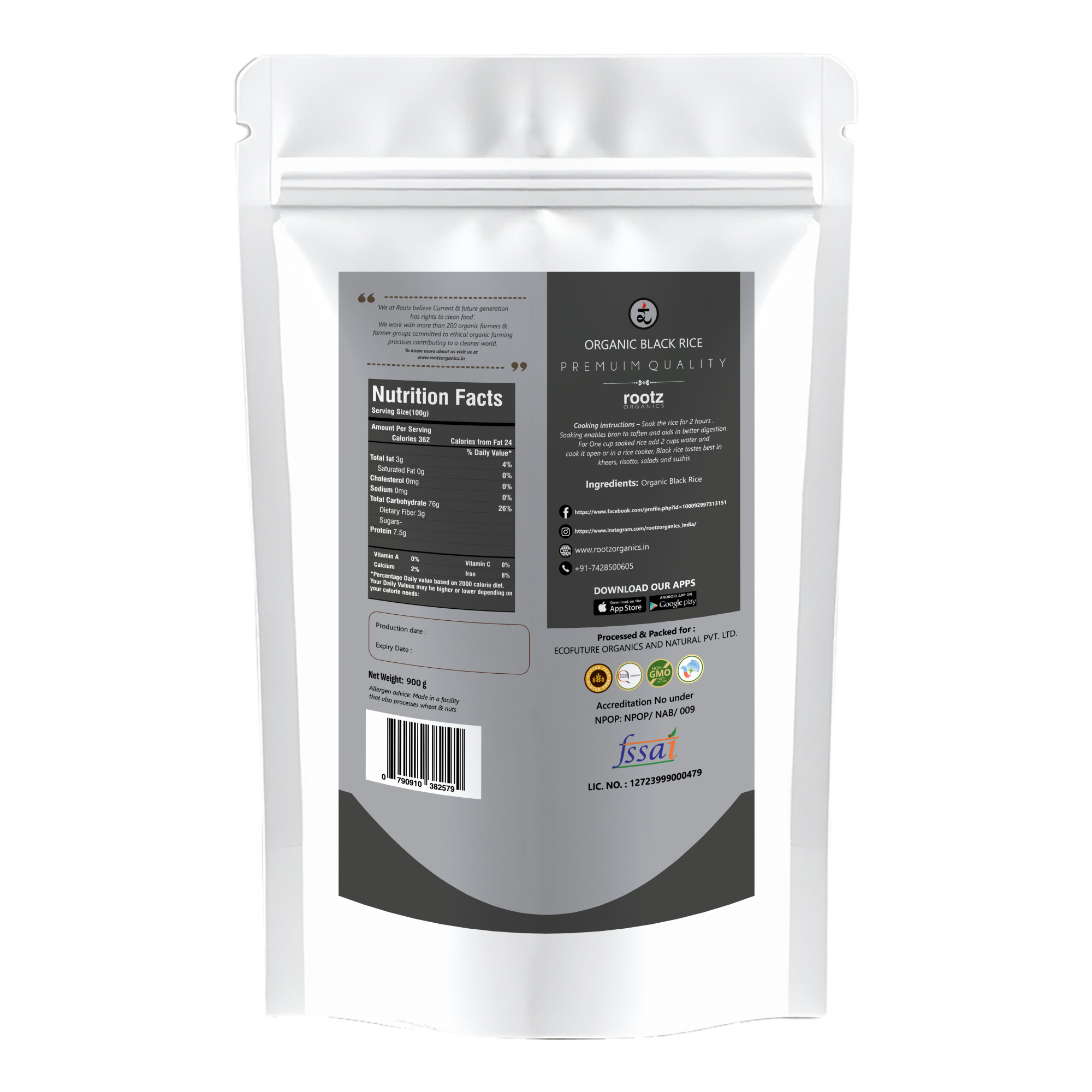
| Nutrient | Per Serving (50g dry) | Per 100g | % DV* |
|---|---|---|---|
| Serving Size | 50g dry (approx. 125g cooked) | ~36 servings per 1.8kg pack | ||
| Energy | 175 kcal | 351 kcal | 9% |
| Total Carbohydrates | 36g | 72.9g | 13% |
| Dietary Fibre | 2.5g | 4.9g | 9% |
| Protein | 4g | 8.1g | 8% |
| Total Fat | 1.1g | 2.2g | 1% |
| Sodium | 3mg | 6mg | 0% |
| Iron | 1.0mg | 2.0mg | 6% |
| Magnesium | 74mg | 147mg | 18% |
| Manganese | 1.5mg | 3.0mg | 65% |
| Zinc | 1.0mg | 2.0mg | 9% |
| Anthocyanins | ~100–200 mg | ~200–400 mg | — |
| Fibre vs White Rice | Over 10× higher than polished white rice | ||
- Store in a cool, dry place away from sunlight.
- Shelf life: up to 12 months when sealed.
- After opening, store in an airtight container and consume within 2–3 months.
Reviews
Login
Don't have an account?
Sign UpThe deep purple cooking water is anthocyanin — the water-soluble antioxidant pigment concentrated in the black rice bran. Anthocyanins are the same class of compound that makes blueberries blue and red cabbage purple. They leach freely into water during rinsing and cooking. Rinsing water runs dark purple and cooking water turns deep purple — both are completely normal and are simply the bran pigment releasing. The purple cooking water is edible and nutritious.
All three are unpolished heritage rice varieties with bran intact. Brown rice — bran is tan/golden; fibre, B vitamins, and minerals but no significant anthocyanins. Red rice (Himalayan Red, Rajamudi, Kerala Red) — bran is reddish-brown; some anthocyanins plus proanthocyanidins. Black rice — bran is deep purple-black; highest anthocyanin concentration of the three, specifically cyanidin-3-glucoside. All three have significantly more fibre, B vitamins, and minerals than polished white rice. For anthocyanin content specifically, black rice is the superior choice
Yes — all rice varieties, including black rice, are naturally gluten-free. Rice does not contain gluten, gliadin, or related prolamins. However, cross-contamination can occur if black rice is processed in a facility that also handles wheat or gluten-containing grains. If managing coeliac disease or clinical gluten sensitivity and requiring a certified gluten-free product, verify with Rootz whether this black rice is processed in a dedicated gluten-free facility before purchase.


